Need Help with Rifle Identification

Jim Cook

Cadet
Joined
May 28, 2017
Location
Oceana, WV
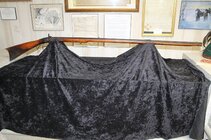
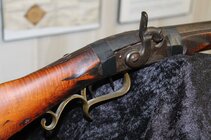
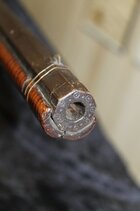
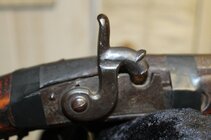
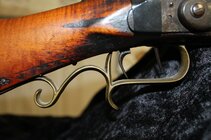
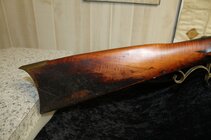
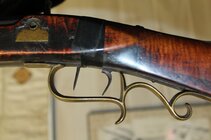
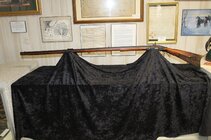
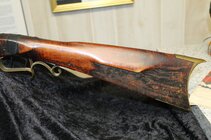
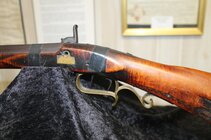
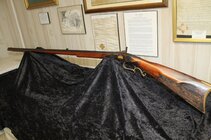
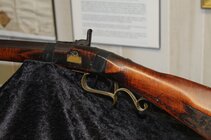
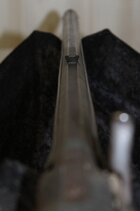
I'm with a small town museum and a lady brought us a gun to display saying it was used in the Revolutionary War, which I know isn't true. However, I don't know enough about black powder guns to say for sure what it is so need help identifying it. The rifle is 5 feet long, percussion cap, and the stamp on the percussion assembly says Leman. I know Leman manufactured guns starting in 1834 so know it isn't from the Revolutionary War. Thinking it might have been used in the Civil War. Have attached several photos. Any help with type, year, etc. would be greatly appreciated.
 

Attachments

  • IMG_0018.JPG
    IMG_0018.JPG
    325.7 KB · Views: 338
  • IMG_0019.JPG
    IMG_0019.JPG
    264.5 KB · Views: 513
  • IMG_0020.JPG
    IMG_0020.JPG
    119.3 KB · Views: 355
  • IMG_0022.JPG
    IMG_0022.JPG
    129.7 KB · Views: 437
  • IMG_0023.JPG
    IMG_0023.JPG
    216.2 KB · Views: 381
  • IMG_0024.JPG
    IMG_0024.JPG
    161.7 KB · Views: 370
  • IMG_0025.JPG
    IMG_0025.JPG
    140.8 KB · Views: 376
  • IMG_0027.JPG
    IMG_0027.JPG
    246.6 KB · Views: 350
  • IMG_0028.JPG
    IMG_0028.JPG
    222.6 KB · Views: 391
  • IMG_0029.JPG
    IMG_0029.JPG
    226 KB · Views: 335
  • IMG_0030.JPG
    IMG_0030.JPG
    241.4 KB · Views: 336
  • IMG_0031.JPG
    IMG_0031.JPG
    202.1 KB · Views: 372
  • IMG_0034.JPG
    IMG_0034.JPG
    103.6 KB · Views: 315
  • IMG_0043.JPG
    IMG_0043.JPG
    190.5 KB · Views: 336
I'm thinking that the lock was sold by Leman but the rifle was made by a gunsmith who purchased the lock. I've never seen a Leman that long. It is a civilian hunting rifle and probably has no military connection.
I hope someone gets that electrical tape off the rifle.
 
After taking a closer look at the lock, it looks like it really doesn't fit. I now believe that the lock isn't original to the rifle. My old eyes aren't too good, so I could be wrong about the fit of the lock.
Where is this at?
An interesting rifle. Thanks for sharing.
 
Welcome from Pittsburgh. Definitely not a Revolutionary War piece unless the lock was replaced, I'm guessing a privately owned piece used for hunting. Doesn't look military to me.
 
Welcome From THE Heart Of Dixie. Great piece and it is a civilian musket but keep in mind that a lot of the Minute Men brought their own muskets to war with them.
 
I'm with a small town museum and a lady brought us a gun to display saying it was used in the Revolutionary War, which I know isn't true. However, I don't know enough about black powder guns to say for sure what it is so need help identifying it. The rifle is 5 feet long, percussion cap, and the stamp on the percussion assembly says Leman. I know Leman manufactured guns starting in 1834 so know it isn't from the Revolutionary War. Thinking it might have been used in the Civil War. Have attached several photos. Any help with type, year, etc. would be greatly appreciated.
Howdy, Jim. Welcome to the forum.
 
That's a very nice rifle, a d if was a Civil War era arm, I have no doubts that someone here could identify it for you.

May I suggest you post your pictures to this forum---
---http://americanlongrifles.org/forum

The site is especially dedicated to arms such as yours and they have a forum for the identifying of rifles by their maker and/or style, etc. , an online library of muzzleloaders if you will.
Good luck, and if they do identify your rifle, would you come back and post what they found?
 
The rifle is very similar to rifles "made for the trade" by Leman, however if it was made by the Leman shop it would also be signed on top of the barrel. It is a very nice example of an American Longrifle and in quite nice overall condition. As for ACW usage, it is always possible that it was used by a Southern Militia unit, etc., although unlikely because of the excellent condition it is in.
J.
 
After taking a closer look at the lock, it looks like it really doesn't fit. I now believe that the lock isn't original to the rifle. My old eyes aren't too good, so I could be wrong about the fit of the lock. Where is this at? An interesting rifle. Thanks for sharing.

Thank you for the replies. This rifle is from Oceana in Wyoming County, located in Southern West Virginia. The story goes the first settler of our county, John Cooke, used the rifle in the Revolutionary War (we can prove he did fight in the Rev. War) and brought it with him when he settled here in 1799. At a later date, one of his son's (or grandson's) converted it from a flintlock to percussion and passed it on down through the family line. The story goes on to say that it may have been used by one of his descendant in the Civil War.

Two Civil War units were formed here in Oceana. In the fall of 1861, his descendant, William N. Cooke began recruiting Union soldiers in Oceana and his name was the first enrolled in Co. I, 8th Virginia Infantry, and later mounted and placed under command of Gen. W. W. Averell as the 7th WV Cavalry. During the same time, George S. Patton (grandfather of WW II Gen. George S. Patton, Jr.) raised a unit in the Kanawha valley called the 1st Kanawha Riflemen. This unit and other units in the area became part of the 22nd Infantry Regiment which was organized July 1861 as part of the Army of Kanawha. The men from Oceana were enrolled in Co. G, 22nd VA. Our area was also home to several Home Guard units.

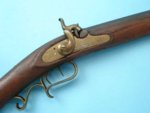
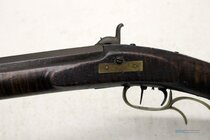
Although I'm the museum historian, black powder rifles are not my area of expertise and I've been unable to locate anyone in Southern West Virginia who could help...which is why I'm reaching to those in the forum. Did do some research on the internet and found a couple of photos of a .36 cal Leman Plains Rifle that really resembles the trigger guard and percussion assembly on our gun. (See attached photos). But again, they could have been added when converted from flintlock.

As for the tape, we have debated removing it. On one hand we would like to keep the rifle in the condition it was passed down through the generations, tape, bailing wire and all, to retain its historical value. On the other hand, it would be nice to have it restored and looking good. We are still debating...

On another note, have been reading through the forums and found many interesting items. Our museum has a section on the Civil War so will most likely be posting and asking more questions in the future. We have also sponsored a Civil War reenactment and living history the past six years and learn something new every time we have one.

Thank you all for the help and comments!
 

Attachments

  • leman 2.jpg
    leman 2.jpg
    12.5 KB · Views: 212
  • Leman 1.jpg
    Leman 1.jpg
    149.4 KB · Views: 243
These sorts of "mountain rifles" were used in the Civil War, and well before that in rural communities to put dinner on the table. Drawings of Daniel Boone show him with just such a rifle, but determining any sort of Civil War (much less American Revolutionary War) provenance for any particular mountain rifle is just about impossible. This rifle is as likely to be Daniel Boone's famous "Ol' Betsy" as it is anything else. We have no way of knowing other than what the family is telling you.

Here is what we can say with a degree of certainty. It has the long octagon-shape associated with handmade mountain hunting rifles of the early 19th century. The images do not show any identifying marks so we are guessing beyond that as to the date or the maker. The stock shape also looks like the kind of grainy hardwood commonly used in these hunting rifles. The percussion lock is not original to the weapon. The hardware certainly looks similar to the Leman plains rifle double trigger type pictured, which would obviously post date the Revolution, but as you point out these parts could have been added at some point in time later when the rifle was converted to percussion. Who knows? The condition is still quite good so it is doubtful (as Jobe Holiday points out) that it saw much military action at any point in its history.

I think if the rifle had been left in it's original flint configuration you could display it as the common type of hunting rifle in use during the early settlement days of the American frontier. What you have here is an artifact primarily of interest to the family that owns it. The lock held in place with black electrician's tape is really an eyesore. I have no idea why anyone would do that to a treasured family heirloom to tell you the truth.

There is an American Longrifles Forum (http://americanlongrifles.org/forum/index.php) that may be a better place to direct your inquiry on the history of this type of rifle.
 
Last edited:
Thank you all for the comments and will look into the forum's mentioned. There are no markings on the barrel that we can see but have been to afraid to remove the barrel to check the bottom of it. If we remove the tape, and we most likely will, what would be the best way to remove the glue residue?
 
The tape, having been previously applied, has already caused a critical condition with the surface patina of the wood. You will not be able to simply "pull" the tape off without dong serious damage to the aged finish of the stock. IMHO, I would use a hand held hair dryer to soften the tape and get it to release itself from the wood. Then you can begin the careful process of removing the sticky stuff off the stock. However, you may rather contact a professional wood conservationist first.

Regarding as to whether this rifle was originally a flint lock, if the lock only has one mounting screw it is unlikely that it was ever a flint lock, and more likely that it was built in its current percussion configuration.
J.
 
As for the tape, we have debated removing it. On one hand we would like to keep the rifle in the condition it was passed down through the generations, tape, bailing wire and all, to retain its historical value. On the other hand, it would be nice to have it restored and looking good. We are still debating...

Contact the NRA museum, ask for Doug Wickland. He'll help you out.

NRA Headquarters
11250 Waples Mill Road
Fairfax, VA 22030
703-267-1600

See also
https://www.nps.gov/museum/publications/conserveogram/10-01.pdf
 
I agree use a hair dryer to get the tape loose. I used Kramers Best to get some sticky stuff off a stock once it removed it without doing any damage
 

Learn About Us
About CivilWarTalk
Contact the Webmaster
Meet the Staff
Link to CivilWarTalk
Join Our Community
Register
Browse Forums
View Today's Discussions
Search the Forum
Get Help
FAQ
Student Guide
Forum Rules & Etiquette
Copyright / DMCA

     Contact Us CivilwarTalk on Facebook CivilWarTalk on YouTube CivilWarTalk on Twitter RSS Feed

Bringing the American Civil War and More to Life.
© 1999 - , CIVILWARTALK, LLC - Site Version 10.0

SlaveryTalk.com - SecessionTalk.com - CivilWarTalk.com - ReconstructionTalk.com
Back
Top