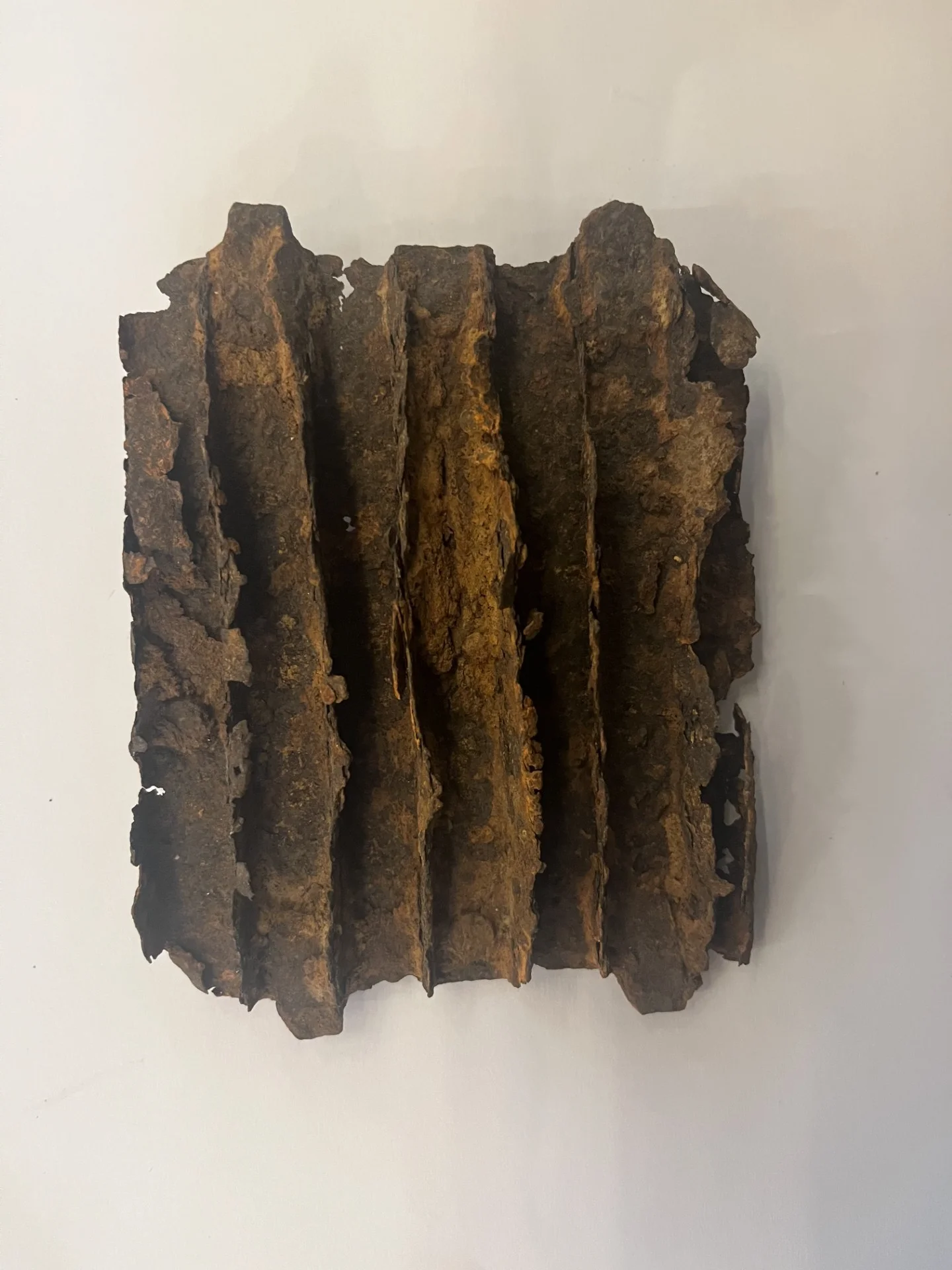
Hello all! In my day job I am a caretaker at a historic site, and we are going through the pieces in our collection trying to verify and document what we have, as record keeping has been somewhat lax in the past. One of our pieces (see below) has been labeled "Remnant of a 16-pound shrapnel shell excavated at Gettysburg, Pennsylvania battlefield 1863." The piece appears to be iron, although it is badly corroded. It is about 4 inches long and 3 1/2 inches tall, with deep grooves on one side and what appears to be a latch or hinge on the other. The piece is flat and thin, with no evidence of curvature.
My first red flag was the designation "16-pound". I am an artillery nerd (although I would not consider myself an expert), especially artillery at Gettysburg. I know there were no 16lb cannon at Gettysburg, but those designations refer to the solid shot from said cannon. However, even when researching shells or case shot for pieces present at Gettysburg no weight matches 16lbs. My second red flag was that any images I find showing explosive shells or case shot look nothing like the piece we have. It certainly does not resemble any intact shell I have seen, and even fragments tend to be thicker and have some evidence of curvature. Finally, the designation of a "shrapnel shell" was not official during the war as far as I know, although it may have been used euphemistically.
In our internal research we have been unable to find when or how this piece came into our possession, only that we had it by 2015 based on pictures we have. At this point I seriously doubt that this is a piece of an artillery shell, and I wonder if it has anything to do with artillery at all. Any help on identification would be appreciated! Thanks!!
View attachment 592180
View attachment 592181
If this
had been from a shot, the closest designs would be in segment shells, the most effective design of shrapnel/case seen in the Armstrong designs, Britten designs, and even various Confederate original designs. The below are all 1850s Armstrong designs.
---
Having said that, interesting as all that it it looks nothing like the internal section of any of these designs or the many other segment shell designs out there, and I think the horse
curry comb suspicion in the thread is right. It looks a lot like the brush of one. Nothing like any part of a shell I have ever seen, and looks too flat anyhow. The sections appear very different in all of those.
I think the lack of a
named brand of shot design, i.e. Hotchkiss, Armstrong, Whitworth, Absterdam, James etc. is a giveaway that the naming was not done with any certainly, and I cannot think of any 16lb-er-
anything from the Civil War. There are British 16lb-ers but this certainly looks nothing like it.
As to Shrapnel, I've seen a lot of debate on naming and it is a bit dodgy, so to clarify - Definitely a term by the 1860s, name and invention dating to General
Henry Shrapnel and his
invention 60 years earlier; the military designation
in the US Army is case shot, but they are the same thing. Much like how the military sack coat is designated the "fatigue
blouse" though it doesn't mean everyone went about talking buying "sack blouses". Any tailoring manual, journal or fashion magazine, or advertisement never calls a
sack coat a blouse. The term, as called today, was sack
coat, the military designation to avoid logistical error and confusion with the military dress
frock coat.) Likewise, I have definitely read accounts referring to injuries, deaths or close encounters with
shrapnel from soldiers.
There is some confusion in the general community because of the side more familiar with the British of the era, confusing things; The British Army at the same time, through to the 1910s has "Case shot" designating the same thing, but also has "segmented case shot" or "
shrapnel" referring to these segment shell designs. Before the adoption of the Armstrong in the 1850s, "shrapnel" referred to case shot as well. And then by the 1910s, "
case shot" can also designate something that looks much more like canister in the British Army...
1910s.
While confusingly, this is also "shrapnel":
1870s. Virtually identical to much of 1860s case/shrapnel used by the same army. And familiar to ACW rifled designs, i.e. this looks comparable to a Parrott design down to the canned burster - another feature copied by the Americans. (Note that this is a 16lb-er shrapnel shell.. that the piece you have is almost certainly not from, either.)
Needless to say, confusing right? I have had irritating conversations with people who think "Civil War case shot" designs look like the top because of this nomenclature. As can be seen, by the definitions here, you can easily call Civil War "case shot" also "shrapnel" going by definitions used by a comparable army at the same time. There's enough range just within the British Army in the 1860s that these definitions of case shot, shrapnel etc. are not necessarily even rules.
That has lead to confusion and pointless debate; generally just understand that case shot and shrapnel are the same thing, i.e. a bursting shell with shot inside that is spread out in a particular direction upon airburst, segment shells are specifically called shrapnel (confusingly sometimes, and sometimes that does not apply as a rule at all... yeah.)
In short as a general rule, in the Civil War shrapnel informally, by original definition and design = case shot, for both smoothbore and rifled designs, but "shrapnel" can also be pedantically used to specifically described usually-imported segment shell designs, which is contradicted by the fact the same armies those differentiations stem from also refers to what we recognize as "case shot" as "shrapnel" anyway. Likewise, most people both then and now refer to it as a byword for debris from ordnance, as shrapnel, adopted first for military use in the 1810s and only widespread first in naval guns from the 1820s (Paixhans), field guns from the 1840s-50s, was the first common explosive design. It's like how you see
vacuum cleaners called "
Hoovers" when the brand is entirely uninvolved often, or referral to
Daguerreotypes when an image is
not one as late as 1870 simply because of the obvious influence on the technology. Which itself has caused issues for some in the hobby it seems, as I have seen many unfamiliar referring to a clearly-wetplate collodion image as a "daguerreotype" under the assumption that all photographs must have been them.
Segment shells are segment shrapnel shells but are not the definition of shrapnel, but a subtype. Case shot is likewise a subtype of Shrapnel; case shrapnel shot. . Shrapnel itself is a subtype of shell, as a shell is literally shelled, with nothing but powder (and since the early 20th century, HE) inside. So - Shrapnel differs by adding shot. Case is a type of shrapnel with widely used 1810s-1950s spherical shot. Segment is a type of shrapnel with frag grenade-like (exact same idea) segments cut into the shell, with or without also having brick-like shot. While case shot splits and sprays in a particular direction within a given angle, segment explodes evenly in a calculable, predictable manner with a minimum predetermined number of pieces (i.e. over 100 for the Armstrong design!) and that is why British designs like the Armstrong segment shell are so praised by former heavy artillerists after the war. Standalone shell was the worst for anti-personnel or air/groundburst as the thick walls of most designs split into several large pieces - good for case, bad for shell. Also good for fortifications, hence why shell was commonly employed against them. Masonry walls in the likes of Pulaski and Sumter were pulverized. High Explosive made simple shell once again effective by WW1 for anti-personnel and has replaced case shot since in that predominant role, although case shot has never left us. 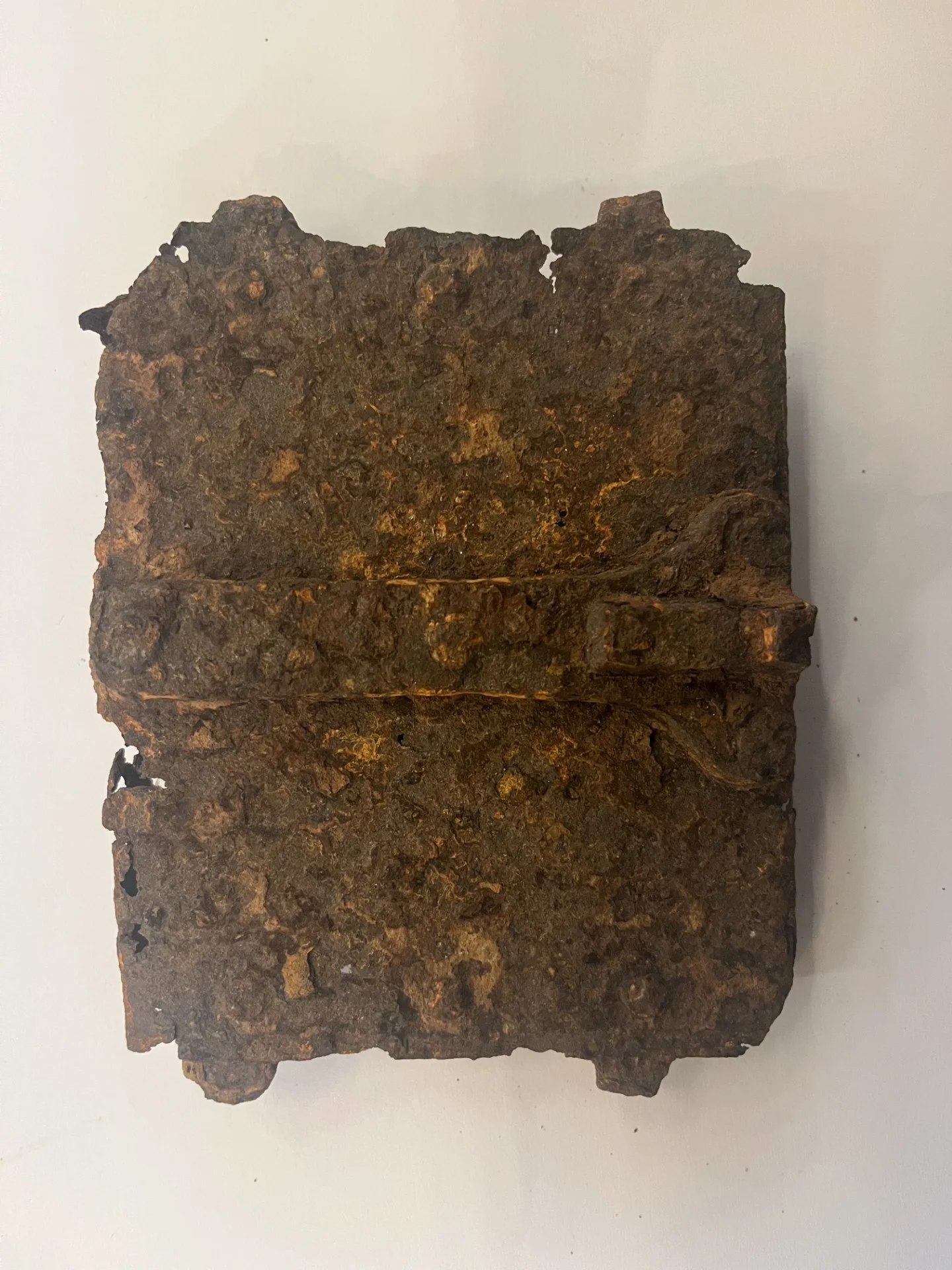

 Forum Host


 Bringing the