Miscellaneous Naval activities

USS ALASKA

Major
Joined
Mar 16, 2016
15 Oct 1863

Mississippi. USS Commodore, Acting Master John R Hamilton, and USS Corypheus, Acting Master Francis H Grove, destroyed a Confederate tannery at Bay St Louis.


USS Corypheus (former CSS Corypheus)
(Sch: t. 81; l. 72'; b. 20'; dph 6')
Corypheus, a yacht built at Brook Haven, N.Y., in 1859, was seized under orders of Gen. M. Lovell, CSA, outfitted as a gunboat, and operated in Lakes Borgne and Pontchartrain. On 13 May 1862 a cutter from USS Calhoun proceeded to Bayou Bonfuca and cut out the gunboat. Following appraisal, the prize was purchased that month from the Key West prize court for $14,724, and promptly taken into the Union Navy.


1760559437868.png

1760559477791.png


Cheers,
USS ALASKA
 
15 Oct 1862

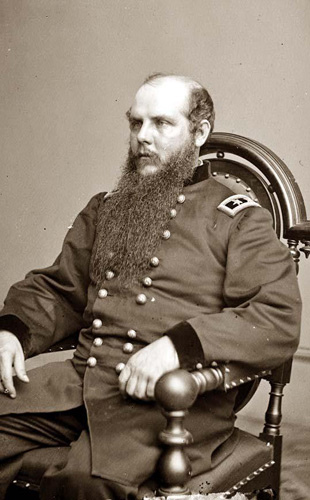
USA. The Western Gunboat Flotilla transferred from Army command to the Navy and was re-titled as the Mississippi River Squadron. The change in title implied that it was now formally equivalent to the other squadrons of the US Navy, so its commanding officer would likewise expect to be a Rear Admiral. Captain Charles Henry Davis USN had not shown the initiative demanded by the Navy Department in active operations so, although he was made a Rear Admiral, he was recalled to Washington, DC, to serve as Chief of the Bureau of Navigation. Most of the available replacements were either unsuitable or unavailable because of other assignments, so Secretary of the Navy Gideon Welles decided to appoint Commander David Dixon Porter to the position, despite having reservations about his lack of seniority and his temperament. Porter became Acting Rear Admiral directly without going through the intermediate ranks of Captain or Commodore and was elevated over the heads of eighty more senior officers. Porter arrived in Cairo, Illinois, having left Washington, DC, for his new command on 9 October.


1760575141774.png

Charles Henry Davis, circa 1860-70 National Portrait Gallery, Smithsonian Institution; Frederick Hill Meserve Collection Mathew Brady This work is in the public domain in the United States because it was published (or registered with the U.S. Copyright Office) before January 1, 1930.


1760575366928.png

Gideon Welles, U.S. Secretary of the Navy between 1855 and 1865 United States Library of Congress's Prints and Photographs division
digital ID cph.3b20114. Mathew Benjamin Brady This work is in the public domain in its country of origin and other countries and areas where the copyright term is the author's life plus 70 years or fewer.


1760575602478.png

Rear Adm. David D. Porter, officer of the Federal Navy, by the Brady National Photographic Art Gallery. 1860 and 1865 Library of Congress Mathew Brady This work is in the public domain in its country of origin and other countries and areas where the copyright term is the author's life plus 70 years or fewer.


Cheers,
USS ALASKA
 
October 18 1864

Florida. Confederate troops attacked the Union steamer Planter, which was gathering logs in Blackwater Bay, at Battledonge. Later, the Planter entered Escambia Bay and carried away 15,000 new bricks and other construction materials.


1760819311619.png

Former CSS Planter wash drawing by R.G. Skerrett, 1901. US Naval History and Heritage Command photo # NH 57521


Planter I (Side-wheel Steamer)
(Str: t. 300; l. 147-; b. 30-; dph. 7-10-; dr. 3-9-; a. I long 32-pdr., 1 short 24-pdr. how.)

Planter, a side-wheel steamer built at Charleston, S.C. in 1860, served the confederacy as an armed dispatch boat and transport attached to the engineer department at Charleston, under Brig. Gen. Ripley, CSA. On 13 May 1862 at 0400, while her captain, C. J. Relyea, was absent on shore, Robert Smalls, an enslaved man who was Planter's pilot, quietly took Planter from the wharf, and with a Confederate flag flying, steamed past the successive Confederate forts, saluting as usual by blowing her steam whistle. As soon as the steamer was out of range of the last Confederate gun, Smalls hauled down the Confederate flag and hoisted a white one. Then he turned Planter over to Onward of the Union blockading force. Besides Smalls, Planter carried seven other men, five women, and three children to freedom. Moreover, besides the ship, her passengers, and cargo, Smalls also brought Du Pont valuable intelligence including word that the Confederates had abandoned defensive positions on the Stono.

The next day Planter was sent to Flag Officer S. F. Du Pont at Port Royal Harbor, S.C., who kept Robert Smalls as Planter's pilot. At the time she was taken over by the Federals, Planter had on board, as a valuable cargo, four guns besides her usual armament.

The Senate and House of Representatives of the United States passed a Private Law on 30 May 1862, granting Robert Smalls and Planter's African-American crew one half of the value of Planter and her cargo.

Du Pont promptly took Planter into the Union Navy and placed her under command of Acting Master Philemon Dickenson. Planter served the South Atlantic Blockading Squadron through the summer of 1862. However, the steamer had been designed to use only wood as fuel, a scarce commodity for blockaders off Charleston. Therefore, Du Pont transferred her to the Army for service near Ft. Pulaski.


1760820200188.png

1760820339437.png


Bricks?

Cheers,
USS ALASKA
 
15 Oct 1862

USA. The Western Gunboat Flotilla transferred from Army command to the Navy and was re-titled as the Mississippi River Squadron. The change in title implied that it was now formally equivalent to the other squadrons of the US Navy, so its commanding officer would likewise expect to be a Rear Admiral. Captain Charles Henry Davis USN had not shown the initiative demanded by the Navy Department in active operations so, although he was made a Rear Admiral, he was recalled to Washington, DC, to serve as Chief of the Bureau of Navigation. Most of the available replacements were either unsuitable or unavailable because of other assignments, so Secretary of the Navy Gideon Welles decided to appoint Commander David Dixon Porter to the position, despite having reservations about his lack of seniority and his temperament. Porter became Acting Rear Admiral directly without going through the intermediate ranks of Captain or Commodore and was elevated over the heads of eighty more senior officers. Porter arrived in Cairo, Illinois, having left Washington, DC, for his new command on 9 October.


View attachment 565054
Charles Henry Davis, circa 1860-70 National Portrait Gallery, Smithsonian Institution; Frederick Hill Meserve Collection Mathew Brady This work is in the public domain in the United States because it was published (or registered with the U.S. Copyright Office) before January 1, 1930.


View attachment 565056
Gideon Welles, U.S. Secretary of the Navy between 1855 and 1865 United States Library of Congress's Prints and Photographs division
digital ID cph.3b20114. Mathew Benjamin Brady This work is in the public domain in its country of origin and other countries and areas where the copyright term is the author's life plus 70 years or fewer.


View attachment 565057
Rear Adm. David D. Porter, officer of the Federal Navy, by the Brady National Photographic Art Gallery. 1860 and 1865 Library of Congress Mathew Brady This work is in the public domain in its country of origin and other countries and areas where the copyright term is the author's life plus 70 years or fewer.


Cheers,
USS ALASKA
I wonder if BUNAV (the predecessor of BUPERS) got any anonymous complaints about Porter skipping ranks ... :D:D
 
19 Oct 1864

Florida. A Union boat expedition under Acting Master George E Hill from USS Stars and Stripes ascended the Ocklockonee River and destroyed an extensive Confederate fishery on Marsh's Island, capturing a detachment of Confederate guards.


1760886081645.png

Watercolor by Erik Heyl, 1952, of SS Metropolis painted for use in his book "Early American Steamers", Volume I. Built at Mystic, Connecticut, in 1861, this steamer served as USS Stars & Stripes in 1861-1865. Sold for commercial use after the Civil War, she was renamed Metropolis in 1871 and wrecked in January 1878. US Naval History and Heritage Command photo # NH 63850 courtesy of Erik Heyl.


1760886285084.png

1760886337955.png


Cheers,
USS ALASKA
 
19 Oct 1864

Florida. A Union boat expedition under Acting Master George E Hill from USS Stars and Stripes ascended the Ocklockonee River and destroyed an extensive Confederate fishery on Marsh's Island, capturing a detachment of Confederate guards.


View attachment 565351
Watercolor by Erik Heyl, 1952, of SS Metropolis painted for use in his book "Early American Steamers", Volume I. Built at Mystic, Connecticut, in 1861, this steamer served as USS Stars & Stripes in 1861-1865. Sold for commercial use after the Civil War, she was renamed Metropolis in 1871 and wrecked in January 1878. US Naval History and Heritage Command photo # NH 63850 courtesy of Erik Heyl.


View attachment 565352
View attachment 565353

Cheers,
USS ALASKA
If it were not for your posts I would never have known about most of these occurrences.
 
21 Oct 1862

Arkansas. USS Louisville, Lieutenant-Commander Meade, escorted the steamer Meteor, which was carrying troops to land at Bledsoe's Landing and Hamblin's Landing. Both towns were burned in reprisal for attacks by Confederate guerrillas on the mail steamer Gladiator early in the morning of 19 October.


Federal naval forces continued pushing up various rivers in Arkansas from their base at Helena on the Mississippi. Federal landing parties from the U.S.S. Louisville and Meteor burned the towns at Bledsoe's and Hamblin's landings in retaliation for a guerrilla attack on a Federal mail steamer. The naval commander reported that "the people along the river bank were duly informed that every outrage by the guerrillas upon packers would be similarly dealt with."


1761052884323.png

Wash drawing of USS Louisville by F. Muller, circa 1900. Courtesy of the U.S. Navy Art Collection, Washington, D.C.
US Navy photo # NH 55827 from the collections of the US Naval History and Heritage Command


I THINK it is in this area...not sure

1761054956964.png

1761055076332.png


Cheers,
USS ALASKA
 
21 Oct 1862

Arkansas. USS Louisville, Lieutenant-Commander Meade, escorted the steamer Meteor, which was carrying troops to land at Bledsoe's Landing and Hamblin's Landing. Both towns were burned in reprisal for attacks by Confederate guerrillas on the mail steamer Gladiator early in the morning of 19 October.


Federal naval forces continued pushing up various rivers in Arkansas from their base at Helena on the Mississippi. Federal landing parties from the U.S.S. Louisville and Meteor burned the towns at Bledsoe's and Hamblin's landings in retaliation for a guerrilla attack on a Federal mail steamer. The naval commander reported that "the people along the river bank were duly informed that every outrage by the guerrillas upon packers would be similarly dealt with."


View attachment 565587
Wash drawing of USS Louisville by F. Muller, circa 1900. Courtesy of the U.S. Navy Art Collection, Washington, D.C.
US Navy photo # NH 55827 from the collections of the US Naval History and Heritage Command


I THINK it is in this area...not sure

View attachment 565593
View attachment 565594

Cheers,
USS ALASKA
My great grandfather (that's right, just one great - I'm as old as dirt) of the 13th Illinois Cavalry was stationed in Arkansas during the war, but I doubt that he knew much about the river warfare.
 
22 Oct 1864

Virginia. Union shore batteries on the north bank of the James River at Signal Hill made a surprise attack on ships of the Confederate James River squadron, anchored nearby. The wooden gunboat CSS Drewry. Lieutenant Wall, was damaged, and then, after replying to the batteries for about an hour, the Confederate vessels retired under the protection of the guns of Fort Darling on Chaffin's Bluff.


The James River Squadron, during a routine patrol of the river on 22 October 1864, was surprised by a new Union battery near Boulware House two miles from Chaffin's Bluff. In order to cover the retirement of Drewry and the other wooden vessels of the fleet, the flagship Virginia II approached the battery, followed by Richmond and Fredericksburg and then affected a retreat upstream to Chaffin's Bluff.


1761168451281.png

1761168494990.png


Cheers,
USS ALASKA
 
22 Oct 1863

Mississippi. The Union steamer Mist was boarded and burned at Ship Island by Confederate guerrillas. It was it attempting to take on board a cargo of cotton without the protection of a Union gunboat.


1761176023673.png

1761176069359.png


Cheers,
USS ALASKA
 
22 Oct 1864

North Carolina. Acting Ensign Sommers led a three-day reconnaissance mission from USS Tacony up the Roanoke River. While returning, the party was fired on by Confederates and forced to seek cover in a swamp. They built a makeshift raft to support the wounded and succeeded in reaching the mouth of the river, where they were picked up by Union forces. Four other members of his party, missing in the swamp for four days, were rescued by Union scouts on 29 October.


1761176377418.png

Generic lithograph representing the Sassacus-class gunboat USS Tacony. Wikipedia John Spivey


1761176663844.png

1761176699756.png


Looking for CSS Albemarle?

Cheers,
USS ALASKA
 
15 Oct 1862

USA. The Western Gunboat Flotilla transferred from Army command to the Navy and was re-titled as the Mississippi River Squadron. The change in title implied that it was now formally equivalent to the other squadrons of the US Navy, so its commanding officer would likewise expect to be a Rear Admiral. Captain Charles Henry Davis USN had not shown the initiative demanded by the Navy Department in active operations so, although he was made a Rear Admiral, he was recalled to Washington, DC, to serve as Chief of the Bureau of Navigation. Most of the available replacements were either unsuitable or unavailable because of other assignments, so Secretary of the Navy Gideon Welles decided to appoint Commander David Dixon Porter to the position, despite having reservations about his lack of seniority and his temperament. Porter became Acting Rear Admiral directly without going through the intermediate ranks of Captain or Commodore and was elevated over the heads of eighty more senior officers. Porter arrived in Cairo, Illinois, having left Washington, DC, for his new command on 9 October.


View attachment 565054
Charles Henry Davis, circa 1860-70 National Portrait Gallery, Smithsonian Institution; Frederick Hill Meserve Collection Mathew Brady This work is in the public domain in the United States because it was published (or registered with the U.S. Copyright Office) before January 1, 1930.


View attachment 565056
Gideon Welles, U.S. Secretary of the Navy between 1855 and 1865 United States Library of Congress's Prints and Photographs division
digital ID cph.3b20114. Mathew Benjamin Brady This work is in the public domain in its country of origin and other countries and areas where the copyright term is the author's life plus 70 years or fewer.


View attachment 565057
Rear Adm. David D. Porter, officer of the Federal Navy, by the Brady National Photographic Art Gallery. 1860 and 1865 Library of Congress Mathew Brady This work is in the public domain in its country of origin and other countries and areas where the copyright term is the author's life plus 70 years or fewer.


Cheers,
USS ALASKA
When the Navy took over the Western Flotilla in October and it became the Mississippi River Squadron one of the timberclads, the USS Conestoga, was already very much so an active component. The USS Sangamon was still in her slips in Chester just south of Philadelphia just less than 1.5 months from launch and was at the time named Conestoga (after the Conestoga River which flows into the Susquehanna River in Pennsylvania). Very cool to understand the naming confusion a little better and likely why the name change happened in September specifically. I had assumed the Sangamon was initially Conestoga due to the rapid expansion of the Navy & geographic proximity made it an easy mistake; not that the Army initially had charge of the vessels.

Thank you!
 
Last edited:
23 Oct 1861

The trial of the Prize crew of the Enchantress began and became a test case for the legal status of Confederate privateers.


United States v. Smith, 27 F. Cas. 1134 (C.C.E.D. Pa. 1861) (No. 16,318) [Third Circuit]

At the outset of the Civil War, President Abraham Lincoln issued a proclamation ordering a blockade of all ports within the Confederacy. The proclamation also stated that blockade runners—including the crews of both Confederate warships and privateers—would be considered pirates. An 1820 statute defining piracy as a capital offense meant that Confederate sailors would be subject to execution if captured.

In July 1861, the crew of the privateering vessel Jefferson Davis seized the schooner Enchantress and attempted to take it to Charleston, South Carolina. They were intercepted and captured by a U.S. Navy vessel and brought to Philadelphia for trial, where they were indicted under the 1820 act. The defendants claimed that because they had acted under the authority of the Confederate government they should be treated as enemies under the laws of war rather than as pirates. If deemed prisoners of war, they would not face execution.

In charging the jury, Justice Grier ruled this defense invalid. "t does not follow," he explained, "that every band of conspirators who may combine together for the purpose of rebellion or revolution or overturning the government of which they are citizens or subjects, become ipso facto a separate and independent member of the great family of sovereign states." Grier pointed to the fact that a civil war was underway to suppress the rebellion as definitive proof that the United States did not recognize the Confederacy as a separate state. The judicial branch was obligated, in Grier's view, to treat the Confederacy in a manner consistent with the views of the executive and legislative branches. The defendants were convicted of piracy and sentenced to death.

While Grier felt obligated to rule in the manner he did, he was unhappy with the result. When charging the jury in another piracy case soon after, he stated that he considered it foolish to treat enemy sailors differently from soldiers captured on land. Complaining that the large number of piracy cases was delaying other important federal court matters, Grier said that he would refuse to try any more of them. Soon after, Lincoln relented on his original proclamation, and Confederate blockade runners were reclassified as prisoners of war.

Despite their conviction and sentence, the crew of the Jefferson Davis were not executed. As a result of threats by Confederate President Jefferson Davis to execute Union prisoners in retaliation, the men were included in a prisoner exchange.


Cheers,
USS ALASKA
 
Last edited:
4 Actions this day....

24 Oct 1862

Arkansas. Sailors in a landing party from USS Baron De Kalb, Captain John Ancrum Winslow, debarked at Hopefield to engage a small Confederate scouting party. Mounting horses which they seized locally, the sailors engaged in a nine-mile running fight that ended with the capture of the Confederate scouts.


1761320132141.png

USS Baron DeKalb, circa 1862, location unknown. Photographer unknown. U.S. National Archives and Records Administration, cataloged under the ARC Identifier (National Archives Identifier) 533123.


1761320317530.png

1761320377222.png


Cheers,
USS ALASKA
 
24 Oct 1863

Louisiana. An expedition began from Griffin's Landing, Mississippi, to Goodrich's Landing aboard the steamers Adams, Baltic, Fairchild, and Homer. A landing party captured an agent with $12,000 in Confederate money who was purchasing livestock to feed Confederates soldiers. Some livestock was sent to the ram USS Monarch, lying off Greenville. Union troops also captured a mail carrier and other cargo.


1761321048405.png

1761320968758.png


Cheers,
USS ALASKA
 
24 Oct 1863

Louisiana. The Confederates burned the steamer Allen Collier that had landed opposite Laconia, Arkansas.


No idea where this might be...

Cheers,
USS ALASKA
 
Last one today...

Follow up to post #11...

24 Oct 1864

Virginia. Confederate Commander John K Mitchell considered the withdrawal of the James River gunboat fleet upriver and closer to Richmond, because of their growing vulnerability to Union attacks. Confederate General Robert Edward Lee advised that if the enemy could cross a force to the southern bank of the James River, it would provoke a major withdrawal and the abandonment of Petersburg and its railroad connections. Lee's arguments required the fleet to remain on guard on the river below Chaffin's Bluff.


Cheers,
USS ALASKA
 
2 posts for today...

25 Oct 1861

New York. The keel of the USS Monitor was laid on the East River in Greenpoint, Brooklyn. The ship incorporated many new and striking design features, the most significant of which were its iron armour and its armament. Designed by John Ericsson, the USS Monitor represented a completely new concept in warship design. It was 172 feet long, displaced 1,200 tons, and drew 10 and ½ feet. Instead of the large numbers of broadside guns that had characterised warships in the past, Ericsson opted for only two guns of very large calibre. He wanted to mount 12-inch guns but had to settle for 11-inch weapons when the larger size was unavailable. These were mounted in a novel cylindrical turret, 20 feet in diameter and 9 feet high. The whole turret rotated on a central spindle and was moved by a steam engine that could be controlled by one man. The circular turret had eight layers of one-inch iron plates and the vertical sides of the raft-like deck had 4 and ½ inches of iron armour. The decks were awash and only the 9-foot high turret and the 4-foot high pilot house showed above the waves.


1761408973628.png

General plan of the Monitor published in 1862, showing the ship's inboard profile, plan view below the upper deck and hull cross sections through the engine and boiler spaces. Courtesy of the Naval Historical Foundation. U.S. Naval Historical Center Photograph. USNHC # NH 50954.


USS Monitor was laid down by the Continental Iron Works on Bushwick Creek - which empties into the East River -

1761409705457.png


1761413399751.png


Cheers,
USS ALASKA
 

Learn About Us
About CivilWarTalk
Contact the Webmaster
Meet the Staff
Link to CivilWarTalk
Join Our Community
Register
Browse Forums
View Today's Discussions
Search the Forum
Get Help
FAQ
Student Guide
Forum Rules & Etiquette
Copyright / DMCA

     Contact Us CivilwarTalk on Facebook CivilWarTalk on YouTube CivilWarTalk on Twitter RSS Feed

Bringing the American Civil War and More to Life.
© 1999 - , CIVILWARTALK, LLC - Site Version 10.0

SlaveryTalk.com - SecessionTalk.com - CivilWarTalk.com - ReconstructionTalk.com
Back
Top