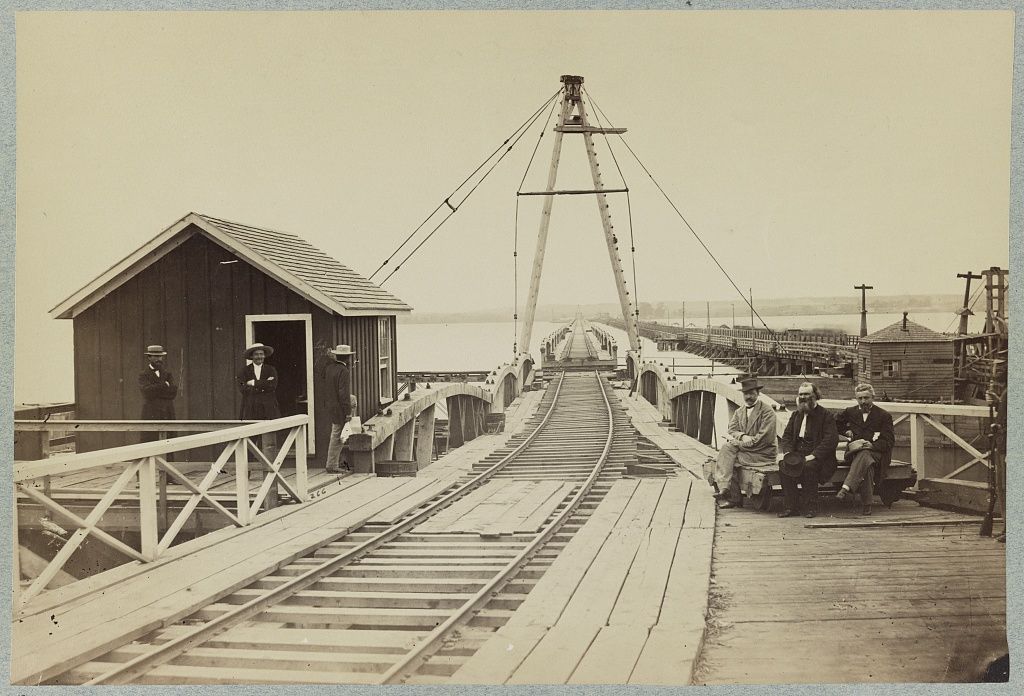
Long bridge, Washington, D.C.

Mike Serpa

Lt. Colonel
Joined
Jan 24, 2013
Long bridge, Washington, D.C. LOC #33471
33471v.jpg

Not one person is identified but the man sitting on the bench in the middle is General Daniel C. McCallum. Before the war he was an architect and engineer who was involved with bridge design, construction and management. During the Civil War he was Military Director and Superintendent of the Union railroads.
33471u.jpg


32232r.jpg

LOC #32232
 
Long bridge, Washington, D.C. LOC #33471
View attachment 91291
Not one person is identified but the man sitting on the bench in the middle is General Daniel C. McCallum. Before the war he was an architect and engineer who was involved with bridge design, construction and management. During the Civil War he was Military Director and Superintendent of the Union railroads.
View attachment 91293

View attachment 91294
LOC #32232

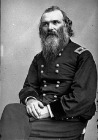
Another great photo Mike ! Here's another one of General McCallum

Daniel Craig McCallum (1815 - 1878)
Born: 01/21/1815 in Renfrewshire, Scotland
Died: 12/27/1878 in Brooklyn, NY
P362.gif
 

Attachments

  • P362.gif
    P362.gif
    45.9 KB · Views: 61
Excellent picture, I wonder how long did a take to construct this bridge?
Excerpt from History of the Long Railroad Bridge Crossing Across the Potomac River
http://www.dcnrhs.org/learn/washington-d-c-railroad-history/history-of-the-long-bridge

With the outbreak of hostilities between North & South and Virginia's May 23, 1861 secession from the Union, the Long Bridge now took on a new, added importance.​

Alexandria was quickly occupied by the Union Army and the US Military RR and the bridge's north and south shores were well guarded by Federal troops, ever vigilant for spies, infiltrators, contraband and of course, invasion. Let us remember that the White House, President Lincoln, the Capitol and the entire Federal Legislature were less than three miles from water's edge.​

Rails were now placed on the ancient, rickety bridge. It was quickly confirmed that the structure could not safely support the weight of locomotives and freight cars. Instead, lightly loaded railroad cars were transhipped across the mile-long structure, pulled by good old-fashioned horse power.​

Not until 1863 was a new, stronger, parallel structure completed, one which could hold the weight of newer, heavier locomotives and freight cars.​

The lack of an adequate crossing during the first years of the war was a motivation, at least in part, for the US Military RR headquarters to be located in Alexandria. Of course, the 'ready-made shops' of the Orange & Alexandria and other railroads in that city had something to do with their decision, too.​

This new bridge was constructed about 100' down river and had two draw spans like its parallel predecessor. Both structures remained in use throughout the remainder of the Civil War.​
 
Excerpt from History of the Long Railroad Bridge Crossing Across the Potomac River
http://www.dcnrhs.org/learn/washington-d-c-railroad-history/history-of-the-long-bridge

With the outbreak of hostilities between North & South and Virginia's May 23, 1861 secession from the Union, the Long Bridge now took on a new, added importance.​

Alexandria was quickly occupied by the Union Army and the US Military RR and the bridge's north and south shores were well guarded by Federal troops, ever vigilant for spies, infiltrators, contraband and of course, invasion. Let us remember that the White House, President Lincoln, the Capitol and the entire Federal Legislature were less than three miles from water's edge.​

Rails were now placed on the ancient, rickety bridge. It was quickly confirmed that the structure could not safely support the weight of locomotives and freight cars. Instead, lightly loaded railroad cars were transhipped across the mile-long structure, pulled by good old-fashioned horse power.​

Not until 1863 was a new, stronger, parallel structure completed, one which could hold the weight of newer, heavier locomotives and freight cars.​

The lack of an adequate crossing during the first years of the war was a motivation, at least in part, for the US Military RR headquarters to be located in Alexandria. Of course, the 'ready-made shops' of the Orange & Alexandria and other railroads in that city had something to do with their decision, too.​

This new bridge was constructed about 100' down river and had two draw spans like its parallel predecessor. Both structures remained in use throughout the remainder of the Civil War.​
Thank you for the web site! It's a lot of information to decipher at one reading. A very interesting story, thanks again for sharing.
 
I knew Long Bridge existed but I was not aware it was a railroad bridge.

Long bridge, begun in 1818, was originally only a roadway, which can be seen to the right in the photo in the OP, and centered below:
1647521697201.png

The parallel railroad span, centered in the OP photograph, was added in 1863.
This building between the spans:
1647521981948.png
is visible in both photos and in the sketch in post #8.
 
Last edited:

Learn About Us
About CivilWarTalk
Contact the Webmaster
Meet the Staff
Link to CivilWarTalk
Join Our Community
Register
Browse Forums
View Today's Discussions
Search the Forum
Get Help
FAQ
Student Guide
Forum Rules & Etiquette
Copyright / DMCA

     Contact Us CivilwarTalk on Facebook CivilWarTalk on YouTube CivilWarTalk on Twitter RSS Feed

Bringing the American Civil War and More to Life.
© 1999 - , CIVILWARTALK, LLC - Site Version 10.0

SlaveryTalk.com - SecessionTalk.com - CivilWarTalk.com - ReconstructionTalk.com
Back
Top