
- Joined
- Apr 4, 2017
- Location
- Denver, CO
All US cities were either ocean ports, river towns or service by canals.
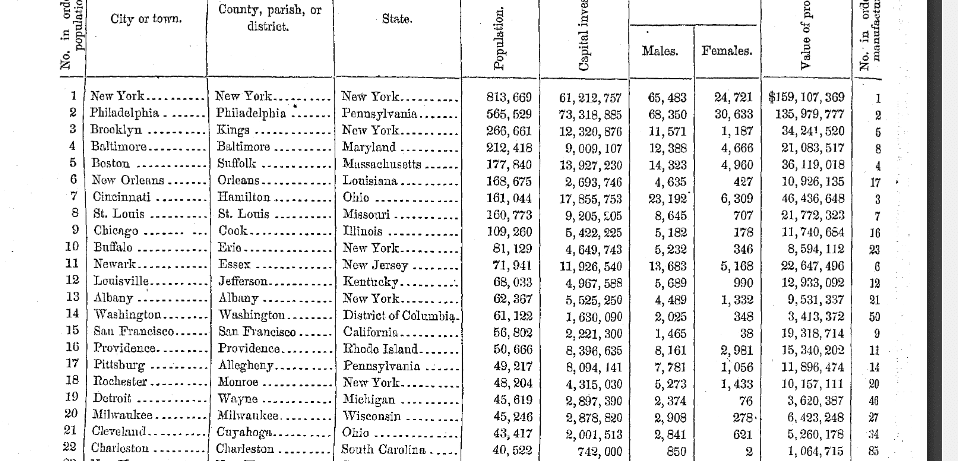
US military capacity was based on ship building capacity, with the main yards in Portsmouth, ME, Boston, Brooklyn, and Philadelphia. The main research station was in Washington, DC.

Men and material moved by the more efficient means of steamship transport, whenever possible.
https://www.jstor.org/stable/1888813?seq=4#metadata_info_tab_contents See page 327.
Although sea power was written down in the United States between 1865 and 1900, while railroads gain ascendancy, that was an inaccurate rendition of the Civil War.
The three biggest operations were Farragut's capture of New Orleans, Grant and Porter's reduction of Vicksburg, and Grant's siege of Richmond based on his water borne logistics which turned City Point into a major shipping center.
Oddly even Sherman's march was to the sea, occupied by the US navy.
US military capacity was based on ship building capacity, with the main yards in Portsmouth, ME, Boston, Brooklyn, and Philadelphia. The main research station was in Washington, DC.
Men and material moved by the more efficient means of steamship transport, whenever possible.
https://www.jstor.org/stable/1888813?seq=4#metadata_info_tab_contents See page 327.
Although sea power was written down in the United States between 1865 and 1900, while railroads gain ascendancy, that was an inaccurate rendition of the Civil War.
The three biggest operations were Farragut's capture of New Orleans, Grant and Porter's reduction of Vicksburg, and Grant's siege of Richmond based on his water borne logistics which turned City Point into a major shipping center.
Oddly even Sherman's march was to the sea, occupied by the US navy.


 Bringing the