"Irish" Potatoes

I still have a few phrases that have lingered from childhood. Most, sadly, have slipped away.
In parts of Southeastern Illinois and Southern Indiana, in the old days green bell peppers were often called "Mangoes". I never saw or ate a fresh mango (the fruit) until I was grown. My mom used to stuff bell peppers with vinegar slaw and put them down in a crock with a sweet brine. They were "stuffed mangoes." I've never seen them called that anywhere else.
 
Irish potato - hadn't heard that for a long time. Potatoes were developed in Peru, in great variety as well, and - like corn - it was a food that kept well and had lots of vitamins. Spanish sailors learned to pack potatoes and corn for their food supply! Which is how Francis Drake got credit (likely undeserved) for introducing the potato to Ireland. He could never figure out whether he was a pirate or a patriot but he was never one to let a juicy-looking Spanish galleon pass. He captured one which, instead of being full of gold was full of potatoes. That was a head scratcher! What's up with the taters? he asked the captain. Cap'n said we're eating them and growing them in Spain. They do well in lousy soil - we have a lot of that! So...legend has it Queen Elizabeth I thought it was a good food for poor people and Ireland was full of poor people so here come the potatoes! Irish potatoes were developed to be blight-resistant, and so they were the predominate crop...until a blight came along they weren't resistant to. When you can see the pestilence drifting in from the ocean...you know you're doomed! But the potato famine did give us Patrick Cleburne. The Cleburne tenants couldn't pay their rent, government said pay them anyway, but without the potato crop no can do...I'm headed for America! Stick a fork in it, his Irish potato was done...
When I was studying the Columbian Exchange in depth (Grad school,) the consensus was the the Spanish accidentally introduced the potato to Ireland, with a nod to Drake.
In 1588, Drake's English Naval forces, aided by mother nature's storms, defeated the Spanish Armada. Some of the damaged Spanish ships sank off the coast of Ireland and potatoes from the ships' commissary supplies floated ashore.
 
Like almost all foods we eat, today's potatoes have been hybridized to such an extent that they look nothing like the "original" Andean potatoes.

The Andean peoples, not just the Incans, preserved their potatoes by a form of "freeze drying" dehydration of their potatoes. Night temperatures in the Andes are well below freezing, while the sun warms things up.
So potatoes freeze at night and thaw out and partially dry in the sun. Over a period of days or weeks, the potatoes eventually become dehydrated enough to last more than a year, thus preventing famine in a bad crop year. The potato drying process is accelerated by barefoot farmers "stomping" the potatoes into small chunks.
I am only moderately fond of eating potatoes, but a real student of their history, uses, etc.
Question for you.

It is a fact the potato blight that caused the Irish potato famine of the late 1840s actually originated in the US. But did not (obviously) cause a potato famine or even a potato shortage in the US. Yet it caused the potato famine in Ireland. For what two reasons was the US not subject to a famine (potato or general famine)
NO cheating by Googling.

When correct answers are discussed, there will be a follow up question. Also NO Googling.

Peru.jpg
 
Long Island was a major potato producer for NYC until the last 20 years. One would occasionally hear white potatoes called Irish potatoes back when I was young. I have not heard that term in a couple of decades though.
 
It is a fact the potato blight that caused the Irish potato famine of the late 1840s actually originated in the US. But did not (obviously) cause a potato famine or even a potato shortage in the US. Yet it caused the potato famine in Ireland. For what two reasons was the US not subject to a famine (potato or general famine)
You didn't have a population that was almost totally reliant on potatoes as it's subsistence crop.

Other agricultural produce that could have fed the starving poor wasn't shipped overseas instead (in the Irish case to England).

Answer: Perhaps you had more variety in agriculture, weren't discriminatory in your actions and didn't ship produce off when the people in your own country were starving.
 
You didn't have a population that was almost totally reliant on potatoes as it's subsistence crop.

Other agricultural produce that could have fed the starving poor wasn't shipped overseas instead (in the Irish case to England).

Answer: Perhaps you had more variety in agriculture, weren't discriminatory in your actions and didn't ship produce off when the people in your own country were starving.
Not bad.
American agriculture was more diversified, in that we did not rely on one or even just a few crops to feed ourselves.
The US did not export a great amount of agricultural produce, true, but.
Due to our diversity, American potato fields were widely separated from one another. Dispersed among fields of other crops, so that the potato blight originated here, but did spread significantly.

Bonus question
So why was Irish agriculture not more diversified?
 
Not bad.
American agriculture was more diversified, in that we did not rely on one or even just a few crops to feed ourselves.
The US did not export a great amount of agricultural produce, true, but.
Due to our diversity, American potato fields were widely separated from one another. Dispersed among fields of other crops, so that the potato blight originated here, but did spread significantly.

Bonus question
So why was Irish agriculture not more diversified?
I think you need to read more Irish history.

The Irish potato famine was a manufactured crisis based on discriminatory mechanisms.

There was diversity in agriculture, but the poor tenant farmers could not avail of this and the produce was sent overseas.
 
I think you need to read more Irish history.

The Irish potato famine was a manufactured crisis based on discriminatory mechanisms.

There was diversity in agriculture, but the poor tenant farmers could not avail of this and the produce was sent overseas.
I am well aware of your statements and do not deny the accuracy of them.
I thought it well known that during the famine Ireland (wealthy land owners) shipped grain to England and other countries because they could get a higher price for it.
My question was why Irish farmers did not have the diversity of US farmers. Why did they rely so heavily upon the potato?
 
Long Island was a major potato producer for NYC until the last 20 years. One would occasionally hear white potatoes called Irish potatoes back when I was young. I have not heard that term in a couple of decades though.
Which is why in the old song "Yes, We Have No Bananas" they mention the "Long Island potato.."
 
When I was dating a girl (now wife) from Hicksville on Long Island my County Cork grandmother would say "you couldn't get a decent potato since they built up Hicksville."
 
In reading about Long Island Potatoes, found this recipe. It is from "The East Hampton Star".

Long Island Skillet Potatoes

"Select the smallest potatoes possible, about the size of golf balls, about three per person. Scrub them well. Quarter them but do not peel them. Heat butter and cooking oil to a depth of one-half inch in a large, heavy skillet. Add potatoes and cook over medium high heat until they begin to brow. Lower heat, cover skillet and continue cooking potatoes for about 20 minutes, until they are tender, stirring them from time to time. Uncover skillet, increase heat and rapidly finish browning the potatoes. Drain them well, sprinkle them generously with salt and freshly ground pepper and chopped parsley and serve."
 
In reading about Long Island Potatoes, found this recipe. It is from "The East Hampton Star".

Long Island Skillet Potatoes

"Select the smallest potatoes possible, about the size of golf balls, about three per person. Scrub them well. Quarter them but do not peel them. Heat butter and cooking oil to a depth of one-half inch in a large, heavy skillet. Add potatoes and cook over medium high heat until they begin to brow. Lower heat, cover skillet and continue cooking potatoes for about 20 minutes, until they are tender, stirring them from time to time. Uncover skillet, increase heat and rapidly finish browning the potatoes. Drain them well, sprinkle them generously with salt and freshly ground pepper and chopped parsley and serve."
Lovely. Of course I never met a potato I didn't like.
 
I grew up thinking Irish Potatoes were a variety of potato called ice potatoes because of the way my paternal grandfather pronounced Irish Potatoes. The smaller red potatoes were the ones known as "Ice" potatoes and the larger white potatoes were known as baking potatoes. We would use those red potatoes in a variety of dishes while the larger white ones were usually baked although they were often cut up to make homemade French Fries or chips. We grew both the red and white potatoes along with sweet potatoes from time to time in our garden every year.
 
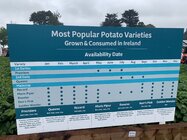
Got a taste of the new season potatoes the other day and they were so good. The best of the new potatoes are the Queen variety but they are a few weeks away. The variety I got were called premiere it's a new one on the market. I had them boiled served with butter and good quality sea salt. It doesn't get any simpler or any better when the produce is good. During the winter months the Cypriot potatoes you can get in the supermarket don't be bad but they are never as good as our domestic ones.
 
Last edited:
I'll let you know if they taste any different!
Well, interestingly I cooked them for myself and one other yesterday and, lo and behold, the other thought they had more flavour!

Now, I only boiled them, didn't mash, added a bit of butter to melt over them once they were on the plate. So the flavour would not have been 'masked' and apparently now has the 👍

I guess it's possible to enjoy potatoes that are low carb, though they haven't been put to the 'mash' test yet :unsure:
 

Learn About Us
About CivilWarTalk
Contact the Webmaster
Meet the Staff
Link to CivilWarTalk
Join Our Community
Register
Browse Forums
View Today's Discussions
Search the Forum
Get Help
FAQ
Student Guide
Forum Rules & Etiquette
Copyright / DMCA

     Contact Us CivilwarTalk on Facebook CivilWarTalk on YouTube CivilWarTalk on Twitter RSS Feed

Bringing the American Civil War and More to Life.
© 1999 - , CIVILWARTALK, LLC - Site Version 10.0

SlaveryTalk.com - SecessionTalk.com - CivilWarTalk.com - ReconstructionTalk.com
Back
Top