Help identifying Enfield P53

RSK23

Cadet
Joined
Sep 24, 2023
Hello all - I'm brand new to the forum and looking for som help evaluating what appears to be an Enfield P53 musket/rifle. My father in law bought this gun years ago and just gave it to me. I'm adding pictures to help with assessing. I've done a bit of research online and have a few observations (though I'm probably wrong about many - and please forgive me if I use improper terms about the parts of the gun - I know so little….):
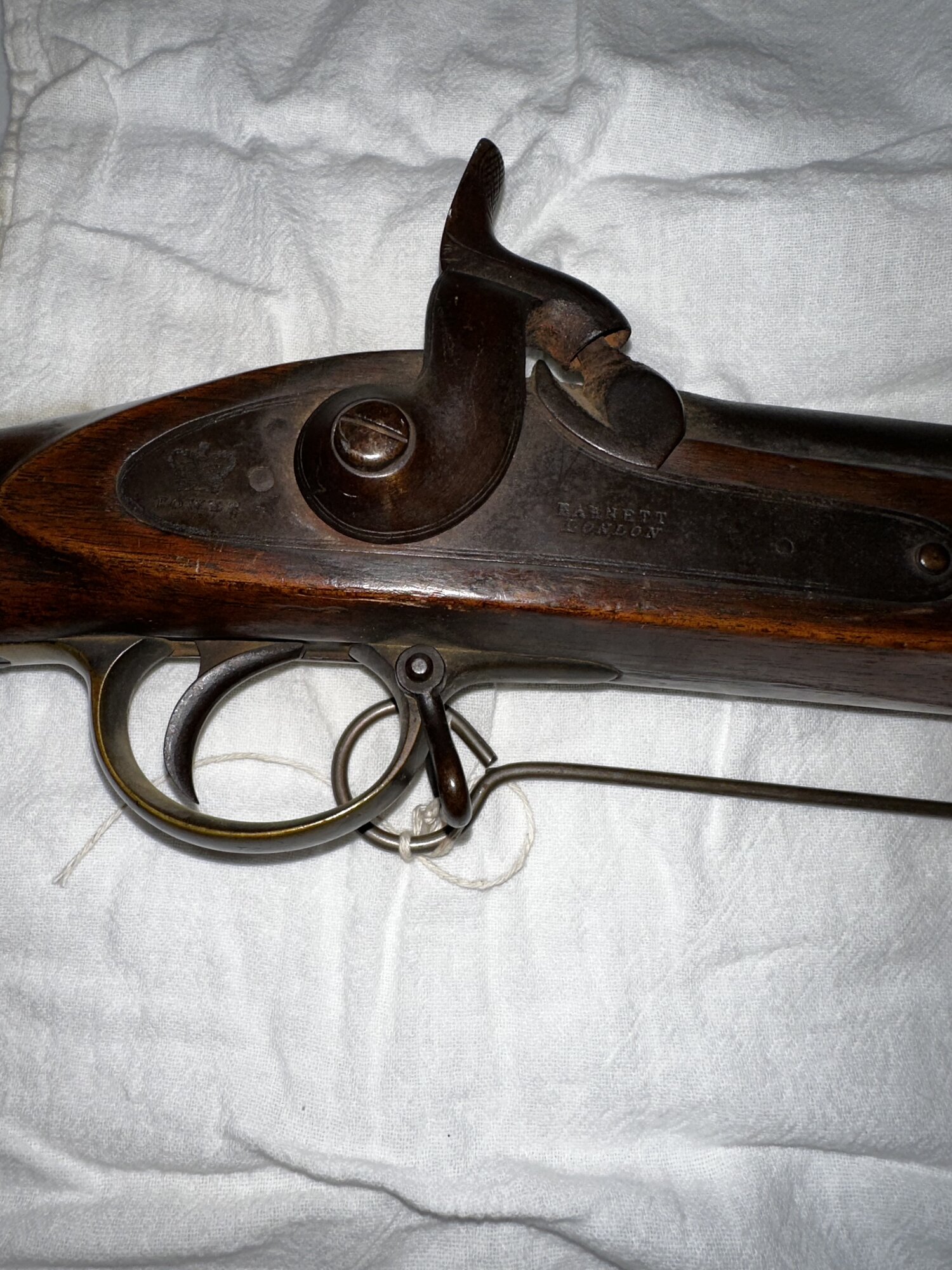
- the lock plate has the Barnett London and Tower stamps
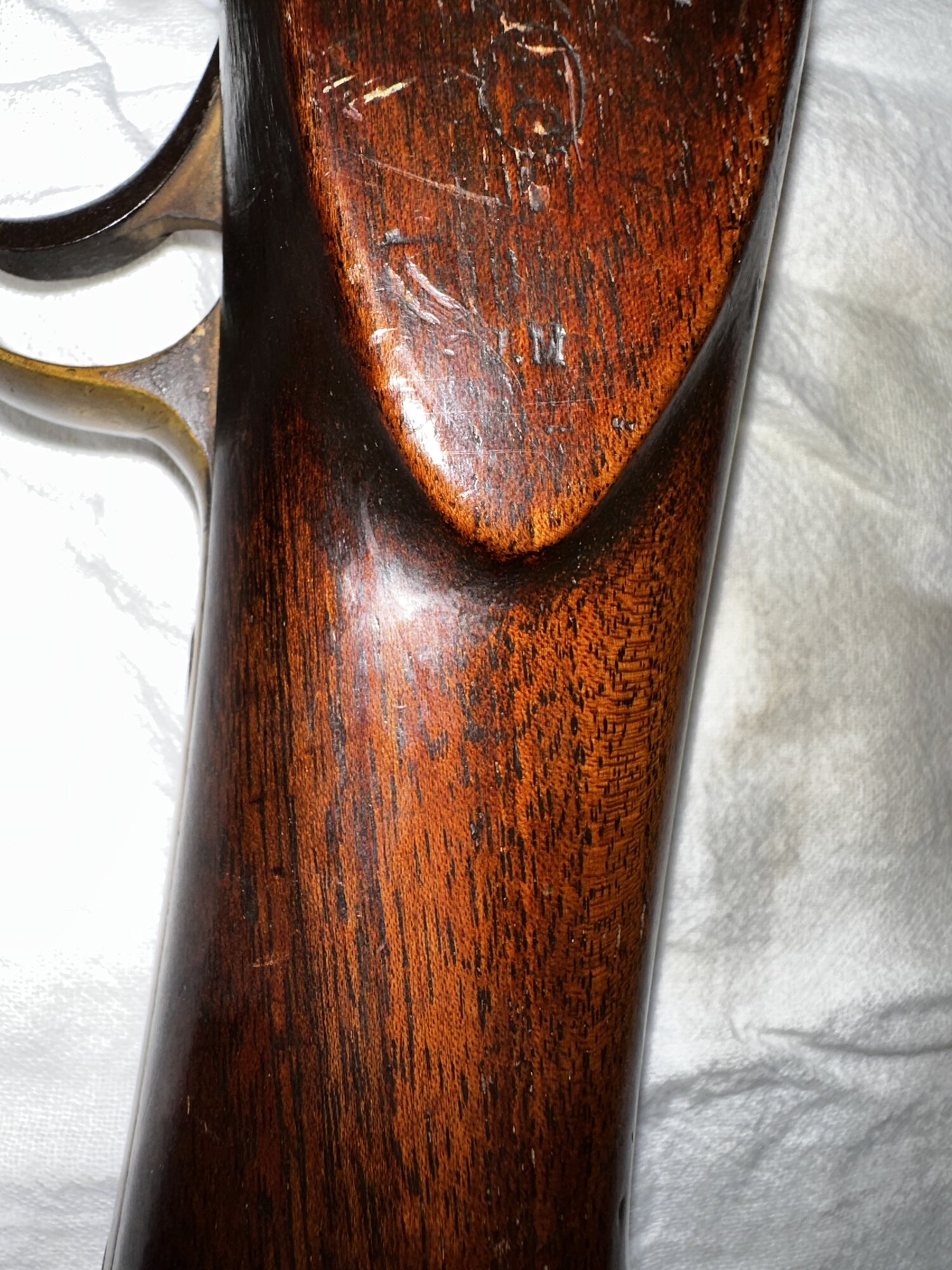
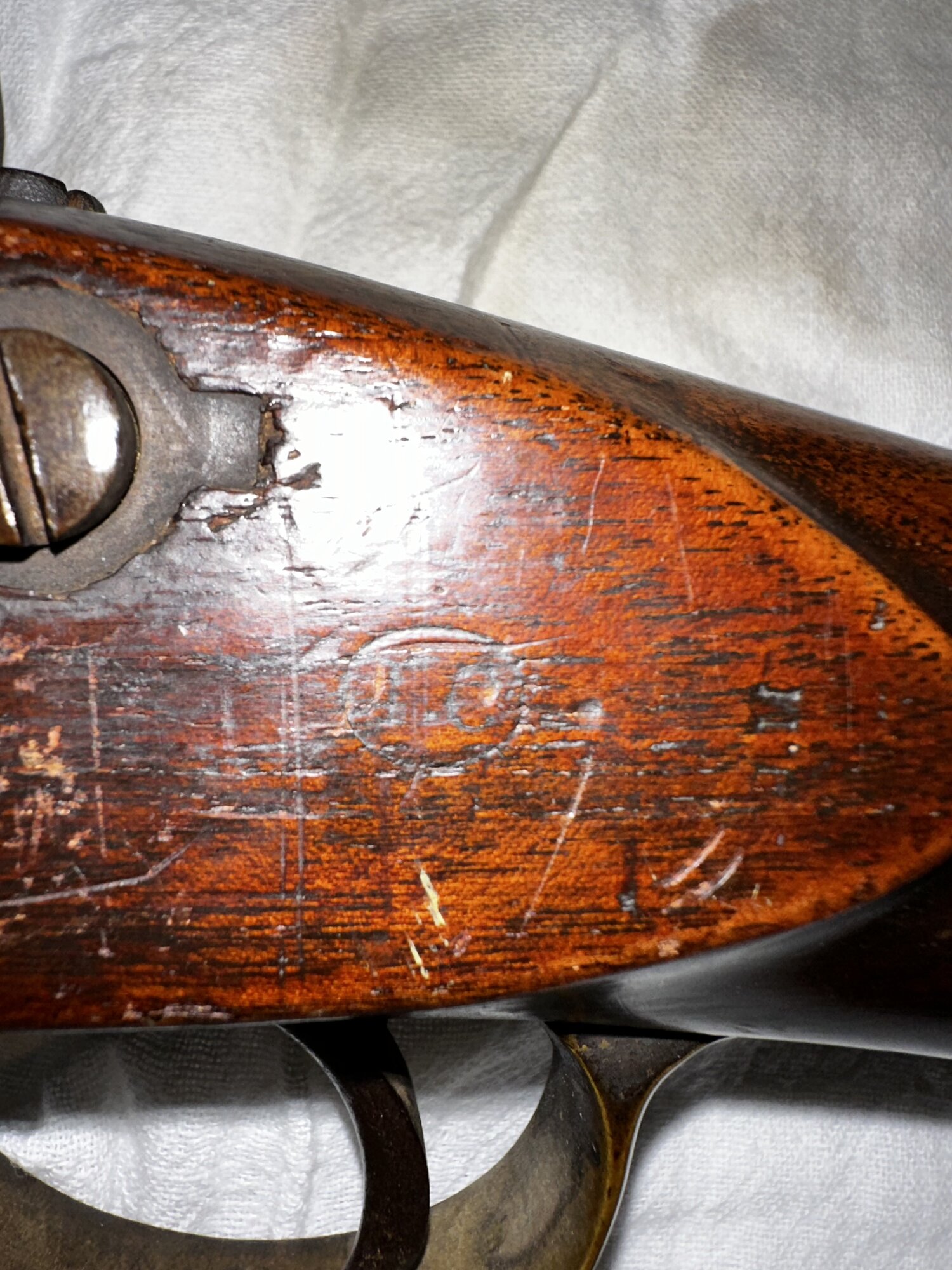
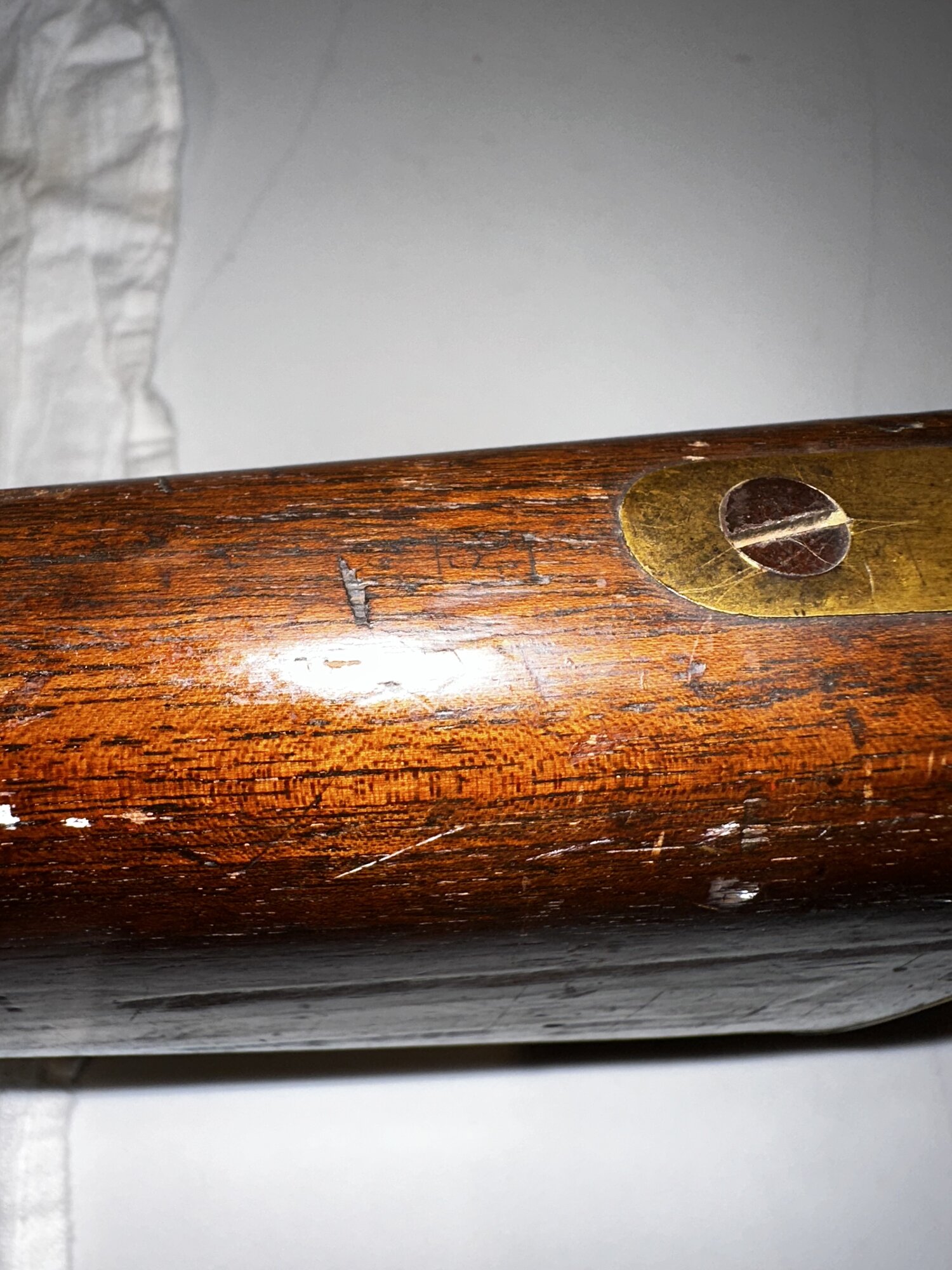
- there is what looks like a TC stamp in an oval in the wood on the left side
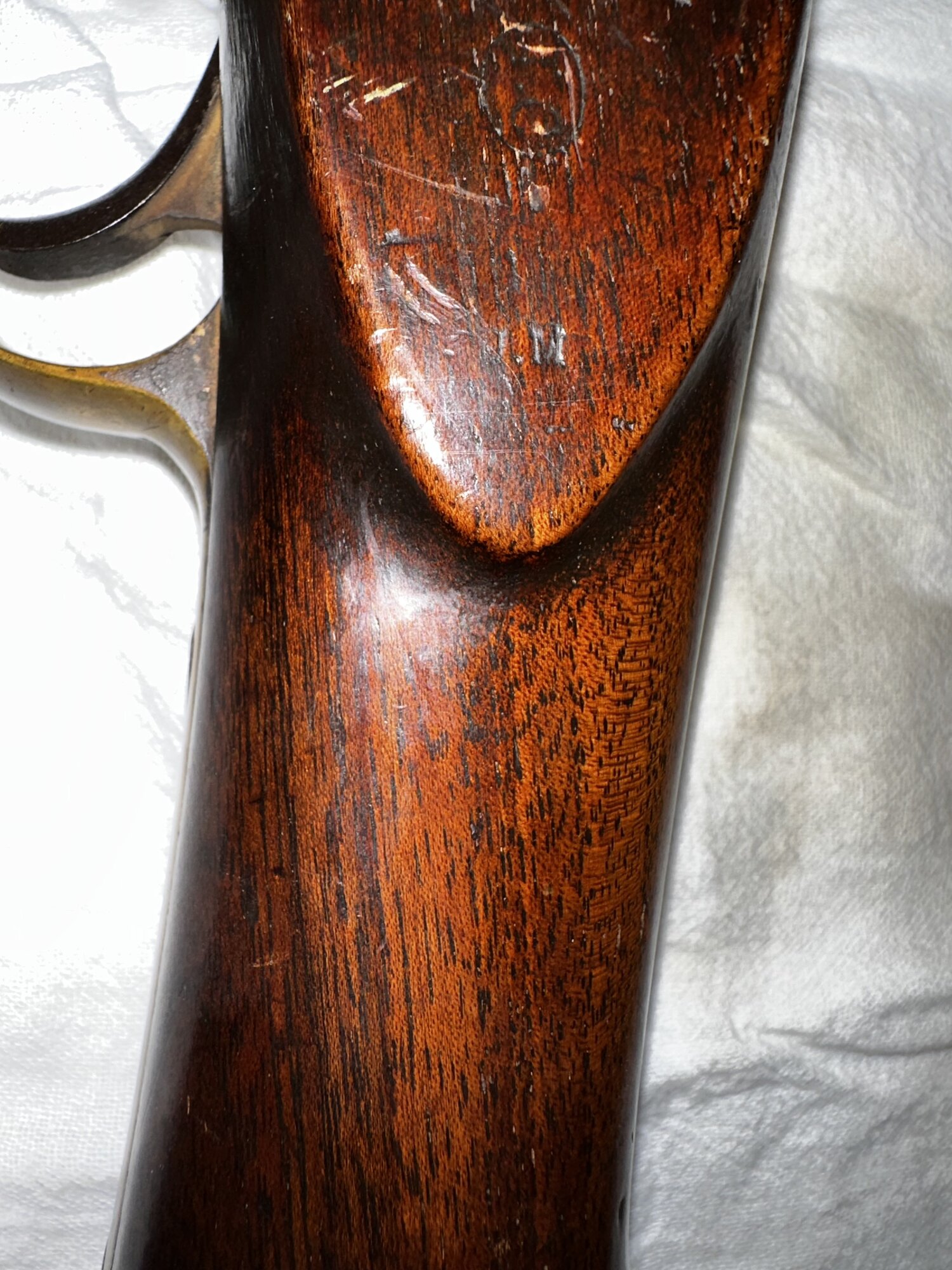
- there is also what looks like a JM stamp on the left side
- looks like the might be a 1 stamp on the top of the butt in front of the buttplate tang
- no numbers on the buttplate
- no JS/Anchor on the underside of the butt
- stamped markings on the barrel that look very similar to others I saw online
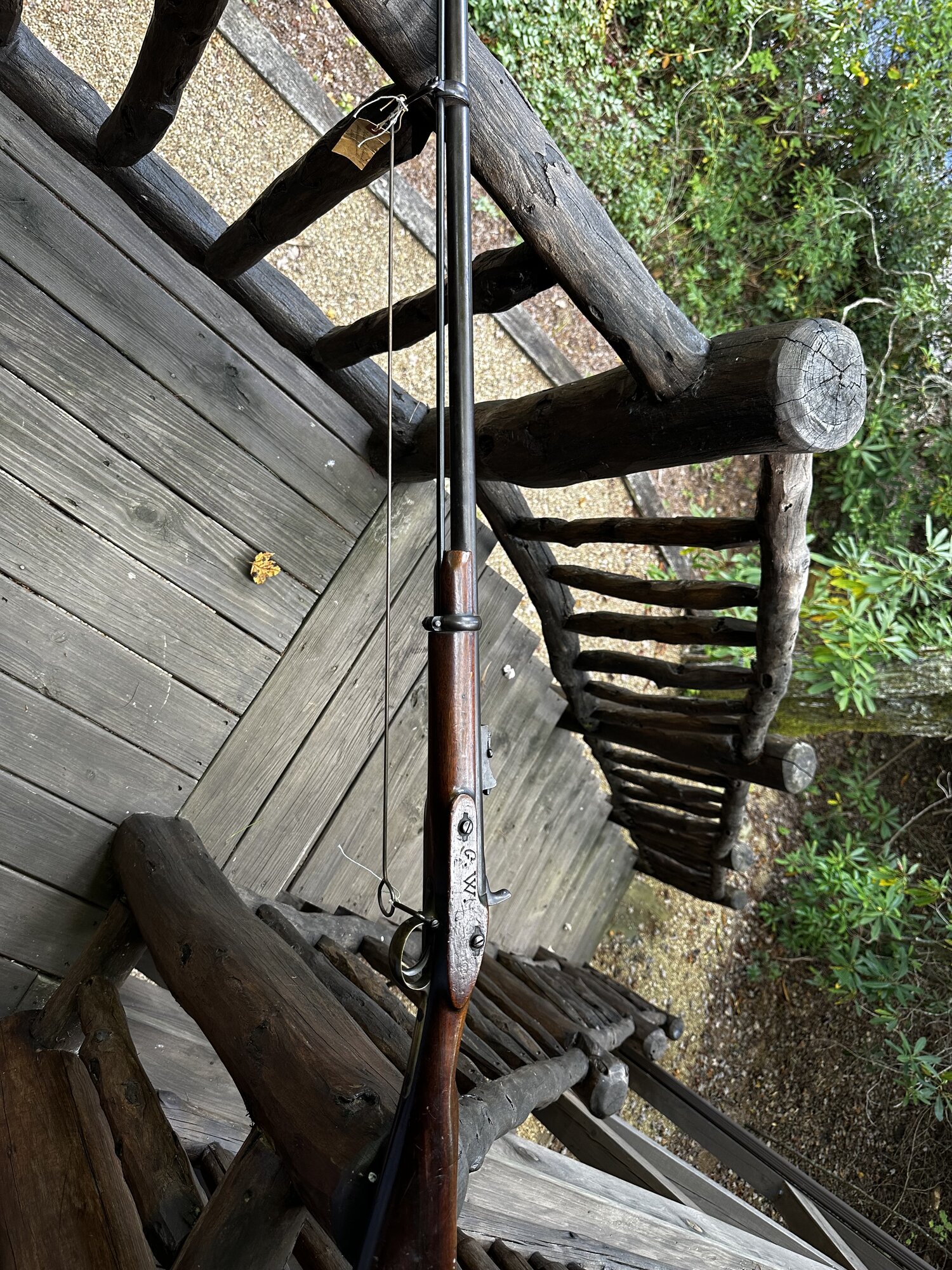
- curiously, there are only two barrel bands and the wood stock stops shortly after the barrel band nearest the lock plate. Maybe the stock was modified? But there don't seem to be any signs on the barrel that there was ever a third band
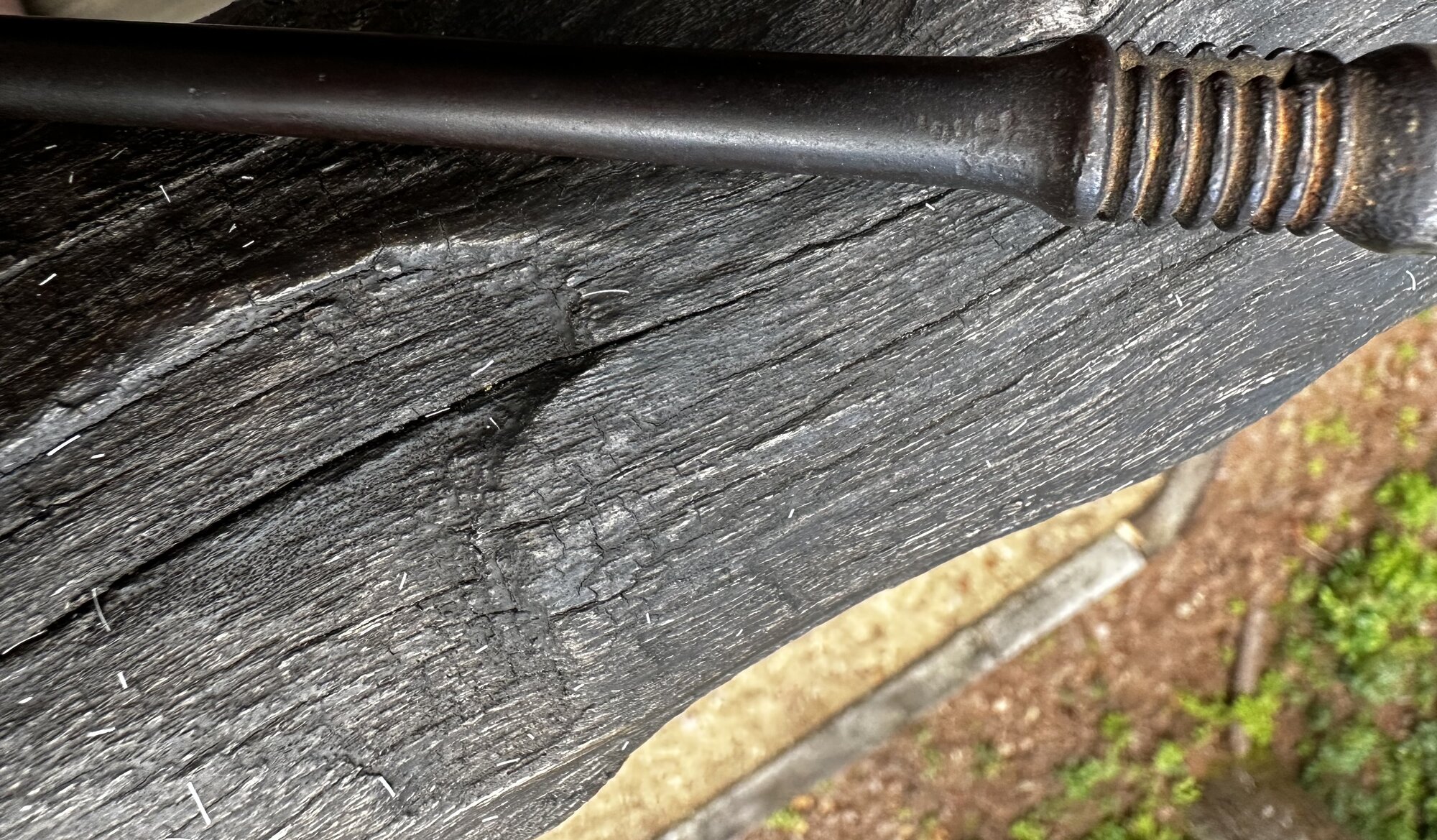
- maybe some sort of stamp near the top end of the ram rod

That's about all I can see. Any insights are much appreciated!!
IMG_0172.jpeg
IMG_0170.jpeg
IMG_0166.jpeg

IMG_0161.jpeg

IMG_0160.jpeg

IMG_0148.jpeg

IMG_0156.jpeg

IMG_0163.jpeg
IMG_0162.jpeg

IMG_0173.jpeg


IMG_0166.jpeg


IMG_0162.jpeg


IMG_0163.jpeg
 
It looks like it was a civilian P53. The sight is the wrong way around, but may well have been moved. It is London-proofed and Barnett was a London gunmaker who supplied many P53s to the Union. (The Confederate weapons were mainly from London Armoury Company (LAC)

Check the length of barrel. 39" is a 3-band and 33" is a 2-band Many of the stamps on the wood are from examiners or agents. Also check inside the barrel for rifling. The front to back backsight was associated with a Lancaster oval bore which looks smoothbored.

A photo of the top of the barrel around the sight would be useful too.
 
You might want to ask a moderator to move this thread to the small arms section, it's not really a relic and it will get more input in that forum.

Like Old Soldier said, it would be useful if you would measure the barrel and provide overall photos. I presume the stock was cut back post-war for use as a shotgun, but it is certainly unusual that the band was retained like that.

Barnett was also a prominent supplier of weapons to the Confederacy. The I.C in an oval is believed to be the marking of Isaac Curtis, who is known to have inspected guns destined for the South. He would later travel to North Carolina to work at the Fayetteville Armory.
 
Thanks all for your very quick responses!! Fascinating info. The barrel is 39" and appears to be smooth bore (though the inside of the barrel is a bit dirty so it's a little hard to see very clearly). Below are a few pics of the top of the barrel near the sight and of the end of the barrel, if that's of any help. I'll see about getting this moved to the small arms section.

Is there any way to tell definitively if it's a Lancaster oval bore (markings, etc)?

Thanks again!!

IMG_0179.jpeg
IMG_0180.jpeg
IMG_0181.jpeg
?hash=246c59619615d74edcd7a0f7d48264f6.jpg

IMG_0192.jpeg


IMG_0196.jpeg
 
Thanks all for your very quick responses!! Fascinating info. The barrel is 39" and appears to be smooth bore (though the inside of the barrel is a bit dirty so it's a little hard to see very clearly). Below are a few pics of the top of the barrel near the sight and of the end of the barrel, if that's of any help. I'll see about getting this moved to the small arms section.

Is there any way to tell definitively if it's a Lancaster oval bore (markings, etc)?

Thanks again!!

It is a standard P1853 and not a Lancaster rifle. The rear sights on the later have a more delicate end on the ladder. The rear sight was knocked off and reinstalled backwards. You can see a shadow on the barrel to the rear of the sight's present location that marks where the rear end of the sight was formally located.
Congratulations though, you have a Confederate Enfield; albeit a sporterized one.
 
These old beasts tend to get very corroded at the muzzle. One way to find out if it still has any rifling left is by using a bore brush. Put a piece of tape sticking out to the side on the top of the rod and push it slowly down. If there is any rifling, the tape will begin to turn slowly as it goes down.

BTW - I agree. It is not a Lancaster sight. The big difference? Lancaster sights have no lines and numbers on the top of the leaf - they are all underneath!
 

Learn About Us
About CivilWarTalk
Contact the Webmaster
Meet the Staff
Link to CivilWarTalk
Join Our Community
Register
Browse Forums
View Today's Discussions
Search the Forum
Get Help
FAQ
Student Guide
Forum Rules & Etiquette
Copyright / DMCA

     Contact Us CivilwarTalk on Facebook CivilWarTalk on YouTube CivilWarTalk on Twitter RSS Feed

Bringing the American Civil War and More to Life.
© 1999 - , CIVILWARTALK, LLC - Site Version 10.0

SlaveryTalk.com - SecessionTalk.com - CivilWarTalk.com - ReconstructionTalk.com
Back
Top