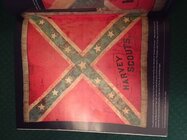
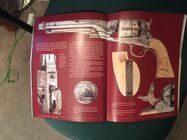
Harvey's Scouts...

5fish

Captain
Joined
Aug 26, 2007
Location
Central Florida
I learn about them while researching another thread... They were supposing one the best scout cavalry units... Addison Harvey was their leader... below is a bunch a stories about the units adventures...

http://msgw.org/madison/harveyscouts/index.htm#history

An authority, General Stephen D. Lee wrote that "They [Harvey's Scouts] were everywhere, conspicuous for activity, enterprise, and persistence," The Scouts have been described by General Sherman as a "bunch of hornets," and thus made life miserable for the Union forces.

The Scouts originally consisted of twenty-five men, selected from Wirt Adams' Regiment of Cavalry for special service under the command of Captain Addison Harvey of Canton, Mississippi. Soon, Capt. Harvey had demonstrated his unique capacity and aptitude for leadership and the scouts were increased to forty men, all carefully picked from Adams' and Ballantine's Cavalry and from the 28th Mississippi Infantry. They were chiefly from Mississippi from different counties but mostly from Madison County.

A part of Harvey's command was constantly on the scout for information. They were armed with Spenser Rifles, short guns that repeat eight times, and two pistols each that carried six charges. Thus, each man had twenty shots and the Spenser Rifles could be reloaded on the run. The saber was generally discarded because they were in the way when a soldier dismounted. When they were on secret service scouting for information, generally two of them went together. The second man was to give assistance in case the first was wounded or to hold the horses while the other made his reconnaissance on foot. These scouts were not expected to fight but to get the information speedily and quietly as possible and report to the captain, avoiding all contact with other fighting situations.

An example of these activities is the Georgia campaign of 1864 when Robert Hooks, an expert, was on a scout alone. Striking the main road, he found himself confronting a Federal trooper scouting, he presumed, like himself. Each saw the other, an enemy between themselves and their command and Hooks cried out "surrender." The other responded "surrender yourself," and with pistols leveled, they charged on each other. Hook's pistol missed fire. The other fired as he passed and Hooks fell with a bullet in his breast. Hooks, however, was soon able to report for duty.

On another occasion, Lt. Lee was undercover near the road watching a passing command of Union cavalry. After they had all passed as he supposed, he dropped back into the road to return to camp with his report. He had taken the precaution before entering the highway to cock his pistol and carried it in his right hand concealed by his overcoat. He had not proceeded fifty yards when on a sudden curve in the road, he found himself within fifty steps of a Federal officer. They saw each other at about the same moment and each saw his precarious situation . . . an enemy in the front and an enemy in the rear. They approached each other at a walk with no hostility or excitement and a bystander would have thought they were two friends about to have a chat. As they met, the Union officer quickly leveled his pistol and said "surrender." Lee for a moment thought he was a goner but a glance showed him that his adversary's pistol was not cocked. He immediately fired. Later that next day, a Union army detachment passed up the road and found the officer severely wounded.

The second part of scouting was the capture of couriers and courier-lines. The scout had to be wide awake at all times for they have to worm their way into command lines, break up command posts, kill sentinels and seize the couriers. To do this was difficult and dangerous. During the Georgia campaign, near Stilesboro, several couriers were captured and very important information obtained. Capt. Harvey with twenty men under cover of a dark night penetrated the enemy's camp, seized the couriers as they passed from one corps to another and made their way out unobserved. The information proved very valuable and the object was to get it to headquarters with dispatch and safety. Some of the captured papers would be read, others were in cipher.

Captain Harvey made it a rule to keep always on hand, some thirty men to move together as emergencies occurred. With these, he was generally able, by an unexpected onslaught to "tear down everything before him" unless there, sometimes, as the boys would say, "he cut off too large a slice" and then he always made good his retreat, fighting so desperately that they never followed him far. Some of the hardest fighting of the war, some of the most brilliant passages of arms, transpired when Addison Harvey and his handful of heroes were falling back before overwhelming numbers.

When scouting was done by squads or detachments, which generally involved some desperate fighting, often against heavy odds, the peril was greatly increased. It was not the object of a scouting party to fight. The object was information for the commanding general, and it was the policy to avoid a fight unless it became inevitable by sudden contact, and retreat impractical.

When General Hood was swinging around in the rear of Atlanta, just before he turned his troops toward Tennessee, Harvey's Scouts were on duty day and night reporting the movements of the enemy. One night, the Scouts struck Etowah River ten miles above Rome, which was then occupied by invaders. Captain Harvey had three objects: First, to introduce an intelligence fellow into Rome, to learn what force was there and whether they were reinforcing or evacuating; Second, he proposed to tear up the railroad on the north side of the river and, if possible, capture a train; Third, to cut the telegraph wire and thus interrupt Sherman's communications between Rome and Atlanta.

Under cover of night, Harvey marched to the river at a point where the railroad ran along the bank; he sent off his two special scouts to pry up a number of rails and took convenient cover to seize the train when it arrived. No train came. The enemy had already, by some means, heard of the break in the railway. During the night the Federals came up and secretly posted a strong detachment of infantry.

At daylight, Harvey was determined to send over a sergeant and four men to cut the telegraph wire and on their return, the Scouts would withdraw from the area. The party sailing a rough float over the river were within twenty yards of the northern bank when the Federal infantry, concealed in a thicket, opened fire upon them. One man was killed and the sergeant, who was standing up, was shot through the thigh and fell into the river. He, however, managed to catch the gunwale of the boat, as it was being turned toward the southern shore. The enemy poured in their fire, splintering the boat and twice wounding Corporal Portwood and killing J. Catlett, a brave and gallant man. Meanwhile, Capt. Harvey opened fire on the Federal force and under his fire, the scouting party in the boat made their escape.

When Major Muldrow's squadron of Wirt Adams' Cavalry made their gallant charge at Champion Hill, led by the Major in person, it happened that a squad of Harvey's men was reconnoitering the enemy at the point where this charge was made. They at once fell in and took part in the attack.

During Sherman's raid on Meridian, Thomas Field was alone on a scout near Hillsboro. Finding that a fight was about to take place with the advance guard, he pressed his way to the front, distinguished himself by his valor and was left dead where he fought.

On another occasion, John Morrow was scouting around the enemy in Alabama when a Texas regiment came up and prepared for a charge. He promptly took a position at the front and while in the act of shooting his adversary, was shot dead. This brave fellow was a mere boy, but a lion in battle.

When Gen. Sherman invaded Atlanta, Capt. Harvey and the Scouts were operating in his rear. After an exhaustive march of four days, about daybreak, Harvey reached the railroad far in the rear of Atlanta. They hitched their horses to a fence that was overrun with vines and briars that concealed those on one side of the fence from those on the other side. This fence struck the railroad at right angles. The horses were tied up. The Scouts went down the railroad and concealed themselves behind another fence that ran immediately down the railroad - a portion of the rails was broken up to throw a passing train.

About 10:00 a.m. Harvey's men, completely in ambush discovered a detachment of infantry marching down the railroad, under a lieutenant. The Captain wanted to capture them without a fight as the nearest Federal post was only a mile off. So he ordered a corporal who was posted nearest the approaching Federals, to rise up when they got opposite him and demand their immediate surrender - no man was to fire unless the enemy began it. When the Federals reached the proper point, the corporal rose and called out "surrender." To this, the Federals answered by preparing for action. The Scouts being quite ready poured in a general volley and the whole Federal command was killed, wounded or captured. The prisoners were sent immediately where the Scouts horses were tied to the fence.

Knowing that they would soon be pursued, Capt. Harvey gave orders to tear up the railroad, so as to give the Scouts time to get away. While they were working, Capt. Harvey suddenly sang out "mount." As they leaped from the railroad break, they saw on the other side of the fence, opposite where they had tied their horses, some 60 yards away, a line of infantry emerging from a dense thicket and advancing in the order of battle. As the Scouts made for the horses, their captain in the lead, the Federals opened a heavy rolling fire, advancing all the while. The Scouts were not permitted to fire, the one object was to save the horses that were between the enemy and nearer to the Union forces that to the Scouts. The Scouts pressed forward under fire, mounted and made off for the nearest shelter, without halting to even say goodbye.

No account was kept of the enemy killed and captured by the Scouts while fighting in Georgia. following Gen. Hood in Tennessee or when pursuing Wilson's command which left Eastport on its famous raid just before the surrender. But, the following is very near the mark:

Harvey's charges into Jackson, Ms., killing Col. Cromwell
capturing 28 of his men.
Total
29
Killed in the fight at Natchez Total
40
Killed and captured in Sherman's campaign to Meridian Total
138
Killed and captured in Sherman's Georgia Campaign Total
1300

Total
1507

The Scouts were a remarkable group. Their country invaded by an overwhelming army, their strongest defenses seized, their dwellings and towns burned, their plantations devastated and their defenders slain, their slaves, whom they held under the guarantees of the constitution, forcibly emancipated and armed, and officered to make war upon them - is it surprising that in the agony of despair, they should resort to war.

Has anyone ever heard of them for I do not remember reading about them before this thread or read about them?


Last edited:
Addison Harvey... sound like he may have been killed by a fellow rebel...

http://msgw.org/madison/harveyscouts/aharvey.htm

Captain Addison Harvey
aharvey1x1.jpg
aharvey1x2.jpg

aharvey2x1.jpg
aharvey2x2.jpg


Addison Harvey, their leader was a remarkable man. He would have none but reliable men about him. He had no use for a mean fellow or a stupid and lukewarm soldier. He was not satisfied with the mere mechanical performance of duty, he required vim, enthusiasm, resolution, activity and a conscientious devotion to the cause. And it was these traits that inspired his corps during the war and afterwards when they gathered each year in their reunion and in his memory. He was the kindest of friends with the tenderest heart, but with a rigid disciplinarian, exacting in the performance of duty.

This company was ordered to Pensacola and on his return, Harvey and Capt. Luckett raised a company of cavalry. They joined Col. Wirt Adams Regiment (Adams was born in Madison County) in 1862. Harvey soon attracted the attention of the commanding officer and was frequently detached on secret expeditions.

In one of his last engagements with the Scouts, Capt. Harvey learned that Gen. McCook with his division of cavalry was in northern Georgia in the rear of the Confederate Army. He ordered Lt. Harvey with six men to spy out the whereabouts of the Federal general. They found that the general was on his way to Macon but a detachment of bluecoats had been lurking about Lovejoy, Georgia. Harvey ordered his men to spread out and singly beat on the underbrush keeping in pistol shot of each other and if either of them saw an enemy to yell and charge. Very soon, a terrific war whoop was sounded, responded to from six different quarters. Then the lieutenant galloped up to the Federal captain and shouted, "captain, stack your arms immediately, I can't restrain my men, you will be massacred." Arms were stacked and the six men and Lt. Harvey marched the whole detachment of bluecoats back as prisoners.

[Powers Papers Scrapbook, Mississippi Archives, p. 75]

The Scouts followed the Confederate Army in the disastrous march to Nashville and after its retreat, took the trail of Wilson on his famous raid through Alabama to Columbus, Georgia, where the brave Captain Harvey was murdered. The Captain came up to the man as he was in the act of stealing one of the Scout's horses and ordered his arrest. The man broke out into abusive language and Captain Harvey knocked him down with his pistol. Not long afterwards, finding Capt. Harvey alone, he slipped up behind him and shot Harvey through the head. Harvey died instantaneously.

General Orders No. 11: Hdqrs. Jackson's Cavalry Division near Sumterville, Ala, May 1, 1865. 'Tis the sad duty of your division commander to announce the death of one of our most gallant and heroic officers. Capt. Addison Harvey, commanding scouts, was assassinated in Columbus, Ga., while in the discharge of his duty, assisting the commandant of the post in restoring order, by a citizen of that place, on the 19th instant. Serving with distinguished gallantry under General Johnston during the campaigns in Mississippi and Northern Georgia and again under General Hood in Tennessee, he won the confidence and esteem of all who knew him and received as a lasting mark of General Johnston's appreciation of his services the proud appellation of the "young officer of great courage and sagacity." Prominent for all that distinguishes rising greatness, sagacity, courage, and intrepidity, combined with energy, perseverance , and that happy resort to expedients to meet sudden and great emergencies, his little band was rendered almost irresistible. During his military career he accomplished more brilliant results and rendered more valuable assistance and information than most officers with commands many times larger than his. To his company, so fondly attached to him by all the associations of close and intimate life; to the service, so much indebted for his concise, definite, and always accurate reports, and to society at large, of which he was one of the purest and brightest ornaments, his loss is irreparable. Peace to the ashes of this distinguished officer, whose death I join you in lamenting. By command of Brigadier-General Jackson: E. T. Sykes, Assistant Adjutant-General

Thus perished by the hand of an assassin, one who had passed unscathed through a hundred combats, a hero and patriot, a man whose military genius seemed like inspiration and yet never neglected any precaution to ensure success. He was buried at Columbus Georgia and his comrades spent the rest of the war without him.

His remains were removed from the soil of Georgia and re-interred in Canton's new cemetery on Wednesday, the 8th day of December, 1886, at 11:00 O'clock a.m.
 
Here are some articles were written about the unit... in 1882... the link:::

https://tnahgp.genealogyvillage.com/harveys-scouts-history.html


Snippets... Could Harvey's Scouts be considered the first Special Forces Unit...

The scouts consisted originally of twenty-five men, selected from General Wirt Adams' regiment of cavalry, confided to Captain Harvey for special service. Having soon demonstrated his activity, audacity and aptitude for this particular line of duty, his command was increased to forty men, all carefully picked from Adams' and Ballentine's cavalry, and from the twenty-eighth Mississippi, and with the stipulation that they were to remain permanently under his command. They came from various Southern States, hut were chiefly from Mississippi, from different counties, the majority from Madison, where Captain Harvey resided.

Snippet... Where did they get their Spencer rifles from...

They were armed with Spenser rifles, (short guns that repeat eight -times) and two pistols each that carried six charges. Thus each man had twenty shots, and the Spenser rifles could be reloaded on the run. The saber was generally discarded because they were in the way when a soldier dismounted.

Snippet... sound like a special forces unit... Like how Havey gets to pick his own special missions...

Harvey's scouts had four distinct kinds of duty to perform.

1st. Secret service scouting for information. Generally two went together, sometimes only one. The second man was sent to give assistance in case of one being wounded, and likewise, on occasions, to halt in charge of the horses, while the other made his reconnaissance on foot. These men were not expected to light. The order was to get the information speedily and quietly as possible, and report to the Captain, avoiding all collisions.

2nd. Then there was an important and hazardous service in the seizure of the enemies couriers, and courier lines for information, and to interrupt their communications. This was effected by slipping in between commands and capturing or killing the couriers en route for other posts of commands.

3rd. There was a service known as squad scouting, when 10 or 15 men, according to circumstances, were sent out under a lieutenant or some non-commissioned officer who could be relied upon to accomplish the object in view, if possible. With each scout of this kind, there was likewise usually an old, well-tried special scout, perfectly familiar with the ground, and who knew how to extricate the squad if entangled by unexpected outposts or other impediments. The "boys" on these occasions would say that the "officer in command went along to get them in a tight place, and the other went along to get them out of it." And it sometimes happened that when their leader had carried them into a dangerous position to gain important information, he would call on his trusty old scout to extricate them, and then for the emergency pass over to him the command. On such duty as this it was expected that every scouting party we fell in with should be promptly attacked, and our parties had frequent conflicts.

4th. These expeditions however, were merely incidental and collateral, so to speak, to the main service in which Capt. Harvey personally engaged. This demanded generally the entire strength of the command, which he kept well in hand, and always in perfect lighting trim. His programme was to reconnoiter every position and every force moving or operating within range, and never to halt till he struck it. He moved very rapidly, and would often strike a large command front, flank and rear in less than 24 hours, and be able to report to our nearest brigade or division commander the strength of the enemy's cavalry, and infantry, supply wagons, ambulance's, artillery. name of the commanding officer, objective point, &c.


Snippet... The war stories like these...

Soon after this the Northern government began to enlist colored troops. The Scouts fell in with n long wagon train from Natchez, guarded by a colored regiment. A desperate light ensued. The Negroes had been taught that we would show them no quarter and fought like devils. After they were shot down, they would thrust their bayonets into our horses as we passed. We met them in a narrow lane, and their teams becoming frightened, turned around and broke the tongues of the wagons, blocking up the road. Of course, there was a terrible slaughter. They finally broke, leaping over fences and hiding in the woods, leaving over forty dead on the field. We had three men wounded; one of them, Alfred Land, a gallant fellow, was shot through the right breast and bayoneted by a Negro. He placed the muzzle against Land's breast and fired, and then thrust his bayonet into him when he fell. He lingered a long time but never was able to rejoin the command.

Lieutenant Harvey was also wounded. A Negro, only five paces off, fired at him. The ball took off the point of his nose. Harvey (whose pistols were all empty) seized a musket from a man who had just surrendered, charged on the Negro, and hurled the musket, like a javelin, at him. It struck the ground, quivering, and the Negro fell on his knees and begged for quarter. And got it.

The invaders patrolled the Mississippi River with a brigade of cavalry and artillery under General Elliott. This brigade was transported from point to point by steamers; frequently landed and sent out marauding parties, who plundered indiscriminately and insulted helpless women. On a certain occasion, they landed at Grand Gulf and sent out a regiment of cavalry to capture or annihilate Harvey and his command who had been constantly annoying their foraging parties. Harvey ambushed his men but left four of them on horseback to decoy the Feds into the trap. Our men kept at a prudent distance, in full view, and were pursued pell-mell by the cavalry firing and yelling. The moment they came within easy range of our guns the Scouts poured a volley into the mass, and the road was literally covered with the fallen. Those behinds, however, bravely pressed forward and compelled Harvey to mount under fire and retreat. They pursed, however, several miles, and we returned the fire until our guns and pistols were emptied, and our horses much fatigued.

Our leader seeing that the situation was unpromising, and that further retreat would be impracticable from the nature of the ground, ordered a halt on the brow of a hill, and told his men they must put on a bold front, and charge as though we had fallen back on our reserve, and had been strongly reinforced. The RUSE succeeded, and the enemy precipitately retreated to their steamer.
 
This story gets better and better::: They have a Monument...

http://msgw.org/madison/harveyscouts/honors.htm

https://www.hmdb.org/marker.asp?marker=120908 this has better photos...

A Harvey Monument Committee was formed with Addison's brother George Harvey as chairman, and on September 18, 1894, the Harvey's Scouts and Addison Harvey monument was dedicated at Canton. The following is from the Madison County Herald of Thursday, January 30, 1975:


"The dedication of the monument in September of 1894 was an event attended by the whole town of Canton and by all the remaining Scouts. Tributes were read to Captain Harvey and others in the company, and at the conclusion the monument unveiled. "Just as the country's flag was furled Death saved him the pain of Defeat," is engraved on the monument in memory of Harvey.

10527058_117962774957.jpg


10527058_117962769844.jpg


The story...

Harvey had often, says Sergeant Nash, around our camp-fire declared that he had no wish to outlive the Confederacy. Strange to say, he was murdered on the very day that Lee surrendered! Thereby lies a mystery!

There is a dispatch recorded in the War of the Rebellion, from Addison at Montgomery on April 14th. Another dispatch which is dated May 1, 1865 and is designated as General Orders, says that Addison was assassinated . . . on the 19th instant. We assume that means the date is April 19, 1865. The monument lists Harvey's death date as April 9, 1865, the day Lee surrendered. According to the dispatches, Addison Harvey was alive after April 14 in order to reach Columbus.

His grave marker::: When did he die????? He died at the literal end of the war...

10527058_117962764335.jpg
 
Here I found another special scout unit that harasses Sherman on his March and in the Carolina's, called Shannon's Scouts...

https://upload.wikimedia.org/wikipe...jpg/150px-SWATF_101_Battalion_beret_badge.jpg

Snippets... Sound familiar...

If the Confederates couldn't defeat the Union armies head to head, they still could fall back on the sort of fast-moving cavalry tactics at which they had so often excelled. Rebel commanders ordered Capt. Alexander May Shannon to gather an elite group of 20 to 30 men from a crack Texas cavalry regiment to go on high-risk scouting missions around Sherman's forces – if not to defeat them, then at least to slow and weaken them before they got to Grant.

Snippet... sound familiar...

Captain Shannon was the ideal commander to lead the Rangers' scouting group, which was nicknamed "Shannon's Scouts." The 26-year-old was aggressive, shrewd and fearless. He also understood how to conduct covert reconnaissance assignments. Confederate Gen. John Bell Hood often sent Shannon and his scouts inside enemy lines, collecting intelligence and attacking Yankees caught ransacking Southern homes.

Snippets... war gets ugly...

As the Union thundered through the Carolinas, the Scouts became increasingly aggressive. Federal soldiers frequently accused Shannon's Scouts of murdering prisoners after they had surrendered. General Sherman went into a fury when more than two dozen of his men were slaughtered, with a message left on their bodies. "It is officially reported to me that our foraging parties are murdered after capture and labeled 'Death to all foragers,'" Sherman wrote in a letter to Confederate Gen. Wade Hampton. "One instance of a lieutenant and seven men near Chesterville; I have ordered a similar number of prisoners in our hands to be disposed of in like manner."

No one knows exactly how many soldiers Shannon's men killed or captured, though he claimed his team assassinated almost 500 men during the March to the Sea.

The war over, Shannon returned to Texas, where he became a successful businessman. He died in 1906 in Galveston, Tex.


How many of these special cavalry scout units did the South create???
 
Here is a site that tells Shannon Scouts improbable war stories... and has OR reports too...

http://www.geocities.ws/crittercompanyorg/shannons_scouts.htm

Snippets...

One day in 1864 regiment Colonel Tom Harrison appointed Captain Shannon to lead three other men, R. L. Dunman, from Chambers County, Texas, who was in Company K, Lew Compton of Company C, and Bill Kyle of Company I, in a reconnaissance mission behind enemy lines to report on one of Sherman's positions, a battery that had been shelling Atlanta. Disguised by wearing Yankee uniform pants, the four made it through enemy lines in darkness, got close enough to observe the battery, then stole horses and made their way back to report by riding through a cornfield to pass the Yankee pickets. According to R. L. Dunman, "The corn was in roasting ear stage, sufficiently tall for us to keep pretty well hidden by it from the sight of the enemy. As we walked through the corn, each man kept well concealed behind his horse, letting him browse past the sentries until we were safely out of sight. Then we mounted our newly acquired steeds and rode them back to headquarters. This detail of Captain Shannon and his three picked men was the origin of 'Shannon's Scouts.'

Snippet... so there were more scouts units made...

The Scouts grew in number, various details having eighteen to thirty men in reports from various writers who served in the unit. The Scouts were never much publicized as some other famous units, but were seasoned fighting men, whose exploits exceeded most other single units. They spent days at a time behind Sherman's lines, taking out foragers, pickets, scouts and light infantry and cavalry units.

Here is an article in a book about a raid where they capture Kilpatrick's sword, hat, ect...

https://books.google.com/books?id=7...AIegQIAhAB#v=onepage&q=shannon scouts&f=false
 
FOUND!!! Scouts were Special forces...

Wade Hampton's Iron Scouts: Confederate Special Forces
V8rCFCba-DEWq8XXOjbCMSPinKDwH2wZHzxiRfEQoeW5v2sowHGsY6DOl70M1W9TTFNuWMd-MucCQ4BCCtCS-tTqbu1InKSk.jpg

D. Michael Thomas
Arcadia Publishing, Mar 5, 2018 - History - 144 pages

Serving from late 1862 to the war's end, Wade Hampton's Scouts were a key component of the comprehensive intelligence network designed by Generals Robert E. Lee, J.E.B. Stuart and Wade Hampton. The Scouts were stationed behind enemy lines on a permanent basis and provided critical military intelligence to their generals. They became proficient in "unconventional" warfare and emerged unscathed in so many close-combat actions that their foes grudgingly dubbed them Hampton's "Iron Scouts." Author D. Michael Thomas presents the previously untold story of the Iron Scouts for the first time.

Review:::

https://www.amazon.com/dp/1467139386/?tag=civilwartalkc-20

For any connoisseur of local history, Civil War History or military history, "Wade Hampton's Iron Scouts" is a must read. Fairfax County Times

"Most widely known for their prominent roles in the famous Beefsteak Raid and in the Battle of Monroe's Crossroads, the unit's full story is told for the first time in D. Michael Thomas's Wade Hampton's Iron Scouts. Though documents surrounding the unit's origins are scarce, according to the author the Iron Scouts were a Lee-Stuart brainchild that was assigned to Wade Hampton to create, with most of the initial contingent of picked men coming from the 2nd South Carolina Cavalry (with many different units eventually contributing members). Formed in late 1862, just 72 men served in the ranks of the Iron Scouts over the 2+ years of its existence. In addition to an organization and service history narrative, the book also includes a roster with quite a bit of biographical detail for each trooper gathered from a variety of sources." Civil War Books and Authors

"Thomas has done a superb job of scouring various sources to put together a history of a neglected branch of the Confederate army. He not only details their exploits but provides brief biographical pieces on many of the scouts." Michael C. Hardy BlogSpot

About the Author
Michael Thomas is a lifelong student of southern history, with special emphasis on the War Between the States. He holds a BA in history from The Citadel and is a U.S. Navy veteran of Vietnam. He spent several years as a volunteer with the Chesterfield Historical Society of Virginia doing research and writing on Chesterfield County Confederate soldiers. He coached and umpired Little League Baseball for thirteen years and later spent several years as a WBTS reenactor. Now retired after thirty-one years in international trade, he is back in his home state of South Carolina.
 
I found the Coleman Scouts... Lead by Captain Henry B. Shaw... this writer has been researching them...

https://www.tennessee-scv.org/colemanscouts/mp.htm

Snippet...

Alfred H. Douglas and John Davis, an older brother of Sam Davis, were called to a conference Generals Cheatham and Hardee. It resulted in their being directed to come as near Nashville as practicable and report what they could learn of the enemy. They succeeded beyond expectation.

After that General Cheatham appointed Captain Henry B. Shaw to take charge of an organization of scouts and to confer with them. General Bragg, in the meantime, had officially notified them to report to Shaw. Captain Shaw, John Davis, and Douglas selected such men as thought efficient for the perilous work. Tthe men left off their uniforms, occasionally wearing citizen's suits or Federal uniforms, they were not required to do it. Many of them would wear Federal overcoats after changing blue by a walnut dye. Their scouting territory extended from the Gulf of Mexico to Louisville, east and west, but their main field of action was in Middle Tennessee. (9)


Snippet...

Shaw, the Captain of the group, assumed the name of Coleman to hide his real identity. He operated within the enemy lines under the guise of an itinerant herb doctor. Information secured by Shaw was passed from him to the scouts and then relayed to Confederate headquarters. R. B. Anderson of Denton, Texas, and a member of the group, in a letter to the Confederate Veteran alluded to the freedom and security promised the scouts as they moved through enemy lines:


Snippet... John Davis... brother Sam Davis ( Confederate Nathan Hale)

http://www.wtv-zone.com/civilwar/sdavis.html

JOHN DAVIS

John Davis, born in 1839, was the son of Charles Lewis Davis and Margaret Saunders Davis of near Smyrna in Rutherford County, Tennessee. His mother died the latter part of 1840, and sometime later his father married Jane Simmons, the mother of Sam Davis, half-brother to John.

According to the Confederate Veteran of November, 1897, Davis was one of the men who, along with Shaw and Alf Douglas, helped select members for the Coleman Scouts. (20) The article further stated that Davis and Douglas were the first two scouts sent out on a mission. John Davis was wounded once during his military career. Sometime during the war he contacted a severe case of typhoid fever and was granted an honorable discharge.

After the war he married Kate Patterson of LaVergne, who had been of invaluable aid to the scouts all during the war. In 1867 John was killed in the explosion of the steamship "David White", of which he was a part-owner along with Henry B. Shaw.
 
I found this thread looking for Coleman's scouts by the famed Larry Cockerham... He was looking for info too...

https://civilwartalk.com/threads/coleman-scouts.14360/

Here is a snippet from that thread adding to the Sam Davis lore;

The whole story of this episode did not come out until much later. The Yankees did not know it, but they had "Coleman" in the same jail cell as Davis. Shaw, described by his captors as "an old , seedy, awkward-looking man in citizen's clothes," was known to the Yankees only by his real name and had been arrested separately from Davis. Shaw had once been Davis's teacher and they were friends, though they were careful to make sure their captors did not know. Davis's execution was clearly visible to his friend in the jail cell.

Davis's patriotism and willingness to die for his country was praised in print and stone throughout the South and caused him to be known as a Confederate Nathan Hale."
 
Well, Shaw ended up in prison... This link is to a whole blog about scouts and spies in the civil war...

http://www.civilwarsignals.org/pages/spy/confedsecret/confedsecret.html

Snippet....

Among the most noted bands of Confederate scouts was one organized by General Cheatham, over which one Henry B. Shaw was put in command. Shaw, who had been a clerk on a steamboat plying between Nashville and New Orleans, had accurate knowledge of middle Tennessee, which in the summer of 1863 was in the hands of the Federal army, owing to Bragg's retreat from Tullahoma. He assumed the disguise of an itinerant doctor while in the Federal lines, and called himself Dr. C. E. Coleman. In the Confederate army he was known as Captain C. E. Coleman, commander of General Bragg's private scouts. The scouts dressed as Confederate soldiers, so that in case of capture they would not be treated as spies. Nevertheless, the information they carried was usually put into cipher.

Shaw was finally captured and sent to Johnson's Island. (See Historic Marker) The command of the famous scouts devolved upon Alexander Gregg, who continued to sign despatches "C. E. Coleman," and the Federal authorities never knew that the original leader of the daring band was in safe-keeping in Sandusky Bay.

On April 7, 1864, President Davis, at Richmond, sent the following telegram to the Honorable Jacob Thompson, in Mississippi, "If your engagements permit you to accept service abroad for the next six months, please come here immediately." Thompson was a citizen of Oxford, Mississippi, and said to be one of the wealthiest men in the South. He was, besides, a lawer and a statesman, had served in Congress, and in the cabinet of President Buchanan as Secretary of the Interior.
 
Here a snippet and house to the lady spy helper and the last person to see Sam Davis before his capture... She married John Davis (Sam's brother) after the war...

Kate Patterson of LaVergne, who had been of invaluable aid to the scouts all during the war.

Here is a link to a picture of her home : https://www.flickr.com/photos/brent_nashville/17543947761

Mary Kate Patterson Home - LaVergne, TN
West of the Old Nashville turnpike stands the home of Mary Kate Patterson, a Confederate spy. She assisted Capt. Henry B. Shaw's Coleman's Scouts, a Confederate cavalry unit and spy network that served the Army of Tennessee, from 1862 to 1865. She befriended Federals and obtained passes to Nashville, where she secured supplies and messages to smuggle to the Scouts in her buggy's false bottom. Her brother, Everard Patterson, also served in the Scouts. Her family sheltered and fed Confederate soldiers, signaling them by an arrangement of louvers and lanterns in the windows when it was safe to come in for medical help and hot meals. She was among the last to see neighbor and fellow spy Sam Davis before he was captured and killed in November 1863. She lived at this house until her death in 1931.

Here is a link to an article about Mary Kate Patterson story...

https://www.murfreesboropost.com/co...cle_61e55521-d24c-5ee1-965a-a5dad5e05734.html

Here is a snippet...

Confederate Spy 'Kate' Weaved In and Out of Mid-Tenn Union Camps

"The Unsinkable Mary Kate" was not a Civil War battle ship.

La Vergne resident Mary Kate Patterson, who had the audacity and courage to take on multiple personalities and appearances, is credited with being an effective espionage agent on dangerous missions for the Confederacy during the Civil War.


Her under-cover efforts came at a crucial time as North and South armies fought to occupy Middle Tennessee, considered a vital farming "bread basket" region of the South.

Although not widely known outside of the South, information shows this prominent physicians' daughter helped provide information used by Southern legends such as Gen. Nathan Bedford Forrest and Coleman Scout Sam Davis.

Mary Kate performed "astonishingly brave deeds" that "greatly benefited" the legendary Confederate Coleman Scouts, according to a family descendant.


Back to Harvey's Scouts... I found this about them harassing Sherman...

http://www.researchonline.net/mscw/unit216.htm

MISSISSIPPI HARVEY'S INDEPENDENT COMPANY ~ CAVALRY

This independent company was raised in Madison County, MS.

Total roll, 118; 12 killed or died in service; wounded, 16; captured, 29. Lieut. Land was killed near Stilesboro, Ga., October, 1864; Captain Harvey was assassinated April 20, 1865, at Columbus, Ga.

"Harvey's Scouts were organized as a detachment of men detailed from Wood's and Starke's Regiments of Wirt Adams' Cavalry, under the command of Lieutenant Harvey of Wood's Regiment. Its subsequent organization as an independent company of scouts, attached to Gen. W. H. Jackson's Division, took place at Cave Springs, Ga., June 1, 1864. Before organizing as a company its service was confined to Mississippi, scouting on the Mississippi River between Vicksburg and Natchez, and following Sherman's raid to Meridian and back. Upon the transfer of General Jackson's Cavalry from Mississippi to Georgia, Harvey accompanied Jackson, and on arriving at Cave Springs was promoted Captain and permitted to increase his command by receiving enlistments to a full company. It had been composed of about forty detailed men. From this time until the surrender, with varied fortunes the scouts watched the movements of the enemy around Atlanta, followed raids and made dashes on the railroad between Chattanooga and Atlanta, went into Tennessee with General Hood, returned to take part with General Forrest against the Wilson raid through Alabama, following the enemy to Columbus, Ga., where Captain Harvey was basely assassinated by a citizen of that place, and finally ceased the struggle upon the surrender of General Taylor." (Notes accompanying the final roll).

During the service in Mississippi, Captain Harvey was wounded in an attack on the escort of a wagon train from Natchez. July 16, 1863, he and his men dashed into Jackson as Sherman's Corps moved out, and Col. John N. Cromwell, Forty-seventh Illinois, was killed in the fight that followed. Harvey reported the capture of twenty-eight men.

In his report of the Meridian campaign, Gen. W. H. Jackson wrote: "I beg leave to call the attention of Major-General Lee to the part performed by Lieutenant Harvey and his gallant band of forty scouts. He was everywhere doing good service; killed and captured of the enemy four times his own number. His daring, coolness and judgment eminently fit him for promotion and much larger command."

Colonel Starke wrote that Harvey brought to bear his usual undaunted courage, extraordinary energy and judgment. Harvey's command of twenty-three men was the only part of the Confederate Cavalry Corps that remained about Meridian while Sherman was destroying the military depots and railroads, and also alone attending the Federal army to Canton. He reported that his men occasioned a Union loss of about 130 killed and captured, and captured two wagons and forty-seven horses and mules. Among his own losses were John Graham killed, and Ruel M. Stancill wounded, of Starke's Regiment; and Private Tindall, Ballentine's Regiment, wounded and captured. James Renfrow and Thomas Field killed, and Private Pereau wounded, of Wirt Adams' Regiment.

Report of General McCook, Union army, June 26, 1864: "These men in the rear who have been doing the mischief near Tilton's belong to this division (Jackson's). They call them Harvey's Scouts."

expbul1d.gif
Officers:
Harvey, Addison - Captain
Lee, Robert J. - First Lieutenant
Land, T. B. - Second Lieutenant
Harvey, George - Second Lieutenant
Harvey, George - Third Lieutenant
Tyson, William H. - Third Lieutenant
Nelson, T. - 3rd Sergeant
expbul1d.gif
Assignments:
expbul1d.gif
Battles:
Natchez, MS - July 16, 1863
Jackson, MS - 1863
The Georgia Campaign - 1864
Wilson's Raid - 1864

 
A controversy related to the Scouts

Thanks for shari

William was only 15 or 16.


Here I found a whole page on William Howcutt... He made a monument to his body servant and memorial stained glass window to his wife... I impressed by his desire for people he cared about to be remembered...

Link: http://www.howcutt.org/william hill howcott.htm

William Hill Howcott (1847-1927)


William%20Hill%20Howcott%20portrait%20small.jpg
William Hill Howcott was born on 1 July 1847 in Mississippi - probably at or near Canton, which is the main town in Madison County He was the fourth of the five known children of Judge John B Howcott and his wife Elizabeth W (formerly Jones).

He served in Captaidison Harvey's Scouts during the Civil War. Most of the members of this Confederate unit were recruited from Madison county. Union forces destroyed the Howcott home at Canton during the War, resulting in Elizabeth Howcott sharing her slaves' quarters.

In the 1890s, William Hill paid for a 20-foot high granite obelisk, which has in recent years been moved to s site in the burial ground between East Academy Street and the Old Madison County Jail in East Fulton Street. The monument commemorates his body servant Willis Howcott, who was of a similar age and accompanied him to war, where Willis lost his life in combat. Its inscription includes these words:


"A tribute to my faithful servant and friend, Willis Howcott, a colored boy of rare loyalty and faithfulness, whose memory I cherish with deep gratitude".

W H Howcott, a clerk, is recorded at 186 Common in Gardner's Directory of New Orleans, 1869. He was later involved in the cotton business and went on to become highly successful in dealing in real estate in Louisiana.


He married Mary Edith, daughter of John and Harriet Louise Watt, at New Orleans on 14 December 1875 – the picture to the left is her wedding portrait. As well as two children whose names have not been found, their offspring were:


· Harley Alexander Watt (1878-1930)

· Louise (1879-1890)

· Edith Elizabeth Mary Delgado (1882-1965)

· William Hill (1891-1907)


· Gladys (1891-1976)

· Constance (1893-1895)

Mary Edith Watt Howcott died 14 May 1893 at the old John Watt residence, Carondelet Street. This was less than one month after she gave birth to her youngest child.


Harvey%20scouts%2025%20April%201906%20reduced.jpg


cantonmon%20reduced.jpg


William Hill Howcott (2nd from right) at Harvey's Scouts reunion - New Orleans, 25 April 1906

Monument to Willis Howcott at Canton, Mississippi

The parish house of Trinity Episcopal Church, New Orleans was sponsored by William Hill Howcott in memory of his son of the same name, who had died of Wrights Disease. The building includes a chapel on the ground floor and further accommodation on the upper floor. A portrait of William Hill Howcott junior hangs on one of the walls.

In 1917, he also provided a stained glass window at Grace Episcopal Church, Canton, in memory of his mother Elizabeth W Howcott.


Canton%20Grace%20exterior%20small.jpg


Canton%20Grace%20Howcott%20window%20-%20small.jpg

Grace church, Canton

Elizabeth W Howcott window


William Hill Howcott died at New Orleans on 12 December 1927 and, like his wife, was buried in the John Watt family tomb at Metairie Cemetery.


Notes


The following pictures are included by kind permission of those who supplied me with them:

  • Harvey Scouts reunion - Patrick M Harrison
  • William Hill Howcott - Peter Monrose
  • Mary Edith Watt Howcott - Elizabeth Monrose Lacouture
 
Last edited by a moderator:
Here is Shannon Scouts ... leader Alexander May Shannon, mini bio...

SHANNON, ALEXANDER MAY (1839–1906). Alexander May Shannon, scout and cavalryman under Confederate generals John Bell Hood, Nathan Bedford Forrest, Wade Hampton, and Joseph Wheeler and prominent Galveston businessman, son of Granville B. and Unity (Williams) Shannon, was born in Arkansas on May 7, 1839. His family moved to Texas when he was fourteen, settling in Johnson County and later in Gonzales County where he began teaching in 1859. His was one of only seven votes against secession in Karnes County. However, when Texas seceded Shannon quickly raised a company and joined Sibley's brigade. Soon, however, he transferred into the Eighth Texas Cavalry-Terry's Texas Rangers-and took part in every one of the regiment's engagements. About 1863 he was made captain. As a cavalry officer, he was shrewd and brave. He fought boldly and aggressively, winning a reputation with his superiors and his men as well as the foe. This reputation led to his scouting behind Sherman's lines in the Atlanta campaign with a cavalry unit of thirty men that gained fame as "Shannon's Scouts." The scouts followed the Union army across Georgia, making raids on Sherman's units and conducting reconnaissance missions, locating approach routes, and relaying military intelligence back to Confederate forces. The unit killed approximately forty-three federals and captured over 100. Shannon's Scouts were so effective that Union general Judson Kilpatrick offered $5,000 for Shannon's capture. Shannon later was put in charge of the secret service of the Army of Tennessee and promoted to colonel in 1865. He was charged with escorting President Jefferson Davis to safety after the fall of Richmond in April 1865, but Davis was captured by federal cavalry before Shannon could come to his aid. After the war Shannon returned to his ranch on the San Antonio River in Karnes County but soon entered the insurance business with John B. Hood in New Orleans in 1869. When the business prospered and grew, he moved to Galveston to take charge of its Texas branch. There he met and married Clara Viola Scott, the daughter of Maj. William Bibb and Bettie (Murphy) Scott, on February 21, 1872. She was the granddaughter of Gen John B. Scott, cofounder of Montgomery, Alabama, and John H. Murphy, fourth governor of Alabama. They had seven children. In 1880 Shannon was engaged in government contract work, employing as many as 300 men building jetties and other public works. He also had a line of barges and tugs employing another sixteen men. In 1886 he issued a proposal to build a Galveston seawall. In 1890 Shannon became general manager of the Galveston and Western Railway; in 1891 he chartered the Galveston Jetty Railroad; in 1893 he became postmaster of Galveston. He became a Mason in May 1860 and was active as such thereafter. In politics he was a Democrat. He died on October 26, 1906, in Galveston and was buried in the Episcopal Cemetery.

https://tshaonline.org/handbook/online/articles/fshlb
 
Last edited:

Learn About Us
About CivilWarTalk
Contact the Webmaster
Meet the Staff
Link to CivilWarTalk
Join Our Community
Register
Browse Forums
View Today's Discussions
Search the Forum
Get Help
FAQ
Student Guide
Forum Rules & Etiquette
Copyright / DMCA

     Contact Us CivilwarTalk on Facebook CivilWarTalk on YouTube CivilWarTalk on Twitter RSS Feed

Bringing the American Civil War and More to Life.
© 1999 - , CIVILWARTALK, LLC - Site Version 10.0

SlaveryTalk.com - SecessionTalk.com - CivilWarTalk.com - ReconstructionTalk.com
Back
Top