
TomP
Sergeant
- Joined
- Sep 29, 2015
- Location
- Corinth, MS
@Don Dixon ,
Don, is this the image you spoke of in the PM? The big 24-pounder is very distinctive with the 5.82" bore and the handles above the trunions.
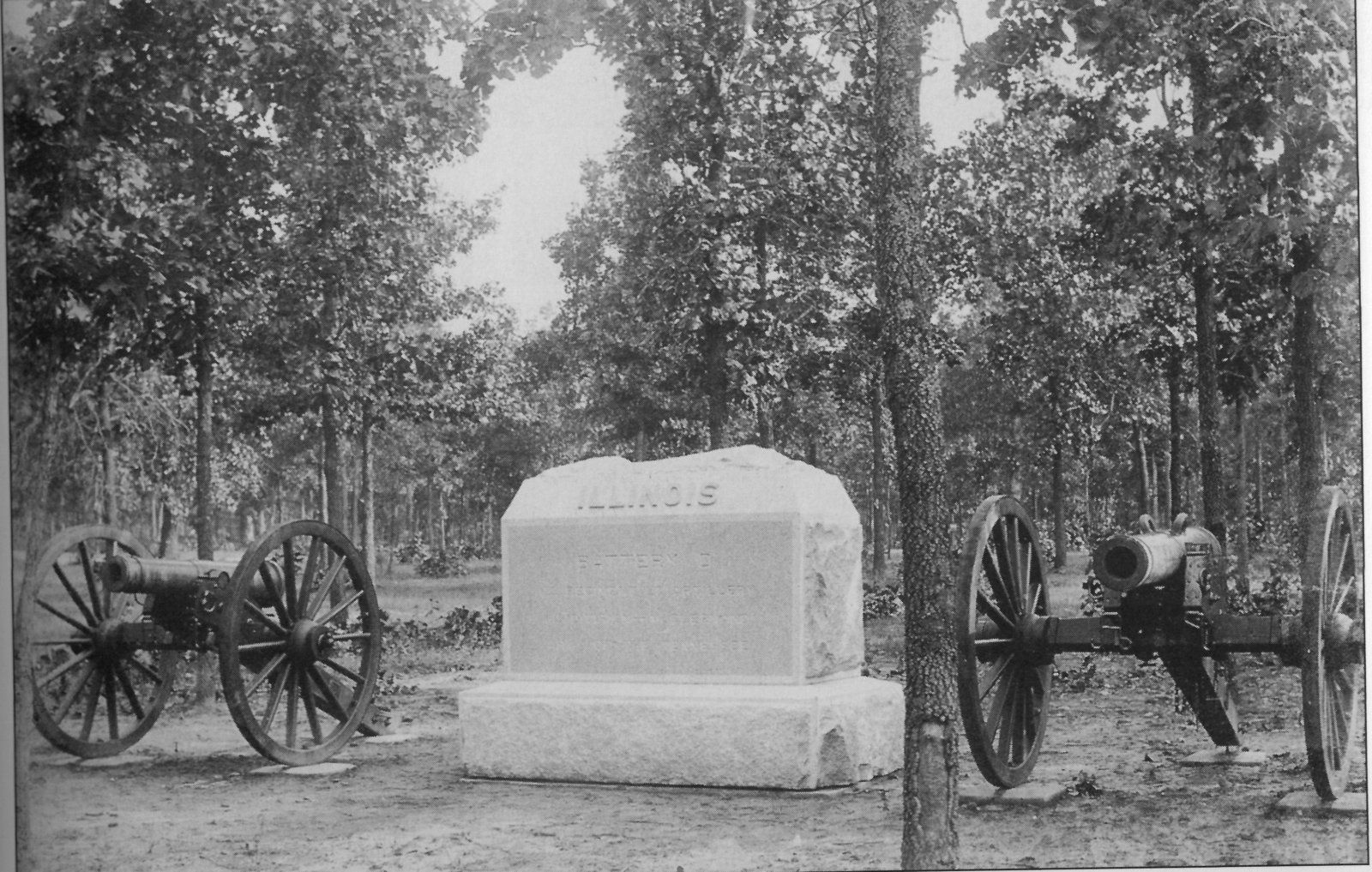
I am very familiar with the two guns that are at the monument today; before I was a Ranger i was in maintenance and took care of the park's historic structures including all of the monuments. Back in 2002 I conducted a very comprehensive survey of the park's artillery collection, which of course included the three 24-pounder howitzers, all of which are model 1841 cast at the Alger foundry.
In June of last year I took a small group on an all-day tour of the park concentrating on the guns in the park collection, not about the guns used in the battle (well not too much). The talk discussed how guns were cast and what the rifling process was like, who the inspectors were and the history of the different foundries. It turned out to be a hit and I will probably repeat it in the spring.
Over the last 15 years the park has been slowly returning cannon to the original 2-gun system but due to lack of documentation it is unknown which guns were located where in the early days. We are moving the guns in conjunction with the replacement of the original iron carriages which are antiques now and many are in poor condition. There has been some resistance to this plan as some folks have seen the groupings for their entire life and do not want to see the change, even when the original 2-gun system is explained.
I have no idea when the 12-pounder howitzer in the image was replaced by the other 24-pounder which is there today. It is kind of amazing that these two guns were cast one after the other at the same foundry, perhaps on the same day. They were definitely both inspected and received by the army within two days of each other; November 6 & 8, 1841.
There is a third model 1841 howitzer on the park which was cast in 1858 and inspected by future Confederate general Benjamin Huger. For years it was placed in Powell Field just south of the National Cemetery although there is no doubt it was originally placed somewhere else on the field. Powell's Field was a 2-gun site that was changed to five guns for visual effect. Last year this gun was moved adjacent to marker No. 59 which is the site of McAllister's Battery on the east side of Jones Field.
Although I work at the Corinth Civil War Interpretive Center in Mississippi, which is a unit of Shiloh NMP, I keep up with all of the location changes to keep our inventory up to date and it is also a record of the changes for the last twenty years.
We are still making changes on the field, albeit very slowly. We have purchased a number of replica Wiard carriages and we have been moving Wiard rifles from across the park to sites where batteries that utilized this type of weapon were engaged. Shiloh has the largest collection of this distinctive weapon than any other park in the system.
All the best,
Tom
Don, is this the image you spoke of in the PM? The big 24-pounder is very distinctive with the 5.82" bore and the handles above the trunions.
I am very familiar with the two guns that are at the monument today; before I was a Ranger i was in maintenance and took care of the park's historic structures including all of the monuments. Back in 2002 I conducted a very comprehensive survey of the park's artillery collection, which of course included the three 24-pounder howitzers, all of which are model 1841 cast at the Alger foundry.
In June of last year I took a small group on an all-day tour of the park concentrating on the guns in the park collection, not about the guns used in the battle (well not too much). The talk discussed how guns were cast and what the rifling process was like, who the inspectors were and the history of the different foundries. It turned out to be a hit and I will probably repeat it in the spring.
Many of the guns in the collection have been moved over the years, some several times. The original park commission came up with idea of using a system to help identify how many guns were being used at that particular spot during the battle, whether the spot was marked by an iron tablet or a monument. If the full battery was present there would be two guns; if the battery was at half strength there would be one gun; and if the battery had been reduced to a single weapon, no cannon would be placed at the site. If at all possible the guns placed at the site would be of the same type used in the battle. It was a good idea and it stayed that way for many years, though it was very difficult to place the correct types of gun in position due to the lack of certain weapons such as 10 and 20 pound parrots and Napoleons. The system was abandoned years later when a superintendent wanted to mass many of the guns for visual effect and to ensure all cannon could be viewed from the tour route. For example, three full batteries were placed in Sarah Bell's Cotton Field and the left of Ruggles' Line was beefed up with over a dozen guns and all of the Confederate made pieces were relocated to this area of the field.(unless the Park Service has been playing musical chairs with the tubes).
Over the last 15 years the park has been slowly returning cannon to the original 2-gun system but due to lack of documentation it is unknown which guns were located where in the early days. We are moving the guns in conjunction with the replacement of the original iron carriages which are antiques now and many are in poor condition. There has been some resistance to this plan as some folks have seen the groupings for their entire life and do not want to see the change, even when the original 2-gun system is explained.
I have no idea when the 12-pounder howitzer in the image was replaced by the other 24-pounder which is there today. It is kind of amazing that these two guns were cast one after the other at the same foundry, perhaps on the same day. They were definitely both inspected and received by the army within two days of each other; November 6 & 8, 1841.
There is a third model 1841 howitzer on the park which was cast in 1858 and inspected by future Confederate general Benjamin Huger. For years it was placed in Powell Field just south of the National Cemetery although there is no doubt it was originally placed somewhere else on the field. Powell's Field was a 2-gun site that was changed to five guns for visual effect. Last year this gun was moved adjacent to marker No. 59 which is the site of McAllister's Battery on the east side of Jones Field.
Although I work at the Corinth Civil War Interpretive Center in Mississippi, which is a unit of Shiloh NMP, I keep up with all of the location changes to keep our inventory up to date and it is also a record of the changes for the last twenty years.
We are still making changes on the field, albeit very slowly. We have purchased a number of replica Wiard carriages and we have been moving Wiard rifles from across the park to sites where batteries that utilized this type of weapon were engaged. Shiloh has the largest collection of this distinctive weapon than any other park in the system.
All the best,
Tom


 Bringing the