
- Joined
- Jan 16, 2015
The following examples seem to suggest that it was not all that rare for soldiers to successfully conceal a flag when their capture was imminent. It would be interesting to learn of similar instances from Gettysburg and other battles to get a sense of how often it occurred. It makes one wonder if any prisoners who died in captivity were buried with an undiscovered flag hidden under their clothing.
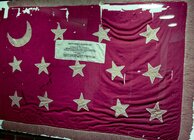
Charles S. Clancey, 4th Sergeant, Company D, 1st Louisiana Infantry. (Fayetteville Observer (NC), August 20, 1863, quoting from the Richmond Examiner) Among the paroled prisoners who have reached Richmond from the last truce boat, is C. S. Clancy, color bearer of the First Louisiana regiment, who was taken prisoner in the battle of the 2d of July, at Gettysburg, whilst bearing his colors up to the very front of the enemy's breastworks, amid a perfect tornado of shell and bullets. Finding himself cut off from escape, and certain to be either killed or captured, Clancy tore his already bullet torn flag from its staff, and secured it underneath his shirt. He was taken prisoner and carried to Fort McHenry, Baltimore, and from thence sent to Fort Delaware, carrying the flag with him, not floating to the breeze, of course, but furled beneath his shirt. Clancy kept his own secret while in the Fort, and when the sick and wounded prisoners were selected to be sent southward, he feigned extreme illness, and was put on board the steamer, with a number of others, still holding fast to this regiment colors, which he brought safely away, and exhibited in this city yesterday. The flag bears the perforations of upwards of two hundred bullets, and one shell, and the piece of another passed through it in the fight at Gettysburg. Clancy is the sixth color bearer of the regiment, five having fallen in battle, with the identical flag in their grasp. The sixth, Clancy, has carried the flag for nearly a year, and he certainly can claim to have carried it farther into the North than the Confederate flag has ever yet been advanced, and what is better back again in triumph.
Frederick Sontag, 5th Sergeant, 14th Louisiana Infantry. (Memoir of W. P. Snakenberg, 14th Louisiana, on file at Gettysburg National Military Park) We lost our regimental colors there [Gettysburg] and did not get them back until the winter. Our color bearer was cut off from us, in the fall back, and seeing that he was a prisoner, tore the flag from his staff and hid it. It was dark when we made the charge [July 2]. After night the color bearer folded the flag around his body and wore it under his clothes until he was exchanged and brought back to us, after we had gone into winter quarters. /// (Civil War News, November 2011, p. 22) Color bearer Frederick Sontag was captured with the flag at Gettysburg and hid the flag in his clothing, returning it to his regiment after his exchange from prison. The 14th Louisiana requisitioned a new flag to replace Sontag's banner and they followed that flag until Appomattox.
Godfrey Gaisser, Corporal, Company K, 6th Louisiana Infantry. (The Charleston Mercury, March 22, 1864) Richmond, Wednesday, March 16. … returned prisoners … when the boats moved off, Ensign Godfrey Gassier (sic) of Company K, 6th Louisiana regiment, hoisted, on a rough sycamore sapling, the battle flag he had concealed about his person ever since his capture at Gettysburg, and flaunted it defiantly in the face of the Yankees. On board the other boats, there arose from the six hundred of Hay's brigade such a shout as his seldom been heard on this earth. [Gaisser's compiled service records indicate he was not captured at Gettysburg, but rather at Rappahannock Station on November 7, 1863.]
Cleopas Bryan Latham, 2nd Corporal, Company H, 1st North Carolina Infantry. (Raleigh Conservative, quoted in The Western Democrat, Charlotte, North Carolina, April 4, 1865) Latham was captured at Gettysburg with the flag of his regiment in his grasp. Seeing escape impossible, he tore the flag from the staff and concealed it on his person. Several times he was searched by the Yankees, but they invariably overlooked the flag. Paroled for exchange, Latham returned to Richmond with other Confederate prisoners still clinging to the dear relics of his country's flag that he had so long concealed and preserved with honor. From Tarboro, North Carolina, Latham wrote to his commander, Col. H. A. Brown, informing him of the safety of the flag, and announcing his determination to carry it into battle again as soon as his furlough expired and he entered the ranks again.
Thomas H. Sheperd, Company E, 1st Michigan Cavalry. (The National Tribune, April 13, 1893) Thomas Shephard of 1st Michigan Cavalry, was taken prisoner at Gettysburg ... had headquarters flag, he tore it from the staff and secreted it on his person. He was 505 days in rebel prisons, but kept the flag and brought it back safely.
[I have also seen mention of the flag of the 48th Ohio Infantry in the western theater going through southern prisons without the "Johnnies" finding it.]
Charles S. Clancey, 4th Sergeant, Company D, 1st Louisiana Infantry. (Fayetteville Observer (NC), August 20, 1863, quoting from the Richmond Examiner) Among the paroled prisoners who have reached Richmond from the last truce boat, is C. S. Clancy, color bearer of the First Louisiana regiment, who was taken prisoner in the battle of the 2d of July, at Gettysburg, whilst bearing his colors up to the very front of the enemy's breastworks, amid a perfect tornado of shell and bullets. Finding himself cut off from escape, and certain to be either killed or captured, Clancy tore his already bullet torn flag from its staff, and secured it underneath his shirt. He was taken prisoner and carried to Fort McHenry, Baltimore, and from thence sent to Fort Delaware, carrying the flag with him, not floating to the breeze, of course, but furled beneath his shirt. Clancy kept his own secret while in the Fort, and when the sick and wounded prisoners were selected to be sent southward, he feigned extreme illness, and was put on board the steamer, with a number of others, still holding fast to this regiment colors, which he brought safely away, and exhibited in this city yesterday. The flag bears the perforations of upwards of two hundred bullets, and one shell, and the piece of another passed through it in the fight at Gettysburg. Clancy is the sixth color bearer of the regiment, five having fallen in battle, with the identical flag in their grasp. The sixth, Clancy, has carried the flag for nearly a year, and he certainly can claim to have carried it farther into the North than the Confederate flag has ever yet been advanced, and what is better back again in triumph.
Frederick Sontag, 5th Sergeant, 14th Louisiana Infantry. (Memoir of W. P. Snakenberg, 14th Louisiana, on file at Gettysburg National Military Park) We lost our regimental colors there [Gettysburg] and did not get them back until the winter. Our color bearer was cut off from us, in the fall back, and seeing that he was a prisoner, tore the flag from his staff and hid it. It was dark when we made the charge [July 2]. After night the color bearer folded the flag around his body and wore it under his clothes until he was exchanged and brought back to us, after we had gone into winter quarters. /// (Civil War News, November 2011, p. 22) Color bearer Frederick Sontag was captured with the flag at Gettysburg and hid the flag in his clothing, returning it to his regiment after his exchange from prison. The 14th Louisiana requisitioned a new flag to replace Sontag's banner and they followed that flag until Appomattox.
Godfrey Gaisser, Corporal, Company K, 6th Louisiana Infantry. (The Charleston Mercury, March 22, 1864) Richmond, Wednesday, March 16. … returned prisoners … when the boats moved off, Ensign Godfrey Gassier (sic) of Company K, 6th Louisiana regiment, hoisted, on a rough sycamore sapling, the battle flag he had concealed about his person ever since his capture at Gettysburg, and flaunted it defiantly in the face of the Yankees. On board the other boats, there arose from the six hundred of Hay's brigade such a shout as his seldom been heard on this earth. [Gaisser's compiled service records indicate he was not captured at Gettysburg, but rather at Rappahannock Station on November 7, 1863.]
Cleopas Bryan Latham, 2nd Corporal, Company H, 1st North Carolina Infantry. (Raleigh Conservative, quoted in The Western Democrat, Charlotte, North Carolina, April 4, 1865) Latham was captured at Gettysburg with the flag of his regiment in his grasp. Seeing escape impossible, he tore the flag from the staff and concealed it on his person. Several times he was searched by the Yankees, but they invariably overlooked the flag. Paroled for exchange, Latham returned to Richmond with other Confederate prisoners still clinging to the dear relics of his country's flag that he had so long concealed and preserved with honor. From Tarboro, North Carolina, Latham wrote to his commander, Col. H. A. Brown, informing him of the safety of the flag, and announcing his determination to carry it into battle again as soon as his furlough expired and he entered the ranks again.
Thomas H. Sheperd, Company E, 1st Michigan Cavalry. (The National Tribune, April 13, 1893) Thomas Shephard of 1st Michigan Cavalry, was taken prisoner at Gettysburg ... had headquarters flag, he tore it from the staff and secreted it on his person. He was 505 days in rebel prisons, but kept the flag and brought it back safely.
[I have also seen mention of the flag of the 48th Ohio Infantry in the western theater going through southern prisons without the "Johnnies" finding it.]




 Bringing the