
- Joined
- Feb 20, 2005
- Location
- Ocala, FL (as of December, 2015).
To All,
I would like to share something I read in the book, General Lee's Army: From Victory To Collapse, by Joseph T. Glatthaar.
In chapter 21, Arms and Ammunition, pg. 261, I read the following:
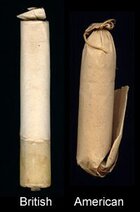
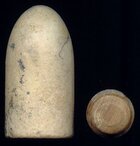
"...Despite the closeness in caliber, .577 and .58, the army had to issue different ammunition and loading instructions for Enfields and Springfields. During the Antietam Campaign, Hill Fitzpatrick struggled to load a Yankee round in his Enfield rifle. "To my greatest mortification my gun failed to fire," the private reported to his wife, "but I soon recollected that it was charged with a Yankee cartridge which had to be ram[m]ed hard. I drew my stick gave it a hard ram tried again and went clear as a whistle." After the battle, Lee's headquarters explained that officers and men could recognize the Enfield ammunition because it had a wooden plug at the cavity. Soldiers were to insert it into the barrel of the musket with the paper. The Springfield ammunition had grooves around it, full of grease. "The .58 caliber will be inserted naked," or without the paper, Lee instructed them..."
But, in chapter 27, Preparing for the Spring Campaign of 1864, pg. 361, I read the following:
"...The Ordance Department issued a circular for soldiers who fired Enfield rifled muskets, reminding them as Lee had done eighteen months earlier that when they loaded the weapon, they could not ram the charge with the paper cartridge. Soldiers must pour the gunpowder, drop the projectile without the paper down the barrel, and then pack it down with the ramrod. The circular reported that "many of them ram the charge home with the paper between the bullet and the powder. As this paper is a very stiff hollow cylinder it will not crumple up, therefore a considerable space in the barrel" developed. Either the projectile lacked adequate velocity when fired--a spent round--or if the powder packed near the bullet, a hang fire (a delayed, inaccurate firing) would occur..."
This was the first I had ever heard or read about this loading problem with the Enfield musket, even with all my years in Civil War reenacting as both a Union and Confederate infantry soldier.
I was under the impression that the paper the round came with was rammed into the barrel of both the Enfield and Springfield muskets, to help hold the powder in place.
It seems to me that the author has his facts a bit mixed up also, stating in the earlier chapter that Lee ordered the Enfield to be loaded with the paper, and yet in the later chapter, Lee sends out a circular stating the Enfield is NOT to be loaded with paper.
I checked the references for both chapters and came up with this:
Chapter 26, Arms and Ammunition, used this reference:
GO (I presume meaning General Order) No. 108, HQ, ANV. 21 Sep. 1862. Wright's Brigade Order Book, Civil War Times Illustrated Collection, US Army Military History Institute.
Chapter 27, Preparing for the Spring Campaign of 1864, had this reference:
Circular. HQ, Johnston's Brigade. 13 Aor. 1864. 1 Jan. 1864. Second Army Corps, O&C of Subcommands, ANV. Record Group 109, NA; Inspection Report of Heth's Division by Sidney H. Davvies, Assistant Adjutant & Inspector General, 28 Feb. 1865, referring to contents of circular in early 1864. Inspection Report, R16 (Microfilm), F59. Record Group 109, NA.
Anyone got any information on this problem of loading an Enfield musket with paper or does anyone think the author might have his facts confused?
Curious,
Unionblue
I would like to share something I read in the book, General Lee's Army: From Victory To Collapse, by Joseph T. Glatthaar.
In chapter 21, Arms and Ammunition, pg. 261, I read the following:
"...Despite the closeness in caliber, .577 and .58, the army had to issue different ammunition and loading instructions for Enfields and Springfields. During the Antietam Campaign, Hill Fitzpatrick struggled to load a Yankee round in his Enfield rifle. "To my greatest mortification my gun failed to fire," the private reported to his wife, "but I soon recollected that it was charged with a Yankee cartridge which had to be ram[m]ed hard. I drew my stick gave it a hard ram tried again and went clear as a whistle." After the battle, Lee's headquarters explained that officers and men could recognize the Enfield ammunition because it had a wooden plug at the cavity. Soldiers were to insert it into the barrel of the musket with the paper. The Springfield ammunition had grooves around it, full of grease. "The .58 caliber will be inserted naked," or without the paper, Lee instructed them..."
But, in chapter 27, Preparing for the Spring Campaign of 1864, pg. 361, I read the following:
"...The Ordance Department issued a circular for soldiers who fired Enfield rifled muskets, reminding them as Lee had done eighteen months earlier that when they loaded the weapon, they could not ram the charge with the paper cartridge. Soldiers must pour the gunpowder, drop the projectile without the paper down the barrel, and then pack it down with the ramrod. The circular reported that "many of them ram the charge home with the paper between the bullet and the powder. As this paper is a very stiff hollow cylinder it will not crumple up, therefore a considerable space in the barrel" developed. Either the projectile lacked adequate velocity when fired--a spent round--or if the powder packed near the bullet, a hang fire (a delayed, inaccurate firing) would occur..."
This was the first I had ever heard or read about this loading problem with the Enfield musket, even with all my years in Civil War reenacting as both a Union and Confederate infantry soldier.
I was under the impression that the paper the round came with was rammed into the barrel of both the Enfield and Springfield muskets, to help hold the powder in place.
It seems to me that the author has his facts a bit mixed up also, stating in the earlier chapter that Lee ordered the Enfield to be loaded with the paper, and yet in the later chapter, Lee sends out a circular stating the Enfield is NOT to be loaded with paper.
I checked the references for both chapters and came up with this:
Chapter 26, Arms and Ammunition, used this reference:
GO (I presume meaning General Order) No. 108, HQ, ANV. 21 Sep. 1862. Wright's Brigade Order Book, Civil War Times Illustrated Collection, US Army Military History Institute.
Chapter 27, Preparing for the Spring Campaign of 1864, had this reference:
Circular. HQ, Johnston's Brigade. 13 Aor. 1864. 1 Jan. 1864. Second Army Corps, O&C of Subcommands, ANV. Record Group 109, NA; Inspection Report of Heth's Division by Sidney H. Davvies, Assistant Adjutant & Inspector General, 28 Feb. 1865, referring to contents of circular in early 1864. Inspection Report, R16 (Microfilm), F59. Record Group 109, NA.
Anyone got any information on this problem of loading an Enfield musket with paper or does anyone think the author might have his facts confused?
Curious,
Unionblue




 Bringing the