1860 Lorenz

iron bender

Corporal
Joined
Jul 18, 2023
Location
Texas
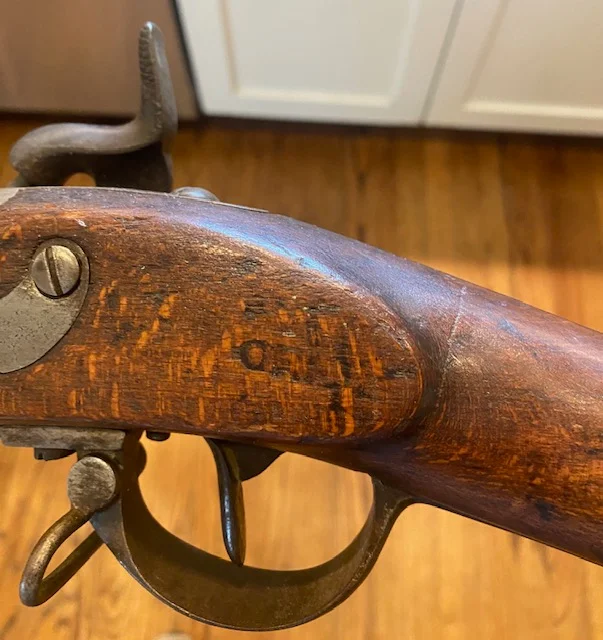
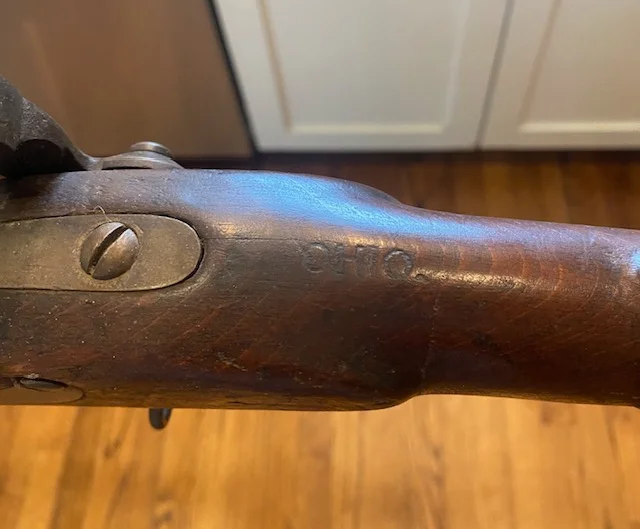
Picked this beautiful rifle up from a forum member last week. 1860 Ohio marked (Co H). It's got a heck of a load in it, like two loads I think. Rifling is excellent. Not chancing this so off to Lodgewood to get the barrel cleaned up. Ramrod is out of a 63 Springfield, and rear sight (long-range) is missing. A fun project that should be a great shooter once bore is evacuated. Last gun I had Lodgewood clean out was a 63 Springfield, and David was convinced it was likely loaded in the 1880's-90's, due to bullet and powder type. Can't wait to see what's in this one!

IMG_0620.webp


IMG_0621.webp


IMG_0622.webp


IMG_0623.webp


IMG_0624.webp


IMG_0625.webp
 
I read in my book, European Arms in the Civil War, the OHIO marks were applied when returned to the state in trade for Enfields or Springfields.

European Arms in the Civil War is ... incorrect. BG John Hunt Morgan's 11 June - 26 July 1863. cavalry raid into Indiana and Ohio created panic in Ohio. The Ohio Arsenal had a large quantity of unserviceable, but largely repairable, arms in storage which had been turned-in by Federal Army units. On 11 July Governor Tod wrote to Secretary Stanton requesting authority to issue 15,000 stand of arms in the state arsenal which were unfit for field service to the state militia. Adjutant General Wright followed this with a 30 July letter to BG Ripley. Wright had issued 8,000 of the arms to the militia in the border counties most affected by the raid. With most of Morgan's raiders having been captured the arms were being returned, but Wright wanted to permanently issue the arms to the militia. Ultimately, 28,524 foreign and U.S. manufactured arms of various grades and conditions - repairable and unrepairable - were transferred to Ohio for repair and issue as an advance on the state's Militia Act quotas.

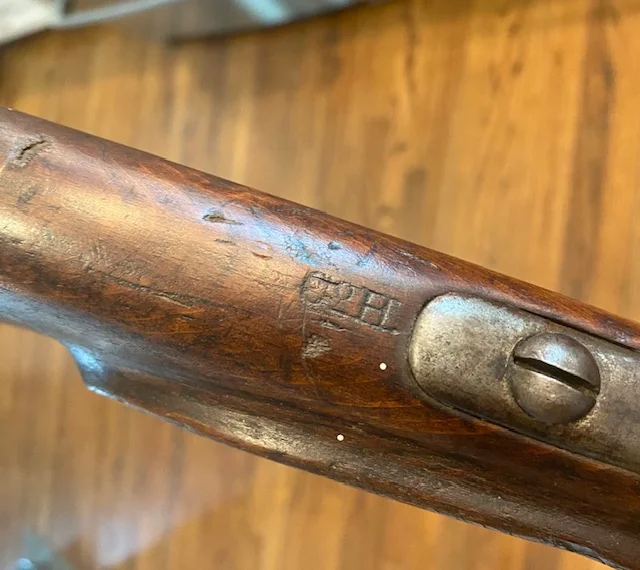
Ohio had received 47,329 arms from the national government under the Militia Act prior to the Civil War, virtually all of which had done missing, or had magically disappeared from inventory if you prefer. To avoid such losses in the future the weapons received from the Ordnance Office in 1863 were stamped "Ohio" at two places on the wrist of the stock with one of two Ohio stamps with slightly different fonts; as illustrated in the photos above. The "Co. H" marking is interesting. After the war the Ohio legislature stupidly directed that the arms be sold as surplus rather than returning them to the Ordnance Office for a credit on the state's Militia Act quotas. In consequence it wasn't entitled to further issues of Militia Act arms well into the 1870s, being left with a motley collection of muzzleloading French rifle muskets to arm it's militia.

Regarding the Muster 1854 System Lorenz rifle musket illustrated above, Ohio received as part of this issue 1,661 serviceable .54 caliber weapons, 2,178 .54 caliber weapons "wanting repair," and an additional 400 Muster 1854 Jaegerstutzen.

Regards,
Don Dixon
 
Awesome addition to the collection, still looks battle ready. Would the "Co H" mark/stamp be a wartime mark or something added later on for display/presentation for a GAR hall? It has a lot of history behind it and it's a real gem. Thank you for sharing
 
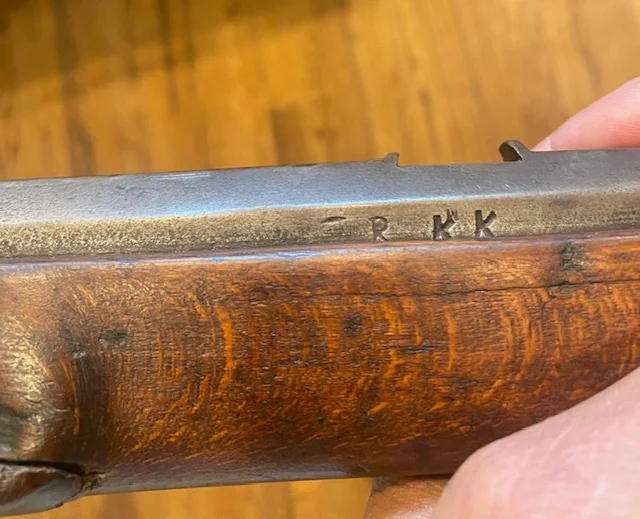
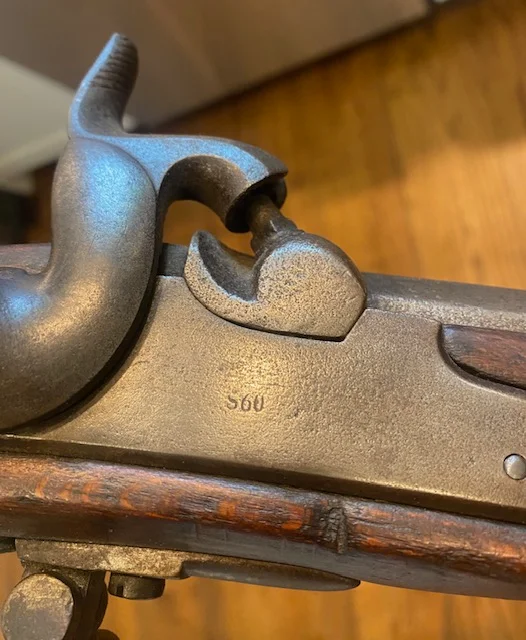
Went ahead and took her down. Interesting all iron furniture is matching number. I'm not familiar with arms of this age being number matched throughout. The interior lock mechanism is all matched to itself, 55, while the rest is 28. Here are barrel markings too. Thanks for looking!
....and love the cheek rest

IMG_0637.webp


IMG_0638.webp


IMG_0639.webp


IMG_0641.webp


IMG_0642.webp


IMG_0643.webp


IMG_0644.webp


IMG_0645.webp


IMG_0647.webp


IMG_0648.webp
 
Went ahead and took her down. Interesting all iron furniture is matching number. I'm not familiar with arms of this age being number matched throughout. The interior lock mechanism is all matched to itself, 55, while the rest is 28. Here are barrel markings too. Thanks for looking!
....and love the cheek rest

The number "55" on the lock parts is the number of the lock maker at the Vienna Arsenal who assembled the lock. The consistency of the numbering throughout the weapon indicates it hasn't been tampered with since it was manufactured.
 

Learn About Us
About CivilWarTalk
Contact the Webmaster
Meet the Staff
Link to CivilWarTalk
Join Our Community
Register
Browse Forums
View Today's Discussions
Search the Forum
Get Help
FAQ
Student Guide
Forum Rules & Etiquette
Copyright / DMCA

     Contact Us CivilwarTalk on Facebook CivilWarTalk on YouTube CivilWarTalk on Twitter RSS Feed

Bringing the American Civil War and More to Life.
© 1999 - , CIVILWARTALK, LLC - Site Version 10.0

SlaveryTalk.com - SecessionTalk.com - CivilWarTalk.com - ReconstructionTalk.com
Back
Top