
Robert Gray
Sergeant Major
- Joined
- Jul 24, 2012
THE LESSON OF THE IRONCLADS - SOME OF THE FIRST TESTS AT THE NAVY-YARD
Rear Admiral John A. Dahlgren founded the Ordnance Department of the US Navy. He introduced safer and better ways to test, build, and operate the heavy naval ordnance of his day, and was well-regarded in his field by both his American and European counterparts. The naval guns he designed were used on both sides of the American Civil War, including the 9-inch guns mounted on the CSS Virginia and the pair of 11-inch guns fitted in the turret of the USS Monitor. The 11-inch Dahlgren guns in this case were capable of driving a 169 pound cast-iron shot to a velocity of 1200 ft/sec. Weight-wise, only three other weapons in Union service at the time were larger.
Observers questioned why the Monitor's guns had failed to do any real damage to the armored Virginia/Merrimac during the battle, even at point-blank distances. Both those in government and the public worried whether the Union fleet could deal with future threats from Confederate ironclads. Dahlgren was determined to find out what had happened at Hampton Roads and how effective the new ironclads were. Since the battle damaged CSS Virginia was unavailable for study, he decided he would have to find out through experimentation.
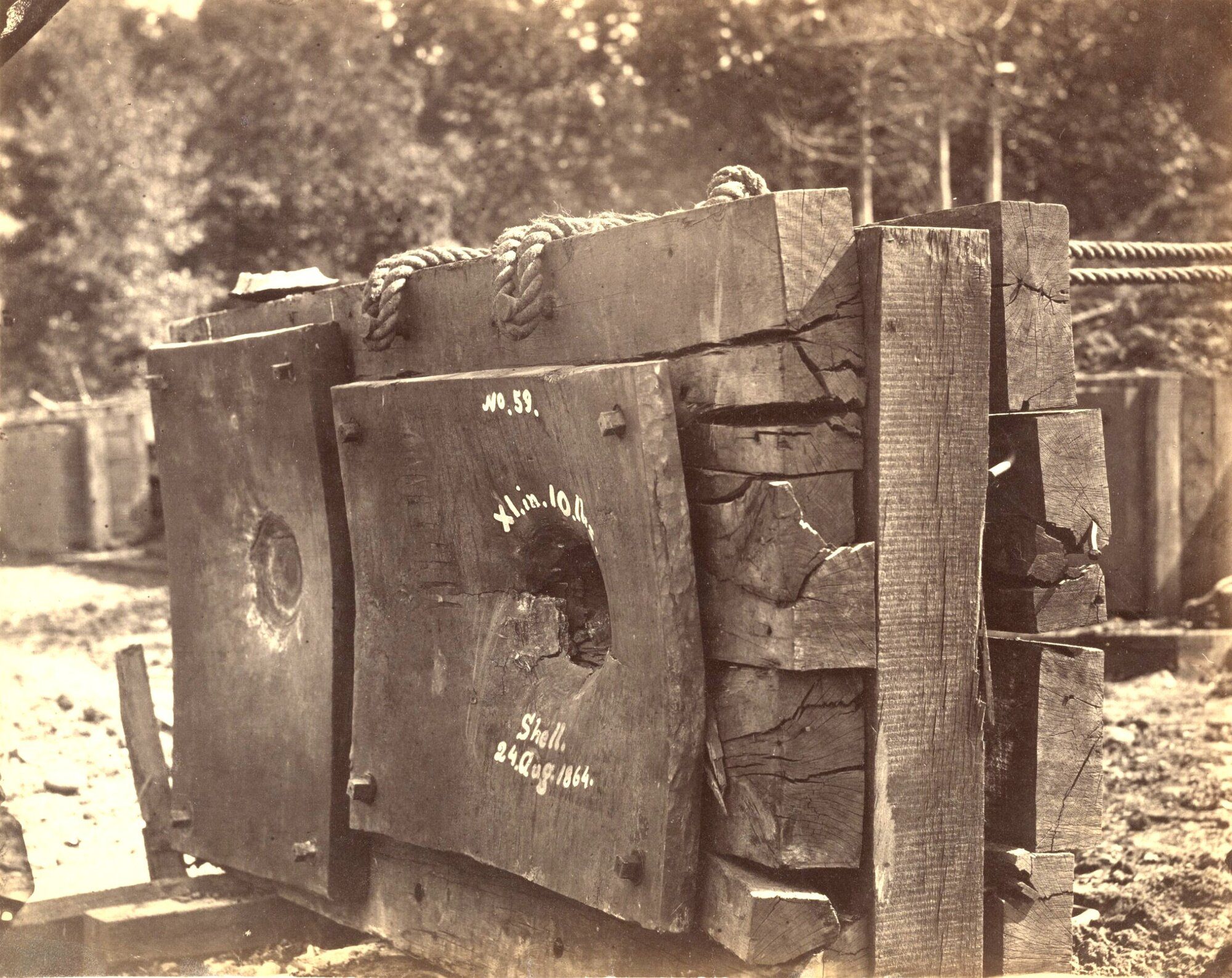
Just two months after the battle, Dahlgren began testing his guns on fabricated armor targets outside the Washington Naval Yard. The testing went on for almost two years, in which time various guns and ammunition from American and British service were tested on both contemporary and experimental types of armor. From these tests, Dahlgren and his staff discovered that the old 11-inch and even 9-inch guns could be made effective against armored ironclads by increasing their powder charge. By doubling the old service charge of 15 pounds to 30 pounds of powder, the 11-inch Dahlgren guns could be made to penetrate through a 4.5" solid iron plate, even when it was angled at a steep 15 degrees. He concluded that if faced by ironclads, gun crews could safely load the 11-inch guns with 25-pound charges to effectively deal with the threat.
Despite his findings, his superiors insisted that a more powerful replacement for the 11-inch guns be developed. Dahlgren introduced a 15-inch gun, which threw a massive 440-pound solid round shot. President Lincoln even attended a test with the experimental 15-inch gun. These were used to arm several of the Union's new ironclad monitors. Their effectiveness was eventually proven when the monitor USS Weehawken used them against the Confederate ironclad CSS Atlanta. Two shots compromised the 4-inch thick iron armor of the Atlanta, splattering the gun crew with splinters from the timber backing. The Atlanta surrendered shortly. Other successes soon followed.
Edited from an article in TheWarHymn.
Images:
Heritage Auctions
J. Paul Getty Museum
National Archives
Naval History and Heritage Command




Rear Admiral John A. Dahlgren founded the Ordnance Department of the US Navy. He introduced safer and better ways to test, build, and operate the heavy naval ordnance of his day, and was well-regarded in his field by both his American and European counterparts. The naval guns he designed were used on both sides of the American Civil War, including the 9-inch guns mounted on the CSS Virginia and the pair of 11-inch guns fitted in the turret of the USS Monitor. The 11-inch Dahlgren guns in this case were capable of driving a 169 pound cast-iron shot to a velocity of 1200 ft/sec. Weight-wise, only three other weapons in Union service at the time were larger.
Observers questioned why the Monitor's guns had failed to do any real damage to the armored Virginia/Merrimac during the battle, even at point-blank distances. Both those in government and the public worried whether the Union fleet could deal with future threats from Confederate ironclads. Dahlgren was determined to find out what had happened at Hampton Roads and how effective the new ironclads were. Since the battle damaged CSS Virginia was unavailable for study, he decided he would have to find out through experimentation.
Just two months after the battle, Dahlgren began testing his guns on fabricated armor targets outside the Washington Naval Yard. The testing went on for almost two years, in which time various guns and ammunition from American and British service were tested on both contemporary and experimental types of armor. From these tests, Dahlgren and his staff discovered that the old 11-inch and even 9-inch guns could be made effective against armored ironclads by increasing their powder charge. By doubling the old service charge of 15 pounds to 30 pounds of powder, the 11-inch Dahlgren guns could be made to penetrate through a 4.5" solid iron plate, even when it was angled at a steep 15 degrees. He concluded that if faced by ironclads, gun crews could safely load the 11-inch guns with 25-pound charges to effectively deal with the threat.
Despite his findings, his superiors insisted that a more powerful replacement for the 11-inch guns be developed. Dahlgren introduced a 15-inch gun, which threw a massive 440-pound solid round shot. President Lincoln even attended a test with the experimental 15-inch gun. These were used to arm several of the Union's new ironclad monitors. Their effectiveness was eventually proven when the monitor USS Weehawken used them against the Confederate ironclad CSS Atlanta. Two shots compromised the 4-inch thick iron armor of the Atlanta, splattering the gun crew with splinters from the timber backing. The Atlanta surrendered shortly. Other successes soon followed.
Edited from an article in TheWarHymn.
Images:
Heritage Auctions
J. Paul Getty Museum
National Archives
Naval History and Heritage Command


 Bringing the