How do you think Custer would have worked out as a Cavalry commander in the Western theater of the Civil War? It would have been interesting to see how well Custer would have done facing off in battle against the likes of Van Dorn,Wheeler, and, most notably, Forrest.
-
Welcome to CivilWarTalk, a forum about the American Civil War! - Join today! It's fast, simple, and FREE!
You are using an out of date browser. It may not display this or other websites correctly.
You should upgrade or use an alternative browser.
You should upgrade or use an alternative browser.
Custer in the Western theater
- Thread starter rbortega
- Start date
All I can tell you is Custer Ain't Skeered.How do you think Custer would have worked out as a Cavalry commander in the Western theater of the Civil War? It would have been interesting to see how well Custer would have done facing off in battle against the likes of Van Dorn,Wheeler, and, most notably, Forrest.
Jim in Wisconsin
Corporal
- Joined
- Nov 30, 2015
Did Custer and Forrest ever meet after the war?

Josh The Lighthouse Guy
Major
- Joined
- Apr 30, 2012
- Location
- Jupiter, FL
Custer wouldn't be intimidated or bluffed by Forrest, but he very well might be suckered into a trap.

Dusty
Sergeant
- Joined
- Jun 22, 2017
He wasn't scared of anything, that's what got him killed. It's anybody's guess how he would have made out there in the Western theater of the Civil War. No, he wasn't scared of anything, that's why he split his forces at the Little Bighorn so his forces could attack the Indian encampment from two different directions, and didn't listen to his scouts, even though they knew there there were thousands of Souix and Cheyenne to his then force, after he split them, of 268. (Soldiers, scouts and civilians) He said he could whip any Indians. Gall, Crazy Horse and Sitting Bull thought otherwise.
Last edited:
It's not that Custer didn't listen to his scouts. Custer believed he had been discovered by the Indians on his back trail, so he hurried his attack. He sent Beenteen to the West, as per his orders, to cutoff an Indian escape to the South. He sent Reno down the valley to attack the village. Custer took the remainder of troop to the right and down the valley to support Reno. Custer was cutoff, surrounded, ran out of ammo, and the rest is history. Coming up in 3 days June 25, 1876.He wasn't scared of anything, that's what got him killed. It's anybody's guess how he would have made out there in the Western theater of the Civil War. No, he wasn't scared of anything, that's why he split his forces at the Little Bighorn so his forces could attack the Indian encampment from two different directions, and didn't listen to his scouts, even though they knew there there were thousands of Souix and Cheyenne to his then force, after he split them, of 268. (Soldiers, scouts and civilians) He said he could whip any Indians. Gall, Crazy Horse and Sitting Bull thought otherwise.

LtGenHenryWagerHalleck
Private
- Joined
- Dec 10, 2024
From this thread you would be led to believe that the Calvary in the west was only a matter of fighting Forrest. They had other goals such as the diversionary raid by Grierson in 1863 and 1864. They also had to screen and gather intelligence. I imagine Custer would have performed similarly to Wilder at Hoover's Gap.
Still I think his talents were better used as a shot in the arm to the Calvary of the eastern forces
Still I think his talents were better used as a shot in the arm to the Calvary of the eastern forces
Dusty
Sergeant
- Joined
- Jun 22, 2017
Yep, leader of the six Crow scouts, Half Yellow Face speaking through an interpreter to Custer that day: you and I are going home today by a road we do not know.

Rhea Cole
Colonel
- Joined
- Nov 2, 2019
- Location
- Murfreesboro, Tennessee
It's not that Custer didn't listen to his scouts. Custer believed he had been discovered by the Indians on his back trail, so he hurried his attack. He sent Beenteen to the West, as per his orders, to cutoff an Indian escape to the South. He sent Reno down the valley to attack the village. Custer took the remainder of troop to the right and down the valley to support Reno. Custer was cutoff, surrounded, ran out of ammo, and the rest is history. Coming up in 3 days June 25, 1876.
Custer did exactly what he always did.
He divided his force, sending a small diversionary flanking force to one end of a village filled with women & children. He then attacked with his main force riding down & indiscriminately killing any man, woman or child that showed themselves.
At the Washita, it was the diversionary force that was massacred.
Military historians have concluded that, like many of us, Custer's vision had diminished with age. It is credible to assume that unable to see the size of the camp, Custer just fell back onto his habitual tactics. Coupled with hubris, poor vision is a way to account for Custer's misjudgments on bluffs above the Greasy Grass. Read more here.
Link

History & Culture - Washita Battlefield National Historic Site (U.S. National Park Service)
History & Culture
Last edited:

Peace Society
First Sergeant
- Joined
- Jun 25, 2019
- Location
- Ark Mo line
This was an interesting article (summarized):
The 1874 Black Hills Expedition was to survey the area and verify if gold really was there. It was, prompting a huge influx of miners into the mountains held sacred by the Sioux. Naturally, there were hostilities.
In the summer of 1876 the army set out to "end the Indian threat." Custer wanted to head the whole expedition, but his inclination to brash activity almost cut him out entirely. He managed to retain command of the Seventh Cavalry. He felt this was an opportunity to get some publicity that could help him get the presidential nomination. He told his Arikara scouts if he could win even a small fight he would become Great Father and he and his chief scout could go to Washington.
On the morning of June 25 the scouts reported the huge camp of the Sioux and Cheyenne and told Custer of their strength. But he pushed right in, not even waiting for reinforcements. His chief scout, Bloody Knife, knew they would not be coming back alive and said so, but that did not deter Custer. The results were as expected.
From "Bloody Knife's Last Stand", by J Daniel Rogers, Natural History magazine 6/92, p 37-43
The 1874 Black Hills Expedition was to survey the area and verify if gold really was there. It was, prompting a huge influx of miners into the mountains held sacred by the Sioux. Naturally, there were hostilities.
In the summer of 1876 the army set out to "end the Indian threat." Custer wanted to head the whole expedition, but his inclination to brash activity almost cut him out entirely. He managed to retain command of the Seventh Cavalry. He felt this was an opportunity to get some publicity that could help him get the presidential nomination. He told his Arikara scouts if he could win even a small fight he would become Great Father and he and his chief scout could go to Washington.
On the morning of June 25 the scouts reported the huge camp of the Sioux and Cheyenne and told Custer of their strength. But he pushed right in, not even waiting for reinforcements. His chief scout, Bloody Knife, knew they would not be coming back alive and said so, but that did not deter Custer. The results were as expected.
From "Bloody Knife's Last Stand", by J Daniel Rogers, Natural History magazine 6/92, p 37-43

13 IL Cav & 64 GA Inf
Captain
- Joined
- Jan 29, 2024
- Location
- Florida & Alabama (also GA & VA)
Haha!All I can tell you is Custer Ain't Skeered.
13 IL Cav & 64 GA Inf
Captain
- Joined
- Jan 29, 2024
- Location
- Florida & Alabama (also GA & VA)
You are right - he was not scared of anything. Custer would have needed his uncanny fortune of being at the right place at the right time during the war. (He lost this after the Civil War, of course.)He wasn't scared of anything, that's what got him killed. It's anybody's guess how he would have made out there in the Western theater of the Civil War. No, he wasn't scared of anything, that's why he split his forces at the Little Bighorn so his forces could attack the Indian encampment from two different directions, and didn't listen to his scouts, even though they knew there there were thousands of Souix and Cheyenne to his then force, after he split them, of 268. (Soldiers, scouts and civilians) He said he could whip any Indians. Gall, Crazy Horse and Sitting Bull thought otherwise.
Dun told you what happened in #6, above. Some need repetition.This was an interesting article (summarized):
The 1874 Black Hills Expedition was to survey the area and verify if gold really was there. It was, prompting a huge influx of miners into the mountains held sacred by the Sioux. Naturally, there were hostilities.
In the summer of 1876 the army set out to "end the Indian threat." Custer wanted to head the whole expedition, but his inclination to brash activity almost cut him out entirely. He managed to retain command of the Seventh Cavalry. He felt this was an opportunity to get some publicity that could help him get the presidential nomination. He told his Arikara scouts if he could win even a small fight he would become Great Father and he and his chief scout could go to Washington.
On the morning of June 25 the scouts reported the huge camp of the Sioux and Cheyenne and told Custer of their strength. But he pushed right in, not even waiting for reinforcements. His chief scout, Bloody Knife, knew they would not be coming back alive and said so, but that did not deter Custer. The results were as expected.
From "Bloody Knife's Last Stand", by J Daniel Rogers, Natural History magazine 6/92, p 37-43
Rhea Cole
Colonel
- Joined
- Nov 2, 2019
- Location
- Murfreesboro, Tennessee
Of course, while unlike Joe Wheeler whose long life was spent polishing his Civil Record into something that only vaguely resembles the actual events, Custer's self aggrandizing was cut short.
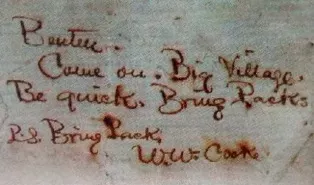
Custer's last message.
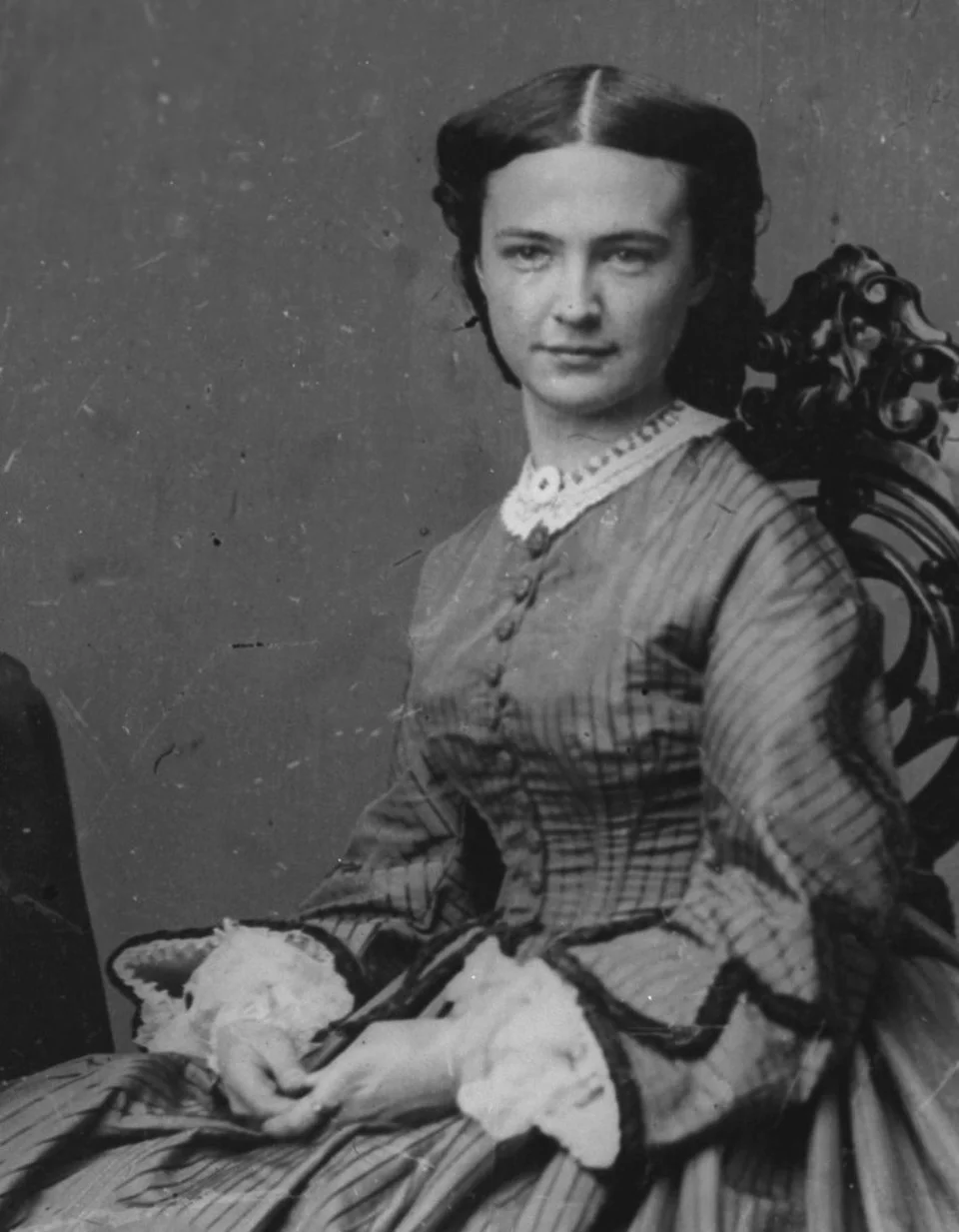
Libbie Custer picked up the flag & made it her long life's work. It was her that hounded Fredrick Benteen like a banshee. Objectively, there was nothing that the (+/-) 125 men he commanded could have done but add to the death toll had he attempted to join Custer. In fact, if the accounts the attackers agree to are accurate, the fight would have been over before Benteen could have arrived.
Custer the great Indian fighter reputation is largely a fictional construct promoted by Mrs. Custer.
Link

 www.nps.gov
*
The life of Libbie Custer, read more here.
Link
 historynet.com
Custer's last message.
Libbie Custer picked up the flag & made it her long life's work. It was her that hounded Fredrick Benteen like a banshee. Objectively, there was nothing that the (+/-) 125 men he commanded could have done but add to the death toll had he attempted to join Custer. In fact, if the accounts the attackers agree to are accurate, the fight would have been over before Benteen could have arrived.
Custer the great Indian fighter reputation is largely a fictional construct promoted by Mrs. Custer.
Link
Custer's Last Message - Little Bighorn Battlefield National Monument (U.S. National Park Service)
Custers Last Message
*
The life of Libbie Custer, read more here.
Link
Libbie Custer: ‘A Wounded Thing Must Hide’
Such were her sad words after the June 1876 Little Bighorn death of her husband, George Armstrong Custer, the onetime ‘Boy General’ with whom she had
historynet.com
Last edited:
Actually, Custer never made it into the Village at the LBH. Killed on the hillside East of the river/village.Custer did exactly what he always did.
View attachment 583151
He divided his force, sending a small diversionary flanking force to one end of a village filled with women & children. He then attacked with his main force riding down & indiscriminately killing any man, woman or child that showed themselves.
At the Washita, it was the diversionary force that was massacred.
Military historians have concluded that, like many of us, Custer's vision had diminished with age. It is credible to assume that unable to see the size of the camp, Custer just fell back onto his habitual tactics. Coupled with hubris, poor vision is a way to account for Custer's misjudgments on bluffs above the Greasy Grass. Read more here.
Link
History & Culture - Washita Battlefield National Historic Site (U.S. National Park Service)
History & Culture
Rhea Cole
Colonel
- Joined
- Nov 2, 2019
- Location
- Murfreesboro, Tennessee
Actually, Custer never made it into the Village at the LBH. Killed on the hillside East of the river/village.
Do you seriously believe that any CWT member would not know that? If you read the text, it clearly refers to Custer's habitual tactic of ordering a small force to the flank while he makes a frontal assault on the village. You can read the accompanying NPS citation, Custer's halt at the riverbank is detailed.
At that point Custer lost the initiative. Halting on the high ground & forming dismounted skirmish lines subjected the disconnected companies to being flanked & destroyed in detail. There was no way for the companies to support each other or displace under fire. As Sitting Bull said, the fight lasted about as long as smoking a pipe.
The archeological study of the Little Big Horn Battlefield revolutionized the understanding of what occurred. Read more here.
Link
Last edited:
#1. Why are you so angry? #2. I read your post above. "Custer did exactly what he always did." Then, your picture with your words below the pic. "He divided his force, sending a small diversionary force to one end of the village filled with women & children. He then attacked with his main force riding down & indiscriminately killing any man, woman or child that showed themselves." Your words. #3. I think you got your battles mixed up. #4. Like I said, Custer did not get into the village. #5. Actually, had you read more sources you would know that Sitting Bull was not on the battlefield but was back in the village, safe, with the women and children. Further, had you done, still, more reading on this battle, you would know that the "as long as it takes to smoke a pipe" is believed, by most LBH scholars, to refer ONLY to the time of the Last Stand Action, EXCLUSIVELY. From first shot to last shot, the firing lasted for over an hour. The first shots were fired at long range. But, thanks for sharing your expertise on this battle with us .......Custer did exactly what he always did.
View attachment 583151
He divided his force, sending a small diversionary flanking force to one end of a village filled with women & children. He then attacked with his main force riding down & indiscriminately killing any man, woman or child that showed themselves.
At the Washita, it was the diversionary force that was massacred.
Military historians have concluded that, like many of us, Custer's vision had diminished with age. It is credible to assume that unable to see the size of the camp, Custer just fell back onto his habitual tactics. Coupled with hubris, poor vision is a way to account for Custer's misjudgments on bluffs above the Greasy Grass. Read more here.
Link
History & Culture - Washita Battlefield National Historic Site (U.S. National Park Service)
History & Culture
Last edited:
Rhea Cole
Colonel
- Joined
- Nov 2, 2019
- Location
- Murfreesboro, Tennessee
#1. Why are you so angry? #2. I read your post above. "Custer did exactly what he always did." Then, your picture with your words below the pic. "He divided his force, sending a small diversionary force to one end of the village filled with women & children. He then attacked with his main force riding down & indiscriminately killing any man, woman or child that showed themselves." Your words. #3. I think you got your battles mixed up. #4. Like I said, Custer did not get into the village. #5. Actually, had you read more sources you would know that Sitting Bull was not on the battlefield but was back in the village, safe, with the women and children. Further, had you done, still, more reading on this battle, you would know that the "as long as it takes to smoke a pipe" is believed, by most LBH scholars, to refer ONLY to the time of the Last Stand Action, EXCLUSIVELY. From first shot to last shot, the firing lasted for over an hour. The first shots were fired at long range. But, thanks for sharing your expertise on this battle with us .......
As I stated above, for facts, read the citations.
Dusty
Sergeant
- Joined
- Jun 22, 2017
Son of the Morning Star, Evan S. Connell. Custer and the Little Bighorn. I have read two other books on this but enjoyed his the best.
You might like Lakota Noon by Greg Michno. Excellent interpretation of information provided by Indian Combatants at LBH.Son of the Morning Star, Evan S. Connell. Custer and the Little Bighorn. I have read two other books on this but enjoyed his the best.
Similar threads

- Replies
- 56
- Views
- 993
- Replies
- 7
- Views
- 322


- Replies
- 60
- Views
- 1K
- Learn About Us
- ►About CivilWarTalk
- ►Contact the Webmaster
- ►Meet the Staff
- ►Link to CivilWarTalk
- Join Our Community
- ►Register
- ►Browse Forums
- ►View Today's Discussions
- ►Search the Forum
- Get Help
- ►FAQ
- ►Student Guide
- ►Forum Rules & Etiquette
- ►Copyright / DMCA
 Bringing the