
 Forum Host
- Joined
- May 12, 2010
- Location
- Now Florida but always a Kentuckian
Some days ago, Northern Light asked about White and Yellow Cornmeal. I was away on trip but wanted to get back to what cornmeal is and the different varieties.
"Cornmeal is the most common form of this grain that we use in baking. Most of the cornmeal you find on the grocer's shelf is made in large mills and is degermed and hulled, which means it will keep pretty indefinitely. There are a number of good mills around the United States that still mill the whole kernel, including the germ. As with whole wheat flour, the oils in the germ are subject to rancidity so need to be consumed fairly quickly. Needless to say, these whole kernel meals are much more interesting and have much more flavor and texture than the large production ones."
"Cornmeal comes in fine, medium, and coarse grinds, as well as in several color, yellow being the most common. White is grown in the South and blue in the Southwest. Nutritionally the yellow comes out on top as it contains beta-carotene, which translates to an additional 630 IU of vitamin A per cup."
Like any nonwheat grain, it contains no gluten so needs some wheat to hold it together in a bread or muffin or cake. The early New England colonists used cornmeal in making Indian Pudding, cornmeal much, Johnny cake, and Anadama bread."
From: "The King Arthur Flour Baker's Companion", The All-Purpose Baking Cookbook, The Countryman Press, Woodstock, Vermont, 2003, page 522.
"Cornmeal is the most common form of this grain that we use in baking. Most of the cornmeal you find on the grocer's shelf is made in large mills and is degermed and hulled, which means it will keep pretty indefinitely. There are a number of good mills around the United States that still mill the whole kernel, including the germ. As with whole wheat flour, the oils in the germ are subject to rancidity so need to be consumed fairly quickly. Needless to say, these whole kernel meals are much more interesting and have much more flavor and texture than the large production ones."
"Cornmeal comes in fine, medium, and coarse grinds, as well as in several color, yellow being the most common. White is grown in the South and blue in the Southwest. Nutritionally the yellow comes out on top as it contains beta-carotene, which translates to an additional 630 IU of vitamin A per cup."
Like any nonwheat grain, it contains no gluten so needs some wheat to hold it together in a bread or muffin or cake. The early New England colonists used cornmeal in making Indian Pudding, cornmeal much, Johnny cake, and Anadama bread."
From: "The King Arthur Flour Baker's Companion", The All-Purpose Baking Cookbook, The Countryman Press, Woodstock, Vermont, 2003, page 522.




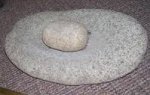



 Bringing the