Clinton, Louisiana

bdtex

Major General
★★ Sr. Moderator
Silver Patron
Annual Winner
Regtl. Quartermaster Chickamauga 2018 Vicksburg 2019
Joined
Jul 21, 2015
Location
Texas
Clinton is the parish seat of East Feliciana Parish. I went there yesterday to visit the Clinton Confederate Cemetery. I didn't really do much research about the town before my trip. It was part of my last minute roadtrip to Port Hudson which is a about 20-25 minutes from there. Before I got to the cemetery I passed the parish courthouse and vowed to stop there on the way to my next scheduled stop.

2017-01-13 16.32.42.jpg
 
Last edited:
My mobile Dropbox account is acting up so I'll have to post the cemetery pictures and some other things of local interest on my desktop pc at work on Monday I guess. Clinton and East Feliciana Parish is a place I wanna visit again.
 
In the spirit of the description of Civil War Traveler's Companion,I found this bed & breakfast in nearby Jackson,LA and almost made a reservation there but decided to go for the safer play at Holiday Inn Express in Zachary,LA(north Baton Rouge) instead. Next time maybe.

http://www.milbankbandb.com/centenary.htm
 
Dropbox working a little better.

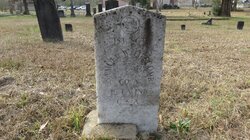
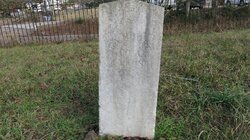
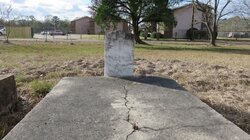
Sad. Very old and not well kept cemetery. Most of the soldiers buried here died of wounds or disease in a nearby hospital. More about that later. Lotta graves marked only by stone blocks with no writing on them. I believe the grass has already covered some stones. I found one and uncovered it. I get the feeling a local SCV chapter probably cleans up there now and then. Didn't see any flags marking the graves. Don't think they'd stay long if any were put there. Might be against cemetery rules. Dunno.

2017-01-13 15.58.43.jpg
 
Last edited:
@bdtex, thanks for a wonderful photo tour !

You've brought back memories of the many years that I lived in Natchez, Mississippi.

Driving down Highway 61 to Baton Rouge, Louisiana was a monthly trip !
And that doesn't include Saturday nights at Tiger Stadium during the fall . . . watching the LSU Tigers play football. :D

Seriously though . . . the history of this part of the United States predates the Civil War by centuries.

Native American Nations, Spanish Conquistadores, French Voyageurs, Royal French "companies" and the relatively unknown fact that the entire area was flooded with British Loyalists during the American revolution. After all, this area was the 15th colony, British West Florida.

British East Florida being the the 14th colony.

And coming full circle back under the Spanish Crown after the revolution. :unsure:

I hope you had time to visit some of the Colonial & Territorial sites in the area.

Especially the Town of St. Francisville, Louisiana.
 
Last edited:
The Courthouse and a monument erected by the local U.D.C. Chapter in 1909.

View attachment 120168
The East and West Feliciana Parishes (translate Happy Land) are just a beautiful historic area. It's hilly and verdant country which was originally populated by English colonists when it became the British West Florida territory after the French and Indian War. Thus it is unlike most of the rest of south Louisiana with its French influence. The towns of Clinton, Jackson and St. Francisville are places to see; the Courthouse in Clinton and the old Lawyer's Row buildings, Jackson and the original Centenary College campus, and the beautiful homes of the area. Rosedown is my favorite, and Asphodel (for the native daffodils) and Oakley where John James Audubon stayed painted and taught for a while are must sees. Audubon was so impressed with the country that he wrote this in part:

Okl1.jpg
Oakley Plantation House

Courtesy of the Capital Resource Conservation and Development Council


Arriving at Oakley Plantation on June 18, 1821, the young aspiring naturalist John James Audubon wrote: "The rich magnolias covered with fragrant blossoms, the holly, the beech, the tall yellow poplar, the hilly ground and even the red clay, all excited my admiration." Audubon's stay at Oakley lasted only four months, but he painted 32 of his famous bird pictures here and developed a love for the beautiful West Feliciana Parish. Mrs. Lucy Pirrie brought the young Audubon to Oakley as a tutor for her daughter, Eliza. The arrangement required that Audubon spend half his time teaching drawing to Eliza, but he was otherwise free to roam the woods and work on his naturalistic paintings. For this Audubon was to receive 60 dollars a month plus room and board for himself and his 13-year-old pupil assistant, John Mason. Audubon returned at a later date to join his wife, then teaching there, and his son. He wrote, "Numerous pupils desired lessons in music, French and drawing. . .the dancing speculation fetched two thousand dollars; and with this capital and my wife's savings I was now able to foresee a successful issue to my great ornithological work." This work was later to become Audubon's famous Birds of America.
 
@bdtex, thanks for a wonderful photo tour !

You've brought back memories of the many years that I lived in Natchez, Mississippi.

Driving down Highway 61 to Baton Rouge, Louisiana was a monthly trip !
And that doesn't include Saturday nights at Tiger Stadium during the fall . . . watching the LSU Tigers play football. :D

Seriously though . . . the history of this part of the United States predates the Civil War by centuries.

Native American Nations, Spanish Conquistadores, French Voyageurs, Royal French "companies" and the relatively unknown fact that the entire area was flooded with British Loyalists during the American revolution. After all, this area was the 15th colony, British West Florida.

British East Florida being the the 14th colony.

And coming full circle back under the Spanish Crown after the revolution. :unsure:

I hope you had time to visit some of the Colonial & Territorial sites in the area.

Especially the Town of St. Francisville, Louisiana.
Most welcome. Not done posting about it,just got tired last night. I did some research of the area at my hotel on Friday night and found more to see but just had no time for it on this trip. Tried to book a room in St. Francisville on Thursday morning but they were booked up. The makings for another trip or 2 are there.
 
The East and West Feliciana Parishes (translate Happy Land) are just a beautiful historic area. It's hilly and verdant country which was originally populated by English colonists when it became the British West Florida territory after the French and Indian War. Thus it is unlike most of the rest of south Louisiana with its French influence. The towns of Clinton, Jackson and St. Francisville are places to see; the Courthouse in Clinton and the old Lawyer's Row buildings, Jackson and the original Centenary College campus, and the beautiful homes of the area. Rosedown is my favorite, and Asphodel (for the native daffodils) and Oakley where John James Audubon stayed painted and taught for a while are must sees. Audubon was so impressed with the country that he wrote this in part:

Okl1.jpg
Oakley Plantation House

Courtesy of the Capital Resource Conservation and Development Council


Arriving at Oakley Plantation on June 18, 1821, the young aspiring naturalist John James Audubon wrote: "The rich magnolias covered with fragrant blossoms, the holly, the beech, the tall yellow poplar, the hilly ground and even the red clay, all excited my admiration." Audubon's stay at Oakley lasted only four months, but he painted 32 of his famous bird pictures here and developed a love for the beautiful West Feliciana Parish. Mrs. Lucy Pirrie brought the young Audubon to Oakley as a tutor for her daughter, Eliza. The arrangement required that Audubon spend half his time teaching drawing to Eliza, but he was otherwise free to roam the woods and work on his naturalistic paintings. For this Audubon was to receive 60 dollars a month plus room and board for himself and his 13-year-old pupil assistant, John Mason. Audubon returned at a later date to join his wife, then teaching there, and his son. He wrote, "Numerous pupils desired lessons in music, French and drawing. . .the dancing speculation fetched two thousand dollars; and with this capital and my wife's savings I was now able to foresee a successful issue to my great ornithological work." This work was later to become Audubon's famous Birds of America.
I concur. The drive to there from the Port Hudson battlefield was beautiful. It was unlike other parts of Louisiana I have driven in. More later. Thanks for the informative reply.
 
I went through the FindAGrave records on the cemetery more than once before my trip. Coupla things I found:

1. An Arkansas soldier that met a girl in Clinton and after quite a record of service in the CSA army that took him many places,he returned to Clinton and found her and married her. They were married 62 years and died within a year of each other. Both of them and one of their sons are buried in the cemetery.

http://www.findagrave.com/cgi-bin/fg.cgi?page=gr&GSsr=81&GScid=1972094&GRid=22218960&

2. This man "Died at the Cottage Plantation from burns received when the steamboat "The Princess" exploded on the Mississippi River south of Baton Rouge" on February 27,1859.

http://www.findagrave.com/cgi-bin/fg.cgi?page=gr&GSsr=81&GScid=1972094&GRid=142434307&

There are lots of links and sources on the explosion of the steamboat "The Princess". Good reads too. I'll post a couple. @AndyHall You may already know about The Princess.

http://www.knowla.org/entry/1599/&view=summary

http://historicalbatonrouge.blogspot.com/2009/09/burning-of-steamer-princess.html?m=1
 
Last edited:
Many of the soldiers buried at Clinton Confederate Cemetery died at Silliman Hospital there in Clinton. Silliman Institute was a women's college in Clinton and also served as a hospital. It was founded by William Clayton Silliman. There is a monument to him in the cemetery.

2017-01-13 16.15.58.jpg
 
When I got back to my hotel room on Friday night I did some research on East Feliciana Parish and found this. If I had seen this on Thursday night at my hotel room,I probably wouldn't have made it to my last planned stop on Friday. :D Gotta go back.

http://www.felicianatourism.org/attraction.htm
 
Jackson and the original Centenary College campus,

The history of Centenary College is fascinating. This is from its website, which may be found here:

"The Civil War, in effect, dealt a mortal wound to Centenary and Jackson. The College closed during the conflict, and six of the 10 seniors were killed in battle or died of wounds and illness. The College was used as a hospital and was captured and recaptured by Union and Confederate forces. The campus itself was the scene of more than one battle."

It subsequently moved to Shreveport and its very pretty, well-laid out campus continues to provide opportunity for modern students to thrive.

Thanks, bdtex, for the pictures. Keep them coming.
 
I look forward to seeing the pictures you post on Monday. Thanks for sharing!
Thank you. I prefer CW touring /sightseeing on weekdays and during the winter months. I can cover a lot more ground in one day not fighting the summer heat and the crowds are small. I've had battlefields to myself the past 3 Januaries. The tradeoff is that it's not exactly the best time of the year for pictures.
 

Learn About Us
About CivilWarTalk
Contact the Webmaster
Meet the Staff
Link to CivilWarTalk
Join Our Community
Register
Browse Forums
View Today's Discussions
Search the Forum
Get Help
FAQ
Student Guide
Forum Rules & Etiquette
Copyright / DMCA

     Contact Us CivilwarTalk on Facebook CivilWarTalk on YouTube CivilWarTalk on Twitter RSS Feed

Bringing the American Civil War and More to Life.
© 1999 - , CIVILWARTALK, LLC - Site Version 10.0

SlaveryTalk.com - SecessionTalk.com - CivilWarTalk.com - ReconstructionTalk.com
Back
Top