Civil War corn.

major bill

Brev. Brig. Gen'l
Forum Host
Joined
Aug 25, 2012
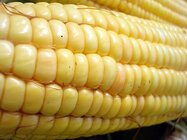
512px-Corn_01.jpg
Corn 01

Ashlyak at ml.wikipedia [CC BY-SA 3.0 (https://creativecommons.org/licenses/by-sa/3.0)], via Wikimedia Commons
Help me understand corn of the Civil War era. Corn was a major food crop and was used as anamal feed during the Civil War. But was it similar to modern corn? Pop corn is ancient, so Civil War soldiers must have seen pop corn, but I doubt this is what they carried. What about sweet corn, was it very common during the Civil War? That leaves us with flint corn or dent corn and if I am not mistaken, dent corn is more of a pist Civil War thing.
 
Last edited by a moderator:
View attachment 304291
Help me understand corn of the Civil War era. Corn was a major food crop and was used as anamal feed during the Civil War. But was it similar to modern corn? Pop corn is ancient, so Civil War soldiers must have seen pop corn, but I doubt this is what they carried. What about sweet corn, was it very common during the Civil War? That leaves us with flint corn or dent corn and if I am not mistaken, dent corn is more of a pist Civil War thing.

Sweet corn was around, it goes back to native americans, it would not have been as sweet as modern hybrids
 
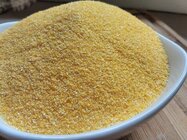
This is the corn a CS soldier got most of the time. How you think we made corn pone. They did get fresh when it was corn harvest time.
512px-Polenta_uncooked.jpg
Polenta uncooked
Popo le Chien [CC BY-SA 3.0 (https://creativecommons.org/licenses/by-sa/3.0)], via Wikimedia Commons
 
Last edited by a moderator:
YEP thats why most of the time was ground up to make corn bread etc BTW they ate raw peanuts as well.
 
View attachment 304291
Help me understand corn of the Civil War era. Corn was a major food crop and was used as anamal feed during the Civil War. But was it similar to modern corn? Pop corn is ancient, so Civil War soldiers must have seen pop corn, but I doubt this is what they carried. What about sweet corn, was it very common during the Civil War? That leaves us with flint corn or dent corn and if I am not mistaken, dent corn is more of a pist Civil War thing.

Modern corn is almost all one of a very few modern varieties developed to produce ethanol and corn syrup. Food corn is also now - aside from a few niche growers - a modern thing. So, one's growers market might sport some heirloom varieties but none of what you can buy at a store is what our ancestors ate. It's the same with tomatoes - today's varieties aren't even the same as what was commonly available in the 1950s. Out here there's a guy who collects old apples from homestead sites and the like and has a business selling them. So, I'd say what you can buy today is likely nothing like what the ancestors ate.

What with the development of GMOs who knows what will be stocked in your local grocery next year.
 
Last edited:
Yes, the cow pea (one of the types of black eyed peas) were all inside the Vicksburg garrison and they tried making bread from it with little success. Big tradition in the south (or at least Miss.) with eating black eyed peas with a ham hock on Jan. 1. Supposed to bring success for the next year.
 
Here is a story of the Confederate army's experience with cowpea bread during the Vicksburg Siege.
Regards
"A plentiful supply of cowpeas (also called black- eyed peas), grown by local farmers for animal feed, had been stockpiled in the city before the siege. These were ground into flour that was used to make bread of sorts. Not every Confederate soldier was thankful for this blessing. Ephraim Anderson of the 1st Missouri Brigade wrote that cowpea bread was a "novel species of the hardest of 'hard tack.' " The cowpea meal "was ground at a large mill in the city, and sent to the cooks in camp to be prepared. It was accordingly mixed with cold water and put through the form of baking; but the nature of it was such, that it never got done, and the longer it was cooked, the harder it became on the outside, which was natural, but, at the same time, it grew relatively softer on the inside, and, upon breaking it, you were sure to find raw pea- meal in the centre. The cooks protested that it had been on the fi re two good hours, but it was all to no purpose; yet, on the outside it was so hard, that one might have knocked down a full- grown steer with a chunk of it." After being fed to the troops for three days and making soldiers sick, cowpea bread was taken off the menu. Boiled cowpeas, however, continued to be about one half of their total subsistence. When the Union soldiers outside the city heard about the cowpea bread, presumably from deserters, a Southerner reported that they "hallooed over for several nights afterwards, enquiring how long the pea- bread would hold out; if it was not about time to lower our colors; and asking us to come over and take a good cup of coffee and eat a biscuit with them. Some of the boys replied that they need not be uneasy about rations, as we had plenty of mules to fall back upon.". *
*http://www.thehistoryreader.com/modern-history/may-18-1863-start-siege-starving-vicksburg/
 
I'm in Oxford too. Not everyone got mule meat and it ran out eventually. I have seen where troops on that main front line facing due east were the most starved primarily because getting them rations was very dangerous. Troops much closer to the river were fed better, even fishing in the swamps for extra food. There was also a lot of hoarding as Union troops later discovered. Thus, distribution of rations was an issue many don't really discuss.
 
I always keep reading that southern soldiers often had to rely on eating "green" corn. Doesn't sound too delectable, is that corn that hasn't yet ripened?
Confederate soldiers jokingly referred to their soiree into Maryland in September of 1862 as the ''green corn campaign'. Unfortunately this reaked havoc with their digestive systems.
 
Most modern varieties didn't exist then. "Green corn" is just field corn that's harvested early and has not been allowed to dry. It's ripe (to our understanding), it just will rot if you throw it in your corncrib. Most corn was harvested late and ground into meal if it was going to be used for human consumption.
Some modern corn varieties don't really need to be cooked before being eaten. We just prefer hot corn slathered in butter and salt. I read directions once on some "butter and sugar" corn that we had that recommended "dipping the corn in hot water for a couple minutes." You might need to boil period corn for an hour to make the kernels soft enough to enjoy.
 
This was a great question. Corn was different back then. Some heirloom varieties are being brought back. There are several sites on who sells seeds and about these types of corn.

There are basically 6 types of corn. They are Sweet Corn, Popcorn, Flour Corn, Dent Corn, Flint Corn and Pod Corn. Good site is:

http://thinkbioenergy.com/did-you-know-there-were-6-different-types-of-corn/

Theses are the major types but there are dozens of other special purpose corns.
 
Last edited:
From my 2nd book:
"Supplies were now to be hauled from Duvall's Bluff to Little Rock in wagons, as the railroad had no rolling stock in order. The consequence was, that we were put on quarter-rations; and very scanty living we found it. A great demand sprung up for pieces of tin and sheet-iron, of which to make graters whereon they grate corn. At these home-made graters the men would put in their spare time by turns, until they had meal enough to satisfy hunger for a day or two; and when that was gone the grater was in demand again. One or two small, portable, iron mills were erected, to be worked by two-man power; and their creaking was heard at almost all hours, monotonous and dreary."
 
From my first book:
The 61st Ill. Regiment, also at Vicksburg with the 126th, provided more of a description of what it was like at Vicksburg.

"The men of the 61st ate quite well during the siege of Vicksburg. Corn was already ripe enough to eat during this time of the year in Mississippi, and it made a splendid supplement to the standard army ration. The favorite method of cooking was to roast it in the shuck. This was accomplished by caking the shuck with mud and covering it with hot coals; when the shuck was burned down to its last layer, it was generally done. Blackberries were also plentiful, especially in this region".[1]


[1] (Dukett 55-56)


Learn About Us
About CivilWarTalk
Contact the Webmaster
Meet the Staff
Link to CivilWarTalk
Join Our Community
Register
Browse Forums
View Today's Discussions
Search the Forum
Get Help
FAQ
Student Guide
Forum Rules & Etiquette
Copyright / DMCA

     Contact Us CivilwarTalk on Facebook CivilWarTalk on YouTube CivilWarTalk on Twitter RSS Feed

Bringing the American Civil War and More to Life.
© 1999 - , CIVILWARTALK, LLC - Site Version 10.0

SlaveryTalk.com - SecessionTalk.com - CivilWarTalk.com - ReconstructionTalk.com
Back
Top