
 Forum Host
- Joined
- Feb 5, 2017
From The Museum of Civil War Medicine
(Civil War medicine facts to get you through the week)
@captaindrew
'Christmas Bells' for Lt. Longfellow
Charles Appleton Longfellow was 18 when he enlisted in the Union Army in March of 1863. He was the oldest child of poet and writer Henry Wadsworth Longfellow. On November 27, 1863, while involved in a skirmish during a battle of the Mine Run Campaign, Charley was shot through the left shoulder. The bullet exited under his right shoulder blade and had skimmed his spine. The wound was considered grave, and the army surgeon told the elder Longfellow that "paralysis might ensue" for his son. On Christmas day, 1863, as his son recovered from his wounds, Henry penned the poem "I Heard the Bells on Christmas Day," an expression of the beauty he heard that day in song, as sorrowful events unfolded around him.
…And in despair I bowed my head;
"There is no peace on earth," I said;
"For hate is strong,
And mocks the song
Of peace on earth, good-will to men!"
Then pealed the bells more loud and deep:
"God is not dead, nor doth He sleep;
The Wrong shall fail, The Right prevail,
With peace on earth, good-will to men."
Charley Longfellow survived his wounds, but never returned to the war. He went on to become a world traveler and author.
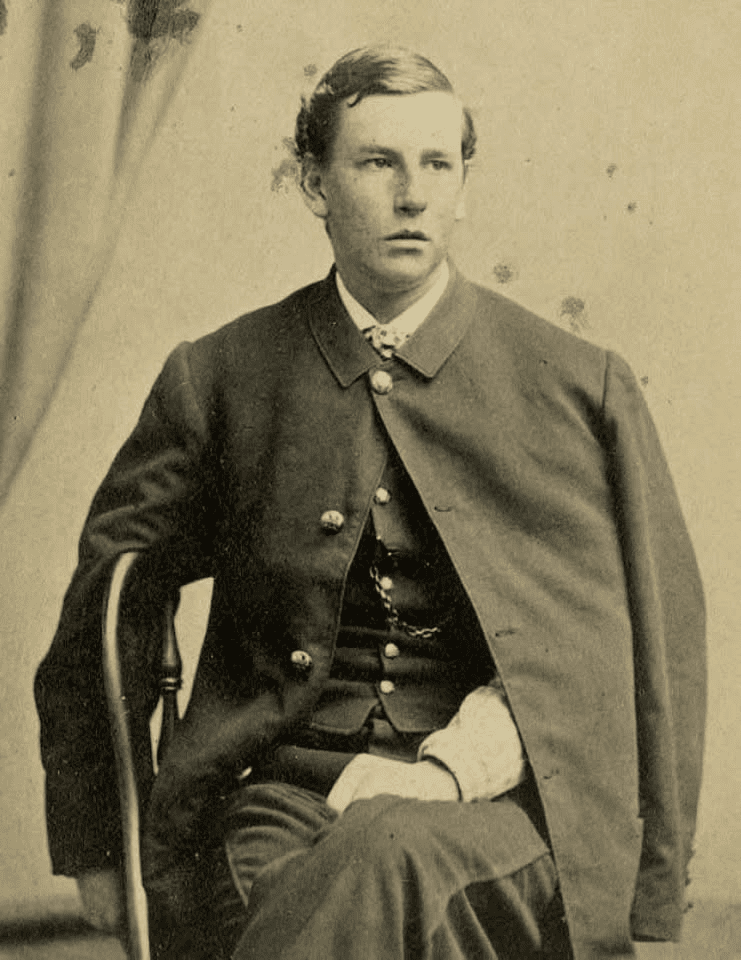
Charley Longfellow informed his father of his decision to enlist in the Union Army in a letter mailed from Portland, Maine.
Dear Papa
You know for how long a time I have been wanting to go to the war I have tried hard to resist the temptation of going without your leave but I cannot any longer, I feel it to be my first duty to do what I can for my country and I would willingly lay down my life for it if it would be of any good God Bless you all.
Yours affectionately
Charley.
Photo: NPS Photo

After his wounding, Charley was brought to New Hope Church, which served as a field hospital during the Mine Run Campaign. He spent four days recovering there before being moved to Alexandria, Va., for continued treatment. This painting of the church was created by Charley's cousin Mary King Longfellow in 1877.
Photo: Museum Collection, Longfellow House-Washington's Headquarters National Historic Site (LONG 18791)

Charley served in the 1st Massachusetts Cavalry as a second lieutenant. His cavalry hat is held at Longfellow House-Washington's Headquarters National Historic Site in Cambridge, Mass. The site preserves the home of Henry Longfellow. The house also served as headquarters for General George Washington during the Siege of Boston, July 1775 - April 1776.
Photo: Museum Collection, Longfellow House-Washington's Headquarters NHS (LONG 14050)
(Civil War medicine facts to get you through the week)
@captaindrew
'Christmas Bells' for Lt. Longfellow
Charles Appleton Longfellow was 18 when he enlisted in the Union Army in March of 1863. He was the oldest child of poet and writer Henry Wadsworth Longfellow. On November 27, 1863, while involved in a skirmish during a battle of the Mine Run Campaign, Charley was shot through the left shoulder. The bullet exited under his right shoulder blade and had skimmed his spine. The wound was considered grave, and the army surgeon told the elder Longfellow that "paralysis might ensue" for his son. On Christmas day, 1863, as his son recovered from his wounds, Henry penned the poem "I Heard the Bells on Christmas Day," an expression of the beauty he heard that day in song, as sorrowful events unfolded around him.
…And in despair I bowed my head;
"There is no peace on earth," I said;
"For hate is strong,
And mocks the song
Of peace on earth, good-will to men!"
Then pealed the bells more loud and deep:
"God is not dead, nor doth He sleep;
The Wrong shall fail, The Right prevail,
With peace on earth, good-will to men."
Charley Longfellow survived his wounds, but never returned to the war. He went on to become a world traveler and author.
Charley Longfellow informed his father of his decision to enlist in the Union Army in a letter mailed from Portland, Maine.
Dear Papa
You know for how long a time I have been wanting to go to the war I have tried hard to resist the temptation of going without your leave but I cannot any longer, I feel it to be my first duty to do what I can for my country and I would willingly lay down my life for it if it would be of any good God Bless you all.
Yours affectionately
Charley.
Photo: NPS Photo
After his wounding, Charley was brought to New Hope Church, which served as a field hospital during the Mine Run Campaign. He spent four days recovering there before being moved to Alexandria, Va., for continued treatment. This painting of the church was created by Charley's cousin Mary King Longfellow in 1877.
Photo: Museum Collection, Longfellow House-Washington's Headquarters National Historic Site (LONG 18791)
Charley served in the 1st Massachusetts Cavalry as a second lieutenant. His cavalry hat is held at Longfellow House-Washington's Headquarters National Historic Site in Cambridge, Mass. The site preserves the home of Henry Longfellow. The house also served as headquarters for General George Washington during the Siege of Boston, July 1775 - April 1776.
Photo: Museum Collection, Longfellow House-Washington's Headquarters NHS (LONG 14050)


 Bringing the