Blue water navy

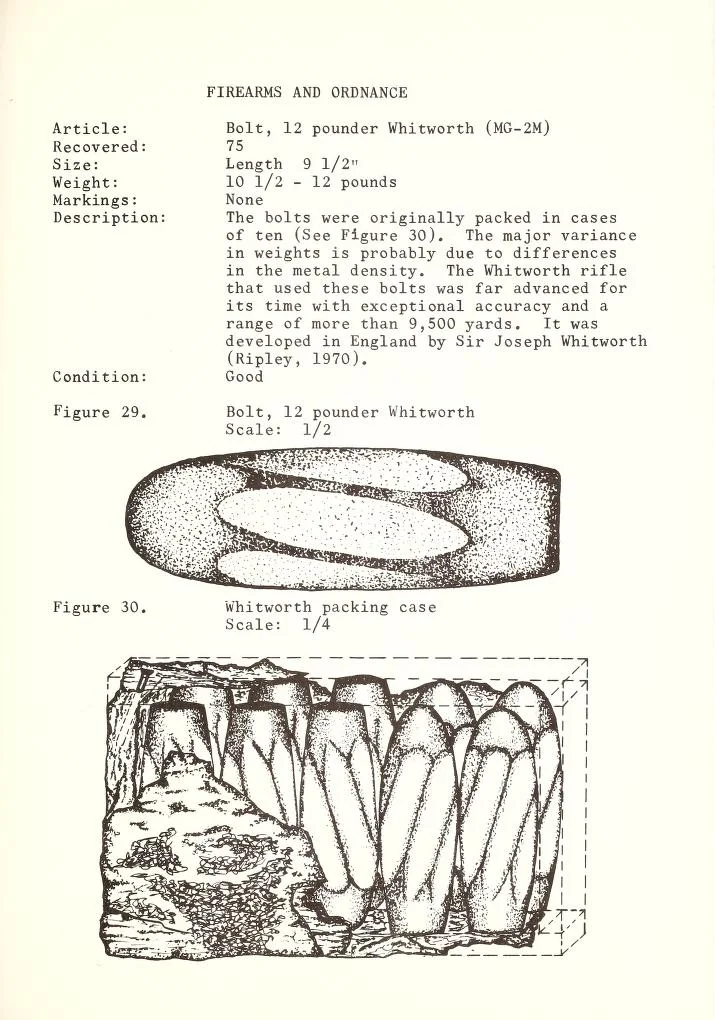
The converted ferry Modern Greece was run aground near Fort Fisher. In the 1970's the wreck & most of its cargo was discovered in shallow water off the beach. The Blockade Runner Modern Greece & Her Cargo is a unique insight into what blockade runners actually carried.
IMG_2395.webp
IMG_2396.webp
IMG_2595.webp
IMG_3521.webp
IMG_3528.webp
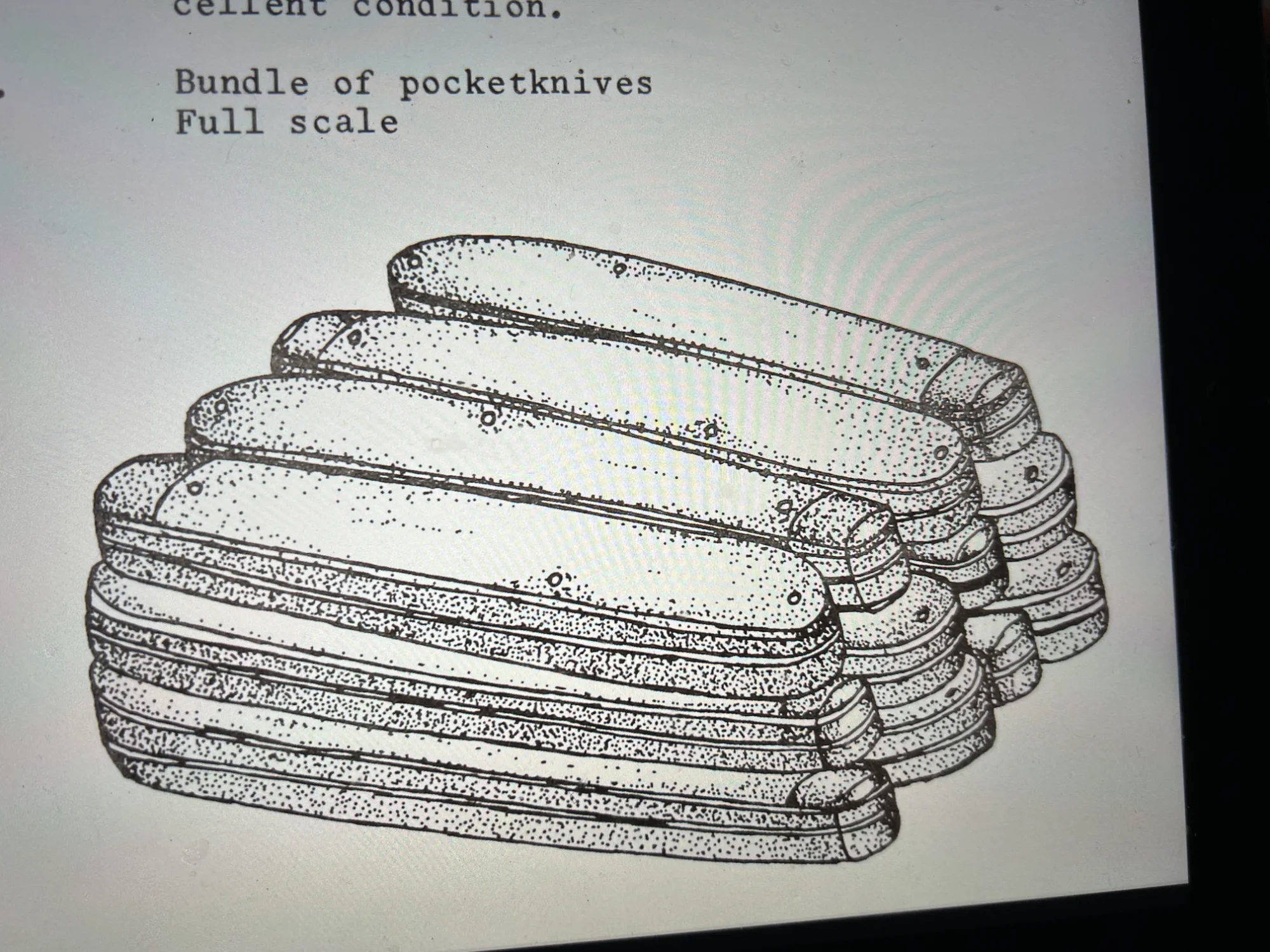
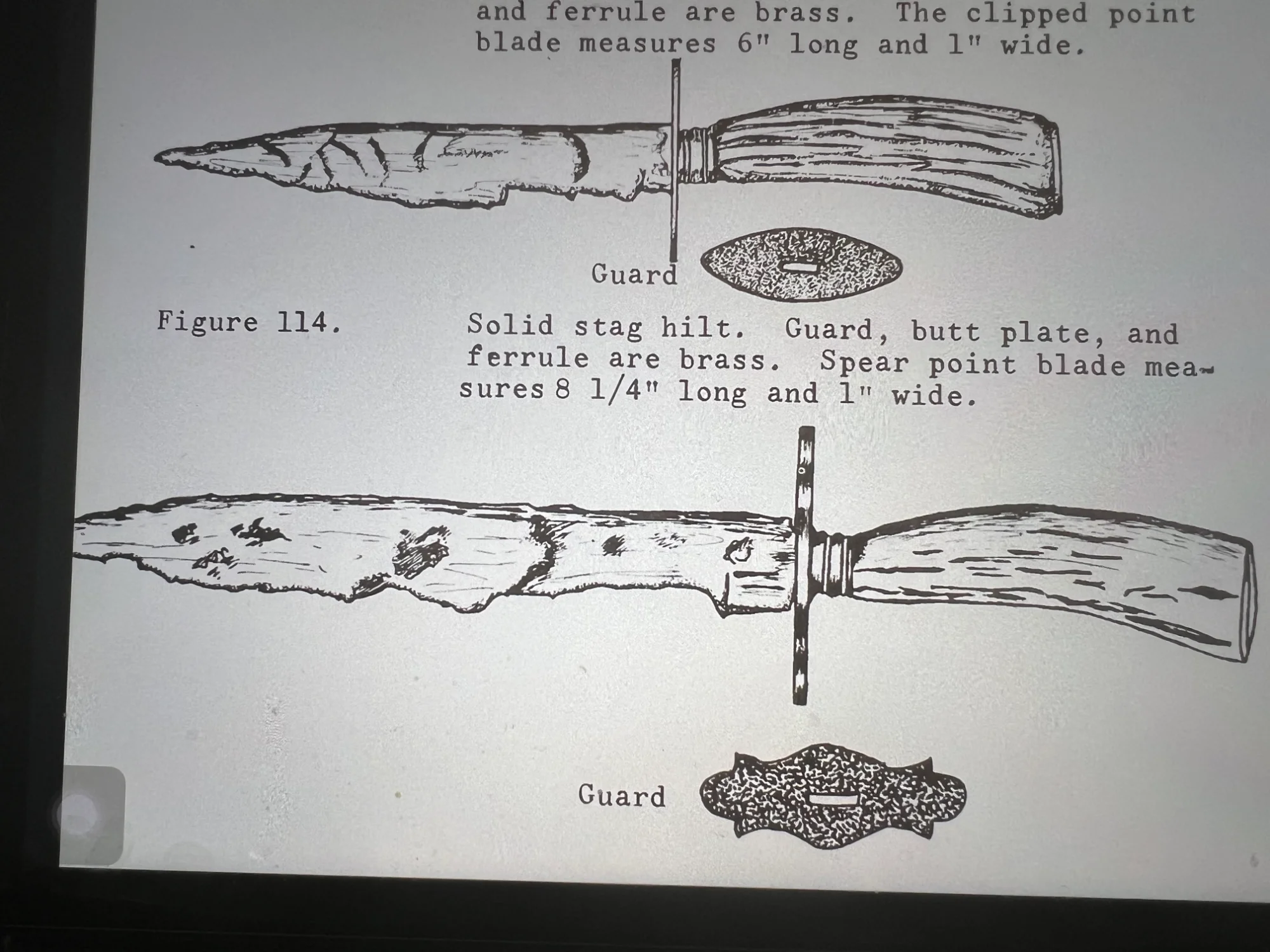
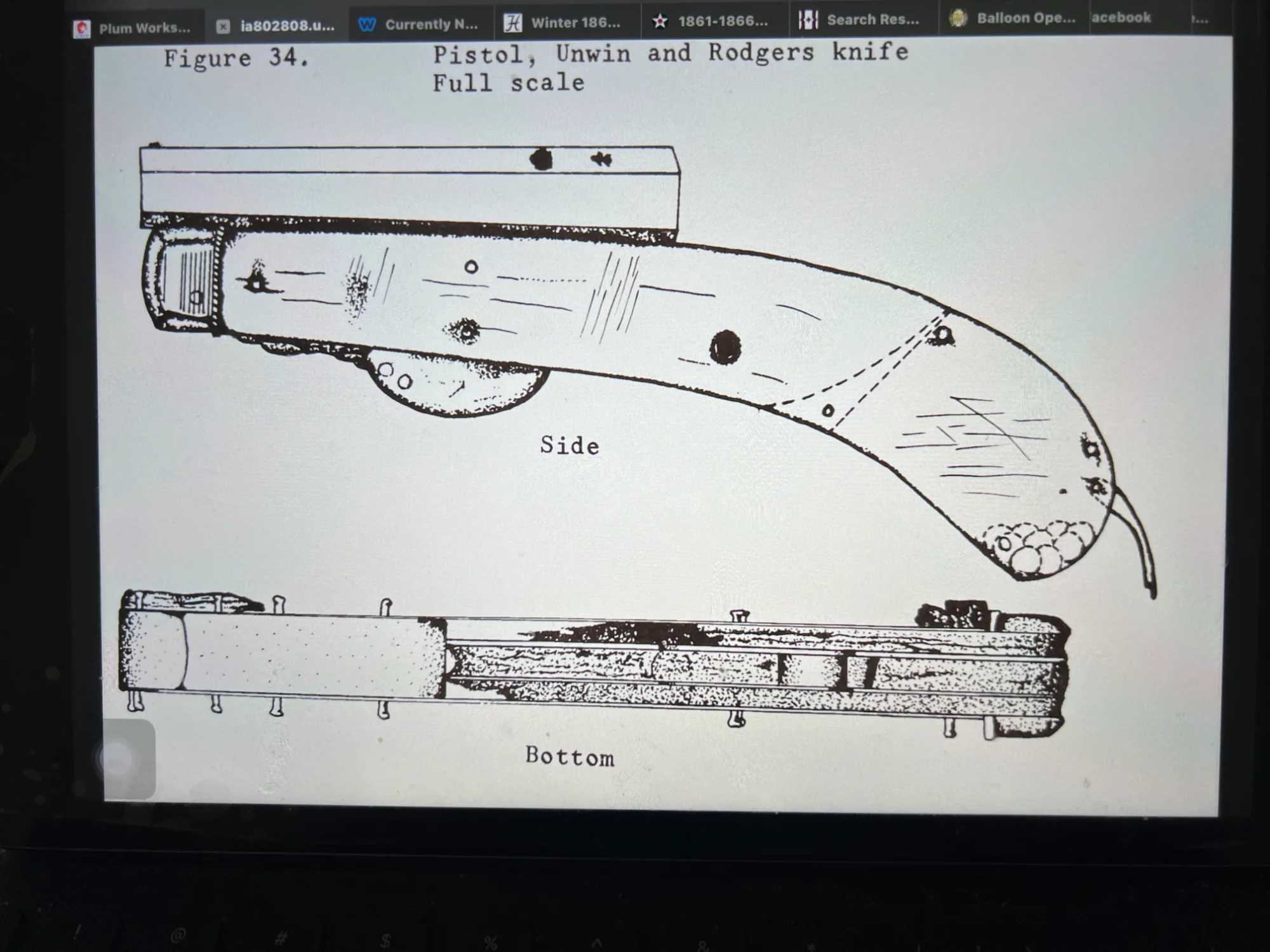
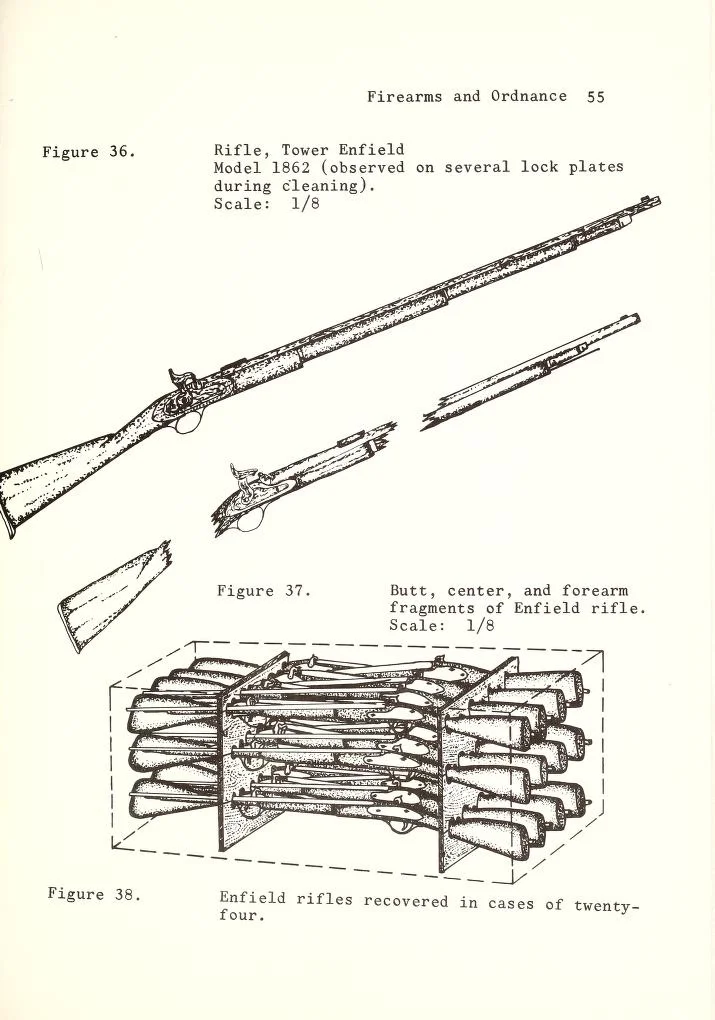
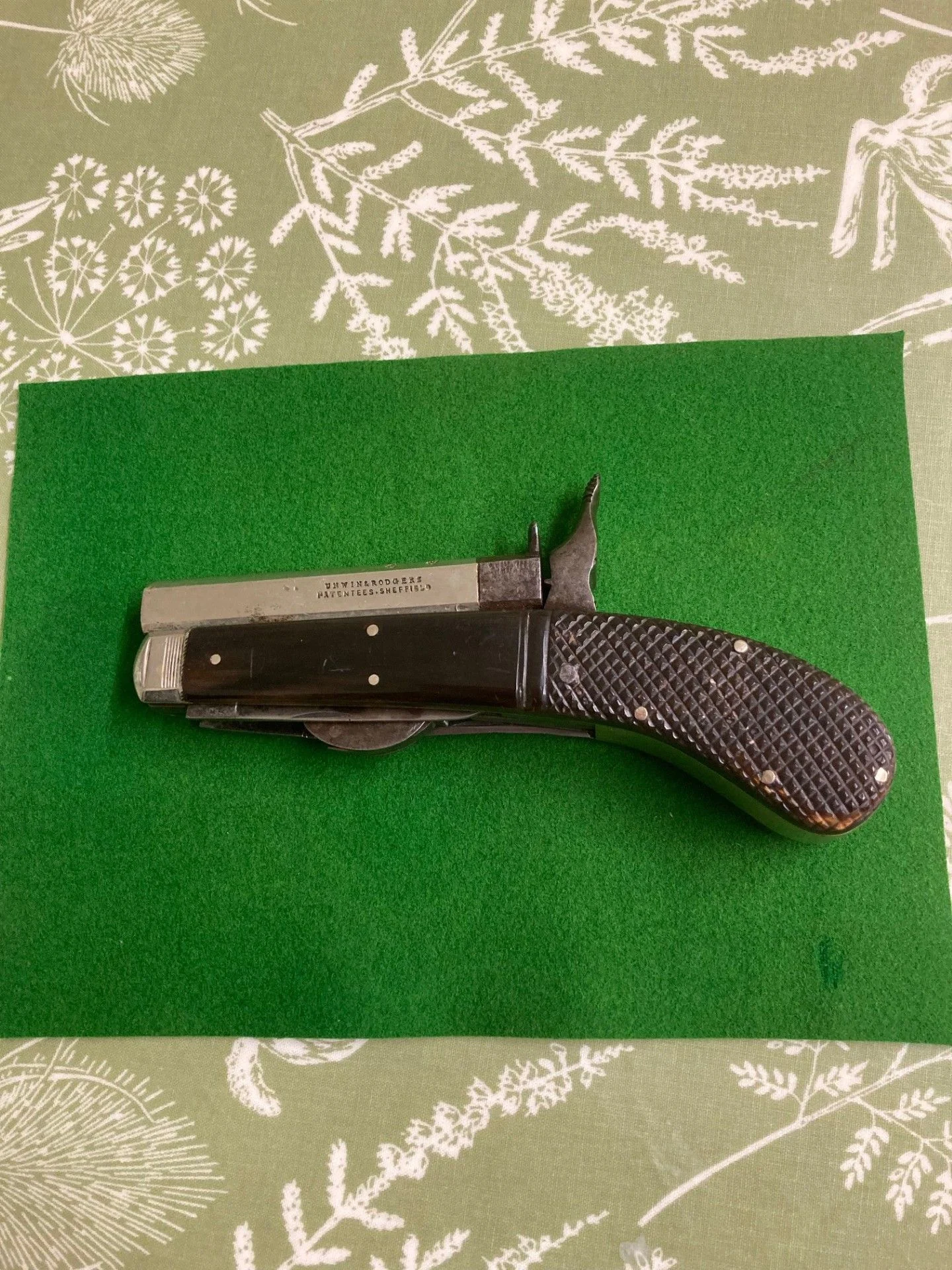
artifacts include hundreds of pocket knives, Enfields in their packing boxes, Whitworth 12 pound artillery rounds, zillions of needles & pins, a whole hardware store full of carpenter's tools. Everyone should have Modern Greece & Her Cargo linked. My favorite Item is a pocket knife pistol. My Cub Scout self lusts after one. Read more here.

Link:

IMG_0071.webp


Oh, yea, We wants it we does! Like I say, the real stuff is a million times more interesting than all the made up scenarios combined.
 
You can pretzel this topic any way you want to. Supplying steam engines to power nonexistent ships served no purpose. What they really needed was parts for RR engines. The diminishing inventory of RR motive power was an existential threat. Wasting precious resources on useless gunboats was, as history demonstrated, a complete waste. There is nothing speculative about this.
Why so apodictic?
 
Were English firms willing to provide marine engine and propulsion parts to the confederacy in kit-built format for reassembly in the confederacy. Also, the provision of tool and machines or were there regulatory obstacles.
As far as I recall the British built a military railroad on the Crimean during the war there - hence it should have been welll possible to transport steam locomotives (in parts) overseas.
There also would have been no legal impediment (as @Old Soldier clarified.
But a maritime steam engine producing enough power to power an ironclad should have been rather bulky cargo.
To be of any relevance the Confederates would also have needed to import several of them.
And to keep them running they also needed spare parts, tools….
Quite an ambitious task.
 
Were English firms willing to provide marine engine and propulsion parts to the confederacy in kit-built format for reassembly in the confederacy. Also, the provision of tool and machines or were there regulatory obstacles.
The parts could have been purchased, but it was difficult to get them into the CSA because of the blockade. Blockade runners could only do so much.
 
As far as I recall the British built a military railroad on the Crimean during the war there - hence it should have been welll possible to transport steam locomotives (in parts) overseas.
There also would have been no legal impediment (as @Old Soldier clarified.
But a maritime steam engine producing enough power to power an ironclad should have been rather bulky cargo.
To be of any relevance the Confederates would also have needed to import several of them.
And to keep them running they also needed spare parts, tools….
Quite an ambitious task.
The Confederates could not build ironclads anyway. Some were clad in old RR rails! Their shipbuilding facilities were minimal with an emphasis on rivercraft. There was little iron plate available. The problem with building railroads is that you have to import the rails, cars and locos if you cannot produce them yourselves. Now try imagining getting a quantity of rails through the USN Blockade.
 
The parts could have been purchased, but it was difficult to get them into the CSA because of the blockade. Blockade runners could only do so much.
IMG_0405.webp

This is a marine engine of 1865. Which parts do you suppose would be shipped as spares? The parts for this engine would not fit any another model, they wear specific to this engine. Assuming a blockade runner could be convinced to add cumbersome castings instead of high profit needles & pins, what engine do you suppose they would fit?
 
View attachment 578677
This is a marine engine of 1865. Which parts do you suppose would be shipped as spares? The parts for this engine would not fit any another model, they wear specific to this engine. Assuming a blockade runner could be convinced to add cumbersome castings instead of high profit needles & pins, what engine do you suppose they would fit?
You are right, but why show a warship engine? ANY marine engine would do. Warship engines were no different than merchant ship engines.
1775804863345.webp

Yes they were pretty BIG and don't forget the BOILERS - up to SIX required and also the coal to fire them. Wood is useless for ships.
Paddle frigate.webp

This was way beyond many union yards, never mind confederate ones. (this is a paddle-wheel frigate)
 
View attachment 578677
This is a marine engine of 1865. Which parts do you suppose would be shipped as spares? The parts for this engine would not fit any another model, they wear specific to this engine. Assuming a blockade runner could be convinced to add cumbersome castings instead of high profit needles & pins, what engine do you suppose they would fit?
While I am also convinced that there were many reasons why the Confederates didn't import maritime engines I really got interested IF such a task was possible at all.

I did a quick search and came upon the iron paddler steamer "Rothay" whose engines came from Liverpool but the ship itself was assembled at Newbie Bridge - about 130 km distant.
In tje second half of the 19th century there were seemingly a lot of northwestern shipbuilders (building rather modest craft) who got their engines from somewhere else.

But I could not find out if they also shipped bigger engines - I will try to have a deeper look soon.
 
While I am also convinced that there were many reasons why the Confederates didn't import maritime engines I really got interested IF such a task was possible at all.

I did a quick search and came upon the iron paddler steamer "Rothay" whose engines came from Liverpool but the ship itself was assembled at Newbie Bridge - about 130 km distant.
In tje second half of the 19th century there were seemingly a lot of northwestern shipbuilders (building rather modest craft) who got their engines from somewhere else.

But I could not find out if they also shipped bigger engines - I will try to have a deeper look soon.
Shipping these engines was 'heavy lift'. The roads were not suitable and only the railways could manage it - however - there were considerations for wheel weight, track weight and clearances. They would have had to shipped as components or sub-assemblies. I can find no illustrations of marine engines being shipped either.

New info from Google AI!!!
  • Manufacturing and Transport: Engines, particularly large ones from leading makers like John Penn and Sons or Maudslay, Sons & Field, were built in engineering shops, often located inland or in separate industrial areas. They were transported to shipyards by sea-going barges, heavy-duty lighters, or on flat-decked barges towed by tugboats.
  • Location of Manufacture: Many major engineering works were situated on waterways (like the Thames, Clyde, or Tyne) specifically to allow for the easy loading and transport of heavy machinery directly to the shipyard's own fitting-out basin.
  • Installation at the Shipyard: Once at the shipyard, the engines (such as side-lever, steeple, or early direct-acting engines) were installed into the hull. This was done using shear legs—large, stationary cranes powered by steam winches or hand-turned gears—often fitted to a dockside, capable of lifting the massive boilers and engines from the transport barges and lowering them into the ship.
  • The Role of Rail: By 1860, the expansion of railway networks allowed for the transport of smaller engines or large component parts from inland factories to coastal shipyards.
  • Pre-installation Assembly: Components like boilers and cylinder blocks were often shipped separately and assembled at the shipyard to manage the extreme weight, which could otherwise crush wooden docks or cause excessive stress on smaller vessels
 
Shipping these engines was 'heavy lift'. The roads were not suitable and only the railways could manage it - however - there were considerations for wheel weight, track weight and clearances. They would have had to shipped as components or sub-assemblies. I can find no illustrations of marine engines being shipped either.

New info from Google AI!!!
Yes, you are absolutely right with all of that - but we should have a deeper look into the matter - it would be highly interesting to see IF such transports were possible and HOW they could do it (and if it was affordable at all).
I deem it a very special question (as we would also have to consider that maritime engines and transporting capacities were developing rapidly at that time.
That's something we cannot find out easily…

And I'd also like to stress the point that AI shouldn't be the correct information source to be questioned (as you need to consider a lot of variables and cultural conditions and very special timeframes a AI has absolutely no relation to).

I'd also like to express my concerns: It eventually might lead to the decline of forums like this one if we would reduce it to a mere exchange of what all our AI agents are saying….
 
I could find out the following:

the austrian navy built quite impressive steam frigates in 1858 - they used 400 HP marine engines imported from Britain. As Austria was always short on cash I'd assume purchasing and transporting those engines shouldn't have been too extravagant or involving too bizarre costs.

Hence I'd suggest it would have been well possible and manageable to get marine engines into the Confederacy IF someone deemed it being desirable….
 
Last edited:
Were English firms willing to provide marine engine and propulsion parts to the confederacy in kit-built format for reassembly in the confederacy. Also, the provision of tool and machines or were there regulatory obstacles.
Machinery was supplied to the CSN by private companies, so tools etc could have been supplied too. The era with which we are familiar of constant regulation of everything really started with the passing of the first UK Official Secrets Act of 1889. Prior to that the distribution of industrial products and knowledge of all kinds was a commercial free for all, and at first that only applied to shipbuilders, dockyards and ordnance factories. It really began the passion for governments all over to impose controls on trade.
 
I could find out the following:

the austrian navy started builded quite impressive steam frigates in 1858 - they used 400 HP marine engines imported from Britain. As Austria was always short on cash I'd assume purchasing and transporting those engines shouldn't have been too extravagant or involving too bizarre costs.

Hence I'd suggest it would have been well possible and manageable to get marine engines into the Confederacy IF someone deemed it being desirable….
Indeed and as until 1889 there was no UK Official Secrets Act covering naval matters, there was nothing to stop commercial companies supplying anything, and indeed nothing to stop the receiving nation copying the item, Patents and copyright were well established but poorly observed and enforced . especially where money was to be made at source.
 
It must also be noted that during these years, UK industries were, for the most part already stretched by the demands for railway equipment at home and around the world, also the demands of the Royal Navy primarily, but by many "foreign" navies seeking ironclads. Leaving aside the naval /military production, at the same the UK was also producing industrial products for peaceful purposes at home and round the world too.
 
And I'd also like to stress the point that AI shouldn't be the correct information source to be questioned (as you need to consider a lot of variables and cultural conditions and very special timeframes a AI has absolutely no relation to).

I'd also like to express my concerns: It eventually might lead to the decline of forums like this one if we would reduce it to a mere exchange of what all our AI agents are saying….
Sorry, I was being honest about my sources. I do not like AI at all and if anything had looked out of place, it would not have been used.

HOWEVER there is nothing there that came as a surprise. No, I could not find any illistrations of the transport of marine engines (plenty of RR locos!). It was not the sort of thing that generated photographic or even illustrative interest in 1860. I have been on this site long enough - and had more than a few arguements - about sources and 'evidence'. I know enough about the development of railways both in Britain and the USA to know that it was not a 'heavy lift' means of communication. Yes, marine engines were transported overseas, but I suspect that it was by component or sub-assembly loaded into ships, as that trying to move any large heavy machinery was very difficult, if not impossible. The engines were assembled in the hull, before the decks were fitted, they were not fitted as a complete unit and that is described in a number of technical publications of the time. Marine engines were made where they were needed, alongside or near shipyard = minimum transport problems.
 
I could find out the following:

the austrian navy built quite impressive steam frigates in 1858 - they used 400 HP marine engines imported from Britain. As Austria was always short on cash I'd assume purchasing and transporting those engines shouldn't have been too extravagant or involving too bizarre costs.

Hence I'd suggest it would have been well possible and manageable to get marine engines into the Confederacy IF someone deemed it being desirable….
Yes. It was possible. But what was needed was a deepsea port to take the cargo ships required AND ones that could avoid the USN Blockade. Many available ports were well upsteam on river estuaries and, since the engines assemblies could not be transported easily, they would have to unload near the shipyards.

Then again, they would have needed COAL for the boilers. Where was the coal to come from? Coal was the only suitable fuel for 'blue water' ships as the only alternative would be wood. This took up much space, was not very efficent and would require replenishing too often. This was not a problem for riverboats so much. Given the USN resources, nearly all 'blue water' craft, they would not have lasted long.

BTW - the 1858 Austrian ship was actually a ship-of-the line - SMS Kaiser - a wooden hulled sailing ship with a steam engine supplied by Maudslay, Sons and Field of Lambeth, London. Their first true ironclad frigates were SMS Drache and Salamander which were launched in 1862
 
Yes. It was possible. But what was needed was a deepsea port to take the cargo ships required AND ones that could avoid the USN Blockade. Many available ports were well upsteam on river estuaries and, since the engines assemblies could not be transported easily, they would have to unload near the shipyards.

Then again, they would have needed COAL for the boilers. Where was the coal to come from? Coal was the only suitable fuel for 'blue water' ships as the only alternative would be wood. This took up much space, was not very efficent and would require replenishing too often. This was not a problem for riverboats so much. Given the USN resources, nearly all 'blue water' craft, they would not have lasted long.

BTW - the 1858 Austrian ship was actually a ship-of-the line - SMS Kaiser - a wooden hulled sailing ship with a steam engine supplied by Maudslay, Sons and Field of Lambeth, London. Their first true ironclad frigates were SMS Drache and Salamander which were launched in 1862
Very interesting points - it should be highly intriguing to dive a little deeper into all of that.

1.)
There seems to be a highly interesting book that takes a closer look on the South´s natural ressources (and hence also her coal mines) - it´s called "Arming the Confederacy" (2015) - I will try to get it.

Do you know (or does anyone) know anything about it?

Do you know how relevant the quality of coal was to such rather early steam engines? I could imagine they operated on a generally lower steam pressure? Maybe there wasn´t that much of a difference coal quality made then - than it made later on with more advanced expansion engines?

2.)
The austrian frigates I found were the "Schwarzenberg" (which fought in the battle off Heligoland) and the "Novara".

3.)
But once again: I am also not convinced at all at the moment that the Confederacy could have managed to create a blue water navy - or would have gained much with such a navy -
but I feel we all are currently a bit fast in our assessments
and take maybe many things for granted we cannot definitely know without some more research.


(And please no hard feelings because my remark on AI - I was impressed myself with what AI told you.)
 
(And please no hard feelings because my remark on AI - I was impressed myself with what AI told you.)
Thank you.

Re: Coal - no help for the Confederate supply but the preferred coal was Welsh dry steam coal - semi- bitumous almost smokeless AKA Admiralty Coal. It was also called 'steam coal'. It is NOT the same as coking or metallergic coal used in the steel industry. There is plenty in Kentucky, (Muhlenberg County). By 1843 the state produced 100,000 tons of coal.

Operating pressure would be around 60lb/sqin depending on design and type.

I do not think a 'blue water' navy was possible. Most of the Southern technology was based around riverine and esturine traffic.
 
So how do you break the blockade, how do you prevent more union landings. The union forces coming in on the land border and the union landings on the coast created a 2-front war for the confederacy, a 2-front war for mid-size powers like the confederacy or later Germany is just too much to handle.
Every river flowing to the sea is an invasion route how do you stop that.
What is a credible alternate to a blue water navy.
 
So how do you break the blockade, how do you prevent more union landings. The union forces coming in on the land border and the union landings on the coast created a 2-front war for the confederacy, a 2-front war for mid-size powers like the confederacy or later Germany is just too much to handle.
Every river flowing to the sea is an invasion route how do you stop that.
What is a credible alternate to a blue water navy.
How? By creating your own 'blue water' navy. Unfortunately, that was not a possibility as we have already discussed. So why didn't the Union use the rivers as transport inland? Mainly because the USN was involved in making the Blockade more effective.

The Confederacy also had a ready supply of converted river craft that could seriously upset any invasion along rivers. Warnings were no problem as river traffic is rather slow and meanders just complicate a speedy approach.
 

Learn About Us
About CivilWarTalk
Contact the Webmaster
Meet the Staff
Link to CivilWarTalk
Join Our Community
Register
Browse Forums
View Today's Discussions
Search the Forum
Get Help
FAQ
Student Guide
Forum Rules & Etiquette
Copyright / DMCA

     Contact Us CivilwarTalk on Facebook CivilWarTalk on YouTube CivilWarTalk on Twitter RSS Feed

Bringing the American Civil War and More to Life.
© 1999 - , CIVILWARTALK, LLC - Site Version 10.0

SlaveryTalk.com - SecessionTalk.com - CivilWarTalk.com - ReconstructionTalk.com
Back
Top