Mississippian1861
Sergeant
- Joined
- Jan 29, 2019
Basic Mid to Late war US infantry impression. Nothing fancy, Sack Coat, Forage Cap, Knapsack, & M1861 Rifle Musket.
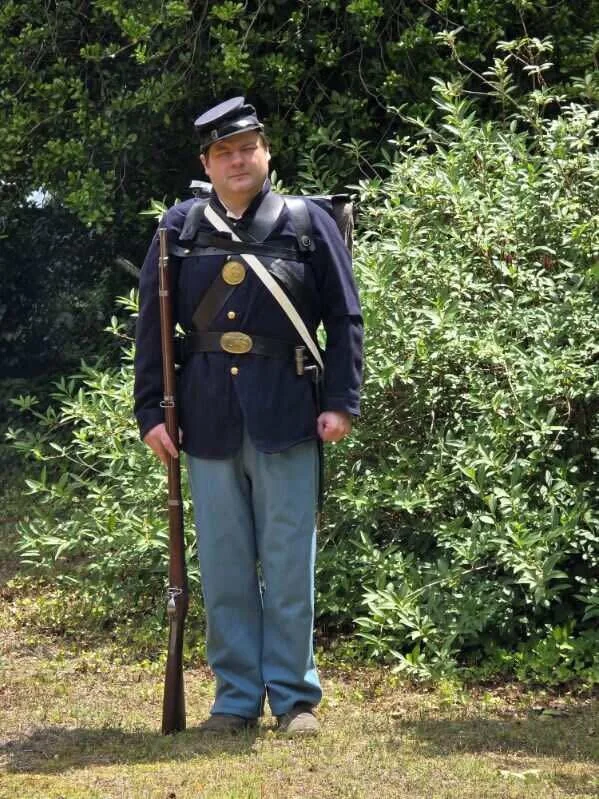
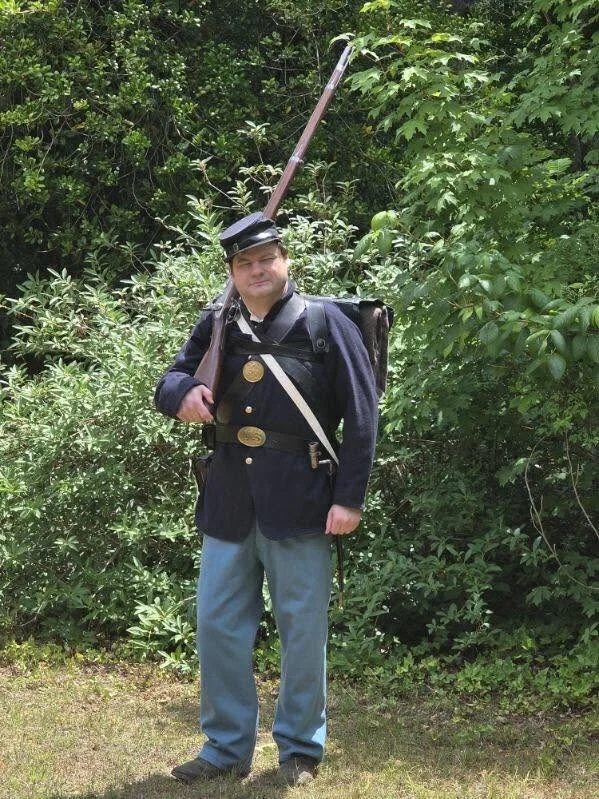
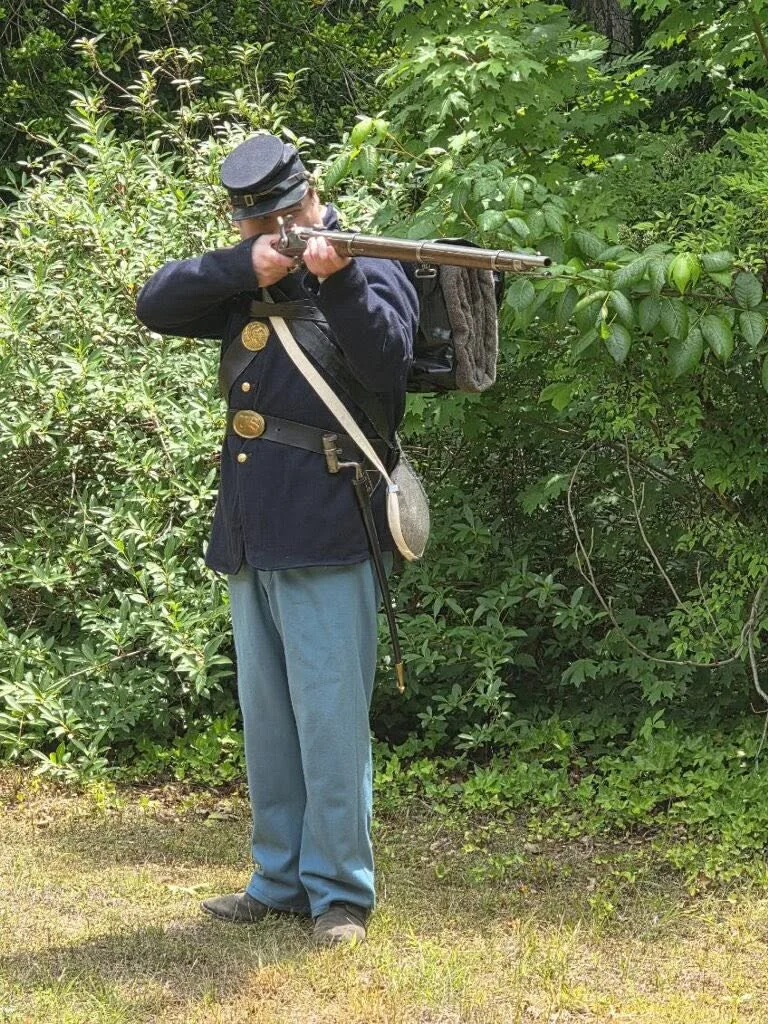


Most Federal canteens were covered with (cheaper at the time) gray or tan jean clothe, occasionally blue if there was scrap on hand but that was more expensive material needed for uniforms, not to use up on canteen covers.A gray canteen cover?
I stand corrected. Thank you.Most Federal canteens were covered with (cheaper at the time) gray or tan jean clothe, occasionally blue if there was scrap on hand but that was more expensive material needed for uniforms, not to use up on canteen covers.

Most Federal canteens were covered with (cheaper at the time) gray or tan jean clothe, occasionally blue if there was scrap on hand but that was more expensive material needed for uniforms, not to use up on canteen covers.
Federal issue canteens were most often covered in some sort of jean cloth or scrap wool, most often brown, tan, or gray. Having a canteen covered in gray wool is entirely correct for a Federal infantry impression. Some canteens were covered in scrap dark blue or sky blue wool left over from uniform cutouts. But gray or tan, most absolutely.A gray canteen cover?
Not at all. Soldiers out in the field wouldn't instantaneously become dirty from head to toe. You'd have gradual fraying of uniforms, fading, gradual staining of the canteen strap with sweat, etc. The shoes and trousers would probably become dirty first, with the fatigue duty of chopping wood, building breastworks, cooking, walking/marching on dusty roads or muddy ground, etc.Too clean and tidy for the field
I agree. It's also very tiresome to see reproduction canteens being sold on sutler row as "Union Blue" or "Confederate Gray". Lol, as if both sides got their equipment from the Acme Company that Wile Coyote always buys from.Blue is way overrepped in my opinion. You hardly see tan outside of hardcore groups. Mine is covered in now very dirty and thinning in places gray Jean cloth. The strap has also seen better days. I really should get another one and leave this one for heavily campaigned impressions.
I really like how proportional you are body-wise. Also love the extra material down at the bottoms of your trousers, suggesting an army size with a bit of extra trouser leg length. Few other details of note, super nice the wider canteen strap as was widely produced and issued. The blanket being folded inside the knapsack and not rolled on top, awesome! Looking good private!Basic Mid to Late war US infantry impression. Nothing fancy, Sack Coat, Forage Cap, Knapsack, & M1861 Rifle Musket.
View attachment 593788
View attachment 593789
View attachment 593790
Federal issue canteens were most often covered in some sort of jean cloth or scrap wool, most often brown, tan, or gray. Having a canteen covered in gray wool is entirely correct for a Federal infantry impression. Some canteens were covered in scrap dark blue or sky blue wool left over from uniform cutouts. But gray or tan, most absolutely.
View attachment 594054
Not at all! Mine is the same condition. I get asked a lot if I'm carrying an original, lol. I do however need to finally coat the inside with beeswax. I'm sure I've consumed a fair amount of rust along with my water, blech!Is it bad that my Federal canteen is in essentially this condition? Minus the cork which is in good condition and I replaced the old rusty chain with a string… lol
A day - and night - in the field would crease it as well as add some 'muck' to knees and the rear of the jacket or pants (where else do you clean off your hands in the field?). Parade wear at depot, for inspection, fine. Field wear? I don't think so.Not at all. Soldiers out in the field wouldn't instantaneously become dirty from head to toe. You'd have gradual fraying of uniforms, fading, gradual staining of the canteen strap with sweat, etc. The shoes and trousers would probably become dirty first, with the fatigue duty of chopping wood, building breastworks, cooking, walking/marching on dusty roads or muddy ground, etc.

Great post!If someone is actively participating in events, the dirt and grime will come naturally. I am against adding "fake" dirt and stains. All uniforms and equipment were issued "new" at one time so it is not incorrect to appear that way at an event, as all of the clothing and equipment will naturally age and get real natural dirt and stains. Also as I have posted before on this subject, the vast majority of individuals (this applies to CW soldiers as well) dont want to be dirt and grease covered. If they can bathe and wash their gear they will. There are always exceptions to this rule and heavy marching and fighting can delay this process but just like today in the 19th century most people were embarrassed to be filthy and having their clothes fall apart. Worn, well used gear that is overall clean (with natural staining) is the most accurate for most impressions.
Another issue is equipment being used by some reeanctors they have used for 30 years and it has worn and has a patina to appear as a museum piece. This is not accurate. during the war equipment was new with the oldest gear at the end of the war being only a few years old at most. Most gear was issued and probably lost/replaced within a year or less. Your canteen and strap should not display 20 years if hard use, its just not accurate.
Another nice touch with your impression is the lack of a musket sling. A practice that I have also followed for thirty+ years.Basic Mid to Late war US infantry impression. Nothing fancy, Sack Coat, Forage Cap, Knapsack, & M1861 Rifle Musket.
View attachment 593788
View attachment 593789
View attachment 593790

Honestly when I looked at unit ordnance reports, many of them had gun slings listed. I don't remember seeing a unit that did not have them.Another nice touch with your impression is the lack of a musket sling. A practice that I have also followed for thirty+ years.


 Forum Host


 Bringing the