
- Joined
- Feb 23, 2013
- Location
- East Texas
Phillip Pry House

Previous to this recent visit I'd always thought of the large brick house belonging to Phillip Pry as the headquarters of Maj. Gen. George B. McClellan during the Battle of Antietam; indeed his headquarters tents had been spread all around it, a "wig-wag" signal station of the U. S. Signal Corps operated on its roof, and a battery of 20-pounder Parrotts from the Artillery Reserve banged away on the plateau behind it. But currently it is being operated as a Field Hospital Museum by members of the Frederick, Maryland, Civil War Medical Museum. Rightly so, as I learned, since it and the farm around it became the hospital for the II Corps of McClellan's army and remained so for weeks following the battle.

Note in this photo of the rear of the Pry House the red flag at left; before the adoption of the more familiar yellow banner with the large green H in the center, this red one indicated the placement of both Union and Confederate field hospitals. Inside the house, which was used as a hospital for II Corps officers, division commander Maj. Gen. Israel B. Richardson died of his wound a few days after the battle.
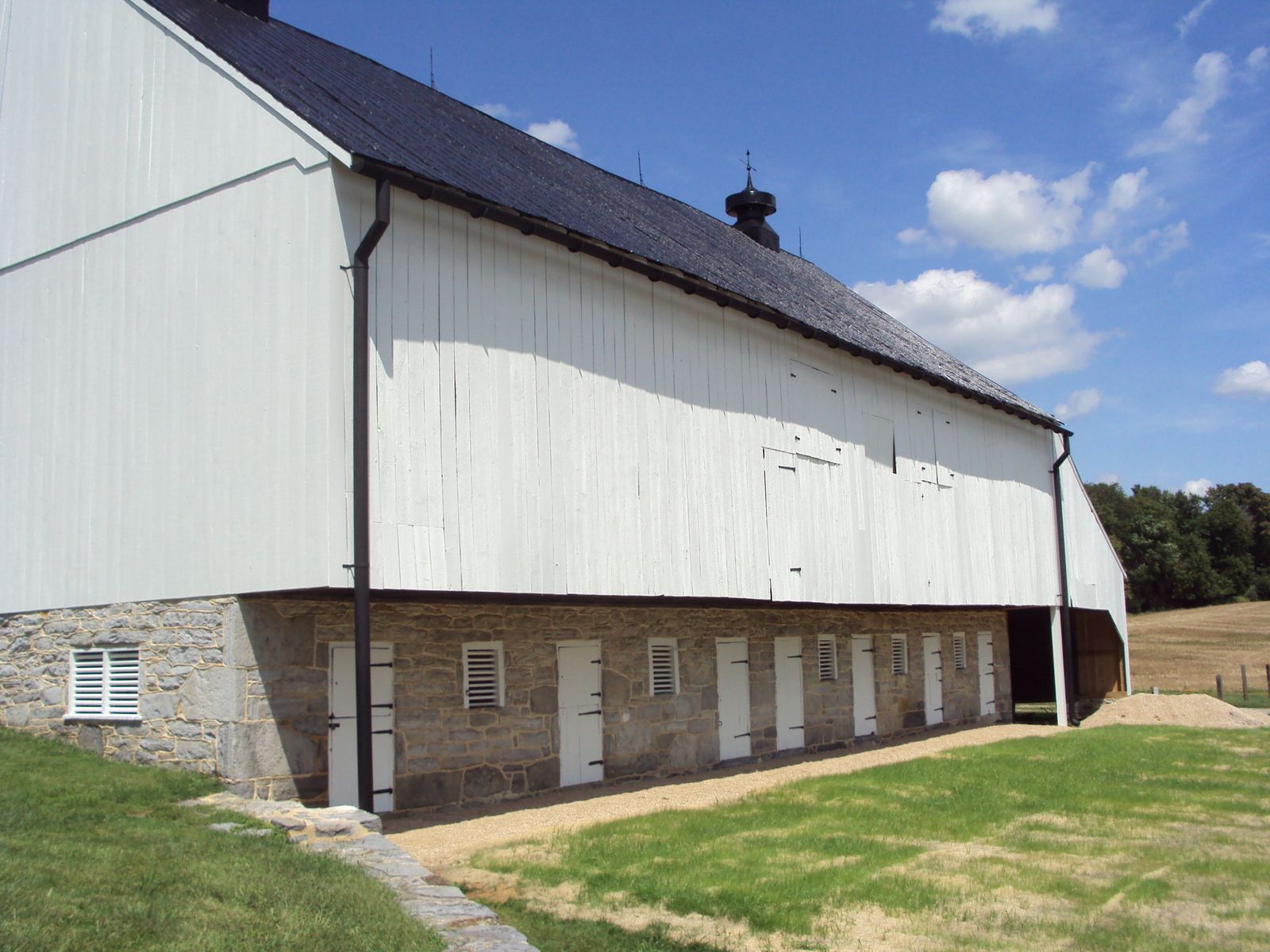
The Pry barn became the hospital for enlisted men of the II Corps; inside it is a replica of a period ambulance like was used to remove the wounded from the battlefield.
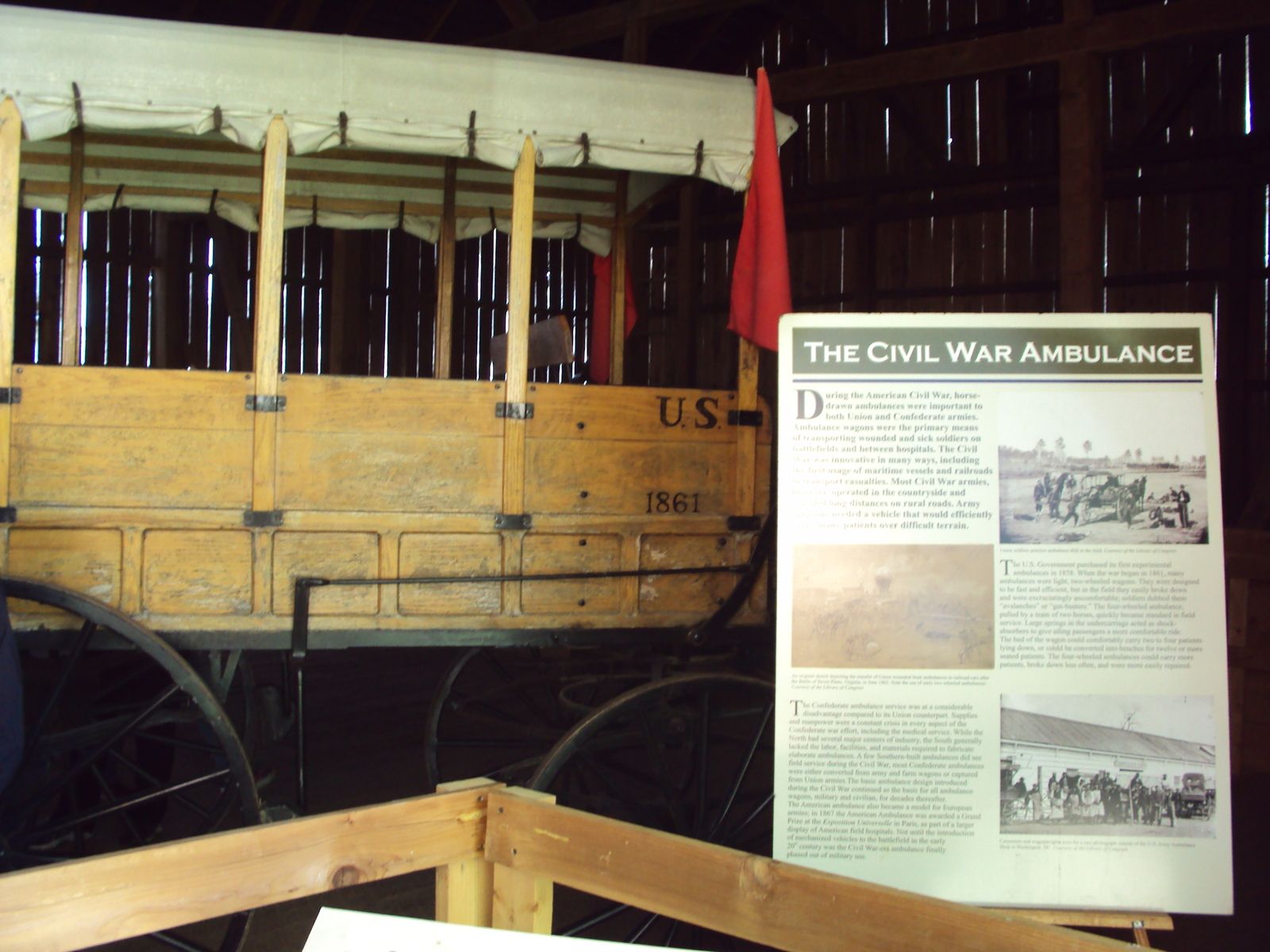
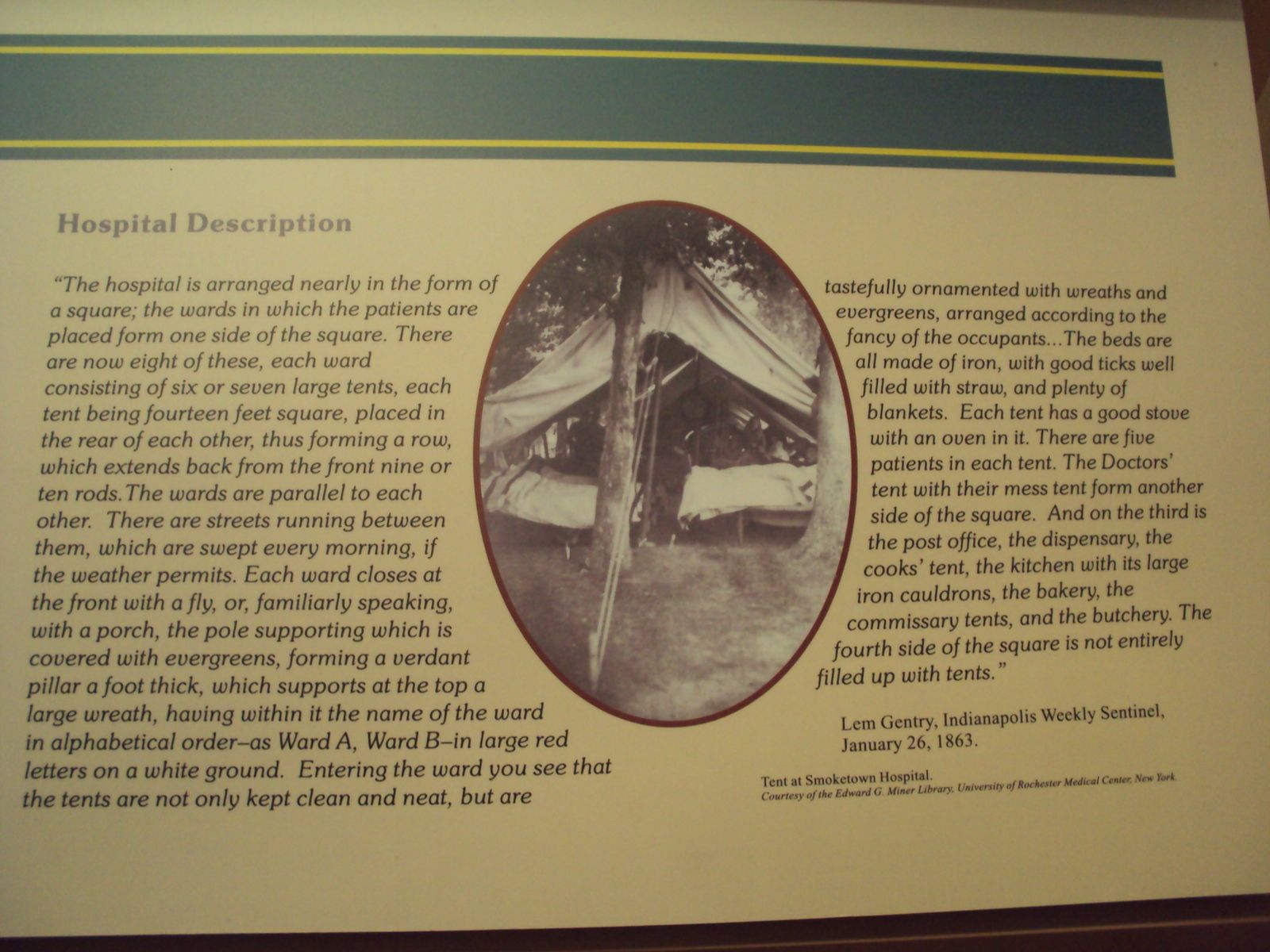
Eventually the scattered unit field hospitals like this were combined into large and relatively efficiently run General Hospitals for those too seriously wounded to be evacuated to towns like nearby Frederick which became a vast hospital in the aftermath of the battles at South Mountain and Antietam. Luckiest were probably the slightly wounded who could travel all the way to cities like Washington, Baltimore, or Philadelphia. The sign below describes one such General Hospital at nearby Smoketown northeast of the battlefield and is only one of a large display of medical-related exhibits, artifacts, and dioramas in the Pry House Museum.
Joseph Poffenberger Farm
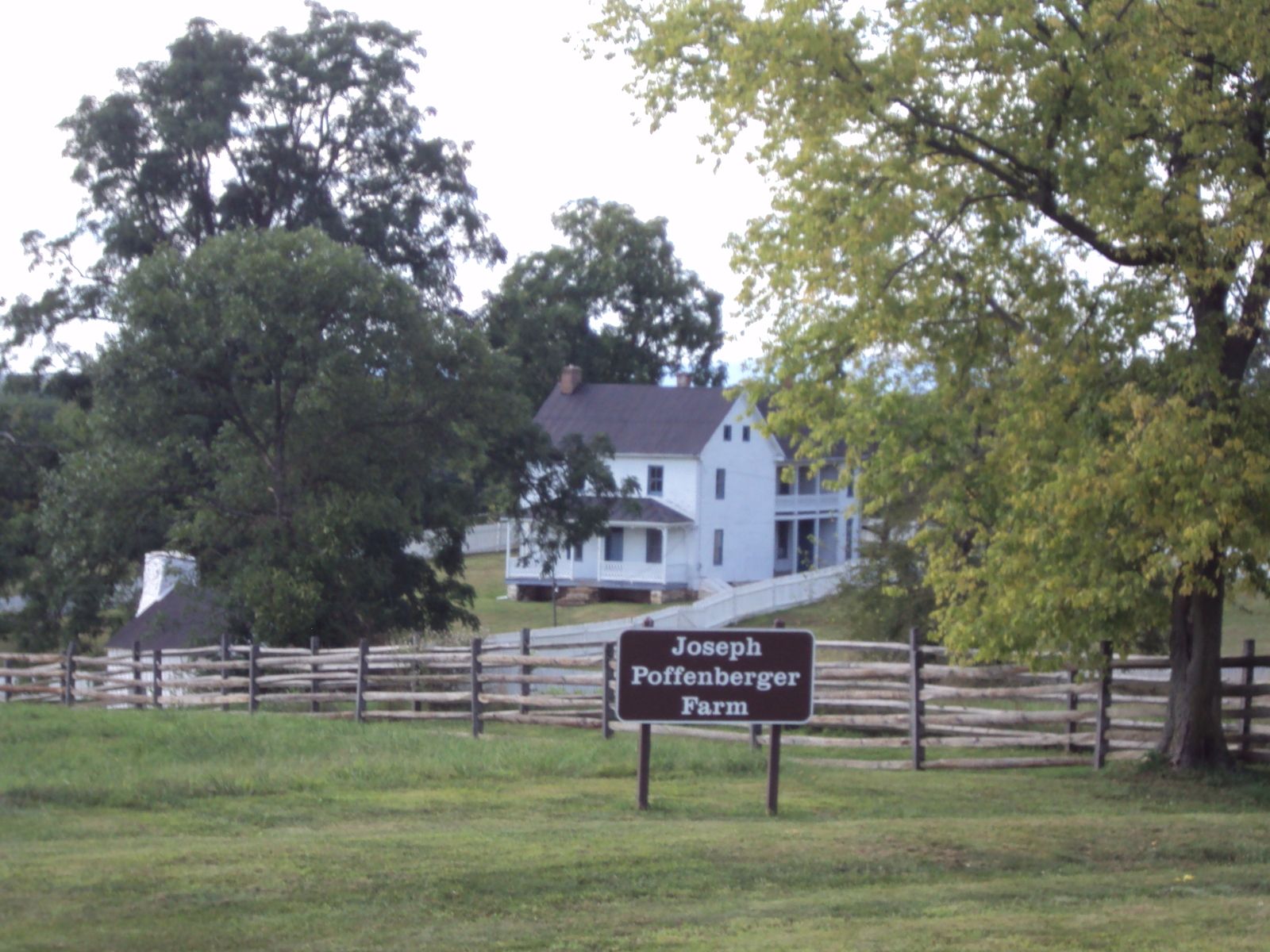
The Poffenberger Farm and House is where the Battle of Antietam began in the pre-dawn darkness of September 17, 1862, as Maj. Gen. Joseph Hooker's Union I Corps moved through here to attack Stonewall Jackson's Confederates in the Miller Cornfield. This location was a natural one to become the I Corps' hospital, though when Hooker was wounded in the foot he was taken all the way back to the Pry House.

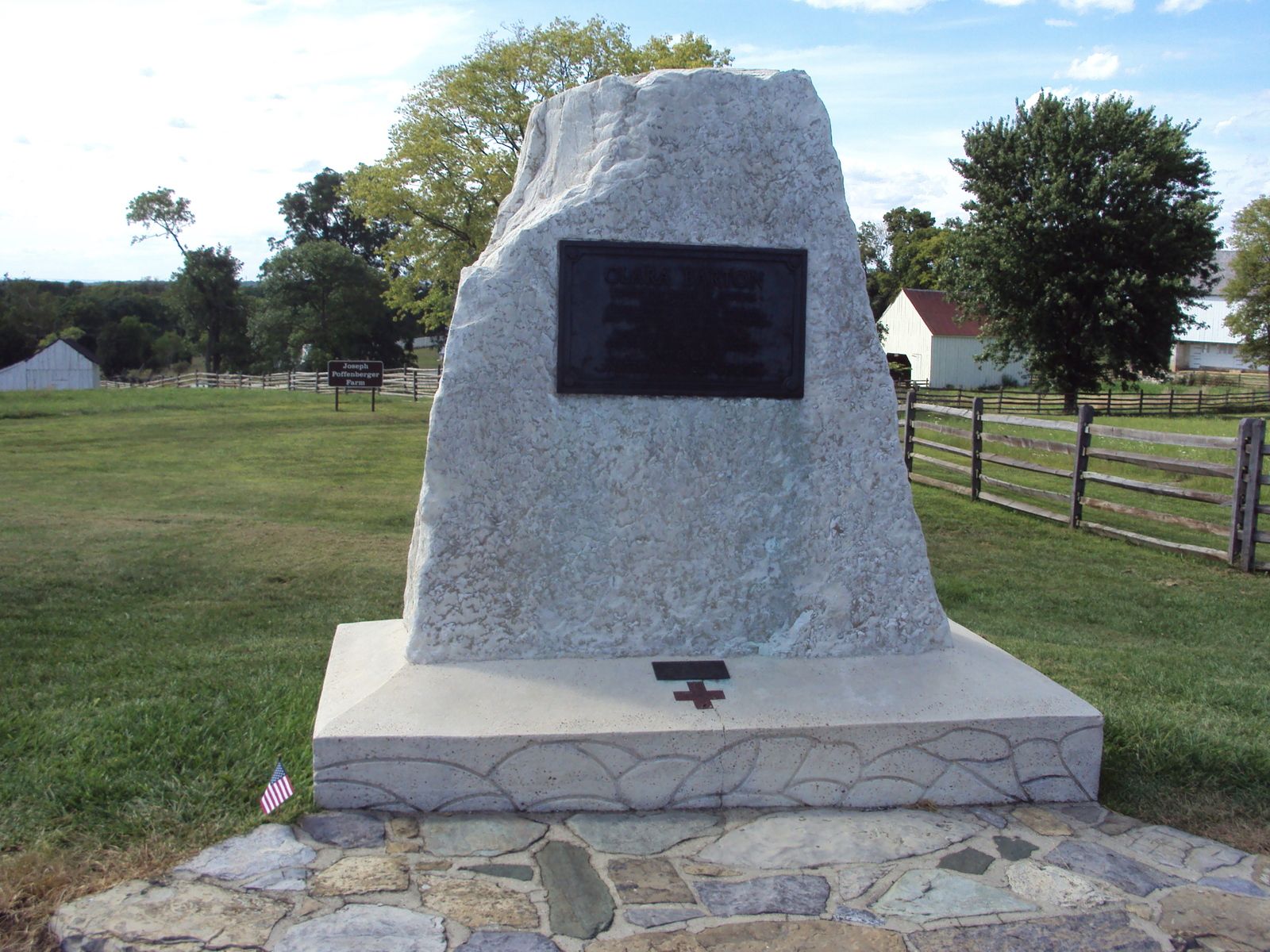
Late in the evening, the famous nurse Clara Barton arrived here with a wagonload of medical supplies and assisted the Federal surgeons throughout the night and following days caring for the many wounded; below is a monument to the memory of her service here at Antietam.
Previous to this recent visit I'd always thought of the large brick house belonging to Phillip Pry as the headquarters of Maj. Gen. George B. McClellan during the Battle of Antietam; indeed his headquarters tents had been spread all around it, a "wig-wag" signal station of the U. S. Signal Corps operated on its roof, and a battery of 20-pounder Parrotts from the Artillery Reserve banged away on the plateau behind it. But currently it is being operated as a Field Hospital Museum by members of the Frederick, Maryland, Civil War Medical Museum. Rightly so, as I learned, since it and the farm around it became the hospital for the II Corps of McClellan's army and remained so for weeks following the battle.
Note in this photo of the rear of the Pry House the red flag at left; before the adoption of the more familiar yellow banner with the large green H in the center, this red one indicated the placement of both Union and Confederate field hospitals. Inside the house, which was used as a hospital for II Corps officers, division commander Maj. Gen. Israel B. Richardson died of his wound a few days after the battle.
The Pry barn became the hospital for enlisted men of the II Corps; inside it is a replica of a period ambulance like was used to remove the wounded from the battlefield.
Eventually the scattered unit field hospitals like this were combined into large and relatively efficiently run General Hospitals for those too seriously wounded to be evacuated to towns like nearby Frederick which became a vast hospital in the aftermath of the battles at South Mountain and Antietam. Luckiest were probably the slightly wounded who could travel all the way to cities like Washington, Baltimore, or Philadelphia. The sign below describes one such General Hospital at nearby Smoketown northeast of the battlefield and is only one of a large display of medical-related exhibits, artifacts, and dioramas in the Pry House Museum.
Joseph Poffenberger Farm
The Poffenberger Farm and House is where the Battle of Antietam began in the pre-dawn darkness of September 17, 1862, as Maj. Gen. Joseph Hooker's Union I Corps moved through here to attack Stonewall Jackson's Confederates in the Miller Cornfield. This location was a natural one to become the I Corps' hospital, though when Hooker was wounded in the foot he was taken all the way back to the Pry House.
Late in the evening, the famous nurse Clara Barton arrived here with a wagonload of medical supplies and assisted the Federal surgeons throughout the night and following days caring for the many wounded; below is a monument to the memory of her service here at Antietam.


 Bringing the