
 Forum Host
- Joined
- May 3, 2013
- Location
- Pennsylvania
I recently traveled from Pittsburgh to Baltimore for business meetings, about a five hour trip. For me it's more enjoyable than flying if the drive is five to six hours in length. I usually like to take a quick break every two to three hours when driving, and this time frame put me in the vicinity of Hagerstown MD. A fifteen minute drive down MD Rt. 65 brought me to the Antietam National Battlefield Visitor Center. The day I drove to Baltimore was pretty miserable so I spent most of my time in the visitor center acquiring my Senior Pass for which I became eligible last year and checking out their book selection. Managed to pick-up two for my library.
The return trip was a much better day weather-wise so I returned. It was cold and windy, but bright blue skies with scattered cloud cover and warm clothing made it worthwhile. One advantage was I almost had the field to myself. Another was that the lack of foliage gave me clear views of landscape that is obscured by foliage at other times of the year. One spot I spent a fair amount of time at Burnside's Bridge.
The following view of the bridge is taken from the position occupied by the 2nd and 20th Georgia Infantry during the battle. The first federal attempt to cross was made by Crook's Division in the vicinity of the bend in the creek to the north (left). A second try was attempted by the 2nd Maryland and the 6th New Hampshire advancing on the flat ground along the creek to the right, but was stopped cold by the Georgians overlooking the bridge.
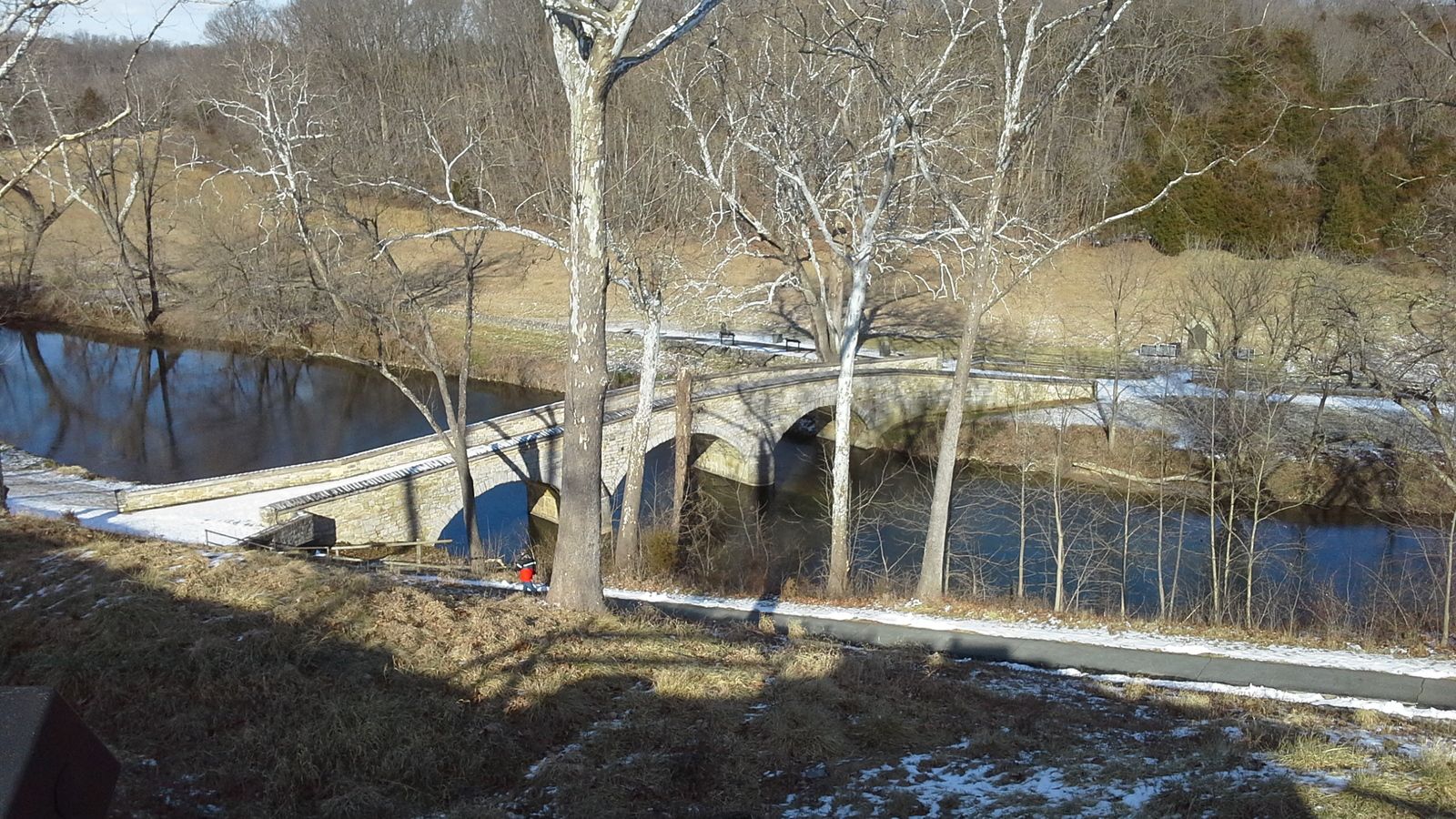
The final, successful attack was orchestrated by Colonel Edward Ferrero commanding a mixed brigade of Massachusetts, New York and Pennsylvania regiments. Ferrero had the 51st Pennsylvania, followed closely by the 51st New York take cover behind the hill directly in front of the bridge abutment and charge directly down the hill across the bridge. The 21st and 35th Massachusetts came in from the right, initially providing covering fire, but then following behind the two 51sts as those regiments advanced.
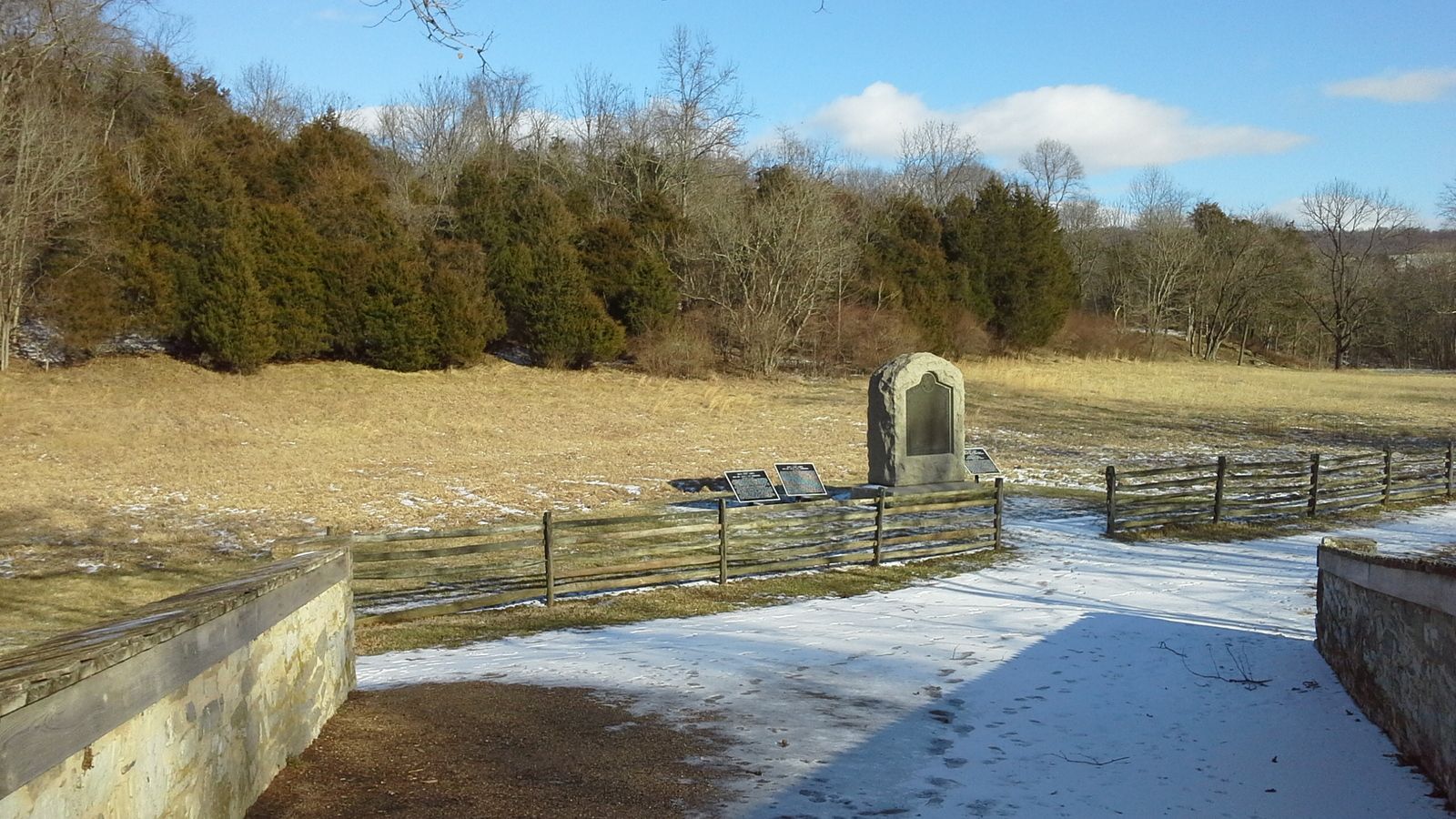
The view of the Georgian positions (near the top of the hill) from the Union perspective.
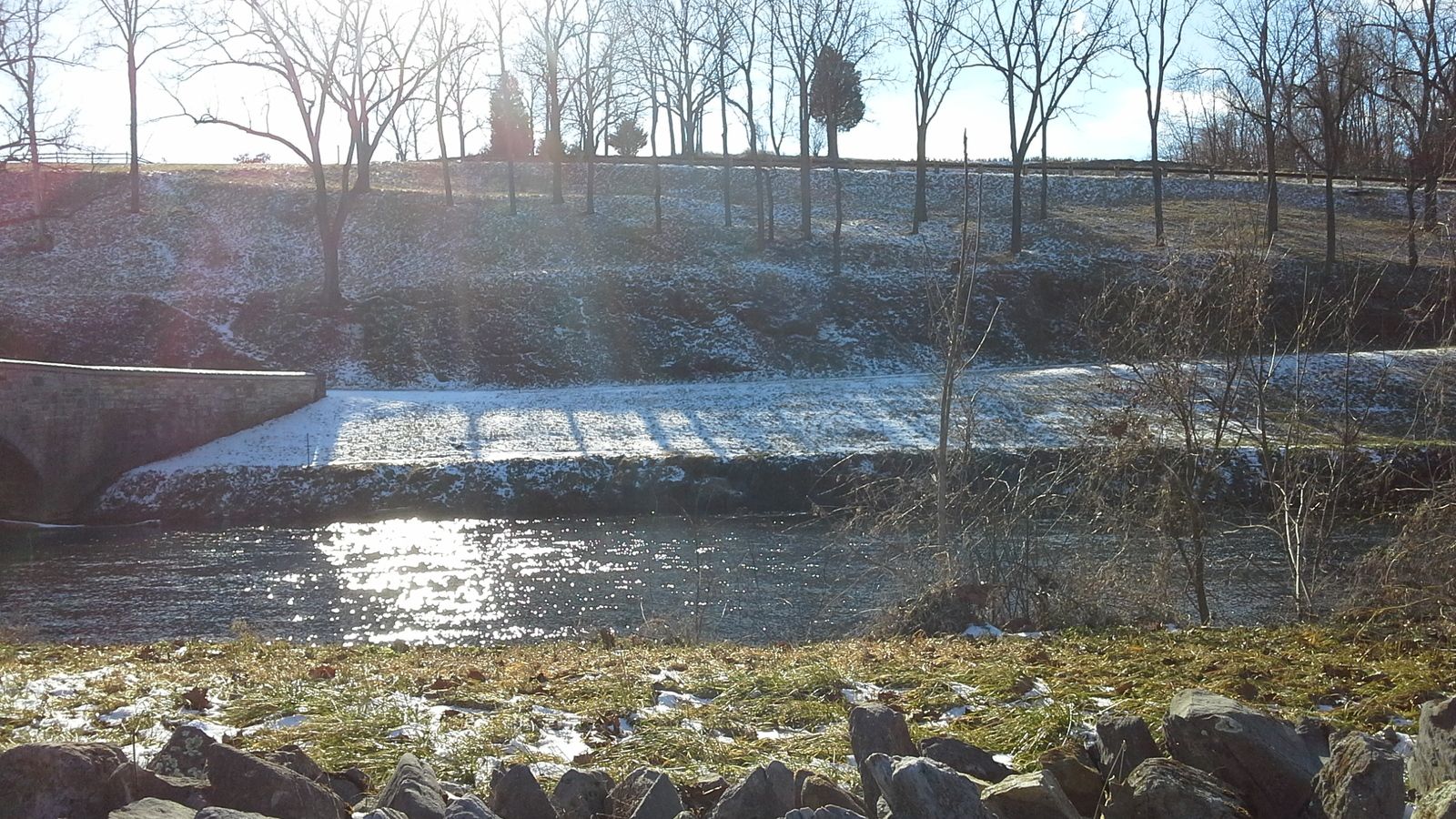
Looking upstream from the bridge. Confederate Colonel Henry Kyd Douglas would state in his memoirs (I Rode with Stonewall) that he could not understand why Burnside did not use his overwhelming numbers to hop, skip and jump across the creek and land on the other side. While I don't doubt the creek may have been lower in September, 1862, than it was this January, I don't envy any Union soldier who would have to climb over the stone wall on the right, lower himself into the creek, cross it and climb up the other side while under fire. I suspect Colonel Douglas may have had different thoughts were he on the other side of the creek.

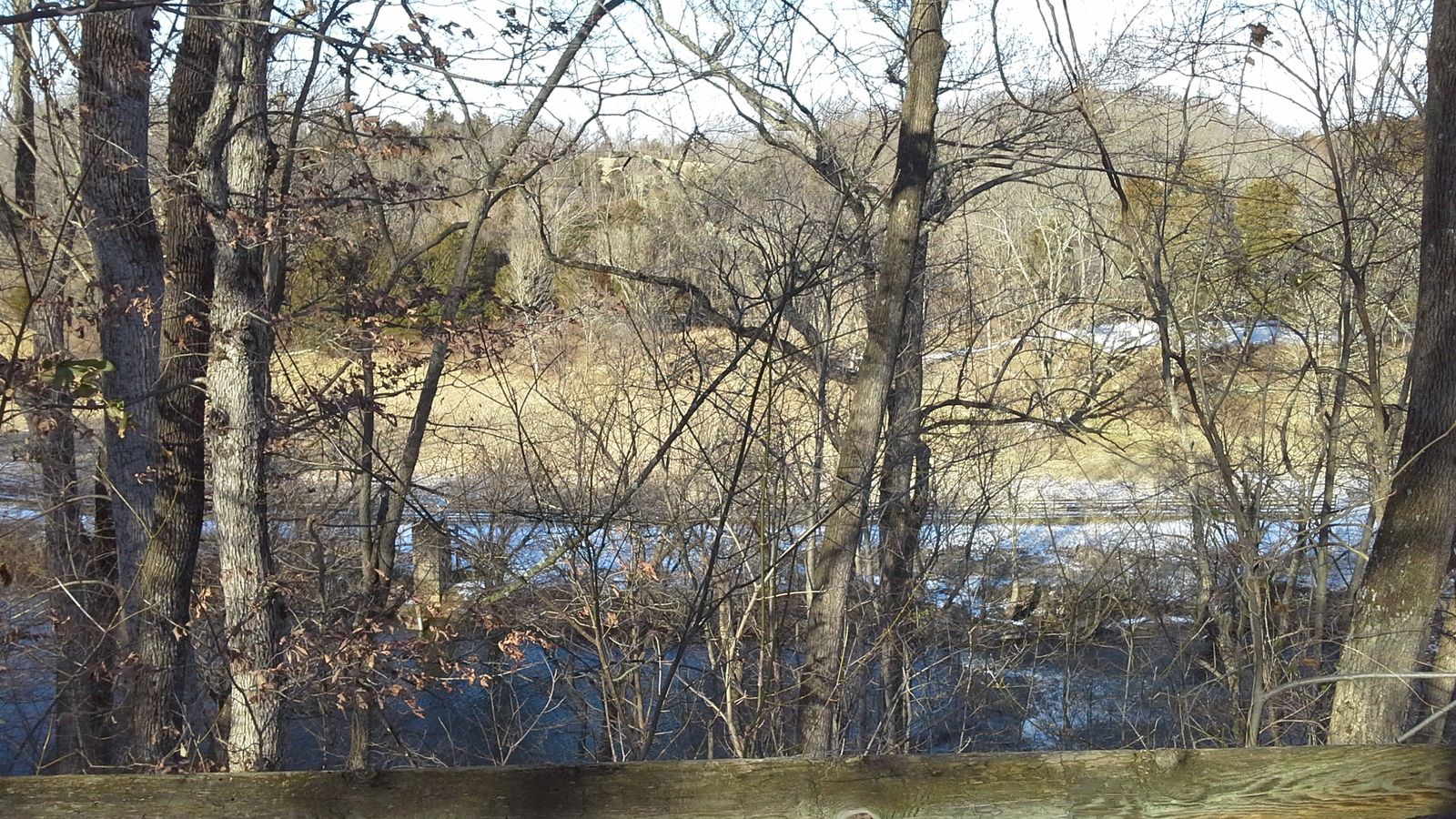
The view from the Georgian Overlook about 1/4 mile down stream of the bridge. The men of the 50th Georgia used this position to fire upon Union regiments on the other side attempting to approach the bridge. I suspect the view was clearer in 'the day'.
The return trip was a much better day weather-wise so I returned. It was cold and windy, but bright blue skies with scattered cloud cover and warm clothing made it worthwhile. One advantage was I almost had the field to myself. Another was that the lack of foliage gave me clear views of landscape that is obscured by foliage at other times of the year. One spot I spent a fair amount of time at Burnside's Bridge.
The following view of the bridge is taken from the position occupied by the 2nd and 20th Georgia Infantry during the battle. The first federal attempt to cross was made by Crook's Division in the vicinity of the bend in the creek to the north (left). A second try was attempted by the 2nd Maryland and the 6th New Hampshire advancing on the flat ground along the creek to the right, but was stopped cold by the Georgians overlooking the bridge.
The final, successful attack was orchestrated by Colonel Edward Ferrero commanding a mixed brigade of Massachusetts, New York and Pennsylvania regiments. Ferrero had the 51st Pennsylvania, followed closely by the 51st New York take cover behind the hill directly in front of the bridge abutment and charge directly down the hill across the bridge. The 21st and 35th Massachusetts came in from the right, initially providing covering fire, but then following behind the two 51sts as those regiments advanced.
The view of the Georgian positions (near the top of the hill) from the Union perspective.
Looking upstream from the bridge. Confederate Colonel Henry Kyd Douglas would state in his memoirs (I Rode with Stonewall) that he could not understand why Burnside did not use his overwhelming numbers to hop, skip and jump across the creek and land on the other side. While I don't doubt the creek may have been lower in September, 1862, than it was this January, I don't envy any Union soldier who would have to climb over the stone wall on the right, lower himself into the creek, cross it and climb up the other side while under fire. I suspect Colonel Douglas may have had different thoughts were he on the other side of the creek.
The view from the Georgian Overlook about 1/4 mile down stream of the bridge. The men of the 50th Georgia used this position to fire upon Union regiments on the other side attempting to approach the bridge. I suspect the view was clearer in 'the day'.
Last edited:


 Bringing the