Another Tower Lock Plate

RSMorris

First Sergeant
Joined
Jul 3, 2020
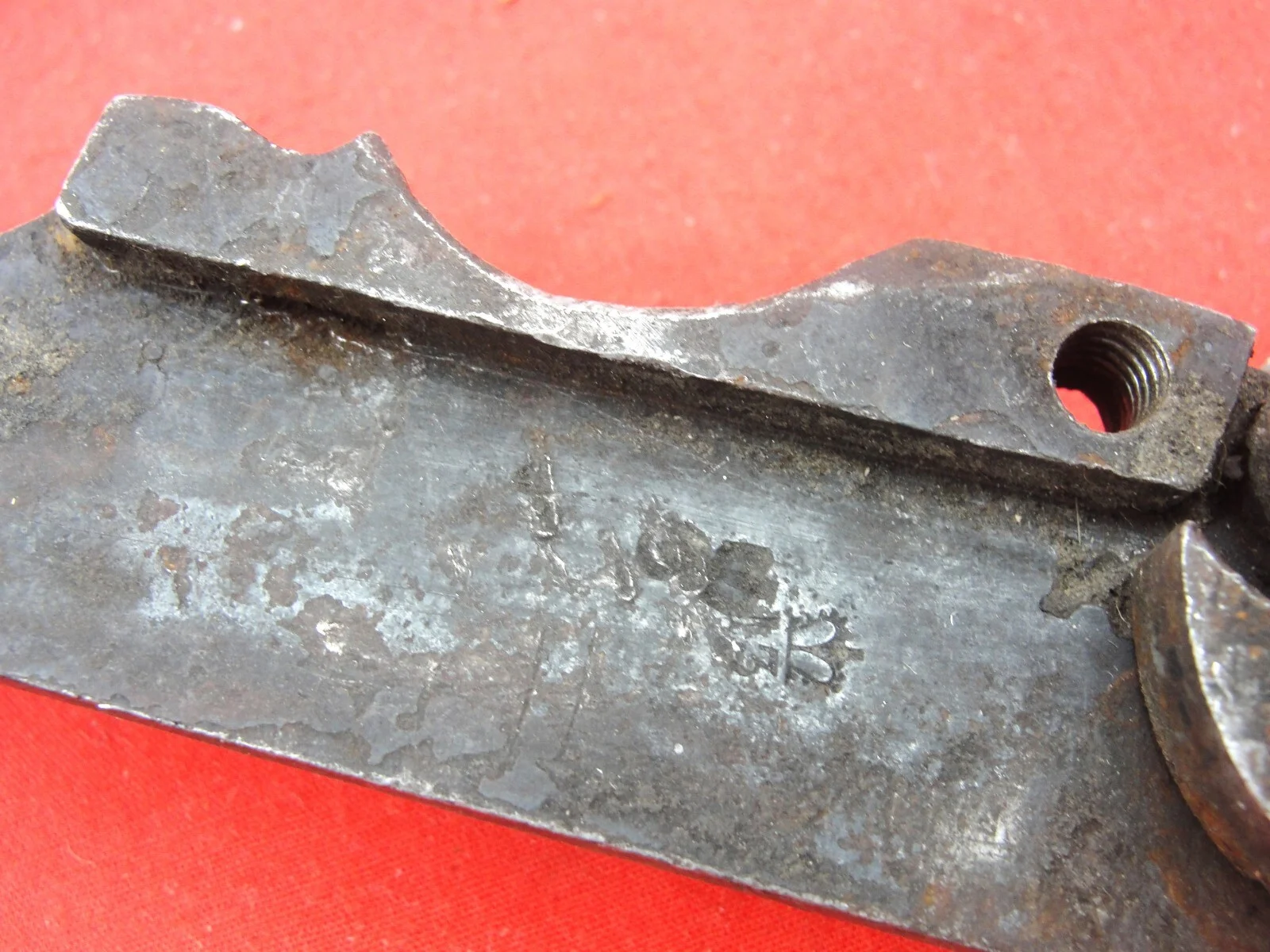
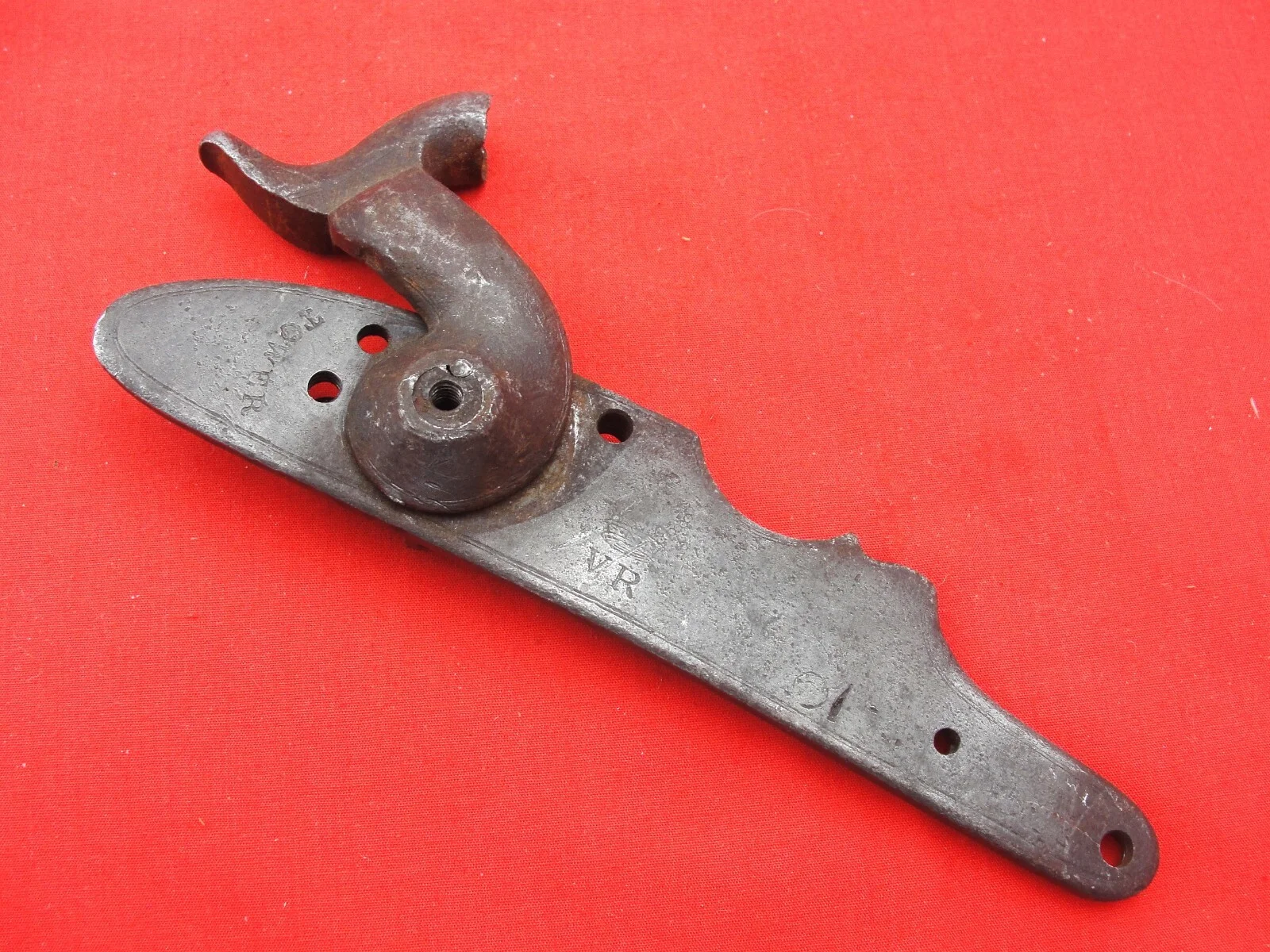
This is another I bought for the collection. It measures 6.5 inches and is VR stamped, I assume to be
Queen Victoria. I think this one would be for a musket. I do not see the Broad arrow stamp on the outside
but appears to have it on the inside of the plate, am I correct , or no? Either was converted to percussion or built as percussion. Again, these are the auction pics until the mail brings it.

s-l1600-1.webp


s-l1600-3.webp


s-l1600.webp
 
Last edited:
The VR is for Victoria Regina and the lock plate is from a flintlock Brown Bess musket. Very few musket with VR were imported to the US as England was neutral :nah disagree:
 
The VR is for Victoria Regina and the lock plate is from a flintlock Brown Bess musket. Very few musket with VR were imported to the US as England was neutral :nah disagree:
Thank you very much for the info... should be imported :-) to my house sometime next week. How can you tell the difference between one that was converted to percussion v. being built as percussion? I have read and I don't remember well the term Brown Bess really only applied to flintlocks and flintlocks converted to percussion, but not to British muskets that were built as percussion. But I don't know.
 
Trivial but England was not neutral. England was just one of the nations of the United Kingdom, which indeed was a neutral country. England has had no government of its own nor an army since 1707 at which time America ceased to be an English colony and became. British colony for a century.
Pedantic yes but using 'England' as a synonym for the UK is disrespectful to the actual English people and their individual status as a nation. Much as if one called a Texan a 'Yankee'.

BTW to placate any Texan readers, if you visit London you can find the old Texan Embassy just up the road opposite the King's Official Residence at St. James Palace. It carries a small plaque on the wall and is the original building at 4 St. James Street, London. SW1A 1EF. The (oldest wine shop in London) are the landlords and next door and a small passageway, 3 Pickering Place has the plaque. The United Kingdom in turn had a Consulate in Houston.
 
Another question, I don't see a Broad Arrow stamp on this, again from pictures only, but I do see a crown stamp on the reverse. Is that the Broad Arrow? If not, what does it mean?
 
Trivial but England was not neutral. England was just one of the nations of the United Kingdom, which indeed was a neutral country. England has had no government of its own nor an army since 1707 at which time America ceased to be an English colony and became. British colony for a century.
Pedantic yes but using 'England' as a synonym for the UK is disrespectful to the actual English people and their individual status as a nation. Much as if one called a Texan a 'Yankee'.

BTW to placate any Texan readers, if you visit London you can find the old Texan Embassy just up the road opposite the King's Official Residence at St. James Palace. It carries a small plaque on the wall and is the original building at 4 St. James Street, London. SW1A 1EF. The (oldest wine shop in London) are the landlords and next door and a small passageway, 3 Pickering Place has the plaque. The United Kingdom in turn had a Consulate in Houston.
GREAT BRITAIN in those days = PLEASE!
 
Here is why I think mine is a flintlock converted to percussion Brown Bess lock. If you note the circle on the mainspring of the flintlock Bess, and the same spot on mine, you can see where that hole was filled in. That makes me believe this was a percussion conversion rather than being built that way. It's my understanding the Pattern 1839 was the first purpose built percussion in that line.

Screenshot 2025-12-26 at 4.57.09 PM.webp


Screenshot 2025-12-26 at 4.48.24 PM.webp
 
It may be a lockplate from a Pattern 1839 Musket - basically a Brown Bess conversion to Percussion. Some were converted BB locks, others new made. The mark inside is an Inspectors stamp
1766786069048.webp

The main stamp would have been the Board of Ordnance B(arrow)O stamp on the butt.
1766786403639.webp
 
yep all I have is the lock plate. It could be a leftover part and converted. I'll give you that. Looks well used... lol. Guess I am more curious about what it was before what it became.
 
GREAT BRITAIN in those days = PLEASE!
Land of the "Pritani" if you go back to Pytheas of Massilia 2,400 years ago. Hence latinised by the Romans into Britannia and thus to British.
It was King James VI of Scotland and I of England who promoted the term Great Britain in pursuit of his aim to unite the two Crowns from a personal Union into one country. That did not happen until the joint Acts of Union of 1707 under Queen Anne. So that is only 450 years ago and the understood Lesser Britain being Brittany (Bretagne or Breizh) which was settled by Britons fleeing the English invading across the North Sea and is now part of France.
However in Roman times the assumption was that the Lesser Britannia was a reference to the smaller island of Ireland across the Irish Sea. The first name the English gave the larger island was Breoten when they arrived there.

It is all quite simple. One country, four nations, three Crown Dependencies and eight languages (Irish Gaelic, Scots Gaelic, Scots, English, Cornish, Welsh, Manx and Anglo-Norman French) now that Norwegian based Norn is extinct. The nearest language to English is Frisian and not one of the native languages. Constitutionally (but not actually) reigned over by Charles III as King of England and Wales, of Northern Ireland and of Scotland, Lord of Mann, Duke of Normandy of the Bailiwick of Jersey and of the Bailiwick of Guernsey.

But one can choose any of these names for the whole island or extended as the United Kingdom as far as I am concerned but England should be reserved for the nation of England itself.

However I have bored the good people of the forum into a near-death experience enough. So I will leave the subject alone.
Bledhen Nowydh Da.
 
Last edited:
Land of the "Pritani" if you go back to Pytheas of Massilia 2,400 years ago. Hence latinised by the Romans into Britannia and thus to British.
It was King James VI of Scotland and I of England who promoted the term Great Britain in pursuit of his aim to unite the two Crowns from a personal Union into one country. That did not happen until the joint Acts of Union of 1707 under Queen Anne. So that is only 450 years ago and the understood Lesser Britain being Brittany (Bretagne or Breizh) which was settled by Britons fleeing the English invading across the North Sea and is now part of France.
However in Roman times the assumption was that the Lesser Britannia was a reference to the smaller island of Ireland across the Irish Sea. The first name the English gave the larger island was Breoten when they arrived there.

It is all quite simple. One country, four nations, three Crown Dependencies and eight languages (Irish Gaelic, Scots Gaelic, Scots, English, Cornish, Welsh, Manx and Anglo-Norman French) now that Norwegian based Norn is extinct. The nearest language to English is Frisian and not one of the native languages. Constitutionally (but not actually) reigned over by Charles III as King of England and Wales, of Northern Ireland and of Scotland, Lord of Mann, Duke of Normandy of the Bailiwick of Jersey and of the Bailiwick of Guernsey.

But one can choose any of these names for the whole island or extended as the United Kingdom as far as I am concerned but England should be reserved for the nation of England itself.

However I have bored the good people of the forum into a near-death experience enough. So I will leave the subject alone.
Bledhen Nowydh Da.
As I said, GREAT BRITAIN in those days.
Peidiwch â gwneud mynyddoedd o dwmpathau gwadd
Blwyddyn newydd dda.*

So there!

*Welsh
Don't make mountains out of molehills
Happy new Year

In reply to Cornish
Happy new Year
 
Last edited:
It is amazing how hard it is to find images of these with the VR cypher. Most of them have the GR.
Queen Victoria came to the throne in 1937 and many flintlocks were made in the reign of George III (d 1820) followed by George IV (1820-1830) and then William IV who ruled from 1830 - 1837 There are VERY few WR locks since there were more than enough GR locks left over from the Napoleonic Wars. Here is one from a P1824 Sea Service pistol:
IMG_2038.webp

By the time Victoria came to the throne, the switch to percussion was underway so no new flintlocks were introduced. This looks very like an unissued conversion - no acceptance stamp - which would have been issued to the Militia.

It may well have been a 'spare' flintlock conversion with the old 'GR' (and acceptance stamp?) ground off at the time the frizzen spring screw and pin holes were filled and levelled.
 

Learn About Us
About CivilWarTalk
Contact the Webmaster
Meet the Staff
Link to CivilWarTalk
Join Our Community
Register
Browse Forums
View Today's Discussions
Search the Forum
Get Help
FAQ
Student Guide
Forum Rules & Etiquette
Copyright / DMCA

     Contact Us CivilwarTalk on Facebook CivilWarTalk on YouTube CivilWarTalk on Twitter RSS Feed

Bringing the American Civil War and More to Life.
© 1999 - , CIVILWARTALK, LLC - Site Version 10.0

SlaveryTalk.com - SecessionTalk.com - CivilWarTalk.com - ReconstructionTalk.com
Back
Top