
Proud Alabamian
Private
- Joined
- Oct 10, 2015
- Location
- Montgomery, Alabama
The new "Alabama Voices Museum" at the Alabama Department of Archives and History is an award-winning exhibit that is among the best you'll find at any state museum in the country. It's War Between the States display, as you would expect, contains some stunning artifacts, as you would expect. I thought I'd use this thread to share some.
One of my favorite Alabama Confederate heroes to study is Colonel Tennent Lomax. Born in Alabama, Lomax served as a captain in the Mexican American War and was governor Orizaba, Mexico. When the War Between The States began, he was commissioned a colonel in the 3rd Alabama Infantry.
Ordered to Pensacola, he fully expected orders to storm Fort Pickens, but the order never came from Montgomery. He paid a visit to the fort under a flag of truce. The officer there told him, "Colonel, we expected the honor of a visit from you some time ago." Lomax replied, "Sir, you would not have been disappointed had my wishes prevailed."
His regiment was soon ordered to Norfolk, Virginia where it's twelve month service expired. Lomax then enlisted as a private, but his regiment soon re-enlisted for the duration of the war and he was it's colonel again.
His only action of the war occurred at the Battle of Seven Pines on May 31, 1862. Lieutenant James Thompson of the 6th Alabama described his final moments. "The 3rd Alabama Regiment...one of the finest regiments in the service was passing. General (John Brown) Gordon, then our colonel, was standing near us. One of the finest looking officers we ever saw reined up his horse, shook hands with him, and while they were exchanging a few words, some of our troops asked, who is he? It was Col. Lomax. His regiment had passed. He told Colonel Gordon that this would be his first and his last battle, and with a smile and a salute, he galloped away toward the fighting to the head of his regiment and they passed out of sight. It seemed to us hardly time for their column to form in line before heavy volleys of musketry were opened in that direction, and soon after, heavy numbers of the regiment were passing wounded or being borne on litters. The gallant Lomax was among the dead."
The Augusta Constitutionalist pays the following tributes to the memory of this gallant officer: "No nobler spirit ever gave his life in defence of his country than Tennant Lomax, Colonel of the Third Alabama regiment, who bravely fell in the late battle near Richmond. He was a man of towering form and commanding present, with a countenance beaming with intelligence, and bearing the stamp of high-toned honor and of every generous emotion. His life was gentle; and the elements so mixed in him that nature might stand up, and my to all the world, 'this was a man.'"
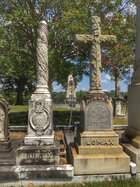
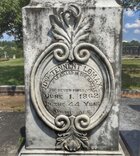
Sadly, Lomax was to receive a commission from Jefferson Davis to brigadier general the day he was killed. He is buried in this grave in Montgomery's Oakwood Cemetery:
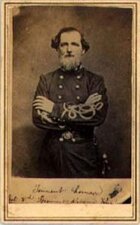
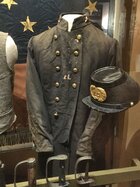
This is a photo of Tennent Lomax that was taken during the War. The exact tunic that he is wearing in the photo is now on display in the Alabama Archives:
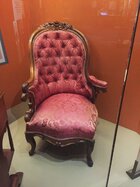
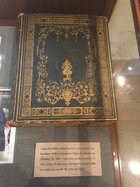
Other items in our state museum include the bible upon which Jefferson Davis took the oath to become Confederate president (every Alabama governor has been sworn in upon it since), and the chair in which he sat during the inaugural ceremony. The arms of the chair are offset so if someone wearing a sword sits in it, the sword naturally drapes off to the side.
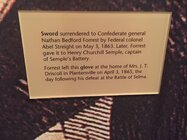
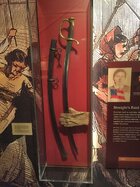
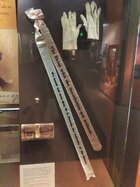
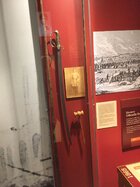
Other interesting artifacts include the sword that was surrendered to General Nathan Bedford Forrest during Streight's raid in Alabama, and one of Forrest's gloves. There is also a display about the secessionist fire-eaters who helped cause the war, and secession sashes that were worn during parades are on exhibit.
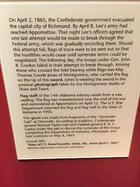
Finally, Major Thomas Goode Jones of Montgomery (my old SCV Camp was named after him) carried the flag of truce, a handkerchief, on the tip of his sword when Lee surrendered at Appomattox, and it, too, is on display here.
One of my favorite Alabama Confederate heroes to study is Colonel Tennent Lomax. Born in Alabama, Lomax served as a captain in the Mexican American War and was governor Orizaba, Mexico. When the War Between The States began, he was commissioned a colonel in the 3rd Alabama Infantry.
Ordered to Pensacola, he fully expected orders to storm Fort Pickens, but the order never came from Montgomery. He paid a visit to the fort under a flag of truce. The officer there told him, "Colonel, we expected the honor of a visit from you some time ago." Lomax replied, "Sir, you would not have been disappointed had my wishes prevailed."
His regiment was soon ordered to Norfolk, Virginia where it's twelve month service expired. Lomax then enlisted as a private, but his regiment soon re-enlisted for the duration of the war and he was it's colonel again.
His only action of the war occurred at the Battle of Seven Pines on May 31, 1862. Lieutenant James Thompson of the 6th Alabama described his final moments. "The 3rd Alabama Regiment...one of the finest regiments in the service was passing. General (John Brown) Gordon, then our colonel, was standing near us. One of the finest looking officers we ever saw reined up his horse, shook hands with him, and while they were exchanging a few words, some of our troops asked, who is he? It was Col. Lomax. His regiment had passed. He told Colonel Gordon that this would be his first and his last battle, and with a smile and a salute, he galloped away toward the fighting to the head of his regiment and they passed out of sight. It seemed to us hardly time for their column to form in line before heavy volleys of musketry were opened in that direction, and soon after, heavy numbers of the regiment were passing wounded or being borne on litters. The gallant Lomax was among the dead."
The Augusta Constitutionalist pays the following tributes to the memory of this gallant officer: "No nobler spirit ever gave his life in defence of his country than Tennant Lomax, Colonel of the Third Alabama regiment, who bravely fell in the late battle near Richmond. He was a man of towering form and commanding present, with a countenance beaming with intelligence, and bearing the stamp of high-toned honor and of every generous emotion. His life was gentle; and the elements so mixed in him that nature might stand up, and my to all the world, 'this was a man.'"
Sadly, Lomax was to receive a commission from Jefferson Davis to brigadier general the day he was killed. He is buried in this grave in Montgomery's Oakwood Cemetery:
This is a photo of Tennent Lomax that was taken during the War. The exact tunic that he is wearing in the photo is now on display in the Alabama Archives:
Other items in our state museum include the bible upon which Jefferson Davis took the oath to become Confederate president (every Alabama governor has been sworn in upon it since), and the chair in which he sat during the inaugural ceremony. The arms of the chair are offset so if someone wearing a sword sits in it, the sword naturally drapes off to the side.
Other interesting artifacts include the sword that was surrendered to General Nathan Bedford Forrest during Streight's raid in Alabama, and one of Forrest's gloves. There is also a display about the secessionist fire-eaters who helped cause the war, and secession sashes that were worn during parades are on exhibit.
Finally, Major Thomas Goode Jones of Montgomery (my old SCV Camp was named after him) carried the flag of truce, a handkerchief, on the tip of his sword when Lee surrendered at Appomattox, and it, too, is on display here.


 Bringing the