
RollAlabamaRoll
Private
- Joined
- Jan 18, 2023
- Location
- Tennessee
I recently came across a very interesting tale of a foreign alliance between the CSS Shenandoah and King Nananierikie of the Pohnpei people.
The following is an extract from the book Sea of Gray by Tom Chaffin, it is a long read but I promise you it'll be the most interesting thing you've read all day.
Each of Ascension's five tribes was ruled by a single chief-
or "king," as the Confederates called the sovereign. Pondering
the Shenandoah's vulnerabilities as the raider lay anchored in
Lohd Harbor, Waddell concluded that it would be prudent to
invite the chief who ruled the chiefdom encompassing Lohd
Harbor to visit the Shenandoah. To deliver the invitation, on
the Confederates' second day at Ascension Waddell dispatched
a detail of six armed men led by Cornelius Hunt, with the
Englishman Harrocke acting as their interpreter.
Hunt's party set off in the captain's personal gig for a nearby
beach where the king often held forth inside a tiny bamboo hut.
But as the men rowed ashore through the surf they confronted,
by Hunt's recollection, what surely ranks among the more
unlikely scenes of hostile military action in the annals of the
Civil War:
A crowd of natives rushed down to meet us, armed with
stones, which they hurl almost with the precision of a
rifle-ball, and swords manufactured from sharks' teeth,
the edges of which are dipped in a subtle poison that
leaves certain death in any wounds they inflict. The ap-
pearance of this heathenish multitude was anything but
conciliatory.
Harrocke stepped in and, defusing the situation, explained
to the islanders the detail's purpose. Even so, the king was not
to be found. He was, the natives explained, at a festival taking
place inland, at a tribal gathering place. Two or three of the na-
tives agreed to take Hunt to the festival. So, as Hunt recalled,
"leaving my men in the boat and accompanied by the inter-
preter, I set forth for the first time in my life to pay a visit to
royalty."
After a steep hike into the island's upland interior, the party
arrived at the festival venue. "It was a rude, extensive building,
built of bamboo, with a high peaked roof and eaves which ex-
tended nearly to the ground," Hunt recalled. Inside, about
three hundred people were gathered. At the center of the gath-
ering sat the king himself-"naked with the exception of a
tappa made of grass, worn about his waist, and smeared from
head to foot with cocoanut oil." Like most of his followers,
Hunt noted, the king's earlobe had been pierced with a gaping
hole that was used to carry a "huge misshapen tobacco pipe."
As Harrocke translated, Hunt relayed the captain's invitation.
The king in due time accepted the entreaty. After giving him-
self "a fresh coating of cocoanut oil," the sovereign-
eventually joined by everyone else at the festival-set off with
Hunt and Harrocke back to the shore, where the Confederates
awaited the shore party's return. There Hunt, Harrocke, the
king, and four of his aides joined the original detail of Confed-
erates in the gig and shoved off for the Shenandoah. Behind
them followed a flotilla of canoes, from fifty to a hundred ac-
cording to various accounts, each carrying up to five of the
king's subjects.
When the royal retinue reached the raider, it found Waddell
and his officers suitably decked out in their gray dress uniforms
with the gold-striped trims. Waddell, pressing his advantage,
had already decided to treat this occasion as a state visit and
accord the monarch all courtesies due any head of state. Thus,
after climbing up the steamer's companion ladder, the chief-
"the Nahnwarki," by title-and the attendants who accom-
panied him were, after stepping onto the gangway, officially
received by Captain Waddell and First Lieutenant Whittle. "I
wish I had a photograph of him," Lining wrote that day. "He is
almost 5 ft. 8 in., dark complexion, not at all an
intelligent
countenance, hair black & of moderate length, with a circlet of
beads around his head, & a collar around his neck. The lobes of
both ears were bored & stretched to such an extent as to easily
admit one's finger, & and in one of them he had a clay pipe i
troduced & kept in place by a half turn. A broad belt was
around his waist, which with the clout finished his costume."
The king's attendants, Lining recalled, were dressed in much
the same manner, and all of them were so "sloshed down well"
with coconut oil that "whenever they leaned up against any
place they left a mark." As Francis Chew noted, "How their
bodies glistened in the rays of the sun!"
As the scores of islanders who had followed the king gath-
ered around the Shenandoah in their canoes, the king and his
party repaired to the captain's cabin with Whittle and Harrocke.
There, pipes were lit and Waddell offered his guest a drink-a
glass of Schiedan schnapps, by his account. And, as Harrocke
interpreted, Waddell began explaining the purpose of the
Shenandoah's visit; as usual, he presented the Confederate cause
as a matter of a heroic, besieged people resisting predatory in-
vaders. "It was explained to him," Waddell recalled, "that the
vessels in port belonged to our enemies who had been fighting
us for years, killing our people, outraging our country-women,
and desolating our homes, and that we were ordered to capture
and destroy their vessels whenever and wherever found, and
that if the laws of his Majesty would not be violated, the vessels
in port would be confiscated."
Based on their first impressions of these captured vessels'
contents, Waddell added, there seemed to be little aboard them
that would be of use to the Shenandoah. He then proposed a
deal: if the king would guarantee the Shenandoah's safety while
in the harbor and post guards onshore to protect her, the Con-
federates would allow his people, once Waddell's men were
done with the whaling vessels, to scavenge all four ships for any-
thing they wished to take. In addition-to arm the guards and
gesture of friendship-Waddell would deliver to the king
twenty-two muskets and some ammunition already taken from
the Harvest. The muskets, however, constituted a dubious gift.
The Harvest's master had intended to use them for trading with
Pacific islanders. But, as Waddell later admitted, the weapons
were old, in poor condition, and appeared "very dangerous."
And if he ever found himself facing one of the rickety firearms
given to the king, "I would have preferred the muzzle to the
chamber as far as danger is concerned."
Unaware of the muskets' condition, the king readily agreed
to Waddell's offer. But the sovereign also asked that the four
vessels be torched inside the harbor so that his people might be
allowed to strip the metal off their hulls' bottoms. "This was of
course readily acceded to by us as it obviated the necessity of
our taking them out to apply the torch," Whittle recalled. Still
later, the king would select the specific spots in the harbor
where the vessels would be destroyed.
"The pipe and schnapps having fulfilled their office," as
Waddell later put it, an easy conviviality now enveloped the cap-
tain and the king. To seal the day's bargain, Waddell presented
the king with a ceremonial sword taken from the Lizzie M. Stacey.
After the talks, the king accepted an invitation to tour the
raider. By the day's end, Whittle recalled, the Shenandoak's of
ficers and their guest had become "best friends" and the king
left the ship "declaring that we all had his hearty welcome."
Afterward, the king's hosts rowed him back to shore in the
captain's gig-his subjects, once again, trailing behind in their
flotilla of canoes. Later that day, Waddell sent off to the king the
promised muskets and ammunition, as well as two boxes of
tobacco. Returning the Confederates' ostensible goodwill, the
king, during the Shenandoah's stay on the island, "sent on board fruit and fish several times and visited us daily." When Waddell, reciprocating protocol, visited the sover- eign's coastal home, he presented the Nahnwarki with a silk scarf. The king, in turn, presented Waddell with a "belt for the shoulders," a sash woven by a local craftsman of native coconut fibers and wool from a visiting whaleship. Waddell treasured the sash. "The belt is peculiar, exhibiting skills in the art of weaving and taste in blending colors," he recounted. His affection for it, however, was not entirely aesthetic. Following four years of fruitless Confederate efforts to win diplomatic recognition from the world's governments, Waddell wrote years later, the gar- ment is "preserved as a memento of the only sovereign who was fearless enough to extend hospitality to a struggling people and to sympathize with a just cause."
On April 3-the raider's third day on Ascension-as Waddell granted shore leave to many of his men, others continued ran- sacking the four prizes. Because at least three of the vessels were returning from successful whaling expeditions, their decks and holds teemed with the harvests of their hunts. Between the Ed- ward Cary and the Hector alone, the Confederates found five hun- dred barrels of whale oil. They also found various harpoons, whale lines, and other equipment. But because the Confederates were not in the whaling business the boarding parties found relatively few stores and items that seemed to be of value to the Shenandoah.
Afterward, the island's natives were, as promised, invited to come aboard the four condemned craft and take anything that they wanted. "All day long they swarmed over the vessels, like driver ants upon a dead carcase," master's mate Cornelius Hunt noted. "Canoes were constantly passing to and fro, laden with
ship's bread, tobacco, bits of iron, harpoons ... and all sorts of odds and ends, until they were fairly surfeited with plundering." Captain Waddell likewise marveled at the islanders' industrious- ness. "Every movable plank, spar and bulkhead was soon taken on shore for flooring purposes," he recalled. "The sails were re- moved from the yards and the sailrooms for tents and to be con- verted into suitable sails for their canoes." Waddell was later told that the copper from the vessels' bottoms would be pounded into breastplates for the island's warriors and used for trade with neighboring tribes.
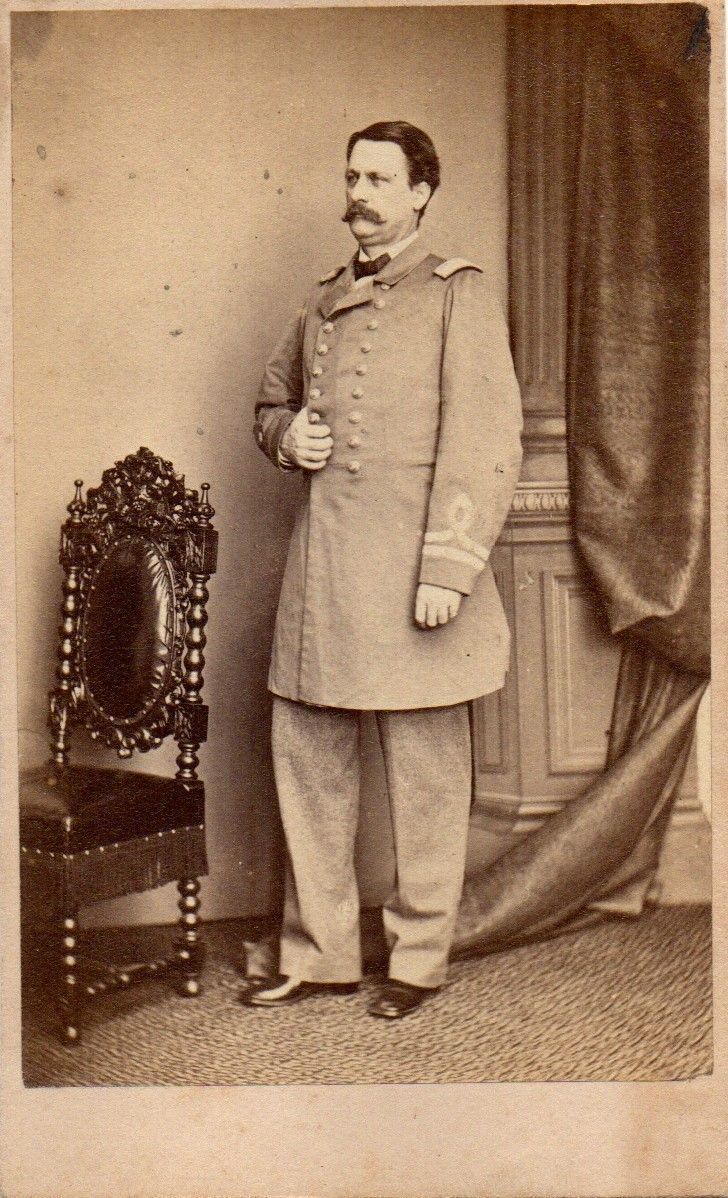
James Waddell, Commander of the Shenandoah.
The following is an extract from the book Sea of Gray by Tom Chaffin, it is a long read but I promise you it'll be the most interesting thing you've read all day.
Each of Ascension's five tribes was ruled by a single chief-
or "king," as the Confederates called the sovereign. Pondering
the Shenandoah's vulnerabilities as the raider lay anchored in
Lohd Harbor, Waddell concluded that it would be prudent to
invite the chief who ruled the chiefdom encompassing Lohd
Harbor to visit the Shenandoah. To deliver the invitation, on
the Confederates' second day at Ascension Waddell dispatched
a detail of six armed men led by Cornelius Hunt, with the
Englishman Harrocke acting as their interpreter.
Hunt's party set off in the captain's personal gig for a nearby
beach where the king often held forth inside a tiny bamboo hut.
But as the men rowed ashore through the surf they confronted,
by Hunt's recollection, what surely ranks among the more
unlikely scenes of hostile military action in the annals of the
Civil War:
A crowd of natives rushed down to meet us, armed with
stones, which they hurl almost with the precision of a
rifle-ball, and swords manufactured from sharks' teeth,
the edges of which are dipped in a subtle poison that
leaves certain death in any wounds they inflict. The ap-
pearance of this heathenish multitude was anything but
conciliatory.
Harrocke stepped in and, defusing the situation, explained
to the islanders the detail's purpose. Even so, the king was not
to be found. He was, the natives explained, at a festival taking
place inland, at a tribal gathering place. Two or three of the na-
tives agreed to take Hunt to the festival. So, as Hunt recalled,
"leaving my men in the boat and accompanied by the inter-
preter, I set forth for the first time in my life to pay a visit to
royalty."
After a steep hike into the island's upland interior, the party
arrived at the festival venue. "It was a rude, extensive building,
built of bamboo, with a high peaked roof and eaves which ex-
tended nearly to the ground," Hunt recalled. Inside, about
three hundred people were gathered. At the center of the gath-
ering sat the king himself-"naked with the exception of a
tappa made of grass, worn about his waist, and smeared from
head to foot with cocoanut oil." Like most of his followers,
Hunt noted, the king's earlobe had been pierced with a gaping
hole that was used to carry a "huge misshapen tobacco pipe."
As Harrocke translated, Hunt relayed the captain's invitation.
The king in due time accepted the entreaty. After giving him-
self "a fresh coating of cocoanut oil," the sovereign-
eventually joined by everyone else at the festival-set off with
Hunt and Harrocke back to the shore, where the Confederates
awaited the shore party's return. There Hunt, Harrocke, the
king, and four of his aides joined the original detail of Confed-
erates in the gig and shoved off for the Shenandoah. Behind
them followed a flotilla of canoes, from fifty to a hundred ac-
cording to various accounts, each carrying up to five of the
king's subjects.
When the royal retinue reached the raider, it found Waddell
and his officers suitably decked out in their gray dress uniforms
with the gold-striped trims. Waddell, pressing his advantage,
had already decided to treat this occasion as a state visit and
accord the monarch all courtesies due any head of state. Thus,
after climbing up the steamer's companion ladder, the chief-
"the Nahnwarki," by title-and the attendants who accom-
panied him were, after stepping onto the gangway, officially
received by Captain Waddell and First Lieutenant Whittle. "I
wish I had a photograph of him," Lining wrote that day. "He is
almost 5 ft. 8 in., dark complexion, not at all an
intelligent
countenance, hair black & of moderate length, with a circlet of
beads around his head, & a collar around his neck. The lobes of
both ears were bored & stretched to such an extent as to easily
admit one's finger, & and in one of them he had a clay pipe i
troduced & kept in place by a half turn. A broad belt was
around his waist, which with the clout finished his costume."
The king's attendants, Lining recalled, were dressed in much
the same manner, and all of them were so "sloshed down well"
with coconut oil that "whenever they leaned up against any
place they left a mark." As Francis Chew noted, "How their
bodies glistened in the rays of the sun!"
As the scores of islanders who had followed the king gath-
ered around the Shenandoah in their canoes, the king and his
party repaired to the captain's cabin with Whittle and Harrocke.
There, pipes were lit and Waddell offered his guest a drink-a
glass of Schiedan schnapps, by his account. And, as Harrocke
interpreted, Waddell began explaining the purpose of the
Shenandoah's visit; as usual, he presented the Confederate cause
as a matter of a heroic, besieged people resisting predatory in-
vaders. "It was explained to him," Waddell recalled, "that the
vessels in port belonged to our enemies who had been fighting
us for years, killing our people, outraging our country-women,
and desolating our homes, and that we were ordered to capture
and destroy their vessels whenever and wherever found, and
that if the laws of his Majesty would not be violated, the vessels
in port would be confiscated."
Based on their first impressions of these captured vessels'
contents, Waddell added, there seemed to be little aboard them
that would be of use to the Shenandoah. He then proposed a
deal: if the king would guarantee the Shenandoah's safety while
in the harbor and post guards onshore to protect her, the Con-
federates would allow his people, once Waddell's men were
done with the whaling vessels, to scavenge all four ships for any-
thing they wished to take. In addition-to arm the guards and
gesture of friendship-Waddell would deliver to the king
twenty-two muskets and some ammunition already taken from
the Harvest. The muskets, however, constituted a dubious gift.
The Harvest's master had intended to use them for trading with
Pacific islanders. But, as Waddell later admitted, the weapons
were old, in poor condition, and appeared "very dangerous."
And if he ever found himself facing one of the rickety firearms
given to the king, "I would have preferred the muzzle to the
chamber as far as danger is concerned."
Unaware of the muskets' condition, the king readily agreed
to Waddell's offer. But the sovereign also asked that the four
vessels be torched inside the harbor so that his people might be
allowed to strip the metal off their hulls' bottoms. "This was of
course readily acceded to by us as it obviated the necessity of
our taking them out to apply the torch," Whittle recalled. Still
later, the king would select the specific spots in the harbor
where the vessels would be destroyed.
"The pipe and schnapps having fulfilled their office," as
Waddell later put it, an easy conviviality now enveloped the cap-
tain and the king. To seal the day's bargain, Waddell presented
the king with a ceremonial sword taken from the Lizzie M. Stacey.
After the talks, the king accepted an invitation to tour the
raider. By the day's end, Whittle recalled, the Shenandoak's of
ficers and their guest had become "best friends" and the king
left the ship "declaring that we all had his hearty welcome."
Afterward, the king's hosts rowed him back to shore in the
captain's gig-his subjects, once again, trailing behind in their
flotilla of canoes. Later that day, Waddell sent off to the king the
promised muskets and ammunition, as well as two boxes of
tobacco. Returning the Confederates' ostensible goodwill, the
king, during the Shenandoah's stay on the island, "sent on board fruit and fish several times and visited us daily." When Waddell, reciprocating protocol, visited the sover- eign's coastal home, he presented the Nahnwarki with a silk scarf. The king, in turn, presented Waddell with a "belt for the shoulders," a sash woven by a local craftsman of native coconut fibers and wool from a visiting whaleship. Waddell treasured the sash. "The belt is peculiar, exhibiting skills in the art of weaving and taste in blending colors," he recounted. His affection for it, however, was not entirely aesthetic. Following four years of fruitless Confederate efforts to win diplomatic recognition from the world's governments, Waddell wrote years later, the gar- ment is "preserved as a memento of the only sovereign who was fearless enough to extend hospitality to a struggling people and to sympathize with a just cause."
On April 3-the raider's third day on Ascension-as Waddell granted shore leave to many of his men, others continued ran- sacking the four prizes. Because at least three of the vessels were returning from successful whaling expeditions, their decks and holds teemed with the harvests of their hunts. Between the Ed- ward Cary and the Hector alone, the Confederates found five hun- dred barrels of whale oil. They also found various harpoons, whale lines, and other equipment. But because the Confederates were not in the whaling business the boarding parties found relatively few stores and items that seemed to be of value to the Shenandoah.
Afterward, the island's natives were, as promised, invited to come aboard the four condemned craft and take anything that they wanted. "All day long they swarmed over the vessels, like driver ants upon a dead carcase," master's mate Cornelius Hunt noted. "Canoes were constantly passing to and fro, laden with
ship's bread, tobacco, bits of iron, harpoons ... and all sorts of odds and ends, until they were fairly surfeited with plundering." Captain Waddell likewise marveled at the islanders' industrious- ness. "Every movable plank, spar and bulkhead was soon taken on shore for flooring purposes," he recalled. "The sails were re- moved from the yards and the sailrooms for tents and to be con- verted into suitable sails for their canoes." Waddell was later told that the copper from the vessels' bottoms would be pounded into breastplates for the island's warriors and used for trade with neighboring tribes.
James Waddell, Commander of the Shenandoah.


 Bringing the