
 Forum Host
- Joined
- Feb 5, 2017
This is eerie. I'm reading from a book by Meyer's about White's Battalion's, "The Commanches." He's talking about how in May they had to traverse back through the Wilderness.
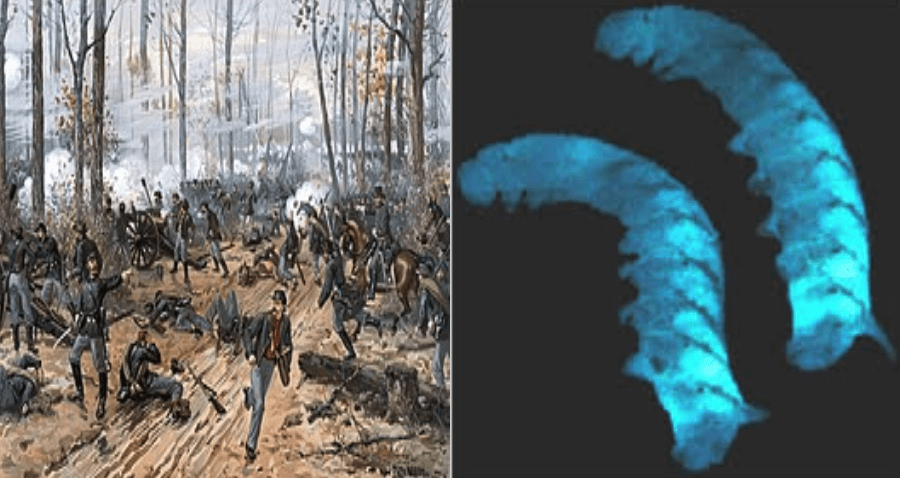
"The second squadron was sent on picket to the left of the army, where it remained for some days, and on its return to the command about the 20th, the first was ordered out fo a tour of duty of the same kind between Todd's Tavern and the Court House; but about 2 o'clock on the morning of the 21st received an order to join the battalion, then bringing up the rear of the army, which was moving by Spottsylvania Court-house towards the North Anna river. The march was rather an exciting one, leading as it did over the broad battle-fields of the Wilderness, where many hundreds of dead men still lay unburied, and the squadron was obliged to pass directly over them, when, as the hoofs of the horses would strike the corpses, the flesh would strip from the bones, leaving them glistening in the phosphorescent light that played around them, and the weird, ghostly influence of the scene affected the men, in the silence and gloom of that early morning, more than the presence of any number of live Yankees could have done; but the night wore away—very slowly indeed, it seemed—and by an hour after sunrise the battalion united a few miles below the Court-house, when it slowly marched along along the Richmond road……"
What was the "weird, phosphorescent light" that they were seeing? And boy, that had to be an awful scene to march through at night - every step a new and horrid surprise and a new and horrid jump scare.
"The second squadron was sent on picket to the left of the army, where it remained for some days, and on its return to the command about the 20th, the first was ordered out fo a tour of duty of the same kind between Todd's Tavern and the Court House; but about 2 o'clock on the morning of the 21st received an order to join the battalion, then bringing up the rear of the army, which was moving by Spottsylvania Court-house towards the North Anna river. The march was rather an exciting one, leading as it did over the broad battle-fields of the Wilderness, where many hundreds of dead men still lay unburied, and the squadron was obliged to pass directly over them, when, as the hoofs of the horses would strike the corpses, the flesh would strip from the bones, leaving them glistening in the phosphorescent light that played around them, and the weird, ghostly influence of the scene affected the men, in the silence and gloom of that early morning, more than the presence of any number of live Yankees could have done; but the night wore away—very slowly indeed, it seemed—and by an hour after sunrise the battalion united a few miles below the Court-house, when it slowly marched along along the Richmond road……"
What was the "weird, phosphorescent light" that they were seeing? And boy, that had to be an awful scene to march through at night - every step a new and horrid surprise and a new and horrid jump scare.




 Bringing the