When positioned in defensive positions and field fortifications, 24-pounder Field Howitzers were extremely useful pieces of ordnance because of their powerful 5.82 inch shells. Their 1400 pound weight made them a very hard to maneuver in the field, and their 1300 yard effective range put them at a disadvantage to other artillery pieces. Nevertheless, infantrymen could not have relished the idea of charging a battery of 24-pdr howitzers.
ARTILLERY PROFILE
WEIGHTS & MEASURES
The companion to the 12 pdr. Field Gun & 12 pdr. Napoleon, the Model 1841 24 pdr. Howitzer was the heaviest ordnance intended for use in the field.
In Federal service, nearly all howitzers had been replaced by Napoleons. The Confederates, having a shortage of field pieces, maintained them in their arsenal. Howitzers like the 24-pounder fired solid shot, spherical case, and canister.
E. Porter Alexander, General Longstreet's Chief of Artillery for much of the war, called them "my favorite guns." On occasion, he even had them mounted on skids and used as mortars.
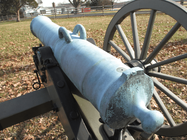
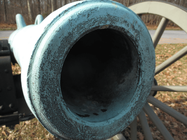
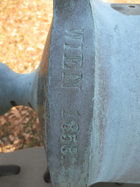
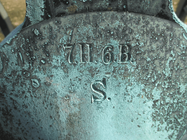
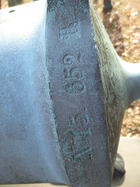
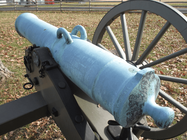
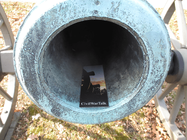
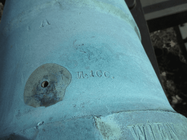
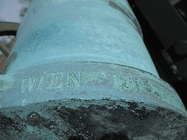
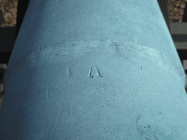
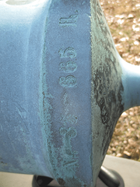
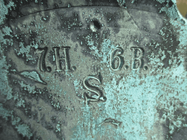
The 24-pounder Field Howitzer in the photo above is one of four used by the Confederates at Gettysburg, and are of Austrian manufacture. They are easily distinguished by the twin "handles" on either side of the tube. Because the bores of this weapon was 5.87 inches instead of the normal 5.82 inches, these guns have the complication of having additional unwanted windage when using standard shells, which were 5.68 inches in diameter by U.S. and C.S. ordnance regulations. With a 0.19 inch windage to overcome, gunners were directed to wrap standard ammunition in canvas bags help alleviate the gap issue.
 .
.

FOR FURTHER READING

 markerhunter.wordpress.com
 markerhunter.wordpress.com
 markerhunter.wordpress.com

 www.gettysburgdaily.com
ARTILLERY PROFILE
- Model: 24-pdr. Field Howitzer
- Type: Muzzleloading Field Howitzer
- In Service With:
- United States Army
- Confederate States Army
- Purpose: To fire heavy explosive shells in a high trajectory over terrain & enemy fortifications for plunging and ricochet fire, and also for short range defense using canister.
- Invented By: Various Cannon Manufacturers at the request and specification of the U.S. Army Ordnance Board in 1831
- Years of Manufacture: 1841 to 1863
- Tube Composition: Bronze
- Rarity: Rare
- US Casting Foundry:
- N.P. Ames, Chicopee, Massachusetts
- Cyrus Alger & Company, Boston, Massachusetts
- CS Casting Foundries:
- Quinby & Robinson, of Memphis, Tennessee
- Variants:
- Pre-1841 U.S. Iron 24 pdr. Flank Howitzer
- Confederate Iron 24 pdr. Flank Howitzer
- Austrian 7-pdr. Field Howitzer (5.87" bore, 7 pdr. by Austrian weighting system of 1850's.)
- No. Purchased During the Civil War: about 65
- No. of Surviving Pieces Today: ?
- Bore Diameter: 5.82 inches
- Inner Chamber Diameter: 4.62 inches
- Tube Length: 61 inches
- Bore Length: 10.48 cal, or 61 inches
- Rifling Type: None
- Trunnion Diameter: 4.2 inches
- Tube Length: 71 inches
- Tube Weight: 1,318 lbs.
- Carriage Type: No. 3 Field Carriage (1,175 lbs.), 57" wheels
- Total Weight (Gun & Carriage): 2,493 lbs.
- Horses Required to Pull: 8
- No. of Crew to Serve: 8
- Typical Number of Projectiles Per Gun:
- 12 shells, 8 case, and 3 canister; 23 projectiles per chest
- Each gun had 4 limber chests
- A total of 94 projectiles per gun
- Projectiles: 18.4 lb. spherical case, common shell, canister
- Standard Powder Charge: 2 to 2.5 lbs. Cannon Grade Black Powder
- Rate of Fire: 1 rounds per minute
- Muzzle Velocity: 1,060 ft/sec.
- Effective Range (at 5°): Using Shell & 2 lbs. Powder... 1,322 yards (0.75 miles)
- Effective Range (at 3° 30'): Using Spherical Case & 2.5 lbs. Powder... 1,200 yards (0.68 miles)
- Projectile Flight Time (at 3° 30'): Using Spherical Case & 2.5 lbs. Powder... 4¾ seconds
The companion to the 12 pdr. Field Gun & 12 pdr. Napoleon, the Model 1841 24 pdr. Howitzer was the heaviest ordnance intended for use in the field.
In Federal service, nearly all howitzers had been replaced by Napoleons. The Confederates, having a shortage of field pieces, maintained them in their arsenal. Howitzers like the 24-pounder fired solid shot, spherical case, and canister.
E. Porter Alexander, General Longstreet's Chief of Artillery for much of the war, called them "my favorite guns." On occasion, he even had them mounted on skids and used as mortars.
The 24-pounder Field Howitzer in the photo above is one of four used by the Confederates at Gettysburg, and are of Austrian manufacture. They are easily distinguished by the twin "handles" on either side of the tube. Because the bores of this weapon was 5.87 inches instead of the normal 5.82 inches, these guns have the complication of having additional unwanted windage when using standard shells, which were 5.68 inches in diameter by U.S. and C.S. ordnance regulations. With a 0.19 inch windage to overcome, gunners were directed to wrap standard ammunition in canvas bags help alleviate the gap issue.
FOR FURTHER READING
- Civil War Artillery at Gettysburg, Cole, Philip M, Da Capo Press, New York, N.Y., 2002.
- Field Artillery Weapons of the Civil War, by Olmstead, Hazlett, & Parks, Univ of Delaware Press, 1988.
- Artillery and Ammunition of the Civil War, by Warren Ripley, Battery Press, 1984.
Big Brass Cannons – 24-pdr Field Howitzers
Prior to the Civil War, field artillery retained the type-classification and employment doctrine from the early 19th-century, leaning heavily on the European Napoleonic experience. While emerging …
markerhunter.wordpress.com
Confederate 24-pdr Howitzers
As mentioned in the posts concerning the 24-pdr Field Howitzers and Flank Howitzers, the Confederate Army also employed these weapons. Confederate howitzers in the 24-pdr caliber fit into three ca…
markerhunter.wordpress.com
Foreign 24-pdr Howitzers
The US Army adopted the 24-pdr caliber for howitzers in conformance with European conventions. Therefore a look at how the class appeared on the other side of the pond is in order, in the first p…
markerhunter.wordpress.com
Gettysburg Artillery Part 2 with Licensed Battlefield Guide George Newton | Gettysburg Daily
Licensed Battlefield Guide George Newton is standing by two 24 pounder howitzers located at Moody’s[...]
www.gettysburgdaily.com
Last edited:





 Bringing the