
 Forum Host
- Joined
- Feb 5, 2017
From Winchester Tales FB page
As the 2nd Massachusetts Infantry began to withdraw from their position along the stone wall at the First Battle of Winchester—near what is now Miller Street—a young officer named Robert Gould Shaw realized he had dropped his sword. Amid the swirl of smoke and musket fire, he hesitated only for a moment before retreating with his fellow Union soldiers. A stream of blue cut through the maze of Winchester's narrow streets—Braddock to Loudoun, then on to Cameron.
But the streets were no longer safe. Confederate troops, already slipping through alleyways and side streets, had infiltrated the town ahead of the retreat. From behind buildings, across cobbled alleys, and out of second-story windows, gunfire cracked and echoed. Some of it came not from soldiers, but from townspeople—loyal to the Southern cause—who joined the fray with pistols and rifles from their upstairs perches. It was pandemonium.
Second Lieutenant Shaw, composed but shaken, tried to make a stand near Cork Street. In the chaos, a bullet struck him in the stomach. The blow knocked him back. Reeling, he reached down, unbuttoned his coat—and to his astonishment, the bullet had hit his pocket watch. The timepiece had saved his life.
Just weeks earlier, Robert Gould Shaw had experienced a very different Winchester. He had camped near the stately old James Mason home known as Selma on Amherst Street, where the scent of boxwoods permeated the evening air. Now, that same town echoed with violence, smoke, and cries of the wounded. Stunned but alive, Shaw turned and slipped away—one of the fortunate few.
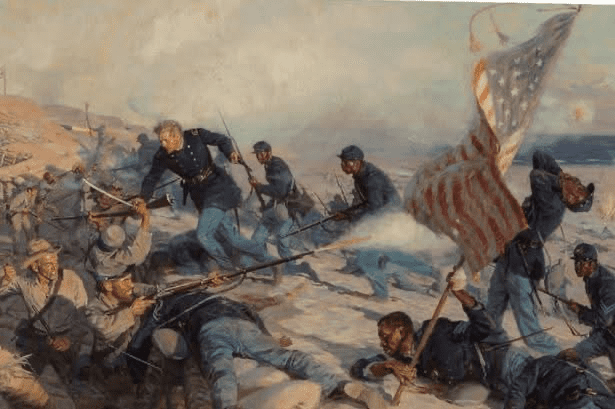
History would remember him not for this narrow escape in Winchester, but for a far greater sacrifice. Just a year later on July 18, 1863, Shaw would lead the 54th Massachusetts—the famed African American regiment—into battle at Fort Wagner. Given an impossible mission, he and most of his men were killed in the assault, buried together in a mass grave.
Their courage—and his—would become immortalized in the film Glory, with Matthew Broderick portraying the young colonel, alongside powerful performances by Morgan Freeman and Denzel Washington.
And yet, how remarkable it is to know that Robert Gould Shaw once walked these same Winchester streets, touched the banisters of houses we still pass by today, and glimpsed the Shenandoah Valley sky just as we do now. Before the glory, before the sacrifice, there was a moment—here—when fate nearly claimed him, and Winchester became a small but meaningful chapter in Robert Gould Shaw's story of the Civil War.


As the 2nd Massachusetts Infantry began to withdraw from their position along the stone wall at the First Battle of Winchester—near what is now Miller Street—a young officer named Robert Gould Shaw realized he had dropped his sword. Amid the swirl of smoke and musket fire, he hesitated only for a moment before retreating with his fellow Union soldiers. A stream of blue cut through the maze of Winchester's narrow streets—Braddock to Loudoun, then on to Cameron.
But the streets were no longer safe. Confederate troops, already slipping through alleyways and side streets, had infiltrated the town ahead of the retreat. From behind buildings, across cobbled alleys, and out of second-story windows, gunfire cracked and echoed. Some of it came not from soldiers, but from townspeople—loyal to the Southern cause—who joined the fray with pistols and rifles from their upstairs perches. It was pandemonium.
Second Lieutenant Shaw, composed but shaken, tried to make a stand near Cork Street. In the chaos, a bullet struck him in the stomach. The blow knocked him back. Reeling, he reached down, unbuttoned his coat—and to his astonishment, the bullet had hit his pocket watch. The timepiece had saved his life.
Just weeks earlier, Robert Gould Shaw had experienced a very different Winchester. He had camped near the stately old James Mason home known as Selma on Amherst Street, where the scent of boxwoods permeated the evening air. Now, that same town echoed with violence, smoke, and cries of the wounded. Stunned but alive, Shaw turned and slipped away—one of the fortunate few.
History would remember him not for this narrow escape in Winchester, but for a far greater sacrifice. Just a year later on July 18, 1863, Shaw would lead the 54th Massachusetts—the famed African American regiment—into battle at Fort Wagner. Given an impossible mission, he and most of his men were killed in the assault, buried together in a mass grave.
Their courage—and his—would become immortalized in the film Glory, with Matthew Broderick portraying the young colonel, alongside powerful performances by Morgan Freeman and Denzel Washington.
And yet, how remarkable it is to know that Robert Gould Shaw once walked these same Winchester streets, touched the banisters of houses we still pass by today, and glimpsed the Shenandoah Valley sky just as we do now. Before the glory, before the sacrifice, there was a moment—here—when fate nearly claimed him, and Winchester became a small but meaningful chapter in Robert Gould Shaw's story of the Civil War.


 Bringing the