
RedRover
1st Lieutenant
- Joined
- Dec 16, 2019
There has been much said of the confusion between the contending armies at Manassas in July, 1861, what with many CSA units in blue uniforms, flannel shirts, etc., and many federal ones in gray, or flannel shirts, etc. Recognizing the situation, both sides initially intended badges for the men to wear in action, but they were not found efficient:
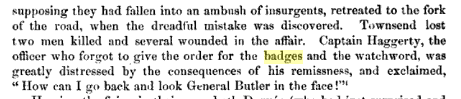
Among the federals, such badges failed to prevent friendly fire at Big Bethel in June, 1861:


General Daniel Harvey Hill, on the Confederate side in that action, noted his men also wore white cap or hat badges there!
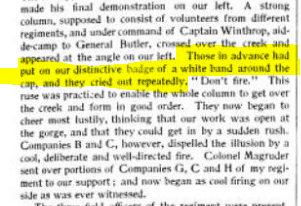
So the Confederates wanted a better badge, and less confusion.
On the Confederate side, June 9, Gen. Beauregard noted to the War Department regarding them:

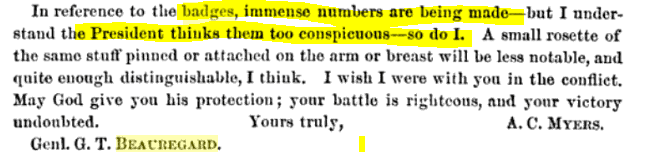
Richmond replied on June 17, and the QM General of the Army (Myers) noted he and Pres. Davis disliked the badges:


From Bonham's brigade:

One of the wing badges worn by an officer of Bonham's brigade at this time survives in the collections of the Museum of the Confederacy, made of red flannel, in the form of an epaulette:
July 1861 Wing Badge: Museum of the Confederacy...
This one belonged to Capt. R. G. Howard of Bonham's Brigade. It was distributed as a distinguishing badge in anticipation of an attack by Union forces at Mitchell's Ford," prior to the battle of First Manassas.
On the 19th of July, the CS Army HQ issued the following warning:

And evidently late that night totally suspended the use of badges at all:

However, in the pages of Confederate Veteran, Mr. W.L. Cabell states that red flannel was made into "small" badges for the left-shoulder and worn at Manassas:

Cabell, forty years on, errs evidently in memory, as the contemporary orders suggests it was after the skirmishing on July 18-19 (Blackburn's ford) that the army HQ ordered badges suspended, and the battle was on the 21st of July.
Badges were occasionally used throughout the war. Robert E. Rodes' brigade wore them at Seven Pines in mid-1862:

And a veteran of the 12th Alabama of Rodes' brigade recalled:


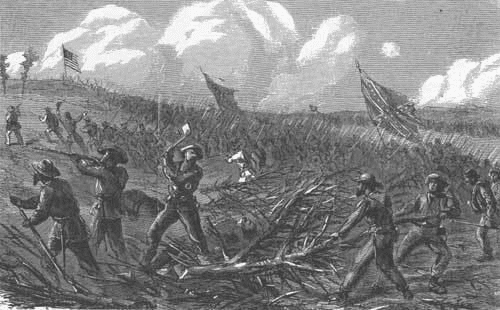
It was noted Mrs. J.B. Gordon spent the night before the attack on Fort Stedman by her husband's command at Petersburg in March, 1865, making up "white badges" for them to wear on their arms in the darkness to avoid friendly fire (if possible).
Among the federals, such badges failed to prevent friendly fire at Big Bethel in June, 1861:
General Daniel Harvey Hill, on the Confederate side in that action, noted his men also wore white cap or hat badges there!
So the Confederates wanted a better badge, and less confusion.
On the Confederate side, June 9, Gen. Beauregard noted to the War Department regarding them:
Richmond replied on June 17, and the QM General of the Army (Myers) noted he and Pres. Davis disliked the badges:
From Bonham's brigade:
One of the wing badges worn by an officer of Bonham's brigade at this time survives in the collections of the Museum of the Confederacy, made of red flannel, in the form of an epaulette:
July 1861 Wing Badge: Museum of the Confederacy...
This one belonged to Capt. R. G. Howard of Bonham's Brigade. It was distributed as a distinguishing badge in anticipation of an attack by Union forces at Mitchell's Ford," prior to the battle of First Manassas.
On the 19th of July, the CS Army HQ issued the following warning:
And evidently late that night totally suspended the use of badges at all:
However, in the pages of Confederate Veteran, Mr. W.L. Cabell states that red flannel was made into "small" badges for the left-shoulder and worn at Manassas:
Cabell, forty years on, errs evidently in memory, as the contemporary orders suggests it was after the skirmishing on July 18-19 (Blackburn's ford) that the army HQ ordered badges suspended, and the battle was on the 21st of July.
Badges were occasionally used throughout the war. Robert E. Rodes' brigade wore them at Seven Pines in mid-1862:
And a veteran of the 12th Alabama of Rodes' brigade recalled:
It was noted Mrs. J.B. Gordon spent the night before the attack on Fort Stedman by her husband's command at Petersburg in March, 1865, making up "white badges" for them to wear on their arms in the darkness to avoid friendly fire (if possible).


 Bringing the