Why did Henry Heth open the ball?

frontrank2

Major
Forum Host
Joined
Oct 10, 2012
Location
Mt. Jackson, Va
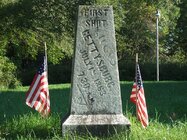
Henry Heth ( aka - Harry ) and his division have gone down in history as starting the Battle of Gettysburg. On June 30, 1863, General Heth sent Pettigrew's Brigade to conduct a reconnaissance at Gettysburg. Pettigrew was instructed to avoid being drawn into battle. While scouting the area, Pettigrew observed what he believed to be Federal cavalry taking up positions west of the town. Pettigrew then dutifully chose not to engage the Yankees and withdrew from the field. He reported his findings to Heth and A.P. Hill ( who had just arrived on the scene ). Hill rejected his report believing that the AOP was still many miles away across the Maryland border. Both Hill and Heth did not trust Pettigrew's judgement as Pettigrew was not a professional soldier.
On the next morning - July 1, 1863, Heth sent a force towards Gettysburg ( with Hill's permission ) to see what was there and to possibly procure some shoes for the men. Many historians doubt the validity of that statement because they feel Heth would've known that Gen. Jubal Early's Division had been through Gettysburg two days earlier, and if there were any shoes for the taking they would've been grabbed by Early's men. General Lee's forces were still spread out at his point in time and as such, Lee had given orders to his commanders not to provoke a major engagement until the ANV could be fully concentrated. Did Heth believe that the troops that Pettigrew reported on the prior day were merely state militia? As it turns out, the Rebels soon encountered dismounted Federal Cavalry of the First Division under General John Buford. Heth then paused to deploy the men into line of battle, and then attacked despite Lee's orders against such. But why did Heth attack???

highground.jpg

Henry_Heth_07583v.jpg

General Henry Heth
 
Heth attacked because he was conducting a reconnaissance in force, which required him to move the Union cavalry out of Gettysburg. He was doing exactly what Hill expected him to do.
But at this point, I would think Heth would've realized he wasn't facing just militia but veteran AOP cavalry. Certainly Lee's standing order against provoking a major battle must have been in the back of Heth's mind. Or was Heth being aggressive and maybe a little over confident in believing he could dislodge the Yankee troopers?
 
But at this point, I would think Heth would've realized he wasn't facing just militia but veteran AOP cavalry. Certainly Lee's standing order against provoking a major battle must have been in the back of Heth's mind. Or was Heth being aggressive and maybe a little over confident in believing he could dislodge the Yankee troopers?

I don't have my library at hand here at my local watering hole, but my general opinion is that Heth figured on running into regular cavalry the entire time, whatever protests he and Hill may have later made to the contrary. Buford being there is not what surprised the ANV. Heth almost certainly figured that a recon in force by an entire infantry division would easily sweep aside any force of horse troopers. What caught him and his bosses by surprise was Reynolds showing up with an entire corps.
 
I may well be misremembering, but I seem to recall someone (Sears maybe?) making a pretty convincing case that Hill had made Lee aware of his intent to send Heth to Gettysburg, and of the purpose of that visit.
 
I never read Steven Sears stuff on Gettysburg, but I have Pfanz's Gettysburg the First Day. I'll have to see what he said. It's been a few years since I read it. :unsure:
 
Logically, I find it unlikely that Hill could commit a third of his corps to a task without informing Lee. I think that up until Reynolds showed up, Heth was encountering exactly the type of resistance he and Hill figured upon.

I have Pfanz's book on the first day, it is among the definative works. I really need to add Bonekemper(sp?) to the collection. I also need to quit typing under the influence :)
 
If there was someone to blame, I would definitely blame Jeb Stuart. He was the eyes of the ANV, and instead of scouting ahead like he should have, he was raiding for wagons up North. I don't really think we can blame Heth, because no one knew the the Union army was so **** close. Heth thought the boys stationed at Gettysburg were militiamen, and soon he found that they Federal cavalrymen under John Buford. Heth decided to engage these so called "militia men," because his division was in bad need for shoes. That's you here "the need for shoes" was how the battle of Gettysburg was commenced, even though in reality it was a minor reason that derailed from no information of what they were up against. I suggest reading "Killer Angels," it's a great book that helps you understand how the battle commenced. The movie "Gettysburg" is based off the book.

"Stuart is the cavalry leader assigned by Lee to track the movements of the Union army. A fun-loving publicity hound, Stuart is off joyriding for the first two days of the battle, and it is his negligence that causes the Confederate army to lose track of the Union troops in the first place. Because of Stuart's absence, during the first two days the Confederates never know where the Union troops are or what the surrounding area looks like."

- http://www.sparknotes.com/lit/killerangels/characters.html


"
Harrison's reception is marked by suspicion and disdain, as various Confederate officers question the validity of the spy and his information. Even Longstreet struggles with whether to trust him. The deciding factors are the nature of the news he brings and the lack of any concrete information from General J.E.B. Stuart. Stuart is supposed to be the Confederate Army's eyes and ears, but he has failed to contact Lee for several days. In Stuart's absence, Longstreet has no choice but to take a chance that Harrison is telling the truth. He brings Harrison to see General Lee.

Harrison gives his information to Lee and is then dismissed. Lee and Longstreet privately discuss what they have learned, Stuart's lengthy absence, and the implications of Meade as the new Union commander. Lee, though concerned about moving "on the word of a paid spy," orders the army to Gettysburg and the ultimate showdown with the Union Army."


- https://www.cliffsnotes.com/literature/k/the-killer-angels/summary-and-analysis/monday-june-29-1863


I couldn't find an online excerpt from Killer Angels, but this scene is directly from the book in the movie "Gettysburg:"

 
Welcome good sir to the forum. I'd not take "Gettysburg" or "The Killer Angels" at face value , as both are highly fictionalized. Stuart was doing exactly what Lee's orders authorized him to do.

That said, Lee's failure to use the cavalry he did have to perform reconnaissance did contribute to Hill's need to conduct the July 1 recon in force with Heth's infantry division.
 
Welcome good sir to the forum. I'd not take "Gettysburg" or "The Killer Angels" at face value , as both are highly fictionalized. Stuart was doing exactly what Lee's orders authorized him to do.

That said, Lee's failure to use the cavalry he did have to perform reconnaissance did contribute to Hill's need to conduct the July 1 recon in force with Heth's infantry division.
Ah okay, thank you.
 
If there was someone to blame, I would definitely blame Jeb Stuart. He was the eyes of the ANV, and instead of scouting ahead like he should have, he was raiding for wagons up North. I don't really think we can blame Heth, because no one knew the the Union army was so **** close. Heth thought the boys stationed at Gettysburg were militiamen, and soon he found that they Federal cavalrymen under John Buford. Heth decided to engage these so called "militia men," because his division was in bad need for shoes. That's you here "the need for shoes" was how the battle of Gettysburg was commenced, even though in reality it was a minor reason that derailed from no information of what they were up against. I suggest reading "Killer Angels," it's a great book that helps you understand how the battle commenced. The movie "Gettysburg" is based off the book.

"Stuart is the cavalry leader assigned by Lee to track the movements of the Union army. A fun-loving publicity hound, Stuart is off joyriding for the first two days of the battle, and it is his negligence that causes the Confederate army to lose track of the Union troops in the first place. Because of Stuart's absence, during the first two days the Confederates never know where the Union troops are or what the surrounding area looks like."

- http://www.sparknotes.com/lit/killerangels/characters.html


"
Harrison's reception is marked by suspicion and disdain, as various Confederate officers question the validity of the spy and his information. Even Longstreet struggles with whether to trust him. The deciding factors are the nature of the news he brings and the lack of any concrete information from General J.E.B. Stuart. Stuart is supposed to be the Confederate Army's eyes and ears, but he has failed to contact Lee for several days. In Stuart's absence, Longstreet has no choice but to take a chance that Harrison is telling the truth. He brings Harrison to see General Lee.

Harrison gives his information to Lee and is then dismissed. Lee and Longstreet privately discuss what they have learned, Stuart's lengthy absence, and the implications of Meade as the new Union commander. Lee, though concerned about moving "on the word of a paid spy," orders the army to Gettysburg and the ultimate showdown with the Union Army."


- https://www.cliffsnotes.com/literature/k/the-killer-angels/summary-and-analysis/monday-june-29-1863


I couldn't find an online excerpt from Killer Angels, but this scene is directly from the book in the movie "Gettysburg:"

Great scene...but movie magic. Ivan is correct. JEB was doing what he was commanded by Lee to do.
 
Welcome good sir to the forum. I'd not take "Gettysburg" or "The Killer Angels" at face value , as both are highly fictionalized. Stuart was doing exactly what Lee's orders authorized him to do.

That said, Lee's failure to use the cavalry he did have to perform reconnaissance did contribute to Hill's need to conduct the July 1 recon in force with Heth's infantry division.

Well said.

The buck definitely stops with Lee in regards to Stuart's activities.
 
If there was someone to blame, I would definitely blame Jeb Stuart. He was the eyes of the ANV, and instead of scouting ahead like he should have, he was raiding for wagons up North. I don't really think we can blame Heth, because no one knew the the Union army was so **** close. Heth thought the boys stationed at Gettysburg were militiamen, and soon he found that they Federal cavalrymen under John Buford. Heth decided to engage these so called "militia men," because his division was in bad need for shoes. That's you here "the need for shoes" was how the battle of Gettysburg was commenced, even though in reality it was a minor reason that derailed from no information of what they were up against. I suggest reading "Killer Angels," it's a great book that helps you understand how the battle commenced. The movie "Gettysburg" is based off the book.

"Stuart is the cavalry leader assigned by Lee to track the movements of the Union army. A fun-loving publicity hound, Stuart is off joyriding for the first two days of the battle, and it is his negligence that causes the Confederate army to lose track of the Union troops in the first place. Because of Stuart's absence, during the first two days the Confederates never know where the Union troops are or what the surrounding area looks like."

- http://www.sparknotes.com/lit/killerangels/characters.html


"
Harrison's reception is marked by suspicion and disdain, as various Confederate officers question the validity of the spy and his information. Even Longstreet struggles with whether to trust him. The deciding factors are the nature of the news he brings and the lack of any concrete information from General J.E.B. Stuart. Stuart is supposed to be the Confederate Army's eyes and ears, but he has failed to contact Lee for several days. In Stuart's absence, Longstreet has no choice but to take a chance that Harrison is telling the truth. He brings Harrison to see General Lee.

Harrison gives his information to Lee and is then dismissed. Lee and Longstreet privately discuss what they have learned, Stuart's lengthy absence, and the implications of Meade as the new Union commander. Lee, though concerned about moving "on the word of a paid spy," orders the army to Gettysburg and the ultimate showdown with the Union Army."


- https://www.cliffsnotes.com/literature/k/the-killer-angels/summary-and-analysis/monday-june-29-1863


I couldn't find an online excerpt from Killer Angels, but this scene is directly from the book in the movie "Gettysburg:"

So much reading to do, so little time. Great fictitious account of a great battle. Little to no truth in it what-so-ever!
 
Henry Heth ( aka - Harry ) and his division have gone down in history as starting the Battle of Gettysburg. On June 30, 1863, General Heth sent Pettigrew's Brigade to conduct a reconnaissance at Gettysburg. Pettigrew was instructed to avoid being drawn into battle. While scouting the area, Pettigrew observed what he believed to be Federal cavalry taking up positions west of the town. Pettigrew then dutifully chose not to engage the Yankees and withdrew from the field. He reported his findings to Heth and A.P. Hill ( who had just arrived on the scene ). Hill rejected his report believing that the AOP was still many miles away across the Maryland border. Both Hill and Heth did not trust Pettigrew's judgement as Pettigrew was not a professional soldier.
On the next morning - July 1, 1863, Heth sent a force towards Gettysburg ( with Hill's permission ) to see what was there and to possibly procure some shoes for the men. Many historians doubt the validity of that statement because they feel Heth would've known that Gen. Jubal Early's Division had been through Gettysburg two days earlier, and if there were any shoes for the taking they would've been grabbed by Early's men. General Lee's forces were still spread out at his point in time and as such, Lee had given orders to his commanders not to provoke a major engagement until the ANV could be fully concentrated. Did Heth believe that the troops that Pettigrew reported on the prior day were merely state militia? As it turns out, the Rebels soon encountered dismounted Federal Cavalry of the First Division under General John Buford. Heth then paused to deploy the men into line of battle, and then attacked despite Lee's orders against such. But why did Heth attack???

View attachment 109276
View attachment 109277
General Henry Heth
He attacked, if that's what we want to call it. His order of March shows he took little to no interest in the scouting reports he received. If nothing else, he (Heth) was over confident.
 
If there was someone to blame, I would definitely blame Jeb Stuart. He was the eyes of the ANV, and instead of scouting ahead like he should have, he was raiding for wagons up North. I don't really think we can blame Heth, because no one knew the the Union army was so **** close. Heth thought the boys stationed at Gettysburg were militiamen, and soon he found that they Federal cavalrymen under John Buford. Heth decided to engage these so called "militia men," because his division was in bad need for shoes. That's you here "the need for shoes" was how the battle of Gettysburg was commenced, even though in reality it was a minor reason that derailed from no information of what they were up against. I suggest reading "Killer Angels," it's a great book that helps you understand how the battle commenced. The movie "Gettysburg" is based off the book.

"Stuart is the cavalry leader assigned by Lee to track the movements of the Union army. A fun-loving publicity hound, Stuart is off joyriding for the first two days of the battle, and it is his negligence that causes the Confederate army to lose track of the Union troops in the first place. Because of Stuart's absence, during the first two days the Confederates never know where the Union troops are or what the surrounding area looks like."

- http://www.sparknotes.com/lit/killerangels/characters.html


"
Harrison's reception is marked by suspicion and disdain, as various Confederate officers question the validity of the spy and his information. Even Longstreet struggles with whether to trust him. The deciding factors are the nature of the news he brings and the lack of any concrete information from General J.E.B. Stuart. Stuart is supposed to be the Confederate Army's eyes and ears, but he has failed to contact Lee for several days. In Stuart's absence, Longstreet has no choice but to take a chance that Harrison is telling the truth. He brings Harrison to see General Lee.

Harrison gives his information to Lee and is then dismissed. Lee and Longstreet privately discuss what they have learned, Stuart's lengthy absence, and the implications of Meade as the new Union commander. Lee, though concerned about moving "on the word of a paid spy," orders the army to Gettysburg and the ultimate showdown with the Union Army."


- https://www.cliffsnotes.com/literature/k/the-killer-angels/summary-and-analysis/monday-june-29-1863


I couldn't find an online excerpt from Killer Angels, but this scene is directly from the book in the movie "Gettysburg:"

In a work meeting years ago I used the line ... "There is no time for that. There is no time!" :D
 

Learn About Us
About CivilWarTalk
Contact the Webmaster
Meet the Staff
Link to CivilWarTalk
Join Our Community
Register
Browse Forums
View Today's Discussions
Search the Forum
Get Help
FAQ
Student Guide
Forum Rules & Etiquette
Copyright / DMCA

     Contact Us CivilwarTalk on Facebook CivilWarTalk on YouTube CivilWarTalk on Twitter RSS Feed

Bringing the American Civil War and More to Life.
© 1999 - , CIVILWARTALK, LLC - Site Version 10.0

SlaveryTalk.com - SecessionTalk.com - CivilWarTalk.com - ReconstructionTalk.com
Back
Top