G-G-Grand-Dad William
Cadet
- Joined
- Jan 18, 2018
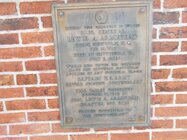
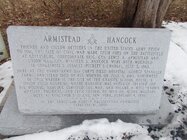
Check out the last paragraph concerning the wounding of General Armistead. I did not want to take it out of context, so I present the whole excerpt from the History of Easton (Pennsylvania). Can any one corroborate this or is it an old soldier's fading remembrance?
Taken from the History of Easton, From The Earliest Times To The Present, 1739-1885,
By Rev. Uzal W. Condit, A.M., Ph.D., Pages 242-243
SEYMOUR'S BATTERY
An Interesting War Letter
The following note from Edward J. Fox, Esq., was published in the "Daily Express" of July 15, 1862. It accompanied the letter of Lieutenant Scott, which we also give:
Editor Express: I received on Friday a letter from General Truman Seymour, who is, since the capture of General McCall, commanding the division of Pennsylvania Reserves, and who was in all the recent battles near Richmond, but escaped unharmed, as his many friends here will rejoice to learn. He sends me a letter from Lieut. Scott, who, since the wounding of Capt. Dehart, is in command of Battery C, Fifth Artillery, the Battery raised by General (then Captain) Seymour. Speaking of the men in the Battery from Easton and vicinity, General Seymour says: "That they could do well we all knew; that none would have behaved more gallantly, may well now be asserted." He gives me permission to make Lieut. Scott's letter public, saying that it will gratify many of the Easton people to be assured that their friends bore a prominent and honorable part in these terrible encounters.
E. J. F.
Camp near James River, June 7, 1862.
General: An answer to your inquiry respecting the Easton men of our battery during the recent engagement would be easy, were it not that to make a distinction in the case of any would be invidious if not unjust, where all did so well. To answer then for all—they did nobly, and I wish it was in my power to express in words the coolness and intrepidity they showed in deeds. Of course during the excitement of an action my eye could not have been upon all. I can therefore speak only of those under my immediate command, adding such items concerning others as I have since obtained from my brother officers. Searfoss was the first victim chosen from among us. He was acting as No. 6 to my right piece, and was in the act of cutting the fuse of a shell when struck by a round shot below the left knee. We were under a very heavy fire from three batteries at the time, and it was some time before he could be carried from the field. He
expired in a few hours after being taken to the hospital, and in him the battery lost a good soldier and a good man. This occurred during the first engagement, June 26, and was the sole casualty of that action. In the action of Gaine's Mill on the following day the battery suffered severely. Sergeant Brodie, the chief of my left piece, paid the penalty of his almost rash bravery, by receiving a wound in his knee. He was struck almost as soon as we had come into battery and before the firing commenced. He reached Savage's Station, where he was no doubt taken prisoner a few days afterward. The courage he displayed deserves especial mention, as did also that of Sergeant Ginginger, who was shot through the body in the same action. On the retreat he came along side of me, and noticing that he swayed unsteadily in his saddle, I called to him, asking if he was hit and telling him to keep by my side. He made no reply, but urged on his horse and was soon lost in the crowd. He died, I think, on Sunday, at Savage's Station. I made an effort to see him but failed. He was remarkable for the energy and thoroughness with which he accomplished whatever he put his hand to, and in his death the battery met with a great loss.
Corporal Hauck was chief of caisson, and when struck was attending to his duties in serving out ammunition. He was shot in the breast and in the thigh and fell immediately. An effort was made to get him off the field, but it was unsuccessful. Sergeant Cook attempted to get him on his horse, but at that moment the horse was shot and the Corporal had to be abandoned. The horse carried the Sergeant off the field and they fell, pierced in six places The Sergeant himself escaped after doing his duty nobly to the last minute, unhurt, but carrying off a memorial hole through his blouse. Corporal Hauck was a man of quiet, modest demeanor, who gave great promise as a soldier.
Naylor was acting as No.1 to Sergeant Cook's piece, and was killed at his post while fighting bravely. You will recollect him the more particularly from the service he rendered you when the battery was under your command. The manner of his death verified your high estimate of his character.
Corporal Carey, gunner to Sergeant Cook's piece was struck in the shoulder while unfixing the prolonge by a buck-shot. I am happy to say he is still with us, that his wound is doing well, and that he will soon return to service.
Of those immediately under my command I cannot speak too well. The two Balliets (William & Ed), Corporal Brader Simons, Gangwere, Galligan, Shane, Mowry, Grimes—in fact all stood up to their work more than like men. Simons and Gangwere you will recollect as the lead drivers of my pieces. Though in a most exposed situation and with no active duty to draw their attention from the scene around them, like men thoroughly in earnest they found for themselves something to do in reporting the effect of the different shots, not discernible by us and when the smoke became so packed in front of the guns as to cut off the view entirely, these men stood up in their stirrups and cheered on the cannoniers till the last shot was fired. Corporal Brader acted as chief of piece after Sergeant Brodie was shot, and filled his place well. He was well sustained by Galligan, the No. 1 of the piece. Corporals Lines, Muller, Green, Reed, and privates Whitesell, the brothers Green and Andrews, have won from their commander the highest praises, and others of whom I have heard, but the multiplicity of whose names prevents any mention of them, have carried their share of the encomiums which public opinion seems to have given the battery. In fact, sir, I find it impossible to mention one without doing injustice by my silence to another. All did well—not one flinched or wavered, or made the first motion towards retreating till they were ordered to do so, and then they stuck by their pieces. That I have not mentioned other names is no reason that they are not deserving of mention. On the contrary there is not one of whom his State and town cannot be proud. I cannot close without mentioning the refreshing coolness of Bugler Reeder Muller on that warm day. The youngest member of the battery, he was not surpassed in courage by the eldest, and followed the Captain hither and thither with the same nonchalance with which he had often followed you on the drill ground.
In conclusion, let me congratulate you sir, upon the good effects of the discipline you enforced when in command of this battery. With education a good beginning makes a good ending. These men received their first start in their military life from you, and to you is due in a great measure the satisfactory results. In the hope, sir, that our deeds have been as satisfactory to you as your commendation has been pleasing to us, I remain.
Your obedient servant, E. G. Scott,
Lieut. Commanding Battery C, Fifth Artillery, U. S. A.
For convenience of reference we continue here briefly our account of the full and faithful services of this body of Eastonians.
After the fearful fighting on the Peninsula, the battery went with the Army of the
Potomac on its northward march in pursuit of Lee, and took part in Second Bull Run, South Mountain and Antietam, which latter fight it opened by a cannonade upon the rebel Washington Artillery on the night of September 16. In the defeats of Fredericksburg and Chancellorsville it did its duty, and in the victory of Gettysburg, which gave the nation so glorious a Fourth of July for 1863, it rendered prominent service, and was highly complimented in general orders.* During the draft riots of 1863, in the City of New York, the battery was ordered there and stationed in City Hall Park, and remained on duty until quiet was restored. It was in the terrible battles of the Wilderness, and closed its fighting at Appomatox. It was subsequently ordered to Fortress Monroe, and performed guard duty over the prison in which Jefferson Davis was confined. At the expiration of its term of enlistment the men returned to Easton and received the congratulations of the citizens for patriotic duty faithfully performed.
*Note.—Sergeant James Simons, in a report of the position of the place of death of the rebel General Armistead upon the field of Gettysburg, in the Daily Free Press of April 22, 1887, states: "The fight went on, and a few minutes after when the wind shifted the smoke, I saw General Armistead lying right out from my gun and from Cushing's guns. I sent Samuel S. Lesher and John J. Gangwere, of Easton, and a man named Thomas Brannon from New York State, to bring the General in. * * * Our battery was located next to Cushing's battery, right behind the stone wall. * * * When they carried General Armistead in the lines he thanked them, and said 'I did not expect to receive such kind treatment from your hands.' Those are believed to be his last words. He was placed on a stretcher, carried down the hill back of our guns, and there died. Our commander
Captain Weir, gave me the order to send out men to bring in the General."
Taken from the History of Easton, From The Earliest Times To The Present, 1739-1885,
By Rev. Uzal W. Condit, A.M., Ph.D., Pages 242-243
SEYMOUR'S BATTERY
An Interesting War Letter
The following note from Edward J. Fox, Esq., was published in the "Daily Express" of July 15, 1862. It accompanied the letter of Lieutenant Scott, which we also give:
Editor Express: I received on Friday a letter from General Truman Seymour, who is, since the capture of General McCall, commanding the division of Pennsylvania Reserves, and who was in all the recent battles near Richmond, but escaped unharmed, as his many friends here will rejoice to learn. He sends me a letter from Lieut. Scott, who, since the wounding of Capt. Dehart, is in command of Battery C, Fifth Artillery, the Battery raised by General (then Captain) Seymour. Speaking of the men in the Battery from Easton and vicinity, General Seymour says: "That they could do well we all knew; that none would have behaved more gallantly, may well now be asserted." He gives me permission to make Lieut. Scott's letter public, saying that it will gratify many of the Easton people to be assured that their friends bore a prominent and honorable part in these terrible encounters.
E. J. F.
Camp near James River, June 7, 1862.
General: An answer to your inquiry respecting the Easton men of our battery during the recent engagement would be easy, were it not that to make a distinction in the case of any would be invidious if not unjust, where all did so well. To answer then for all—they did nobly, and I wish it was in my power to express in words the coolness and intrepidity they showed in deeds. Of course during the excitement of an action my eye could not have been upon all. I can therefore speak only of those under my immediate command, adding such items concerning others as I have since obtained from my brother officers. Searfoss was the first victim chosen from among us. He was acting as No. 6 to my right piece, and was in the act of cutting the fuse of a shell when struck by a round shot below the left knee. We were under a very heavy fire from three batteries at the time, and it was some time before he could be carried from the field. He
expired in a few hours after being taken to the hospital, and in him the battery lost a good soldier and a good man. This occurred during the first engagement, June 26, and was the sole casualty of that action. In the action of Gaine's Mill on the following day the battery suffered severely. Sergeant Brodie, the chief of my left piece, paid the penalty of his almost rash bravery, by receiving a wound in his knee. He was struck almost as soon as we had come into battery and before the firing commenced. He reached Savage's Station, where he was no doubt taken prisoner a few days afterward. The courage he displayed deserves especial mention, as did also that of Sergeant Ginginger, who was shot through the body in the same action. On the retreat he came along side of me, and noticing that he swayed unsteadily in his saddle, I called to him, asking if he was hit and telling him to keep by my side. He made no reply, but urged on his horse and was soon lost in the crowd. He died, I think, on Sunday, at Savage's Station. I made an effort to see him but failed. He was remarkable for the energy and thoroughness with which he accomplished whatever he put his hand to, and in his death the battery met with a great loss.
Corporal Hauck was chief of caisson, and when struck was attending to his duties in serving out ammunition. He was shot in the breast and in the thigh and fell immediately. An effort was made to get him off the field, but it was unsuccessful. Sergeant Cook attempted to get him on his horse, but at that moment the horse was shot and the Corporal had to be abandoned. The horse carried the Sergeant off the field and they fell, pierced in six places The Sergeant himself escaped after doing his duty nobly to the last minute, unhurt, but carrying off a memorial hole through his blouse. Corporal Hauck was a man of quiet, modest demeanor, who gave great promise as a soldier.
Naylor was acting as No.1 to Sergeant Cook's piece, and was killed at his post while fighting bravely. You will recollect him the more particularly from the service he rendered you when the battery was under your command. The manner of his death verified your high estimate of his character.
Corporal Carey, gunner to Sergeant Cook's piece was struck in the shoulder while unfixing the prolonge by a buck-shot. I am happy to say he is still with us, that his wound is doing well, and that he will soon return to service.
Of those immediately under my command I cannot speak too well. The two Balliets (William & Ed), Corporal Brader Simons, Gangwere, Galligan, Shane, Mowry, Grimes—in fact all stood up to their work more than like men. Simons and Gangwere you will recollect as the lead drivers of my pieces. Though in a most exposed situation and with no active duty to draw their attention from the scene around them, like men thoroughly in earnest they found for themselves something to do in reporting the effect of the different shots, not discernible by us and when the smoke became so packed in front of the guns as to cut off the view entirely, these men stood up in their stirrups and cheered on the cannoniers till the last shot was fired. Corporal Brader acted as chief of piece after Sergeant Brodie was shot, and filled his place well. He was well sustained by Galligan, the No. 1 of the piece. Corporals Lines, Muller, Green, Reed, and privates Whitesell, the brothers Green and Andrews, have won from their commander the highest praises, and others of whom I have heard, but the multiplicity of whose names prevents any mention of them, have carried their share of the encomiums which public opinion seems to have given the battery. In fact, sir, I find it impossible to mention one without doing injustice by my silence to another. All did well—not one flinched or wavered, or made the first motion towards retreating till they were ordered to do so, and then they stuck by their pieces. That I have not mentioned other names is no reason that they are not deserving of mention. On the contrary there is not one of whom his State and town cannot be proud. I cannot close without mentioning the refreshing coolness of Bugler Reeder Muller on that warm day. The youngest member of the battery, he was not surpassed in courage by the eldest, and followed the Captain hither and thither with the same nonchalance with which he had often followed you on the drill ground.
In conclusion, let me congratulate you sir, upon the good effects of the discipline you enforced when in command of this battery. With education a good beginning makes a good ending. These men received their first start in their military life from you, and to you is due in a great measure the satisfactory results. In the hope, sir, that our deeds have been as satisfactory to you as your commendation has been pleasing to us, I remain.
Your obedient servant, E. G. Scott,
Lieut. Commanding Battery C, Fifth Artillery, U. S. A.
For convenience of reference we continue here briefly our account of the full and faithful services of this body of Eastonians.
After the fearful fighting on the Peninsula, the battery went with the Army of the
Potomac on its northward march in pursuit of Lee, and took part in Second Bull Run, South Mountain and Antietam, which latter fight it opened by a cannonade upon the rebel Washington Artillery on the night of September 16. In the defeats of Fredericksburg and Chancellorsville it did its duty, and in the victory of Gettysburg, which gave the nation so glorious a Fourth of July for 1863, it rendered prominent service, and was highly complimented in general orders.* During the draft riots of 1863, in the City of New York, the battery was ordered there and stationed in City Hall Park, and remained on duty until quiet was restored. It was in the terrible battles of the Wilderness, and closed its fighting at Appomatox. It was subsequently ordered to Fortress Monroe, and performed guard duty over the prison in which Jefferson Davis was confined. At the expiration of its term of enlistment the men returned to Easton and received the congratulations of the citizens for patriotic duty faithfully performed.
*Note.—Sergeant James Simons, in a report of the position of the place of death of the rebel General Armistead upon the field of Gettysburg, in the Daily Free Press of April 22, 1887, states: "The fight went on, and a few minutes after when the wind shifted the smoke, I saw General Armistead lying right out from my gun and from Cushing's guns. I sent Samuel S. Lesher and John J. Gangwere, of Easton, and a man named Thomas Brannon from New York State, to bring the General in. * * * Our battery was located next to Cushing's battery, right behind the stone wall. * * * When they carried General Armistead in the lines he thanked them, and said 'I did not expect to receive such kind treatment from your hands.' Those are believed to be his last words. He was placed on a stretcher, carried down the hill back of our guns, and there died. Our commander
Captain Weir, gave me the order to send out men to bring in the General."


 Forum Host


 Bringing the