A major part of making black powder is wetting the ingredients and then running them through an incorporating mill at the factory. So, if your powder got wet at Chickamauga, that wasn't the first time. Make us a test cartridge and shoot it. If it works fine if not, you can always sprinkle the powder on your garden as fertilizer.
-
Welcome to CivilWarTalk, a forum about the American Civil War! - Join today! It's fast, simple, and FREE!
You are using an out of date browser. It may not display this or other websites correctly.
You should upgrade or use an alternative browser.
You should upgrade or use an alternative browser.
Wet Powder
- Thread starter Pvt.Gustafsson
- Start date

Craig L Barry
Sergeant Major
- Joined
- Jan 5, 2010
- Location
- Murfreesboro, TN
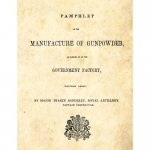
That was Major Baddeley's contribution to the Royal Gun Powder works at Waltham Abbey during the 1850s. The steam opened the pores in the charcoal which made it receptive to binding with the other two ingredients. The CS Augusta Powder Works in Georgia copied Baddeley's process verbatim and "were never in want of powder." Yes, it was the same Major Baddeley who patented an improved barrel band design for the type IV P53 Enfield long rifles at RSAF.
Attachments

frankconrad
Sergeant
- Joined
- Sep 19, 2009
- Location
- Iowa
When I was Gunsmithing in the 60s, I litterly found everything but the kitche sink in a barrel of muzzle loaders.
Whatever you do. if your ramrod doesn't go in clear to the beech plug don't use heat to remove the breech plug.
I have after getting a load reamoved lit a small sample of powder with the tourch, it still would burn. black powders burning rate is controled by the grain size, so if you turn it into
powder you will have something like ffffg.
V.M. Starr who I learned from had fired inside primed 45-70 shells with good results that at that time were 75 years old.
I have never heard of a substantiated case of blackpowder igniting without some form of outside ignition, or of unplaned pressure excersion.
Whatever you do. if your ramrod doesn't go in clear to the beech plug don't use heat to remove the breech plug.
I have after getting a load reamoved lit a small sample of powder with the tourch, it still would burn. black powders burning rate is controled by the grain size, so if you turn it into
powder you will have something like ffffg.
V.M. Starr who I learned from had fired inside primed 45-70 shells with good results that at that time were 75 years old.
I have never heard of a substantiated case of blackpowder igniting without some form of outside ignition, or of unplaned pressure excersion.
Steve Johnson
Private
- Joined
- Jan 23, 2014
Smokeless powder would be ruined but black powder (just for firing as a blank). just needs to be dried, crushed and re-rolled. Don't use wet, then dried black powder for live firing though. By the way, this works for wet fireworks also. Fireworks are actually packed and shipped damp for safety reasons.
Steve Johnson
Steve Johnson

JPWalton
Sergeant
- Joined
- Apr 29, 2013
Posting a definition of unstable is not proof that something is unstable. Neither is repeating it over and over again.
un·sta·ble
ˌənˈstābəl/
adjective
adjective: unstable; comparative adjective: unstabler; superlative adjective: unstablest
1.
prone to change, fail, or give way; not stable.

Rebforever
Lt. Colonel
- Joined
- Oct 26, 2012
Handling BP can be hazardous to ones health. Toss it. Pennies v Your life.
All it takes is static electricity to set it off. Toss it. I have been BP shooter for years.
I have thrown out BP that doesn't even LOOK exactly right.
All it takes is static electricity to set it off. Toss it. I have been BP shooter for years.
I have thrown out BP that doesn't even LOOK exactly right.

Poor Private
First Sergeant
- Joined
- Sep 6, 2009
Your wrong, it has been proven that static electricity will not set off black powder. Go to www.muzzleloadingforum.com and search under static electricity. Make sure of your statements before you post, and come up with provenance .Handling BP can be hazardous to ones health. Toss it. Pennies v Your life.
All it takes is static electricity to set it off. Toss it. I have been BP shooter for years.
I have thrown out BP that doesn't even LOOK exactly right.
Rebforever
Lt. Colonel
- Joined
- Oct 26, 2012
Your wrong, it has been proven that static electricity will not set off black powder. Go to www.muzzleloadingforum.com and search under static electricity. Make sure of your statements before you post, and come up with provenance .
Did you ever hear of anyone blowing up their vacuum cleaner? You don't have to get so snarky.
You are off your noodle if you think I will retract my statement.
Poor Private
First Sergeant
- Joined
- Sep 6, 2009
Rebforever,
Sir just like your other statements in this thread it has been proven wrong. May I suggest you do a bit of research before you issue statements, or personally attack a person.
Sir just like your other statements in this thread it has been proven wrong. May I suggest you do a bit of research before you issue statements, or personally attack a person.

- Joined
- Aug 17, 2011
- Location
- Birmingham, Alabama
As Moderator
Gentlemen, stop the personal back and forth or it will be stopped for you less gracefully.
Rebforever
Lt. Colonel
- Joined
- Oct 26, 2012
Rebforever,
Sir just like your other statements in this thread it has been proven wrong. May I suggest you do a bit of research before you issue statements, or personally attack a person.
The reason I apply caution over BP I have seen those vacuum cleaners blow up.
I don't need to research, read books, etc. It is my experience over the years.
Having that experience, fooling around with BP, which stands for Black Powder, not the 'other stuff,
trouble can come from differing direction.
I beg to differ, you started the personal stuff and I responded in kind.
But I do apologize for my response if it was taken wrong.
- Joined
- Aug 17, 2011
- Location
- Birmingham, Alabama
Found this in various places. My interpretation is that it is possible, but unlikely. I'd treat it like I treat working on my PC, around flammable fluids and so on--ground myself before starting. By grounding, I mean touching grounded equipment, a big chunk of iron/steel or pipe not being continuously connnected.
Muzzleloader Magazine
Editor
Rebel Publishing Co., Inc
Sir:
Static electricity is always a topic of conversation within the explosive industry. Black Powder is a "low explosive" as opposed to "high explosive" like TNT, but is nevertheless dangerous when mishandled or when proper safeguards are ignored. Believe me, safety is always on our minds.
I have read reports on several studies concerning the ability of static electricity to ignite Black Powder. Most were conducted for the military. Keep in mind, that materials behave differently under different conditions, e.g. enclosed vessels, open vessels, varying temperatures and humidity, etc., and that no experiment can test for every combination of variables. But all the studies came to the same basic conclusions within the realm of the conditions they did test for: static electricity can ignite Black Powder, but only at very high levels of electrostatic induction as measured in Joules—between 8 and 20 Joules generally. I don't want to get to technical, so the point is, normal human activity cannot generate this kind of charge.
We take some ordinary precautions at the plant. All of our equipment is grounded and the building is grounded. We also treat some of the plastic bags we use with anti-static compound, but that's about the extent of it.
The fact, is we have never had an incident in our plant related to static electricity in over 90 years of production.
THE FUN (but nervous) RIDE TO SAVANNAH....
Back in 1968 was when I first joined the Oglethorpe Light Infantry, a N-SSA unit in Savannah, I was attending a team meeting when the subject of replenishing their powder supply came up. Seems that the OLI purchased their black powder every few years in a big group purchase.
So, when the question came up as to who was going to pick up the powder in Atlanta, I volunteered to do so as I had some business to take care of in that city anyway-I had NO IDEA what I was letting my self in for!
After the meeting, Eulie took me aside and told me that I had to pick up the powder from a sporting goods wholesaler in Atlanta. He gave me that name and address of the company and directions on how to get there. He asked what day I was going and I told him "Next Wednesday." Eulie said he would call ahead and they would be expecting me.
I actually decided to go up on Tuesday and take care of my personal business and spend the night in Atlanta in a motel. Well, the next Wednesday morning, I arrived at the sporting goods company around 10:00 A.M., identified myself and said I was there to pick up the powder for the OLI.
The manager explained to me that they could not load the powder yet because I did not have a Georgia Explosives License. Somewhat taken aback by that bit of information, I asked how I could obtain a Georgia Explosives License. He told me to go downtown to one of the state office building and apply for one at the state fire marshal's office.
So, thirty minutes later after fighting Atlanta traffic for a few minutes, I found the fire marshal's office. A sweet little old lady told me that the license fee was $3.00. So, I paid her the $3.00, showed her my driver's license for identification and within a few minutes I had an official document that said: "Explosive's License" with the great seal of Georgia on it. Now, I was "official" and a "legal eagle."
Then it was back to the sporting goods store. I showed the manager my brand new Explosives License, he took down the number of it and told me to pull around back so they could load my car with the powder. I was driving a bright yellow Cutlass 442.
Upon pulling around back, there was a large stack of those little black, 25 pound Gunpowder Kegs on the pavement besides the back door! I had no idea how much powder the OLI had ordered, but it was a LOT. Matter of fact, one of the store employees doubted that we could get all of those kegs of powder in my car.
Well, I opened the trunk and we started loading those kegs of powder in the trunk. So many, in fact, there was no way I could close my trunk lid. I pulled the trunk lid as far down as possible and using some cord provided by the store I tied the trunk lid down.
The next, we started filling up the back seat with 25 pound kegs of DuPont black powder. They went all the way to the ceiling!!! Then we shoehorned as many as we could into the passenger side of the car. Amazingly, We got ALL the kegs of powder into my car!
After signing the receipt for the powder, I got back into my car and make a joke to the manager who was standing besides my window to say "Good Bye" to me: I said: "WELL, IF SOMEONE RUNS INTO ME, THEY WILL GET ONE HECK OF A SURPRISE."
His dry comment" "YEP, BUT YOU WILL NEVER KNOW IT!"
Needless to say, I drove really careful, but back in those days I smoked and somewhere around Macon, I was dying for a cigarette. Unable to take the nicotine pangs any longer, I pulled the car off the interstate, walked about 50 yards from it and lit up a Marlboro.
After I finished the cigarette, I walked back to the car and drove the rest of the way to Savannah.
I dropped off the powder at Eulie's house that evening. I was never so glad to be rid of all of those kegs of DuPont powder!
Back in 1968 was when I first joined the Oglethorpe Light Infantry, a N-SSA unit in Savannah, I was attending a team meeting when the subject of replenishing their powder supply came up. Seems that the OLI purchased their black powder every few years in a big group purchase.
So, when the question came up as to who was going to pick up the powder in Atlanta, I volunteered to do so as I had some business to take care of in that city anyway-I had NO IDEA what I was letting my self in for!
After the meeting, Eulie took me aside and told me that I had to pick up the powder from a sporting goods wholesaler in Atlanta. He gave me that name and address of the company and directions on how to get there. He asked what day I was going and I told him "Next Wednesday." Eulie said he would call ahead and they would be expecting me.
I actually decided to go up on Tuesday and take care of my personal business and spend the night in Atlanta in a motel. Well, the next Wednesday morning, I arrived at the sporting goods company around 10:00 A.M., identified myself and said I was there to pick up the powder for the OLI.
The manager explained to me that they could not load the powder yet because I did not have a Georgia Explosives License. Somewhat taken aback by that bit of information, I asked how I could obtain a Georgia Explosives License. He told me to go downtown to one of the state office building and apply for one at the state fire marshal's office.
So, thirty minutes later after fighting Atlanta traffic for a few minutes, I found the fire marshal's office. A sweet little old lady told me that the license fee was $3.00. So, I paid her the $3.00, showed her my driver's license for identification and within a few minutes I had an official document that said: "Explosive's License" with the great seal of Georgia on it. Now, I was "official" and a "legal eagle."
Then it was back to the sporting goods store. I showed the manager my brand new Explosives License, he took down the number of it and told me to pull around back so they could load my car with the powder. I was driving a bright yellow Cutlass 442.
Upon pulling around back, there was a large stack of those little black, 25 pound Gunpowder Kegs on the pavement besides the back door! I had no idea how much powder the OLI had ordered, but it was a LOT. Matter of fact, one of the store employees doubted that we could get all of those kegs of powder in my car.
Well, I opened the trunk and we started loading those kegs of powder in the trunk. So many, in fact, there was no way I could close my trunk lid. I pulled the trunk lid as far down as possible and using some cord provided by the store I tied the trunk lid down.
The next, we started filling up the back seat with 25 pound kegs of DuPont black powder. They went all the way to the ceiling!!! Then we shoehorned as many as we could into the passenger side of the car. Amazingly, We got ALL the kegs of powder into my car!
After signing the receipt for the powder, I got back into my car and make a joke to the manager who was standing besides my window to say "Good Bye" to me: I said: "WELL, IF SOMEONE RUNS INTO ME, THEY WILL GET ONE HECK OF A SURPRISE."
His dry comment" "YEP, BUT YOU WILL NEVER KNOW IT!"
Needless to say, I drove really careful, but back in those days I smoked and somewhere around Macon, I was dying for a cigarette. Unable to take the nicotine pangs any longer, I pulled the car off the interstate, walked about 50 yards from it and lit up a Marlboro.
After I finished the cigarette, I walked back to the car and drove the rest of the way to Savannah.
I dropped off the powder at Eulie's house that evening. I was never so glad to be rid of all of those kegs of DuPont powder!
JPWalton
Sergeant
- Joined
- Apr 29, 2013
I take your point and won't try to deny your experience. However, other people have their own experience as well, and it's equally valid. Others have both experience and literature, the latter written by people who conducted laboratory experiments. Science ultimately trumps.
I think the bottom line here is that while what you describe isn't impossible (obviously), it is most unlikely. So therefore, it becomes a matter of where a person wants to draw their safety line. Keeping that in mind, let's get back to the original question. It wasn't about powder in vacuum cleaners. It was about what to do with wet powder.
Based on everything provided, your stance isn't wrong, but it is extremely conservative, and to some excessively so.
'Nuff said?
I think the bottom line here is that while what you describe isn't impossible (obviously), it is most unlikely. So therefore, it becomes a matter of where a person wants to draw their safety line. Keeping that in mind, let's get back to the original question. It wasn't about powder in vacuum cleaners. It was about what to do with wet powder.
Based on everything provided, your stance isn't wrong, but it is extremely conservative, and to some excessively so.
'Nuff said?
The reason I apply caution over BP I have seen those vacuum cleaners blow up.
I don't need to research, read books, etc. It is my experience over the years.
Having that experience, fooling around with BP, which stands for Black Powder, not the 'other stuff,
trouble can come from differing direction.
I beg to differ, you started the personal stuff and I responded in kind.
But I do apologize for my response if it was taken wrong.

- Joined
- Feb 20, 2005
- Location
- Near Kankakee
Agreed. We had black powder on the farm in very large grains. We were not to play with it. So we didn't. It was used for splitting stumps and logs.I take your point and won't try to deny your experience. However, other people have their own experience as well, and it's equally valid. Others have both experience and literature, the latter written by people who conducted laboratory experiments. Science ultimately trumps.
I think the bottom line here is that while what you describe isn't impossible (obviously), it is most unlikely. So therefore, it becomes a matter of where a person wants to draw their safety line. Keeping that in mind, let's get back to the original question. It wasn't about powder in vacuum cleaners. It was about what to do with wet powder.
Based on everything provided, your stance isn't wrong, but it is extremely conservative, and to some excessively so.
'Nuff said?
I like the idea that static electricity might spark an ignition, but only if you can see it and hear it. To this day, I do not fill a gas can without grounding myself before filling the gas can for the mower. Static electricity can set off a can of gasoline quicker than black powder.
- Joined
- Aug 17, 2011
- Location
- Birmingham, Alabama
A major part of making black powder is wetting the ingredients and then running them through an incorporating mill at the factory. So, if your powder got wet at Chickamauga, that wasn't the first time. Make us a test cartridge and shoot it. If it works fine if not, you can always sprinkle the powder on your garden as fertilizer.
Smokeless power is fertilizer on steroids, but BP is sulfur, saltpeter and carbon - won't hurt your garden in small quantities, but unlikely to green anything.

JamesKelly
Private
- Joined
- Nov 27, 2013
- Location
- Michigan
Black powder that got wet makes wonderful fertilizer for your yard or for your corn.
As someone said, you can end up with fine dust. Black powder dust is quite easy to ignite.
With respect to those who Proved that static electricity cannot ignite black powder, I think they were talking about actual hard grains of powder, FFFg or such. Dust is another matter - you may recall that flour storage areas have been known to blow up from a spark?
I have some OLD du Pont powder that has moved from Pennsylvania to Ohio then Michigan, at least. Couple years ago, slowly filling a horn through my brass funnel, idly noticed the very fine black cloud arising from it. Yeah, the can said FFg but over the years & miles quite a bit of fine dust formed.
Ya don't think a little spark just might have caused some action there?
A test can prove whatever the tester wants, depends upon his assumptions which he should, but rarely does, write down.
You may notice that modern reloading equipment made for black powder uses metal, rather than plastic. That is because knowledgeable people, as opposed to self-described Expert Researchers, know that static electricity and black powder can be a bad combination. Lyman's site says "black powder cartridge silhouette and cowboy action shooters . . . metering bars rotate in a non-sparking brass sleeve. A large non-static aluminum powder reservoir holds a pound of black powder."
If you'd like to draw your social security for a while & have a good shot at Alzheimers, keep static electricity away from your black gunpowder.
As someone said, you can end up with fine dust. Black powder dust is quite easy to ignite.
With respect to those who Proved that static electricity cannot ignite black powder, I think they were talking about actual hard grains of powder, FFFg or such. Dust is another matter - you may recall that flour storage areas have been known to blow up from a spark?
I have some OLD du Pont powder that has moved from Pennsylvania to Ohio then Michigan, at least. Couple years ago, slowly filling a horn through my brass funnel, idly noticed the very fine black cloud arising from it. Yeah, the can said FFg but over the years & miles quite a bit of fine dust formed.
Ya don't think a little spark just might have caused some action there?
A test can prove whatever the tester wants, depends upon his assumptions which he should, but rarely does, write down.
You may notice that modern reloading equipment made for black powder uses metal, rather than plastic. That is because knowledgeable people, as opposed to self-described Expert Researchers, know that static electricity and black powder can be a bad combination. Lyman's site says "black powder cartridge silhouette and cowboy action shooters . . . metering bars rotate in a non-sparking brass sleeve. A large non-static aluminum powder reservoir holds a pound of black powder."
If you'd like to draw your social security for a while & have a good shot at Alzheimers, keep static electricity away from your black gunpowder.
What makes black powder so unique is that its burning rate and the pressures generated depend on the size of the individual grains of the powder. For example, 2Fg and 3Fg are usually used for rifles, muskets and pistols. However, the much finer grained 4Fg is recommended for use ONLY as priming powder.
I think that the late Elmer Keith reported that a .45 Long Colt cartridge loaded with 4Fg actually blew up a Colt Peacemaker when the round was fired in it. This is not to say this will happen every time, but when powder "detonates" rather then "burns" when ignited, some very high pressures can be generated.
So, by crushing up your caked black powder, you run the risk of crushing it too fine, possibly producing excess pressures when you attempt to fire it in your musket.
POWDER IS RELATIVELY INEXPENSIVE, so dispose of your formerly wet powder and use some factory fresh powder.
I think that the late Elmer Keith reported that a .45 Long Colt cartridge loaded with 4Fg actually blew up a Colt Peacemaker when the round was fired in it. This is not to say this will happen every time, but when powder "detonates" rather then "burns" when ignited, some very high pressures can be generated.
So, by crushing up your caked black powder, you run the risk of crushing it too fine, possibly producing excess pressures when you attempt to fire it in your musket.
POWDER IS RELATIVELY INEXPENSIVE, so dispose of your formerly wet powder and use some factory fresh powder.

Pvt.Gustafsson
Private
- Joined
- Jan 13, 2013
- Location
- Cincinnati, OH
I actually just threw it away the other day. I won't have to worry about it anymore.What makes black powder so unique is that its burning rate and the pressures generated depend on the size of the individual grains of the powder. For example, 2Fg and 3Fg are usually used for rifles, muskets and pistols. However, the much finer grained 4Fg is recommended for use ONLY as priming powder.
I think that the late Elmer Keith reported that a .45 Long Colt cartridge loaded with 4Fg actually blew up a Colt Peacemaker when the round was fired in it. This is not to say this will happen every time, but when powder "detonates" rather then "burns" when ignited, some very high pressures can be generated.
So, by crushing up your caked black powder, you run the risk of crushing it too fine, possibly producing excess pressures when you attempt to fire it in your musket.
POWDER IS RELATIVELY INEXPENSIVE, so dispose of your formerly wet powder and use some factory fresh powder.
It wasn't much anyway.
Similar threads

- Replies
- 16
- Views
- 416
- Replies
- 7
- Views
- 110

- Replies
- 0
- Views
- 88

Similar threads
- Replies
- 6
- Views
- 7

- Replies
- 4
- Views
- 146
- Learn About Us
- ►About CivilWarTalk
- ►Contact the Webmaster
- ►Meet the Staff
- ►Link to CivilWarTalk
- Join Our Community
- ►Register
- ►Browse Forums
- ►View Today's Discussions
- ►Search the Forum
- Get Help
- ►FAQ
- ►Student Guide
- ►Forum Rules & Etiquette
- ►Copyright / DMCA
 Bringing the