Victorian Embroidery

The answer turned up easily. Perforated paper embroidery became popular in the 1820's, reached its zenith around 1870 and died out by 1910. Was an easy, quick craft of that era. Smaller pieces like these apparent bookmarks were earlier, larger works more popular later.

"This material, known as Perforated card-board at the time, first became available in the 1820s as plain sheets used for the creation of bookmarks and small mottoes and sayings, often taken from the Bible. By the 1870s the Victorian craze for this inexpensive and versatile craft material was at its peak. The invention of new printing processes made the pre-printing of mottoes and bookmarks on the perforated paper possible. These items were extremely popular and original examples, in good condition, can still be found today. The Victorian fad of embroidering mottoes on perforated paper died out around 1910 and was virtually lost as a needleart until recently being rediscovered. Perforated paper as we know it today was invented by Justin Ruble of Pennsylvania." Wiki

Here's one very similar to my "Love" one.
View attachment 147206

And another with ribbon, clearly bookmarks.

View attachment 147207


Ah. Of course you have these. What's hysterical is, Mom found hers and just continues using them. She still does. I don't think it's from any notion her great grandmother must have done them- she's Scots, likes them and why find another bookmark when a perfectly lovely one is at hand? She has a few carved wooden ones, too- a Scottish soldier, maybe a thistle.

It makes you reluctant to part with any old books. Who on earth knows what is tucked inside? Too fascinating. Thanks for sharing these, RobertP! Have a feeling it's a 10,000th of the needlework within a few yards of where you are.
 
How lovely! I'm not sure but these might be counted cross stitch. Little "x" stitches made with embroidery thread on Aida cloth. My Aunt Alma taught me how to do this crafts years ago before she passes and it's one of my very fond memories from my childhood. I also remember she used to dip snuff!


Hate to get off thread but there's a topic I've been dying to get into but terrifies me! Women who took snuff. Because it was not a habit comprehensively engaged in, boy, is it tough finding good information. Seems cultural, entrenched, a social norm in areas- and beyond that the whole thing goes kaphooey. One of the things that's wonderful, digging around in history is finding what in heck was the genuine story. There always is one.
 
Ah. Of course you have these. What's hysterical is, Mom found hers and just continues using them. She still does. I don't think it's from any notion her great grandmother must have done them- she's Scots, likes them and why find another bookmark when a perfectly lovely one is at hand? She has a few carved wooden ones, too- a Scottish soldier, maybe a thistle.

It makes you reluctant to part with any old books. Who on earth knows what is tucked inside? Too fascinating. Thanks for sharing these, RobertP! Have a feeling it's a 10,000th of the needlework within a few yards of where you are.
These people were Scots-Irish and I'm sure shared similar traits. There are just a couple of other things in the Bible, one is poetry written in the same hand as the person who entered the genealogy from the 1750's to 1776. I believe it is my gggg-grandmother Phoebe, who married as a widow Robert in 1769. There has been a Robert in every generation since.


IMG_2130.JPG

the reverse:

IMG_2131.JPG


Notice the distinctive "d's". Don't know if she copied the poems or composed them.

IMG_2129.JPG
 
Hate to get off thread but there's a topic I've been dying to get into but terrifies me! Women who took snuff. Because it was not a habit comprehensively engaged in, boy, is it tough finding good information. Seems cultural, entrenched, a social norm in areas- and beyond that the whole thing goes kaphooey. One of the things that's wonderful, digging around in history is finding what in heck was the genuine story. There always is one.
Aunt Alma was actually my Great Aunt, my grandmother's brother's wife and she kept a tiny snuff box in her bosom. I kid you not. She was robust. A wonderful Southern cook, she was always in motion always talking and laughing, so much so that sometimes a bit of that snuff juice would trickle out of the side of her mouth and she wouldn't even notice. I would, of course, and was I was fascinated! While the other ladies in my world were always smoking and smacking gum, Aunt Alma was dipping her snuff. I wish I knew more about her and had more to offer. She made the best peach cobbler and taught me how to cross stitch. She was kind to me. Most of my memories of her are feelings and I like revisiting them! Thank you for taking me there this morning.

Edited to add: My family had a long line on strong women. Independent, sassy, beautiful, fierce, beehive hair do that reached to Heaven. No one seemed to mind much that Aunt Alma dipped. Or, maybe they just didn't dare say anything to her face. :sneaky:
 
Last edited:
I don't know what snuff is. :unsure: I shall go look it up though!

...

"Snuff is a smokeless tobacco made from ground or pulverised tobacco leaves.[1] It is inhaled or "snuffed" into the nasal cavity, delivering a swift hit of nicotine and a lasting flavoured scent (especially if flavouring has been blended with the tobacco)."

It is inhaled or "snuffed" into the nasal cavity, delivering a swift hit of nicotine and a lasting flavoured scent (especially if flavouring has been blended with the tobacco).']Wiki

Is this what you guys are talking about?
 
I don't know what snuff is. :unsure: I shall go look it up though!

...

"Snuff is a smokeless tobacco made from ground or pulverised tobacco leaves.[1] It is inhaled or "snuffed" into the nasal cavity, delivering a swift hit of nicotine and a lasting flavoured scent (especially if flavouring has been blended with the tobacco)."

It is inhaled or "snuffed" into the nasal cavity, delivering a swift hit of nicotine and a lasting flavoured scent (especially if flavouring has been blended with the tobacco).']Wiki

Is this what you guys are talking about?
I knew a few old timers, one also female, who dipped snuff. I didn't know it was inhaled, what I remember is them putting a pinch behind lip in front of lower teeth.
 
These people were Scots-Irish and I'm sure shared similar traits. There are just a couple of other things in the Bible, one is poetry written in the same hand as the person who entered the genealogy from the 1750's to 1776. I believe it is my gggg-grandmother Phoebe, who married as a widow Robert in 1769. There has been a Robert in every generation since.


View attachment 147314
the reverse:

View attachment 147316

Notice the distinctive "d's". Don't know if she copied the poems or composed them.

View attachment 147313


That is flattening. How does anyone in your family get anything done? It's tough enough not chasing down the relics and textiles from Mom's family- written poetry, family Bibles, letters galore- I'd be in the poorhouse, ignoring 2017 with one's entire ancestry in 3-D, as a backdrop daily. Really, thanks for sharing the page. And no blots! Those pens were no joke either. One bit of pressure too much and pffftttt, there goes the page.

It's striking, watching the migration. Something I'm not sure our generation takes into consideration is how families knew perfectly well which cousins had gone South, generations before, and had stayed in touch. You look up so many soldiers and there are the same names fighting in Union and Confederate ranks. I have a couple photos of our typical, ringlet bedecked Husons and just could not find them or why these women were in the old albums? Found them ' South '. Names are such a give away, like you mention- it'll be the same name passed down from the fellow first making an appearance from the Old Country.

Well, unless Virginia was the first stop. Sorry to be so wordy- love this stuff and it's your fault for giving us more of your museum. :angel:
 
Aunt Alma was actually my Great Aunt, my grandmother's brother's wife and she kept a tiny snuff box in her bosom. I kid you not. She was robust. A wonderful Southern cook, she was always in motion always talking and laughing, so much so that sometimes a bit of that snuff juice would trickle out of the side of her mouth and she wouldn't even notice. I would, of course, and was I was fascinated! While the other ladies in my world were always smoking and smacking gum, Aunt Alma was dipping her snuff. I wish I knew more about her and had more to offer. She made the best peach cobbler and taught me how to cross stitch. She was kind to me. Most of my memories of her are feelings and I like revisiting them! Thank you for taking me there this morning.

Edited to add: My family had a long line on strong women. Independent, sassy, beautiful, fierce, beehive hair do that reached to Heaven. No one seemed to mind much that Aunt Alma dipped. Or, maybe they just didn't dare say anything to her face. :sneaky:


OH do not- no kidding, you just made me cry. Had several Aunt Almas and miss them dreadfully. We can see yours! I mean the aunts who passed on what they did, had the same place in our lives they did, taught the same things and placed the same importance where it matters- on being a chick, navigating he world. You can' put your finger on it when a child but boy, role models? It's amazing you do not do snuff. Heck, if she was mine I'd be the snuff-takingest, cobbler bakingest, bee-hive wearingest cross stitcher on the block. Maybe not- I just remembered one of mine wore oxfords and support hose.

Our women role models really are so precious- they matter so much. I was as lucky as you and we know it. Have a friend who cooks the real, knock down, drag out PA Dutch food. Long line of women passing it on and she hasn't the faintest idea she's walking History. Or how increasingly rare. I'm pretty hopeful forums like this are waking us up, you know?

Aunt Alma. Goodness, Ashley Mel, kill me more. I'll be worthless for the rest of the day. No eulogy at her funeral was lovelier than what you wrote of her. It couldn't have been.
 
I don't know what snuff is. :unsure: I shall go look it up though!

...

"Snuff is a smokeless tobacco made from ground or pulverised tobacco leaves.[1] It is inhaled or "snuffed" into the nasal cavity, delivering a swift hit of nicotine and a lasting flavoured scent (especially if flavouring has been blended with the tobacco)."

It is inhaled or "snuffed" into the nasal cavity, delivering a swift hit of nicotine and a lasting flavoured scent (especially if flavouring has been blended with the tobacco).']Wiki

Is this what you guys are talking about?


I had no energy to reply on the topic in connection with Aunt Alma- she got to me! Thanks for looking it up? Torn on the topic because there are some snarky newspaper articles of the era on women and snuff- so couldn't figure out if it was something insulting? Snark and newspapers is nothing new- and women were snarked at over most fashion extremes, too. PLUS if it was largely a Southern custom of course Northern papers would be snitty.

Men and snuff go way, way back. Can never figure it out, from Regency times because the intent seems to have been to sneeze? Odd way to spend your time and a little dicey- no wonder handerchiefs ( will someone please spell that? ) were so large. :giggle:

I see RobertP has rescued us. I'd still like to look into snuff and women and the whole reason why men, writing for newspapers, felt it to be shocking or worthy of comment. Seems a natural outcome of living around an awful lot of tobacco. Like wearing clothing, living around a lot of cotton.
 
That is flattening. How does anyone in your family get anything done? It's tough enough not chasing down the relics and textiles from Mom's family- written poetry, family Bibles, letters galore- I'd be in the poorhouse, ignoring 2017 with one's entire ancestry in 3-D, as a backdrop daily. Really, thanks for sharing the page. And no blots! Those pens were no joke either. One bit of pressure too much and pffftttt, there goes the page.

It's striking, watching the migration. Something I'm not sure our generation takes into consideration is how families knew perfectly well which cousins had gone South, generations before, and had stayed in touch. You look up so many soldiers and there are the same names fighting in Union and Confederate ranks. I have a couple photos of our typical, ringlet bedecked Husons and just could not find them or why these women were in the old albums? Found them ' South '. Names are such a give away, like you mention- it'll be the same name passed down from the fellow first making an appearance from the Old Country.

Well, unless Virginia was the first stop. Sorry to be so wordy- love this stuff and it's your fault for giving us more of your museum. :angel:
Hi Annie. They were living near your part of the world at the time in Clarion Co., having moved there from Centre County. My ancestor was a middle son, a young tailor by trade, who got on a flatboat and headed to New Orleans. He stayed only a short while before relocating upriver to Grand Gulf, Miss. The families did stay in touch, he travelled to Pa. nearly every year, up the nearby Natchez Trace, back down the rivers for a number of years. He must have been a favorite son because his father presented him with the family Bible as noted inside the cover in 1842.

The other little item in the Bible is a small newspaper clipping with a poem by Anne C Lynch titled Washington (on Huntington's Picture of Washington Crosing the Alleghany in early life). I didn't pay any attention to it until yesterday but found the poem was part of collection published in 1848 about that striking painting completed in 1840. I don't know the name of the newspaper or date but seems likely before 1850. The Alleghany flows through their Clarion Co. and must have been a source of pride and good memories as they kept this particular clipping in the Bible. It is really interesting to put the pieces together.

Those reunion visits ended with the Civil War. My ancestor sent 4 sons into it, two in the ANV and 2 in the western army. As noted earlier one was killed, and the other 3 recovering from wounds when it was over. His northern family wrote shortly afterwards about how well things were going for them, etc., he explained his situation at home and broke off communication permanently. But the stone at his grave says prominently "Born in Pennsylvania" which clearly must have remained important to him in his life story.
IMG_2133.JPG
 
Last edited:
OH do not- no kidding, you just made me cry. Had several Aunt Almas and miss them dreadfully. We can see yours! I mean the aunts who passed on what they did, had the same place in our lives they did, taught the same things and placed the same importance where it matters- on being a chick, navigating he world. You can' put your finger on it when a child but boy, role models? It's amazing you do not do snuff. Heck, if she was mine I'd be the snuff-takingest, cobbler bakingest, bee-hive wearingest cross stitcher on the block. Maybe not- I just remembered one of mine wore oxfords and support hose.

Our women role models really are so precious- they matter so much. I was as lucky as you and we know it. Have a friend who cooks the real, knock down, drag out PA Dutch food. Long line of women passing it on and she hasn't the faintest idea she's walking History. Or how increasingly rare. I'm pretty hopeful forums like this are waking us up, you know?

Aunt Alma. Goodness, Ashley Mel, kill me more. I'll be worthless for the rest of the day. No eulogy at her funeral was lovelier than what you wrote of her. It couldn't have been.

And now I'm the one crying! But it's good! So good!
Blessing to you!
 
@RobertP , your family Bible and all its treasures are indeed "flattening", as Annie says. I really appreciate you sharing them with us.

I have a family Bible that I haven't paged through yet. I think I shall!
Yes, look. There may be some interesting things and notations in there. Notice that in ours the births are recorded to the hour on the page I posted. In some earlier entries from the first half of the 1700's they are recorded in a different hand to the quarter of an hour and there is even one that says "Born ye 24 Day of ye 8 month about 29 minits after Eleven aClock in the morning 1744" Evidently clocks were more accurate then than I thought!
 
Came back to this thread with a question for our wonderful expert on embroidery expert, sweet LoriAnn!
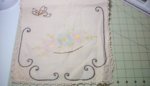
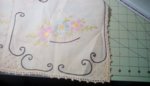
Yesterday a friend was letting me have an early look at her brother's estate sale and a few things caught my eye one of which was a small table runner that had some embroidery. I know it is not an antique piece but I thought it was pretty so I bought it from her alog with some teacups and other odds and ends. My question is, how do I clean it. The owner was a smoker and it seems to be slightly yellow from than and has that smokey/dusty smell. I don't want to damage the material. Any ideas?Here's a pic but not a very good one.
20506967_10210014648150878_2928797636936737301_o.jpg 20543585_10210014641430710_8848556951980176153_o.jpg
 
I know it is not an antique piece but I thought it was pretty so I bought it from her alog with some teacups and other odds and ends. My question is, how do I clean it. The owner was a smoker and it seems to be slightly yellow from than and has that smokey/dusty smell. I don't want to damage the material. Any ideas?
I'm definitely no expert, but I can share what I've learned so far. By the way, looking at that pattern, it could be vintage. :) The fact that it's yellowing hints at vintage as well.
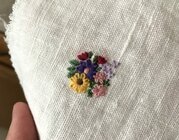
I will come back with some proper links about washing hand embroidery, both old and new. But until I do some research, I will share my experiences so far: (Skip to the end if you just want to read the conclusion.)

1) I hand wash and line dry my embroidery. Embroidery floss is respectably strong, and the stitches can be well anchored, but it's still a layer of fiber that can only stand up to so much friction before starting to wear. I use a tiny bit of laundry detergent and hand wash gently. I squeeze out excess water by rolling it up in a towel and then pressing. (That works for yarny things too!) Then I hang to dry.

2) Usually I don't soak embroidery. I wash, rinse, and get to the drying immediately. However, one bit of embroidery I let sit for 10 minutes or so, and the red floss bled onto the linen background.

Once I realized what had happened, I washed the project again. And again. Gently but purposefully trying to reduce the bleed mark. (Also, I figured if it bled more, this would be good to learn.)

I didn't get it all ~ you can still see a pink halo around my red tulips. :cry:

IMG_2231.JPG

I experimented by washing another design with those deep red tulips, not soaking as usual, and there was no bleeding thankfully.

So, in conclusion, and until further notice,

* Hand wash
* Don't soak

(I could have just typed that, couldn't I? :tongue: But no. I had to cry about my tulips.)

I will be back with information from true experts. :thumbsup:
 
Usually I don't soak embroidery. I wash, rinse, and get to the drying immediately. However, one bit of embroidery I let sit for 10 minutes or so, and the red floss bled onto the linen background.
Oh you wonderful, wonderful dear!
I was going to soak it!

I'm definitely no expert, but I can share what I've learned so far. By the way, looking at that pattern, it could be vintage. :smile: The fact that it's yellowing hints at vintage as well.

That would be a nice surprise!

I will be back with information from true experts. :thumbsup:

Well, I think we already know who THAT is! :cool:

Thank you!!!
 
Oh, there is a small hole in the fabric - about half way down the scarf/runner. Not too large, just a tiny pin prick.
Repairable or leave alone as is?
 
Oh, there is a small hole in the fabric - about half way down the scarf/runner. Not too large, just a tiny pin prick.
Repairable or leave alone as is?
Hm. I think it depends on how the item will be used. A hole will get bigger over time. But if it's a tiny hole, and it's a table runner that doesn't get much in the way of punishment (unlike my handkerchiefs that get stuffed in and then pulled out of my purse), perhaps leaving it be would be smarter.

Then again, it's easier to repair a smaller hole than a larger one. :D So there's an argument for that as well. I think if it were me, I'd keep an eye on it. If it starts to get bigger, then I'd try sewing it shut.

As for cleaning advice, I was disappointed to find conflicting information online. Soak vs. Don't Soak. Warm vs. Cold Water. Hand Wash vs. Machine Wash. :rolleyes: Reminds me of the fiber community, where people debate about how to wash hand knits.

I will refer you to a post by an embroidery enthusiast whose blog I follow: Made To Be Used at Needle 'N Thread

It's a great article on using vintage linens (and enjoying them!), and half way down she discusses the cleaning of them.
Of course, she mentions soaking! And she refers to whitework, which naturally gets around the color bleed problem. Yet when I search the net about embroidery floss bleeding, I get plenty of hits featuring those who have experienced dye bleed (with reds, mostly). :help:

I notice your design doesn't have any red though. Since this is the only color that has given me trouble so far, you might be totally safe sticking with a gentle hand wash in cold water.
 
Doing a little more research on what types of stitches were used at the time. A little early, but I imagine the use of these stitches didn't change too much. (I will find out.)

Godey's July, 1854, page 73

At the bottom, it says: "Work in raised satin-stitch, sewing over the lines, or in buttonhole-stitch."

Guess who has to learn buttonhole stitch now. :nerd: I might add, one must be very careful when typing "buttonhole stitch" into Google. :O o:
 

Learn About Us
About CivilWarTalk
Contact the Webmaster
Meet the Staff
Link to CivilWarTalk
Join Our Community
Register
Browse Forums
View Today's Discussions
Search the Forum
Get Help
FAQ
Student Guide
Forum Rules & Etiquette
Copyright / DMCA

     Contact Us CivilwarTalk on Facebook CivilWarTalk on YouTube CivilWarTalk on Twitter RSS Feed

Bringing the American Civil War and More to Life.
© 1999 - , CIVILWARTALK, LLC - Site Version 10.0

SlaveryTalk.com - SecessionTalk.com - CivilWarTalk.com - ReconstructionTalk.com
Back
Top