Vicksburg Next Up

Johnny Shafto

Sergeant
Joined
Jun 21, 2021
Trying to understand CW history is both daunting and irresistible. Overwhelmed I thought it best to take only small bites of the pie. I became focused on only three events. I would commit to physically visiting each location then study in preparation. Study, visit, then move on to the next, this I could handle. My choices and reasoning.
1. Shiloh/Corinth. The battle that shocked the nation. It even changes Grant's perspective.
2. Vicksburg Campaign. Arguably the most rewarding for the victor and most devastating for the vanquished. Tactical masterpiece. The anaconda tightens.
3. Gettysburg. Famous for a reason. Ask someone to name one event. Meade vs. Lee. If not then what?

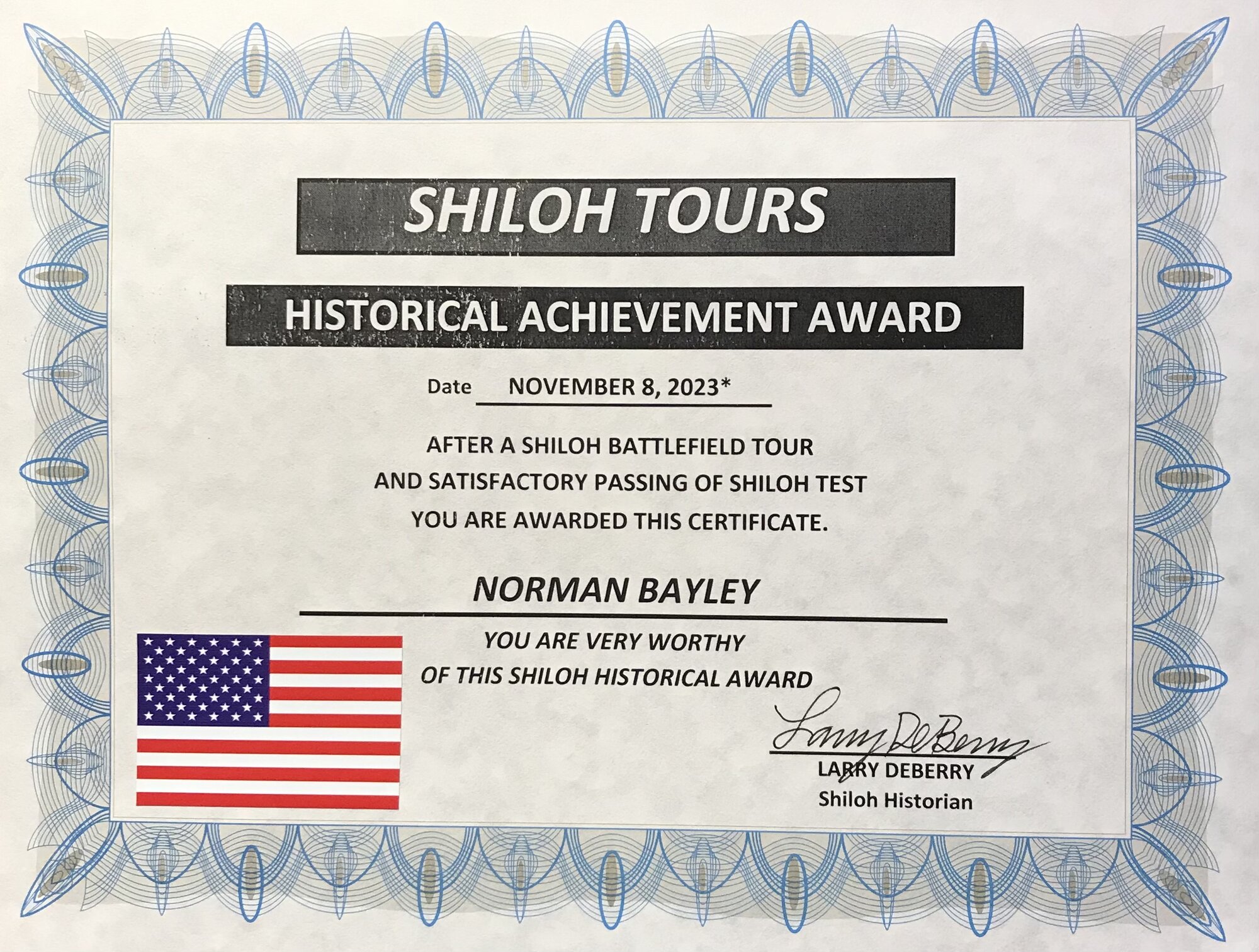
The first is under my belt. Required two visits and several days. Received my diploma. (See attachment).

Next up: Vicksburg. Reading has just begun but I have a questions for this distinguished group. (I was once told the only stupid question is the question unasked).
1. It seems like Champion Hill was ckeck mate. Was the siege really necessary? Walk away. Save yourselves. Did anyone make the argument? Was anyone listening? Did Davis have a say in this?
2. Farragut had already been up and down from New Orleans. Why couldn't he ferry Grant's boys over to Bruinsburg? Wrong boats?
IMG_3610.jpeg
 
Yes, capturing Vicksburg was still necessary because Confederate guns still poised a distinct danger to Union patrols going up and down the Mississippi River. Taking the Hill City would also severe supply and communication pathways for the Confederates. Plus, it was important in taking out another large Confederate force, improving moral in the North while demoralizing the South.

It's been said many times that Vicksburg was strategically more important than the victory at Gettysburg. I tend to agree.
 
The strategy that ended up winning the war was Scott's Anaconda Plan, with a few minor adjustments. The old soldier knew that if they failed to get the short war everybody desired, the conflict would devolve into a war of attrition due to the numerical and industrial capacity of the Union in comparison to the Confederacy. In other words, the Union was simply better equipped to fight a longer war. So time was on their side. His strategy would merely help that process along and maybe not take as much time as it otherwise would have. Certainly, he didn't want the war to outlast Northern resolve, which was formidable, but not limitless. So just because the fall of Vicksburg didn't immediately lead to winning the war doesn't mean that it wasn't necessary. The South wasn't some third world country with a primitive economy. Agrarian doesn't mean backwards. It had a very modern, dynamic, and robust economy. And when markets like that encounter obstacles, what they do is not immediately crumple, but adapt. Failure only comes when there's no longer any options to adapt to. Think of it like a city with five roads coming out of it. You block one road, and they'll simply go to using another road. Block that road. And they still have three roads to go. Yeah, sure what they're forced to settle on might not be the option they would have chosen had they still had all their options available. Maybe it's a longer route or the road isn't as smooth as they would have liked. But it's all they got. So they make it work. Thus, it was going to take more than the fall of Vicksburg for the Union to win the war. It was the entire conquest of the Mississippi River, the Union blockade, the fall of several southern ports to Union land and naval armies, the fall of Atlanta and the destruction of Confederate infrastructure by Sherman's armies, the burning of the Shenandoah Valley, the fall of Petersburg and Richmond, etc., etc. However, going back to my road analogy, you can't very well say that blocking one road isn't important because there are four other roads still to block…or three or whatever. It's a strategic process. The outcome of individual battles only matter in so much as they are stepping stones to their final goal. Vicksburg was one of those stepping stones, as it cut the Confederacy in half and stopped the influx of supplies from places like Texas and Missouri, much of which was used by the Confederate Army.
 
Last edited:
Yes, capturing Vicksburg was still necessary because Confederate guns still poised a distinct danger to Union patrols going up and down the Mississippi River. Taking the Hill City would also severe supply and communication pathways for the Confederates. Plus, it was important in taking out another large Confederate force, improving moral in the North while demoralizing the South.

It's been said many times that Vicksburg was strategically more important than the victory at Gettysburg. I tend to agree.
This I understand. Vicksburg and New Orleans were hugely important and had to be in Union control. But why couldn't the Confederates see the writing on the wall before the siege? It was all but over when the army came flooding back into Vicksburg proper after being routed. They regrouped and dug in. Can't imagine what the citizens were thinking. It would have been horrifying. "What are you doing?!."
 
The strategy that ended up winning the war was Scott's Anaconda Plan, with a few minor adjustments. The old soldier knew that if they failed to get the short war everybody desired, the conflict would devolve into a war of attrition due to the numerical and industrial capacity of the Union in comparison to the Confederacy. In other words, the Union was simply better equipped to fight a longer war. So time was on their side. His strategy would merely help that process along and maybe not take as much time as it otherwise would have. Certainly, he didn't want the war to outlast Northern resolve, which was formidable, but not limitless. So just because the fall of Vicksburg didn't immediately lead to winning the war doesn't mean that it wasn't necessary. The South wasn't some third world country with a primitive economy. Agrarian doesn't mean backwards. It had a very modern, dynamic, and robust economy. And when markets like that encounter obstacles, what they do is not immediately crumple, but adapt. Failure only comes when there's no longer any options to adapt to. Think of it like a city with five roads coming out of it. You block one road, and they'll simply go to using another road. Block that road. And they still have three roads to go. Yeah, sure what they're forced to settle on might not be the option they would have chosen had they still had all their options available. Maybe it's a longer route or the road isn't as smooth as they would have liked. But it's all they got. So they make it work. Thus, it was going to take more than the fall of Vicksburg for the Union to win the war. It was the entire conquest of the Mississippi River, the Union blockade, the fall of several southern ports to Union land and naval armies, the fall of Atlanta and the destruction of Confederate infrastructure by Sherman's armies, the burning of the Shenandoah Valley, the fall of Petersburg and Richmond, etc., etc. However, going back to my road analogy, you can't very well say that blocking one road isn't important because there are four other roads still to block…or three or whatever. It's a strategic process. The outcome of individual battles only matter in so much as they are stepping stones to their final goal. Vicksburg was one of those stepping stones, as it cut the Confederacy in half and stopped the influx of supplies from places like Texas and Missouri, much of which was used by the Confederate Army.
Thank you. Greatly appreciated. I was vague with my original query. I understand the Anaconda plan, hence the mention in the original post. I understand that capturing Vicksburg was, as Lincoln indicated, the key we must have in our pocket. Arguably Grant's campaign may have been the most important of the war. But it's the futility of the siege that is so difficult to understand, not why Vicksburg had to be under Union control.
 
This I understand. Vicksburg and New Orleans were hugely important and had to be in Union control. But why couldn't the Confederates see the writing on the wall before the siege? It was all but over when the army came flooding back into Vicksburg proper after being routed. They regrouped and dug in. Can't imagine what the citizens were thinking. It would have been horrifying. "What are you doing?!."

Grant had the same opinion as you did, he felt that the southern troops were demoralized after Champion Hill and Big Black River Bridge. He paid for that opinion with the lives of his men on May 19th and 22nd. It was far from over and Grant didn't have enough troops on hand at the outset for a complete investment of the city, as the roads leading south of the city were more or less unguarded until mid June. Plus you had Joe Johnston lurking somewhere near Jackson with a growing army.
 
This I understand. Vicksburg and New Orleans were hugely important and had to be in Union control. But why couldn't the Confederates see the writing on the wall before the siege? It was all but over when the army came flooding back into Vicksburg proper after being routed. They regrouped and dug in. Can't imagine what the citizens were thinking. It would have been horrifying. "What are you doing?!."
The 'why' is because Pemberton was told directly by Davis to hold Vicksburg at all costs, though there are some that conclude this wasn't a direct order. Either way, it seems Pemberton understood it as an order and was determined to do just that. And after all, Pemberton knew the city was well defended (as seen in the 47-day siege). What really hurt Pemberton was Johnston not doing anything to assist, leaving Vicksburg to its fate.
 
Grant had the same opinion as you did, he felt that the southern troops were demoralized after Champion Hill and Big Black River Bridge. He paid for that opinion with the lives of his men on May 19th and 22nd. It was far from over and Grant didn't have enough troops on hand at the outset for a complete investment of the city, as the roads leading south of the city were more or less unguarded until mid June. Plus you had Joe Johnston lurking somewhere near Jackson with a growing army.
Exactly! I would have stepped in the same hole. It was all but over. Unfortunately for the poor citizens in town, who had a Union soft spot anyway given the upriver commerce, the topography provided protection. They probably thought things would be different if Jefferson Davis' office had been somewhere on Washington street. "Excuse me soldier, can you point me in the direction of General Pemberton? I have something to discuss." 😆
 
The 'why' is because Pemberton was told directly by Davis to hold Vicksburg at all costs, though there are some that conclude this wasn't a direct order. Either way, it seems Pemberton understood it as an order and was determined to do just that. And after all, Pemberton knew the city was well defended (as seen in the 47-day siege). What really hurt Pemberton was Johnston not doing anything to assist, leaving Vicksburg to its fate.
Yes! Johnston's reaction to Grant at Jackson is, at this point in my study, still very confusing. This raises another question. Was communication between Pemberton and Davis even possible after Champion Hill and Black River? It sounds like no. When and if Davis had seen the writing on the wall would he have been able to communicate with his old friend? Would Grant have allowed a message to stand down to pass through lines? After 47 days did Pemberton reach a state of reality on his own?
 
Yes! Johnston's reaction to Grant at Jackson is, at this point in my study, still very confusing. This raises another question. Was communication between Pemberton and Davis even possible after Champion Hill and Black River? It sounds like no. When and if Davis had seen the writing on the wall would he have been able to communicate with his old friend? Would Grant have allowed a message to stand down to pass through lines? After 47 days did Pemberton reach a state of reality on his own?
I think communication was pretty much cutoff after Grant had driven off Johnston at Jackson on the 14th.

And yes, by July 1st, Pemberton had given up hope that help was coming.
 
I blame that whole debacle on Jefferson Davis, who I think was motivated by the fact that his plantation was there in exhorting Pemberton to hold the city at all cost. Maybe I'm being unfair, but it makes no sense to me that a West Point graduate like Davis wouldn't realize what Joe Johnston was saying was true. A city can be retaken. But a trapped army is gone forever. They're lucky Grant didn't insist on unconditional surrender, because it really would have been gone forever. Not only would there have there been more civilian deaths, but all those soldiers would have spent the rest of the war in a Union prison camp and probably died there, considering how overcrowded those prisons became in the latter part of the war. And Davis underestimated Grant as well underestimating how difficult it would be for Johnston to come to Pemberton's aid instead of Pemberton leaving the city and coming to Johnston. Grant knew very well that Johnston and Pemberton's forces together outnumbered him. It's why he launched a very successful cavalry raid into the heart of Mississippi, had Sherman feint attacks to the north, chased the Confederates out of Jackson, and cut telegraph wires, all to keep Johnston and Pemberton distracted and from joining up. Having a smaller Union army between two Confederate forces that outnumber him might seem like a golden opportunity. But not when they can't communicate with each other and not when one is not following orders anyway when they do communicate. The whole reason the Battle of Champion Hill happened was because Pemberton disobeyed an order to join Johnston at Clinton. Instead, Pemberton moves in the opposite direction because he decided to attack Grant's supply line, only to call a counter march when he realized that it maybe wasn't such a hot idea and to obey Johnston after all. Except then it was too late because he had to cross a road that McPherson's forces were marching on. And Johnston kept exhorting Pemberton to come out of the city with his forces, which he could have done up until the Battle of the Big Black River Bridge. I know that some people think Davis is great and don't have much respect for Johnston, but this was a no-brainer. And during the Siege of Petersburg, Robert E. Lee himself made the call that Pemberton should have made, that Johnston was ordering him to do. Even for important cities like Petersburg and Richmond, Lee wasn't about to let his army get trapped in the siege. Eventually, they did get trapped anyway, but he was trying to get to Johnston, which is what Pemberton should have done.
 
Last edited:
I blame that whole debacle on Jefferson Davis, who I think was motivated by the fact that his plantation was there in exhorting Pemberton to hold the city at all cost. Maybe I'm being unfair, but it makes no sense to me that a West Point graduate like Davis wouldn't realize what Joe Johnston was saying was true. A city can be retaken. But a trapped army is gone forever. They're lucky Grant didn't insist on unconditional surrender, because it really would have been gone forever. Not only would there have there been more civilian deaths, but all those soldiers would have spent the rest of the war in a Union prison camp and probably died there, considering how overcrowded those prisons became in the latter part of the war. And Davis underestimated Grant as well underestimating how difficult it would be for Johnston to come to Pemberton's aid instead of Pemberton leaving the city and coming to Johnston. Grant knew very well that Johnston and Pemberton's forces together outnumbered him. It's why he launched a very successful cavalry raid into the heart of Mississippi, had Sherman feint attacks to the north, chased the Confederates out of Jackson, and cut telegraph wires, all to keep Johnston and Pemberton distracted and from joining up. Having a smaller Union army between two Confederate forces that outnumber him might seem like a golden opportunity. But not when they can't communicate with each other and not when one is not following orders anyway when they do communicate. The whole reason the Battle of Champion Hill happened was because Pemberton disobeyed an order to join Johnston at Clinton. Instead, Pemberton moves in the opposite direction because he decided to attack Grant's supply line, only to call a counter march when he realized that it maybe wasn't such a hot idea and to obey Johnston after all. Except then it was too late because he had to cross a road that McPherson's forces were marching on. And Johnston kept exhorting Pemberton to come out of the city with his forces, which he could have done up until the Battle of the Big Black River Bridge. I know that some people think Davis is great and don't have much respect for Johnston, but this was a no-brainer. And during the Siege of Petersburg, Robert E. Lee himself made the call that Pemberton should have made, that Johnston was ordering him to do. Even for important cities like Petersburg and Richmond, Lee wasn't about to let his army get trapped in the siege. Eventually, they did get trapped anyway, but he was trying to get to Johnston, which is what Pemberton should have done.
I'm not a defender of Jefferson Davis and I think the evidence shows that by March of 1865 he was totally out of touch with the overwhelming evidence that the war was lost. Lee believed it to be so by March. The man was almost out of his mind by the fall of Richmond as evidenced by his statements that not having to defend the capital was an actual advantage. Yet, in fairness to ol' Jeff, I don't recall ever reading a source indicating his strategy on the Vicksburg defense was motivated by a desire to protect his private property. If that you're personal hunch--have at it but if you have a source that back this up I'd like to know of it.
 
That's a good schedule/plan and if Mr. DeBerry blessed you, then that's good enough for me. Enjoy your travels.
 
Trying to understand CW history is both daunting and irresistible. Overwhelmed I thought it best to take only small bites of the pie. I became focused on only three events. I would commit to physically visiting each location then study in preparation. Study, visit, then move on to the next, this I could handle. My choices and reasoning.
1. Shiloh/Corinth. The battle that shocked the nation. It even changes Grant's perspective.
2. Vicksburg Campaign. Arguably the most rewarding for the victor and most devastating for the vanquished. Tactical masterpiece. The anaconda tightens.
3. Gettysburg. Famous for a reason. Ask someone to name one event. Meade vs. Lee. If not then what?

The first is under my belt. Required two visits and several days. Received my diploma. (See attachment).

Next up: Vicksburg. Reading has just begun but I have a questions for this distinguished group. (I was once told the only stupid question is the question unasked).
1. It seems like Champion Hill was ckeck mate. Was the siege really necessary? Walk away. Save yourselves. Did anyone make the argument? Was anyone listening? Did Davis have a say in this?
2. Farragut had already been up and down from New Orleans. Why couldn't he ferry Grant's boys over to Bruinsburg? Wrong boats?

View attachment 556208
You are doing it right. I started a similar pat ten years ago and have now been to over 50 battlefields and many of the most well known I have visited multiple times. You will want a guide for Vicksburg like you did at Shiloh. However, I'd encourage you to do your own driving tour the day prior to your guide tour so you have a good "35,000 feet" overview to start. They have an excellent visitor center as well. BTW my great great grand father was in the Ohio 72nd and was on the far right line under Buckland when Shiloh opened. Then he was at Vicksburg and participated in the attempted breakthrough. Ultimatedly captured by FOrrest and Brices Cross Roads and taken to Andersonville. Have a great visit.
 
I'm not a defender of Jefferson Davis and I think the evidence shows that by March of 1865 he was totally out of touch with the overwhelming evidence that the war was lost. Lee believed it to be so by March. The man was almost out of his mind by the fall of Richmond as evidenced by his statements that not having to defend the capital was an actual advantage. Yet, in fairness to ol' Jeff, I don't recall ever reading a source indicating his strategy on the Vicksburg defense was motivated by a desire to protect his private property. If that you're personal hunch--have at it but if you have a source that back this up I'd like to know of it.
I don't, which is why I said I'm probably being unfair. I just have a hard time understanding Davis. He seemed to be constantly doing things that undermined the very Cause he was fighting for. His belief in holding Vicksburg at all cost seems to be particularly faulty thinking that it's hard for me to reconcile with his military education.
 
Last edited:
Yes, capturing Vicksburg was still necessary because Confederate guns still poised a distinct danger to Union patrols going up and down the Mississippi River. Taking the Hill City would also severe supply and communication pathways for the Confederates. Plus, it was important in taking out another large Confederate force, improving moral in the North while demoralizing the South.

It's been said many times that Vicksburg was strategically more important than the victory at Gettysburg. I tend to agree.
Pemberton's army could easily have evaded Grant's forces and moved out of the area.
Also it is not well known, but is a fact that the northern end of the seige lines (Federal left and Confederate right) were not closed by the Federals until some after Grant began the seige proper. Part or all of the Confederate army could have left Vicksburg via that route.
Pemberton later said that could not abandon Vicksburg because of the great amount of stores and facilities, as well as it strategic importance. He also had reason to believe that Johnston would attack Grant from the east and end the seige.

Gaining possession of the Mississippi river was vital in restoring commerce between the states of the upper river and New Orleans and beyond. The Confederate blockade of this trade early in the war was the cause of many boys from the states mentioned to volunteer.
These were farmers who could not get many of their crops to market.
 
That's a good schedule/plan and if Mr. DeBerry blessed you, then that's good enough for me. Enjoy your travels.
Thank you Sir. Mr. Berry is an amazing man. On our first visit we took advantage of his general introduction to the battle. He transformed the pastoral beauty of our surroundings into a visceral understanding of the contrast that was the battle of Shiloh. During our second visit we gave Mr. DeBerry carte blanche to cover topics of his choosing. Colonel Everett Peabody's movements and his deserving the Medal of Honor along with Lew Wallace on day 2 and being unjustly made a scapegoat for day one were discussed in detail.
 
Pemberton's army could easily have evaded Grant's forces and moved out of the area.
Also it is not well known, but is a fact that the northern end of the seige lines (Federal left and Confederate right) were not closed by the Federals until some after Grant began the seige proper. Part or all of the Confederate army could have left Vicksburg via that route.
Pemberton later said that could not abandon Vicksburg because of the great amount of stores and facilities, as well as it strategic importance. He also had reason to believe that Johnston would attack Grant from the east and end the seige.

Gaining possession of the Mississippi river was vital in restoring commerce between the states of the upper river and New Orleans and beyond. The Confederate blockade of this trade early in the war was the cause of many boys from the states mentioned to volunteer.
These were farmers who could not get many of their crops to market.
Hard to imagine the frustration that farmers would have felt. And their families. First your means of earning a living are taken away, then the man of the home leaves in an attempt to rectify the situation. A life changing scenario is an understatement. And the citizens of Vicksburg. Seeing those ominous dark Farragut boats slowly creeping up the river. Peace and prosperity about to come to a tragic end.
 
You are doing it right. I started a similar pat ten years ago and have now been to over 50 battlefields and many of the most well known I have visited multiple times. You will want a guide for Vicksburg like you did at Shiloh. However, I'd encourage you to do your own driving tour the day prior to your guide tour so you have a good "35,000 feet" overview to start. They have an excellent visitor center as well. BTW my great great grand father was in the Ohio 72nd and was on the far right line under Buckland when Shiloh opened. Then he was at Vicksburg and participated in the attempted breakthrough. Ultimatedly captured by FOrrest and Brices Cross Roads and taken to Andersonville. Have a great visit.
Great advice. Thank you so much! Your great great grand father's connection to these places must give you a very special feeling as you walk in his footsteps. The stories he could tell. I get chills just thinking about it. Did he survive Andersonville?
 
Great advice. Thank you so much! Your great great grand father's connection to these places must give you a very special feeling as you walk in his footsteps. The stories he could tell. I get chills just thinking about it. Did he survive Andersonville?
He survived Andersonville and returned to NW Ohio, had a second child, became the Rector of the Methodist Church and participated in veterns affirs and reunions of the Ohio 72nd, dying at the age of 84 in 1921. His bother-in-law , captured as well by Forrest , died at Andersonville. I prayed at his grave. BTw- there is a popular dining spot in Vicksburg named Walnut Hills. It's known for it's Southern regional cooking. My college rommie and I ate there and enjoyed it. Also- since Vicksburg is your next up and Gettysburg to follow, if you have not already read it, I suggest you get Edwin C Bearrs book Receding Tide. He does an excellent work on just those two battles.
 

Learn About Us
About CivilWarTalk
Contact the Webmaster
Meet the Staff
Link to CivilWarTalk
Join Our Community
Register
Browse Forums
View Today's Discussions
Search the Forum
Get Help
FAQ
Student Guide
Forum Rules & Etiquette
Copyright / DMCA

     Contact Us CivilwarTalk on Facebook CivilWarTalk on YouTube CivilWarTalk on Twitter RSS Feed

Bringing the American Civil War and More to Life.
© 1999 - , CIVILWARTALK, LLC - Site Version 10.0

SlaveryTalk.com - SecessionTalk.com - CivilWarTalk.com - ReconstructionTalk.com
Back
Top