
- Joined
- Feb 15, 2015
- Location
- New York, New York
When I was a little girl growing up, I always looked forward to the first day in December not only because Christmas was that much closer, but because I would receive an Advent calendar with chocolates in it from my grandmother. I always loved opening the tiny doors to reveal holiday themed chocolates. This year I received a special Tea Lovers Advent Calendar and it not only brought back memories of my childhood, but also made me wonder when did this fun holiday countdown 'clock' appear. After some digging I discovered the Advent calendar had some very meager beginnings.
Until about the 16th century children received their holiday gifts on St. Nicholas' Day (December 6). Martin Luther rejected the worship of saints and altered the tradition. Since then, gift exchanges occur on Christmas. To shorten the longer wait time for children, Protestants developed several customs, including the Advent calendar.
Poor families typically marked 24 chalk lines on the door and their children in turn would erase one each day. Others put straw in a manger daily to build up the bed of Jesus in time for his birth. Other variations included candles with 24 tick marks or paper chains, from which one link was torn off each day. In wealthy homes the children received gingerbread daily. Catholics also enjoyed the advent calendar, and the tradition spread across Germany.
In 1902, a Protestant book store in Hamburg printed the first Advent calendar in the form of a clock. Two years later a German newspaper included a Christmas countdown calendar in one of its editions. Then, in 1908, a Munich publisher sold colorful photos to cut out and paste onto 24 slots on cardboard.
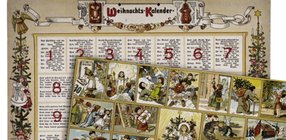
The first modern Advent calendars with little doors made their debut in 1920. Behind every door was a picture or Bible verse. During WWII advent calendars took a turn in Germany, instead of showing religious themes, they centered on German folktales and legends to remove the religious element of the holiday.
From the 1950s onward, the Advent calendar became an affordable mass-produced item. Behind the doors, little photos with winter scenes or religious motifs could be found. Some calendars contained chocolates or other sweets.
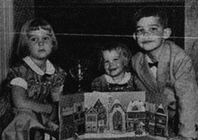
Believe it or not but, Dwight Eisenhower is often credited for the popularity of the Advent calendar tradition catching on in the U.S. During his presidency, he was photographed opening an Advent calendar with his grandchildren. The photograph ran in several national newspapers and in turn spurned sales and solidifying it as a popular holiday tradition.
Today Advent calendars aren't just for children as I discovered when I received my tea version. Notably in the UK, Aldi stores sell a wine Advent calendar containing a different type of wine daily (the tiny bottles) and apparently another friend of mine spotted a make-up version giving various luxury samples of cosmetics to beauty lovers during the holiday season.
***Hopefully, it's all right to post this here as it's sort of food related given most modern variations revolve around food and drink!***
Until about the 16th century children received their holiday gifts on St. Nicholas' Day (December 6). Martin Luther rejected the worship of saints and altered the tradition. Since then, gift exchanges occur on Christmas. To shorten the longer wait time for children, Protestants developed several customs, including the Advent calendar.
Poor families typically marked 24 chalk lines on the door and their children in turn would erase one each day. Others put straw in a manger daily to build up the bed of Jesus in time for his birth. Other variations included candles with 24 tick marks or paper chains, from which one link was torn off each day. In wealthy homes the children received gingerbread daily. Catholics also enjoyed the advent calendar, and the tradition spread across Germany.
In 1902, a Protestant book store in Hamburg printed the first Advent calendar in the form of a clock. Two years later a German newspaper included a Christmas countdown calendar in one of its editions. Then, in 1908, a Munich publisher sold colorful photos to cut out and paste onto 24 slots on cardboard.
The first modern Advent calendars with little doors made their debut in 1920. Behind every door was a picture or Bible verse. During WWII advent calendars took a turn in Germany, instead of showing religious themes, they centered on German folktales and legends to remove the religious element of the holiday.
From the 1950s onward, the Advent calendar became an affordable mass-produced item. Behind the doors, little photos with winter scenes or religious motifs could be found. Some calendars contained chocolates or other sweets.
Believe it or not but, Dwight Eisenhower is often credited for the popularity of the Advent calendar tradition catching on in the U.S. During his presidency, he was photographed opening an Advent calendar with his grandchildren. The photograph ran in several national newspapers and in turn spurned sales and solidifying it as a popular holiday tradition.
Today Advent calendars aren't just for children as I discovered when I received my tea version. Notably in the UK, Aldi stores sell a wine Advent calendar containing a different type of wine daily (the tiny bottles) and apparently another friend of mine spotted a make-up version giving various luxury samples of cosmetics to beauty lovers during the holiday season.
***Hopefully, it's all right to post this here as it's sort of food related given most modern variations revolve around food and drink!***


 Forum Host


 Bringing the