-
Welcome to CivilWarTalk, a forum about the American Civil War! - Join today! It's fast, simple, and FREE!
You are using an out of date browser. It may not display this or other websites correctly.
You should upgrade or use an alternative browser.
You should upgrade or use an alternative browser.
Sword
- Thread starter Fireman19
- Start date

Patrick H
Lt. Colonel
- Joined
- Mar 7, 2014
First of all, welcome from Missouri. Secondly, lots of people will want to see pictures of the sword. Save a file in .jpg format, about six or seven physical inches wide at 150 dpi. Go to the weapons forum and look for "Create a thread". Click. Give your thread a title and write your inquiry in the text block. Then look at the three buttons at the bottom right of the text block, like I am doing at this very moment. Click "Upload a File." Navigate to your sword picture and select it. Sit back and wait a few minutes. It will soon appear as a thumbnail under your text block. You'll see the options of "Thumbnail" or "Full size." Select either, but I always post single pictures in full size. Wait another moment and your picture will appear in full size. Then click "start thread" at the bottom and the whole thing will launch.
Good luck with it!
Good luck with it!

 Forum Host
- Joined
- May 1, 2015
- Location
- Upstate N.Y.
Welcome, enjoy

Lanyard Puller
First Sergeant
- Joined
- Nov 29, 2017
- Location
- South Carolina
Welcome, Looking forward to your photos.

- Joined
- Jan 4, 2017
- Location
- Ont. Canada
Hello from Ont. Canada, can,t wait to see the pics

Larryh86GT
Captain
- Joined
- Jan 20, 2018
- Location
- Near sunny Buffalo New York
Welcome from WNY.

7th Mississippi Infantry
Brev. Brig. Gen'l
- Joined
- Sep 28, 2013
- Location
- Southwest Mississippi
Welcome !Hi everyone, my coworker has this sword with no markings that he or i saw. I was wondering if anyone could tell me anything about it. Also how would i post pictures of it in a new thread?
We're looking forward to see your images of this sword.
Click the button below right . . . 'upload a file' .
Choose the sword image from your files and after it uploads . . . then click 'post reply".
Last edited:

Jonl51
Corporal
- Joined
- Apr 10, 2018
- Location
- Northern Illinois
Welcome from The Land of Lincoln. You will get lots of help as there are many knowledgeable folks here.Hi everyone, my coworker has this sword with no markings that he or i saw. I was wondering if anyone could tell me anything about it. Also how would i post pictures of it in a new thread?
Have fun.

mofederal
Major
- Joined
- Jun 27, 2017
- Location
- Southeast Missouri
Hello and welcome to the talk forum from Southeast Missouri located on the banks of the muddy Mississippi River. Photos would be great.
Test
Welcome !
We're looking forward to see your images of this sword.
Click the button below right . . . 'upload a file' .
Choose the sword image from your files and after it uploads . . . then click 'post reply".
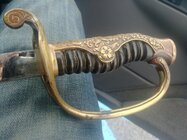
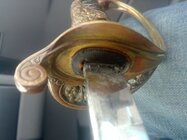
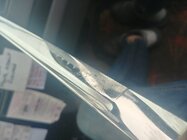
Hi everyone, my coworker has this sword with no markings that he or i saw. I was wondering if anyone could tell me anything about it. The blade is 23 5/8 inch
Attachments
Test
Welcome !
We're looking forward to see your images of this sword.
Click the button below right . . . 'upload a file' .
Choose the sword image from your files and after it uploads . . . then click 'post reply".
Jobe Holiday
Sergeant Major
- Joined
- Mar 1, 2010
- Location
- The Perpetually Frozen North
Imperial Japan.
J.
J.
Last edited:

Mrs. V
1st Lieutenant
- Joined
- May 5, 2017
@Western Reserve Volunteer your take?

- Joined
- Jul 30, 2016
- Location
- berlin
did they have swords with european style hilts? i have seen the chrisathemum but i believe it's a coincidence - they have a sword tradition of their ownImperial Japan.

Western Reserve Volunteer
Sergeant
- Joined
- May 12, 2018
Your sword is a Japanese Army Officers sword, of the WW1 era, in fairly complete condition. It is also known as a Kyu-gunto, or "Old Pattern Sword", because it is a Western Style sword adopted during the Meji Period (1867-1912) and produced until the Taisho period (1912-1923), a period of Westernization in Japan. Later, as the rise of nationalism pushed Japan towards World War Two, new pattern "Shin Gunto" that resembled the traditional Katana replaces these swords in service. But many were still issued to lower rank officers as the Japanese military found itself short on supplies as the officer Corp grew as a result of the war in China. Likely your sword either was carried by a low rank soldier during the war or was sitting in an arsenal somewhere, and was taken home as war booty by an American veteran after WW2. The flower on the guard is a chrysanthemum, symbol of the Japanese Imperial family and a cartouche that is on all Japanese weapons (unless it has been defaced post surrender or surplus sale of course, but nobody seems to have done that with swords afaik).
If you ever visit Japan, know that these swords sit in a legal gray area. Mass produced Shingunto swords are illegal in Japan because they are not considered cultural & artistic artifacts as are older hand made blades. Early production Kyugunto either used traditionally crafted blades or were remountings of existing katanas, so would still be legally art although the status of the mountings is legally questionable. I believe your piece may be a later production version which has a mass produced blade but I can't be sure with the pictures you have posted...
If you ever visit Japan, know that these swords sit in a legal gray area. Mass produced Shingunto swords are illegal in Japan because they are not considered cultural & artistic artifacts as are older hand made blades. Early production Kyugunto either used traditionally crafted blades or were remountings of existing katanas, so would still be legally art although the status of the mountings is legally questionable. I believe your piece may be a later production version which has a mass produced blade but I can't be sure with the pictures you have posted...
- Joined
- Jul 30, 2016
- Location
- berlin
thx, i didn't know thatYour sword is a Japanese Army Officers sword, of the WW1 era, in fairly complete condition. It is also known as a Kyu-gunto, or "Old Pattern Sword", because it is a Western Style sword adopted during the Meji Period (1867-1912) and produced until the Taisho period (1912-1923), a period of Westernization in Japan. Later, as the rise of nationalism pushed Japan towards World War Two, new pattern "Shin Gunto" that resembled the traditional Katana replaces these swords in service. But many were still issued to lower rank officers as the Japanese military found itself short on supplies as the officer Corp grew as a result of the war in China. Likely your sword either was carried by a low rank soldier during the war or was sitting in an arsenal somewhere, and was taken home as war booty by an American veteran after WW2. The flower on the guard is a chrysanthemum, symbol of the Japanese Imperial family and a cartouche that is on all Japanese weapons (unless it has been defaced post surrender or surplus sale of course, but nobody seems to have done that with swords afaik).
If you ever visit Japan, know that these swords sit in a legal gray area. Mass produced Shingunto swords are illegal in Japan because they are not considered cultural & artistic artifacts as are older hand made blades. Early production Kyugunto either used traditionally crafted blades or were remountings of existing katanas, so would still be legally art although the status of the mountings is legally questionable. I believe your piece may be a later production version which has a mass produced blade but I can't be sure with the pictures you have posted...

originalrebelyell
Sergeant
- Joined
- Oct 27, 2015
Japanese officers dress sword . I have one like it my dad brought back from the war.
What parts would you need too see because i can get moreYour sword is a Japanese Army Officers sword, of the WW1 era, in fairly complete condition. It is also known as a Kyu-gunto, or "Old Pattern Sword", because it is a Western Style sword adopted during the Meji Period (1867-1912) and produced until the Taisho period (1912-1923), a period of Westernization in Japan. Later, as the rise of nationalism pushed Japan towards World War Two, new pattern "Shin Gunto" that resembled the traditional Katana replaces these swords in service. But many were still issued to lower rank officers as the Japanese military found itself short on supplies as the officer Corp grew as a result of the war in China. Likely your sword either was carried by a low rank soldier during the war or was sitting in an arsenal somewhere, and was taken home as war booty by an American veteran after WW2. The flower on the guard is a chrysanthemum, symbol of the Japanese Imperial family and a cartouche that is on all Japanese weapons (unless it has been defaced post surrender or surplus sale of course, but nobody seems to have done that with swords afaik).
If you ever visit Japan, know that these swords sit in a legal gray area. Mass produced Shingunto swords are illegal in Japan because they are not considered cultural & artistic artifacts as are older hand made blades. Early production Kyugunto either used traditionally crafted blades or were remountings of existing katanas, so would still be legally art although the status of the mountings is legally questionable. I believe your piece may be a later production version which has a mass produced blade but I can't be sure with the pictures you have posted...
- Joined
- Jul 30, 2016
- Location
- berlin
the more the betterWhat parts would you need too see because i can get more

Similar threads


- Replies
- 3
- Views
- 172
- Replies
- 15
- Views
- 313
- Replies
- 6
- Views
- 194
Similar threads

- Learn About Us
- ►About CivilWarTalk
- ►Contact the Webmaster
- ►Meet the Staff
- ►Link to CivilWarTalk
- Join Our Community
- ►Register
- ►Browse Forums
- ►View Today's Discussions
- ►Search the Forum
- Get Help
- ►FAQ
- ►Student Guide
- ►Forum Rules & Etiquette
- ►Copyright / DMCA
 Bringing the