Suggestions Please, what are these structures.

The lesser known railroads, particularly in the northeastern part of California were built and maintained by Greeks. Between 1880 and 1920, they were the primary workers, usually recruited by company agents back east. The little round ovens they used to bake bread are still found along the railroads. They didn't get treated any better than the Chinese, either!
Speaking of northern California, ever heard of the Arcata and Mad River Railroad?
 
:D Annie and Mary! Yes, indeed, although it was mostly defunct by my day. Used to live in Blue Lake. Lots of lumber trains!
The A&MR operated from 1854 into the 1980's. The company I worked for built some all-door boxcars for them for hauling lumber. I actually visited Arcata in the 70's.
 
The A&MR operated from 1854 into the 1980's. The company I worked for built some all-door boxcars for them for hauling lumber. I actually visited Arcata in the 70's.

Nice town, then. Lived over on the coast a while with Yurok relations, mostly around Requah. Blue Lake was a lumber town like Korbel - think the line between was still operating then. The railroads up here were all about lumber!
 
There are more than a few reports of soldiers and brakemen being knocked off the cars because of not paying attention and hitting a bridge while on the roof of the cars.

... leading to the invention of the old cat of nine tails, nine pieces of rope hanging from a wooden crossarm over the track, attached to a trackside pole. Each rope had a knot tied on the end, to weight it. If you were on top of a car, walking away from the locomotive and felt the ropes and knots brush the back of your head, you knew it was time to hit the deck. Bridge or low tunnel coming up right away! All of them could clear a man in a prone position.

A five rope version survived in Winston-Salem up until about 20 years ago.

As for camp cars, they still exist today, though they are more likely to be mobile homes on flats rather than the repurposed passenger cars of previous recent decades. Downtown Greensboro, NC is a common place to find them parked when not in use, near the Elm Street crossing.
 
I'm quite interested in the civil engineering side of the railroad and it was whilst I was looking for pictures of railroad construction workers that I came across this photograph. I have no idea what I'm looking at. Can anyone tell me what these structures are, I initially thought that this could be temporary accommodation for construction workers but I'm not so sure. Did these buildings remain on the train, were they being moved to a specific location?
From all of the accounts that I have read, life in the railroad construction camps was pretty harsh and living accommodation was poor. I have read that as the railroads continued to expand living conditions improved and many workers would travel with their families, could this photo show an example of improved living conditions or is it just a cargo of prefab huts.

View attachment 164165
Looks like a work train of several dormitory cars....
 
You are right. The western half of the transcontinental railroad was largely built by Chinese workers and the eastern half mainly by Irish workers.
I've also seen a few pictures with Mexican railroad workers, according to Wiki, Mexican workers were known as 'Traquero' they didn't start working on the railroads until the 1880's which coincides with the exclusion of Chinese workers. Apparently these Mexican railroad workers covered track building in the South west, Mid West and as far North as Chicago, they weren't paid well, even in the 1930's they were only being paid about $30 per month and that was for a 6 day week.
8c1fea4b8e330a830ffdc39a83ba4ba0.jpg
 
... leading to the invention of the old cat of nine tails, nine pieces of rope hanging from a wooden crossarm over the track, attached to a trackside pole. Each rope had a knot tied on the end, to weight it. If you were on top of a car, walking away from the locomotive and felt the ropes and knots brush the back of your head, you knew it was time to hit the deck. Bridge or low tunnel coming up right away! All of them could clear a man in a prone position.

A five rope version survived in Winston-Salem up until about 20 years ago.

As for camp cars, they still exist today, though they are more likely to be mobile homes on flats rather than the repurposed passenger cars of previous recent decades. Downtown Greensboro, NC is a common place to find them parked when not in use, near the Elm Street crossing.
The same method is currently being used in India to deter people from traveling on the roofs of cars, the only difference being that the wooden cross arm has rope with rocks attached, its cruel but pretty effective as a deterrent.
 
Never seen or heard of Italians building or working pre- or CW Southern railroads. Irish were used now and again, but in at least 2 cases, the Irish were so drunken and violent that the RR got rid of them and expanded their slave gangs.
I haven't either, I was shooting for Irish but came up with Italian, at least I got the "I"correct.
 
The same method is currently being used in India to deter people from traveling on the roofs of cars, the only difference being that the wooden cross arm has rope with rocks attached, its cruel but pretty effective as a deterrent.

:confused: We sometimes have to learn the hard way - like my buddy's sail boat. Found out why you never turn your back on the boom vang!
 
.

Expired Image Removed
 

Attachments

  • charleston%20a.jpg
    charleston%20a.jpg
    50.4 KB · Views: 131
  • irr121_135a.jpg
    irr121_135a.jpg
    36.8 KB · Views: 126
  • francis%20trolley.jpg
    francis%20trolley.jpg
    61.8 KB · Views: 119
:confused: We sometimes have to learn the hard way - like my buddy's sail boat. Found out why you never turn your back on the boom vang!
Have you noticed how booms always seem to be strategically placed at cranium height.
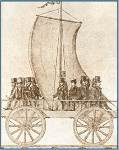
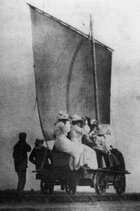
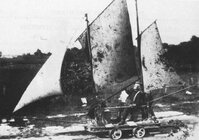
And keeping us on track (excuse the pun) here some bright spark thought that railroad sailing would work. Here's a couple of picks taken of railroad sail thingy, there is one story of a railroad sail thingy reaching a speed of 20mph, all was well whilst the wind was abeam but when the wind changed direction, it blew the sail thingy of the rails along with its 15 passengers, as you can imagine it all resulted in a bit of a wreck, the handful of sailors that made up the crew were able to re-rig the sales and set off again.
charleston%20a.jpg

irr121_135a.jpg

francis%20trolley.jpg


Source http://www.douglas-self.com/MUSEUM/LOCOLOCO/sail/sail.htm


Expired Image Removed
 
Have you noticed how booms always seem to be strategically placed at cranium height.
And keeping us on track (excuse the pun) here some bright spark thought that railroad sailing would work. Here's a couple of picks taken of railroad sail thingy, there is one story of a railroad sail thingy reaching a speed of 20mph, all was well whilst the wind was abeam but when the wind changed direction, it blew the sail thingy of the rails along with its 15 passengers, as you can imagine it all resulted in a bit of a wreck, the handful of sailors that made up the crew were able to re-rig the sales and set off again.
View attachment 164352
View attachment 164353
View attachment 164354

Source http://www.douglas-self.com/MUSEUM/LOCOLOCO/sail/sail.htm


Expired Image Removed
Dave, I do believe you fired two rounds without reloading on your Post Reply button.
 
I'm not sure about down south.....but out west, it was darn near exclusively Chinese.
I can't find where I read it but I'm sure that I read that Chinese workers had to pay a tax to the railroad if they wanted to be accompanied by their families. I'm not sure how that works and why a tax would need to be paid, it seems to me that a family would suffer because the worker would be paid less, perhaps that's why the railroad companies introduced the tax, it would discourage the Chinese population from increasing in number.
 

Learn About Us
About CivilWarTalk
Contact the Webmaster
Meet the Staff
Link to CivilWarTalk
Join Our Community
Register
Browse Forums
View Today's Discussions
Search the Forum
Get Help
FAQ
Student Guide
Forum Rules & Etiquette
Copyright / DMCA

     Contact Us CivilwarTalk on Facebook CivilWarTalk on YouTube CivilWarTalk on Twitter RSS Feed

Bringing the American Civil War and More to Life.
© 1999 - , CIVILWARTALK, LLC - Site Version 10.0

SlaveryTalk.com - SecessionTalk.com - CivilWarTalk.com - ReconstructionTalk.com
Back
Top