
 Forum Host
- Joined
- Feb 5, 2017
From FB "Civil War Medicine and Surgery"
During the siege of Battery Wagner, Captain Hansford Dade Duncan Twiggs stepped onto the parapet to observe the Union fleet. A shell exploded only a few yards away.
Twiggs collapsed "all of a heap." He could walk only with a soldier supporting each arm. His body shook violently, his head drooped onto his chest, and he soon developed repeated convulsions.
Yet Dr. Benjamin Rhett found "no mark of external injury upon him."
Twiggs recovered, but Rhett never forgot the case. In 1873, he published several examples of soldiers who suffered paralysis, convulsions, altered consciousness, and even death after nearby shell explosions, despite having no wound, bruise, or visible trauma.
Rhett struggled to explain the phenomenon. Did compressed air strike the nerves? Did the blast act directly upon the brain or spinal cord? He admitted that he did not know.
Union surgeon Dr. George Burr had reported similar cases in 1865. One officer developed paralysis after a shell exploded nearby. Another became confused, unsteady, and only partly conscious.
Burr also described an adjutant whose personality changed completely after an explosion. Once considered a courageous and dependable officer, he abandoned his regiment and was dismissed from the service. Burr was convinced that the man's behavior reflected an injured brain.
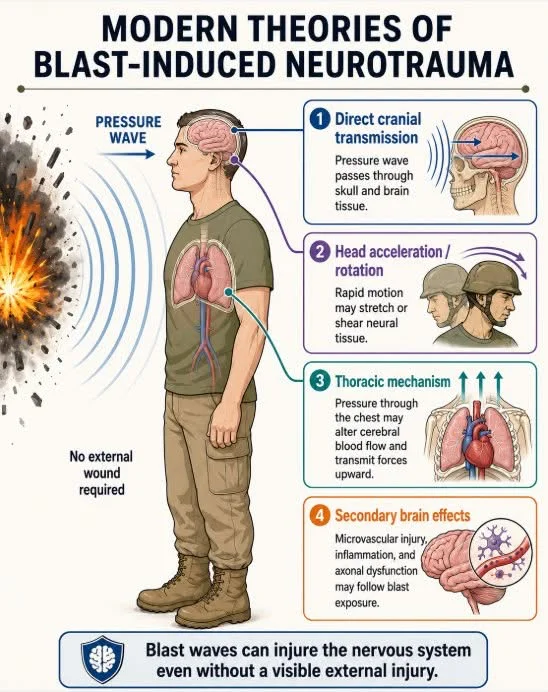
Today, these cases would raise concern for blast-induced neurotrauma (BINT). Even now, the mechanism is incompletely understood. Theories include direct transmission of the pressure wave through the skull, rapid acceleration or rotation of the head, pressure transmitted through the chest and circulation, and secondary inflammation or microscopic injury within the brain.
The science is getting closer, but Rhett and Burr had already recognized the essential fact: An explosion could injure the nervous system even when the shell never touched the soldier.
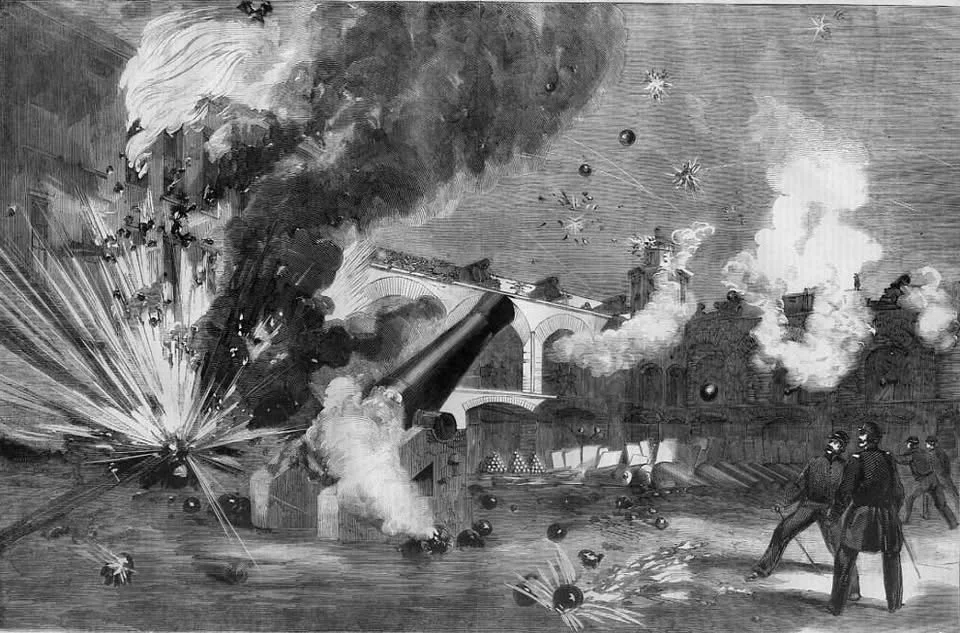


During the siege of Battery Wagner, Captain Hansford Dade Duncan Twiggs stepped onto the parapet to observe the Union fleet. A shell exploded only a few yards away.
Twiggs collapsed "all of a heap." He could walk only with a soldier supporting each arm. His body shook violently, his head drooped onto his chest, and he soon developed repeated convulsions.
Yet Dr. Benjamin Rhett found "no mark of external injury upon him."
Twiggs recovered, but Rhett never forgot the case. In 1873, he published several examples of soldiers who suffered paralysis, convulsions, altered consciousness, and even death after nearby shell explosions, despite having no wound, bruise, or visible trauma.
Rhett struggled to explain the phenomenon. Did compressed air strike the nerves? Did the blast act directly upon the brain or spinal cord? He admitted that he did not know.
Union surgeon Dr. George Burr had reported similar cases in 1865. One officer developed paralysis after a shell exploded nearby. Another became confused, unsteady, and only partly conscious.
Burr also described an adjutant whose personality changed completely after an explosion. Once considered a courageous and dependable officer, he abandoned his regiment and was dismissed from the service. Burr was convinced that the man's behavior reflected an injured brain.
Today, these cases would raise concern for blast-induced neurotrauma (BINT). Even now, the mechanism is incompletely understood. Theories include direct transmission of the pressure wave through the skull, rapid acceleration or rotation of the head, pressure transmitted through the chest and circulation, and secondary inflammation or microscopic injury within the brain.
The science is getting closer, but Rhett and Burr had already recognized the essential fact: An explosion could injure the nervous system even when the shell never touched the soldier.


 Bringing the