This musket is a US Model 1822 (Model 1816 type 2). Originally it would have been a flintlock, but it has been percussion altered via the National Armory, aka "Belgian" or "cone-in-barrel" method. Interestingly, this musket shows a 3rd class inspection cartouche which was applied sometime between 1842 and 1848. The interesting part is that, by date anyways, your musket should have been a 2nd class arm. Third class arms were to consist of "all arms made from 1812 to 1820 inclusive". Your musket must have an abnormally sized bore to have made it into the 3rd class section, or may have been unserviceable due to a broken mainspring or something of the like when it was inspected.
Usually 3rd class arms are encountered with patent breech alterations (at least in my experience). This is because they usually survived the percussion alterations of 1845 to 1855 which were the most prolific alteration periods prior to the war. At the onset of the Civil War arsenals across the country were scoured looking for anything relatively serviceable. However, by then the unserviceableness of the cone-in-barrel alterations was evident and the majority of War-time alterations were accomplished with sturdier alterations more capable of handling the breech pressures of being fired.
It's not a very valuable gun, but for someone who really likes percussion alterations (such as myself) it is a very neat piece. I would doubt that your ancestor carried this musket during his service. I would wager that he bought it after the war, possibly as a GAR parade gun given its very good condition.
As for cleaning the rust off, I would start with a microfiber rag with a touch of Rem-oil, or other gun lubricant. Just be sure to keep it off the wood. If you have areas of more severe rust very fine grit steel wool would do the job, but it is best to start small.
Thanks for sharing!
Garrett

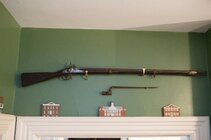
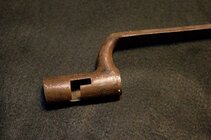
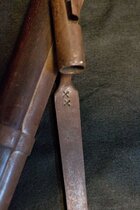
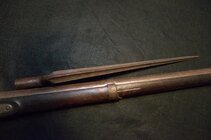
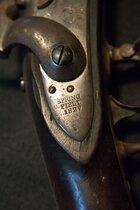
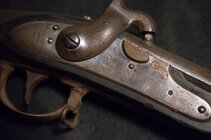
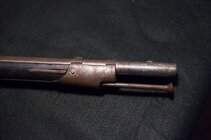
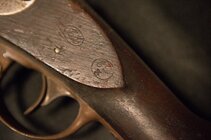
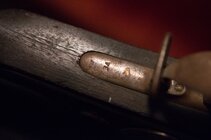 As I've posted before, my Gggrandfather was a US Sharpshooter during the war. The units were disbanded nearing the end of the war and he was transferred to a standard unit. This Springfield is in my house as well as the Target rifle he used as a Sharpshooter. Would this be a weapon used in a regular unit? Based on the age of the weapon it's likely his also. Anything you can tell me about the weapon?

 Forum Host


 Bringing the