Scottish Sea Monster

5fish

Captain
Joined
Aug 26, 2007
Location
Central Florida
Below is a picture of the Confederate ironclad ram that was never delivered to them. It was referred to by the confederate agent as number #61 but this was a huge ironclad frigate and got the nickname "the Scottish Sea Monster" and by others as "Glasgow" name after the city where it was being built. She had a broadside armament of 20 guns...She ended up in the Danish navy and was named Danmark. She only went on one tour and almost got swapped at sea...
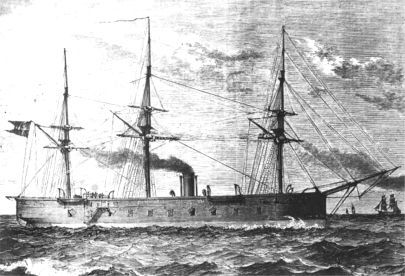


KMD_Danmark.jpg
 
It certainly looks like a monster. Why did it never get delivered - was it built too late in the war, or did American diplomats convince them not to deliver it to the Confederates?
 
It certainly looks like a monster. Why did it never get delivered - was it built too late in the war, or did American diplomats convince them not to deliver it to the Confederates?

It was not so much American agents getting involved as the political atmosphere towards the war in England changed. The Shipbuilder fear their government would not allow the sale so the canceled the contact. The ship was taking awhile to build... The historians say the ship was not suited for the confederacy needs. Like its draft was 6ft to deep for working along the shoals and it took to much crew and maintenance. Plus, the ship was a dog, it almost sunk in its first storm at sea. The Danes turned it into a barracks ships tied to the pier.
 
The appearance of the Danmark was fairly typical for the ocean-going ironclad frigates being built in Britain, France, Spain, etc. Although slightly larger than the Union's New Ironsides, it was actually slightly smaller than most of such European ships. Armor thickness was comparable. It probably would have been a tough battle if they had encountered each other.
 
"Glasgow" name after the city where it was being built. She had a broadside armament of 20 guns...She ended up in the Danish navy and was named Danmark. She only went on one tour and almost got swapped at sea...
5Fish.

You wouldn't happen to know the name of the shipbuilders or
shipyard in Glasgow that built her?

Mac.


You wouldn't happen to know the name of the shipbuilders or
shipyard in Glasgow that built her?

Mac.

Built by J+G Thompson at their original site in Govan , which would later become the site of the Graving dock. Before moving across to Clydebank location where they would be bought out in 1899 by John Browns.
 
I wasn't aware of that floating brick. It sounds like it would have been more dangerous to the crew than to Yankee merchant ships.
 
Thanks for that post macadam. Really took me back down memory lane and remembering freezing cold , rainy Glasgow days waiting for a bus to Johnstone from the Broomielaw, while all around was a hive of activity on a very busy Clyde. All gone now sadly.
 

Learn About Us
About CivilWarTalk
Contact the Webmaster
Meet the Staff
Link to CivilWarTalk
Join Our Community
Register
Browse Forums
View Today's Discussions
Search the Forum
Get Help
FAQ
Student Guide
Forum Rules & Etiquette
Copyright / DMCA

     Contact Us CivilwarTalk on Facebook CivilWarTalk on YouTube CivilWarTalk on Twitter RSS Feed

Bringing the American Civil War and More to Life.
© 1999 - , CIVILWARTALK, LLC - Site Version 10.0

SlaveryTalk.com - SecessionTalk.com - CivilWarTalk.com - ReconstructionTalk.com
Back
Top