Salt During The War

donna

Brev. Brig. Gen'l
Forum Host
Joined
May 12, 2010
Location
Now Florida but always a Kentuckian
Salt was indispensable to the armies, both North and South. It was used for preserving foods, for the health of horses, and in tanning leather for shoes, saddles, belts and cartridge boxes.

Salt could be mined or retrieved by evaporating seawater.

The Federal relied on the salt works at Onondaga Lake which were near Syracuse, New York. These salt works had been used for decades. In 1862 alone, more than nine million barrels of salt which were worth in excess of $30 million were produced from this site in New York.

Another source for the Federals was west of the mountains at Saginaw River site in Michigan. This site yielded more than 500,000 barrels of salt each year. Because of these sites, the Federals didn't need to import foreign salt.

The Confederates used hundreds of coastal evaporating operations. They also had 5 principal sources which were located in Louisiana, Alabama, Virginia and Kentucky. The production site in the Kanawha Valley was lost to the South when western Virginia defected from Virginia. The Louisiana salt works were lost when the Federal troops occupied that area about halfway during the war.

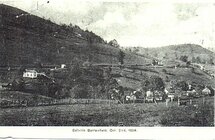
Saltville, Kentucky was the largest supplier of salt for the Confederacy. It made 3000 bushels of salt each day. It could have supplied the needs of the Confederacy if it had had enough workers and rail connections. Saltville was always threatened by Federal armies. Yet it remained in Southern hands and was the only provider for the South during the entire war.

Information from: "Daily Life In Civil War America", Second Edition, Dorothy Denneen Volo and James M. Volo, pages 155-156.
 
Another major work for the production of salt was Cedar Key,Florida on the Gulf coast.they even had a train line to bring the salt to Hogtown which is modern day Gainesville.
The railroad was the Florida Railroad, running from Fernandina to Cedar Keys, by way of Baldwin and Gainesville. The road was built to relieve ships of the need to sail around Florida to get to the Gulf ports. Ships were to offload at one end, use the railroad to ship to the other end of the line, then reload on a different ship. It was a crazy idea, easily stolen by railroads with connections to Savannah, Charleston, etc on one end and the destination customer on the other end (ie Charleston to Vicksburg), cutting out the Florida problem completely. The fear of this happening was the reason Florida RR president Yulee fought so hard to prevent his irrelevant road being removed during the war to make a connection between the Georgia and Florida railroads.

The Confederates removed about 5 miles of rail from each end of the road early in the war, when it dawned on them that it would be easy for the Union to take and hold the road and use it to conquer Florida while the Confederacy could not afford the troops to prevent such.
 
Salt was indispensable to the armies, both North and South. It was used for preserving foods, for the health of horses, and in tanning leather for shoes, saddles, belts and cartridge boxes.

Salt could be mined or retrieved by evaporating seawater.

The Federal relied on the salt works at Onondaga Lake which were near Syracuse, New York. These salt works had been used for decades. In 1862 alone, more than nine million barrels of salt which were worth in excess of $30 million were produced from this site in New York.

Another source for the Federals was west of the mountains at Saginaw River site in Michigan. This site yielded more than 500,000 barrels of salt each year. Because of these sites, the Federals didn't need to import foreign salt.

The Confederates used hundreds of coastal evaporating operations. They also had 5 principal sources which were located in Louisiana, Alabama, Virginia and Kentucky. The production site in the Kanawha Valley was lost to the South when western Virginia defected from Virginia. The Louisiana salt works were lost when the Federal troops occupied that area about halfway during the war.

Saltville, Kentucky was the largest supplier of salt for the Confederacy. It made 3000 bushels of salt each day. It could have supplied the needs of the Confederacy if it had had enough workers and rail connections. Saltville was always threatened by Federal armies. Yet it remained in Southern hands and was the only provider for the South during the entire war.

Information from: "Daily Life In Civil War America", Second Edition, Dorothy Denneen Volo and James M. Volo, pages 155-156.
Syracuse salt was so profitable and steady in its income stream that it was used to secure Erie Canal bonds in the early 19th century.
 
FYI there were brine pits around the Saginaw River (Michigan) for salt production , but there aren't any mountains anywhere near there .
 
Salt was indispensable to the armies, both North and South. It was used for preserving foods, for the health of horses, and in tanning leather for shoes, saddles, belts and cartridge boxes.

Salt could be mined or retrieved by evaporating seawater.

The Federal relied on the salt works at Onondaga Lake which were near Syracuse, New York. These salt works had been used for decades. In 1862 alone, more than nine million barrels of salt which were worth in excess of $30 million were produced from this site in New York.

Another source for the Federals was west of the mountains at Saginaw River site in Michigan. This site yielded more than 500,000 barrels of salt each year. Because of these sites, the Federals didn't need to import foreign salt.

The Confederates used hundreds of coastal evaporating operations. They also had 5 principal sources which were located in Louisiana, Alabama, Virginia and Kentucky. The production site in the Kanawha Valley was lost to the South when western Virginia defected from Virginia. The Louisiana salt works were lost when the Federal troops occupied that area about halfway during the war.

Saltville, Kentucky was the largest supplier of salt for the Confederacy. It made 3000 bushels of salt each day. It could have supplied the needs of the Confederacy if it had had enough workers and rail connections. Saltville was always threatened by Federal armies. Yet it remained in Southern hands and was the only provider for the South during the entire war.

Information from: "Daily Life In Civil War America", Second Edition, Dorothy Denneen Volo and James M. Volo, pages 155-156.
Check out the battle of Saltville, Virginia.
Salt was indispensable to the armies, both North and South. It was used for preserving foods, for the health of horses, and in tanning leather for shoes, saddles, belts and cartridge boxes.

Salt could be mined or retrieved by evaporating seawater.

The Federal relied on the salt works at Onondaga Lake which were near Syracuse, New York. These salt works had been used for decades. In 1862 alone, more than nine million barrels of salt which were worth in excess of $30 million were produced from this site in New York.

Another source for the Federals was west of the mountains at Saginaw River site in Michigan. This site yielded more than 500,000 barrels of salt each year. Because of these sites, the Federals didn't need to import foreign salt.

The Confederates used hundreds of coastal evaporating operations. They also had 5 principal sources which were located in Louisiana, Alabama, Virginia and Kentucky. The production site in the Kanawha Valley was lost to the South when western Virginia defected from Virginia. The Louisiana salt works were lost when the Federal troops occupied that area about halfway during the war.

Saltville, Kentucky was the largest supplier of salt for the Confederacy. It made 3000 bushels of salt each day. It could have supplied the needs of the Confederacy if it had had enough workers and rail connections. Saltville was always threatened by Federal armies. Yet it remained in Southern hands and was the only provider for the South during the entire war.

Information from: "Daily Life In Civil War America", Second Edition, Dorothy Denneen Volo and James M. Volo, pages 155-156.

Check out Saltville, Virginia. https://www.encyclopediavirginia.org/Saltville_During_the_Civil_War

My GGG Uncle Col. Legrand Shockley was KIA in the 1st battle of Saltville October 2, 1864.
 
Last edited:
FYI there were brine pits around the Saginaw River (Michigan) for salt production , but there aren't any mountains anywhere near there .

Michigan was one of the largest suppliers of salt during the Civil War. The Saginaw Valley area teemed with salt wells but prior to the War the facilities to evaporate the brine and transform it to solidified salt were extremely small scale. In 1859 state Senator James Birney introduced a bill to the state legislature calling for a bounty of 10 cents per barrel of salt in an attempt to increase the production of salt. The legislature was skeptical and joked about the bill because very few of them believed that large amounts of salt could be produced in Michigan. One of the senators jokingly suggested that the 10 cent bounty be given for every bushel of salt produced so the bill was amended to reflect the bounty being paid on the smaller quantity and was passed and signed by the governor. A group of investors formed and bored a large well near Saginaw as well as building the facilities required to transform the brine. During the first year in business (June 1861 -July 1862) they produced almost 11,000 barrels of 5 bushels per barrel. With the Civil war in full swing they had tripled production by the following year. The state legislature, realizing that their joke had backfired on them, repealed the bounty during 1863 but the salt company had discovered in the meantime that the use of scrap wood from the sawmills and furniture manufacturers instead of the much more expensive cordwood they had been using to evaporate the brine, was cheaper and offset the loss of the state paid bounty. Salt production steadily increased over the years to a point that by 1880, Michigan supplied half of the country's salt supply.
 

Learn About Us
About CivilWarTalk
Contact the Webmaster
Meet the Staff
Link to CivilWarTalk
Join Our Community
Register
Browse Forums
View Today's Discussions
Search the Forum
Get Help
FAQ
Student Guide
Forum Rules & Etiquette
Copyright / DMCA

     Contact Us CivilwarTalk on Facebook CivilWarTalk on YouTube CivilWarTalk on Twitter RSS Feed

Bringing the American Civil War and More to Life.
© 1999 - , CIVILWARTALK, LLC - Site Version 10.0

SlaveryTalk.com - SecessionTalk.com - CivilWarTalk.com - ReconstructionTalk.com
Back
Top