My 3d great-grandfather Richard Dial and his two brothers were all in the Union Army. Richard's brother Philip was killed just short of the Confederate works on the south side of Kennesaw Mountain on 27 June 1864 and was buried where he fell. Exactly 80 years later in 1944, he was disinterred and reburied at Marietta National Cemetery. My question is: how were soldiers buried that made it possible for someone to identify them 80 years later?
-
Welcome to CivilWarTalk, a forum about the American Civil War! - Join today! It's fast, simple, and FREE!
You are using an out of date browser. It may not display this or other websites correctly.
You should upgrade or use an alternative browser.
You should upgrade or use an alternative browser.
Question about burials in the field
- Thread starter MikeDial
- Start date

RedRover
Captain
- Joined
- Dec 16, 2019
My 3d great-grandfather Richard Dial and his two brothers were all in the Union Army. Richard's brother Philip was killed just short of the Confederate works on the south side of Kennesaw Mountain on 27 June 1864 and was buried where he fell. Exactly 80 years later in 1944, he was disinterred and reburied at Marietta National Cemetery. My question is: how were soldiers buried that made it possible for someone to identify them 80 years later?
During the fighting about Kennesaw, there was a truce between the two armies, to allow them to collect and bury their dead between the lines.
The graves were marked by their friends...
The graves were marked with pieces of wood.
In 1865-66, a local family donated land for a cemetery nearby to reinter the battlefield dead. The US Military took up the bodies from the marked graves on the battlefield, and other points from Sherman's Atlanta campaign, etc. and reburied them there in what is now the Marietta National Cemetery. Over 7,000 of the bodies were named, and about 3,000 unnamed. This notice gives that Philip Dial was moved to the Marietta National Cemetery from Kennesaw Mountain...
His remains had been reinterred in the Marietta National Cemetery as of 1869 according to the Government...
From 1899, the Marietta National Cemetery near Kennesaw Mountain, some unnamed bodies found in the area were yet being interred there...
Last edited:

 Forum Host
- Joined
- Nov 25, 2021
- Location
- Chicagoland
It's interesting that documents above list Private Dial as being in two different Illinois regiments. According to the Illinois state muster roll, the correct regiment is the 86th. Dial was a farmer from Olio Township in Woodford County. He was born in Mount Vernon in Knox County, Ohio. Dial's home in Illinois was in the Peoria area and it was in Peoria that he mustered in. The largest town in Olio Township is Eureka which is the county seat for Woodford County. Eureka College was Ronald Reagan's school.
35th MA InfRegt
Sergeant
- Joined
- Jun 9, 2014
It is a pity that so-called "dog-tags" hadn't been introduced yet (these were a 20th century innovation) since that would have been of substantial assistance in the identification process in this period.
Mississippian1861
Sergeant
- Joined
- Jan 29, 2019
They had them, they were private purchase though not government issue.It is a pity that so-called "dog-tags" hadn't been introduced yet (these were a 20th century innovation) since that would have been of substantial assistance in the identification process in this period.
35th MA InfRegt
Sergeant
- Joined
- Jun 9, 2014
True, but their use was not official nor systematic throughout the entire army. And I don't think there was much if any use of multiple identification tags by soldiers. The modern system uses two dog tags carried by the soldier at all times on active duty, one of which will remain with his (or hers) corpse if KIA. Obviously, some identification for a Civil War-era soldier would be better than none at all. I think the Union Army could have done better in this area.They had them, they were private purchase though not government issue.
RedRover
Captain
- Joined
- Dec 16, 2019
It's interesting that documents above list Private Dial as being in two different Illinois regiments. According to the Illinois state muster roll, the correct regiment is the 86th. Dial was a farmer from Olio Township in Woodford County. He was born in Mount Vernon in Knox County, Ohio. Dial's home in Illinois was in the Peoria area and it was in Peoria that he mustered in. The largest town in Olio Township is Eureka which is the county seat for Woodford County. Eureka College was Ronald Reagan's school.
I suspect the reference to him in the "83rd" is just a typo.

Rhea Cole
Colonel
- Joined
- Nov 2, 2019
- Location
- Murfreesboro, Tennessee
Your ancestor's grave was not just a random burial. The location of graves were carefully marked on maps.
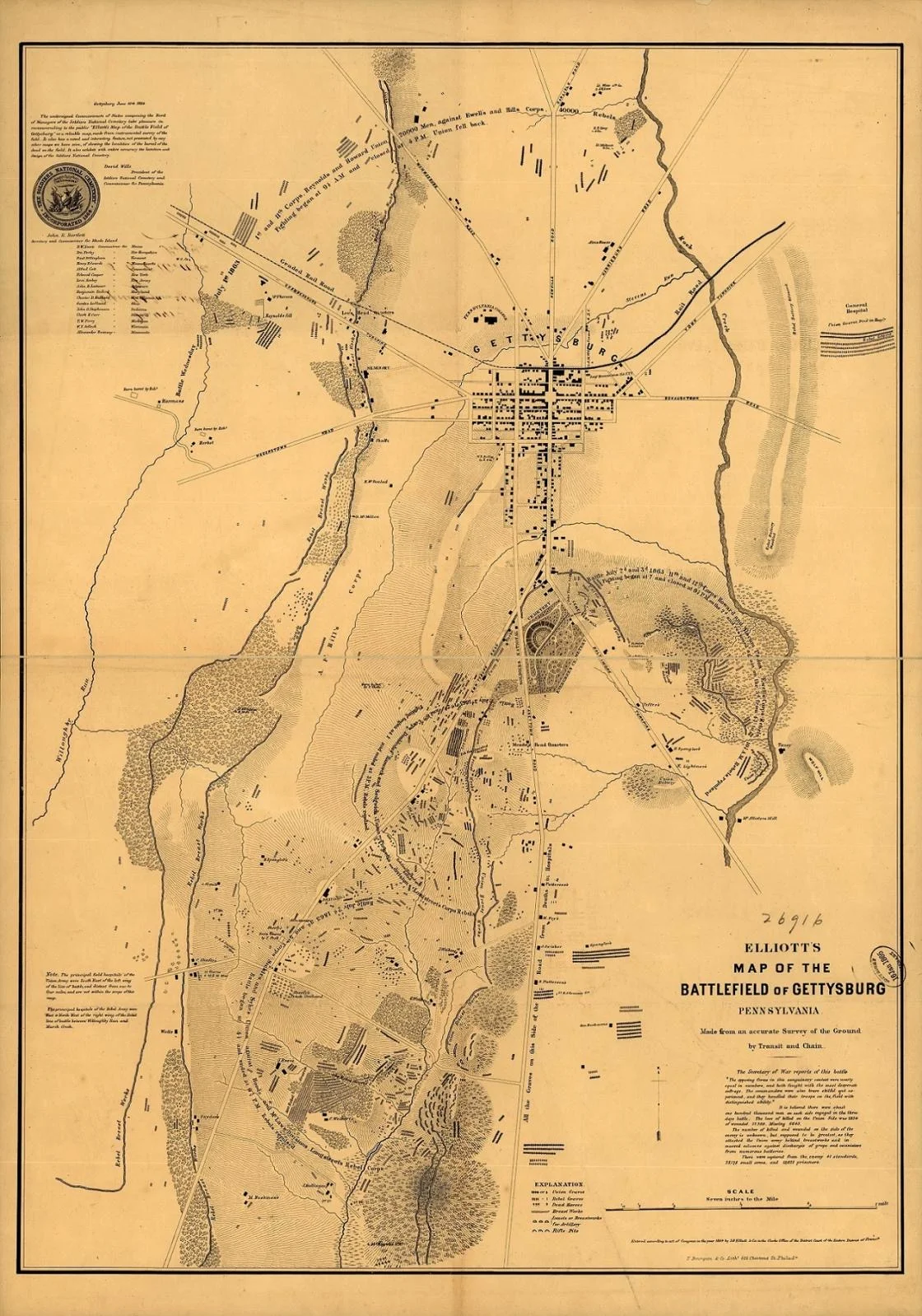
They were referred to as 'ghoul maps.' This example of the Gettysburg battlefield was sold as a souvenir. There is one from Antietam, as well.
The maps were based on both soldier's & contractor's reports. Because in the West the Union army almost exclusively universally retain command of the battle space, it was commonplace to hire civilian contractors paid a set rate / burial to collect & inter the dead.
The orderly arrangement of the fallen Confederates is testimony to the intensity of losses along the stout fence from two day's attacks stopped beside the Emmitsburg Road.
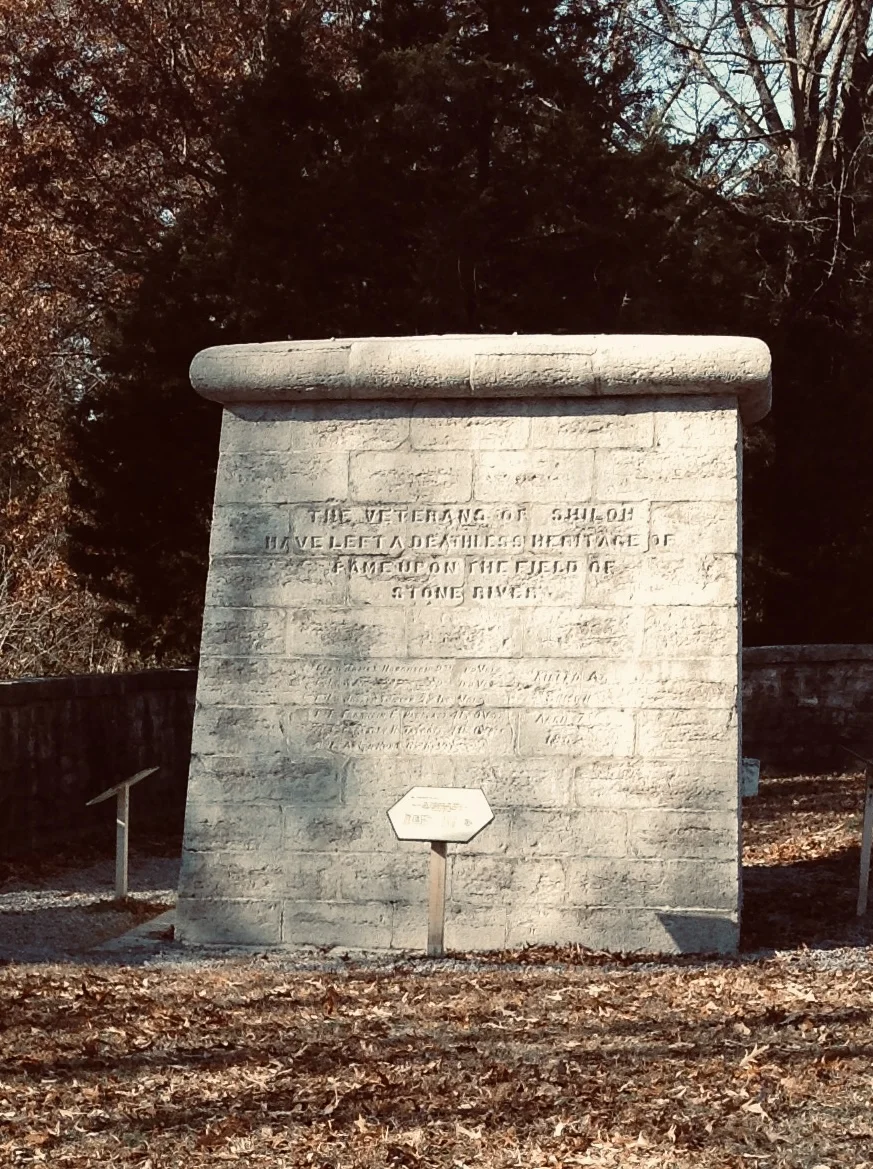
The Hazen Brigade Monument at Stones River was commissioned by survivors of the b battle for the Round Forest on Dec 32, 1862. Limestone headstones & a stout stone fence were constructed by immigrant German stone masons. They carved their names on the near by limestone cliff.
During renovations about ten years ago it was discovered that the headstones did not, in fact, mark burials. Instead, the trench burial where Hazen's men stood their ground runs under the monument.
In Gilpin-Faust's 'This Republic of Suffering; Death During The Civil War' she documents the creation of three cemeteries by order of General Thomas, commander of the Department of the Cumberland at Nashville, Murfreesboro & Chattanooga. At his order, there was no segregation of men by states or race.
By chance the 111th USCTI was guarding the stretch of N&CRR chosen for the site of Stones River National Cemetery. They were put under the command of army Chaplin William Earnshaw. Their mandate was to go out seventy miles & collect the remains of soldiers buried at hospital sites, skirmishes etc.
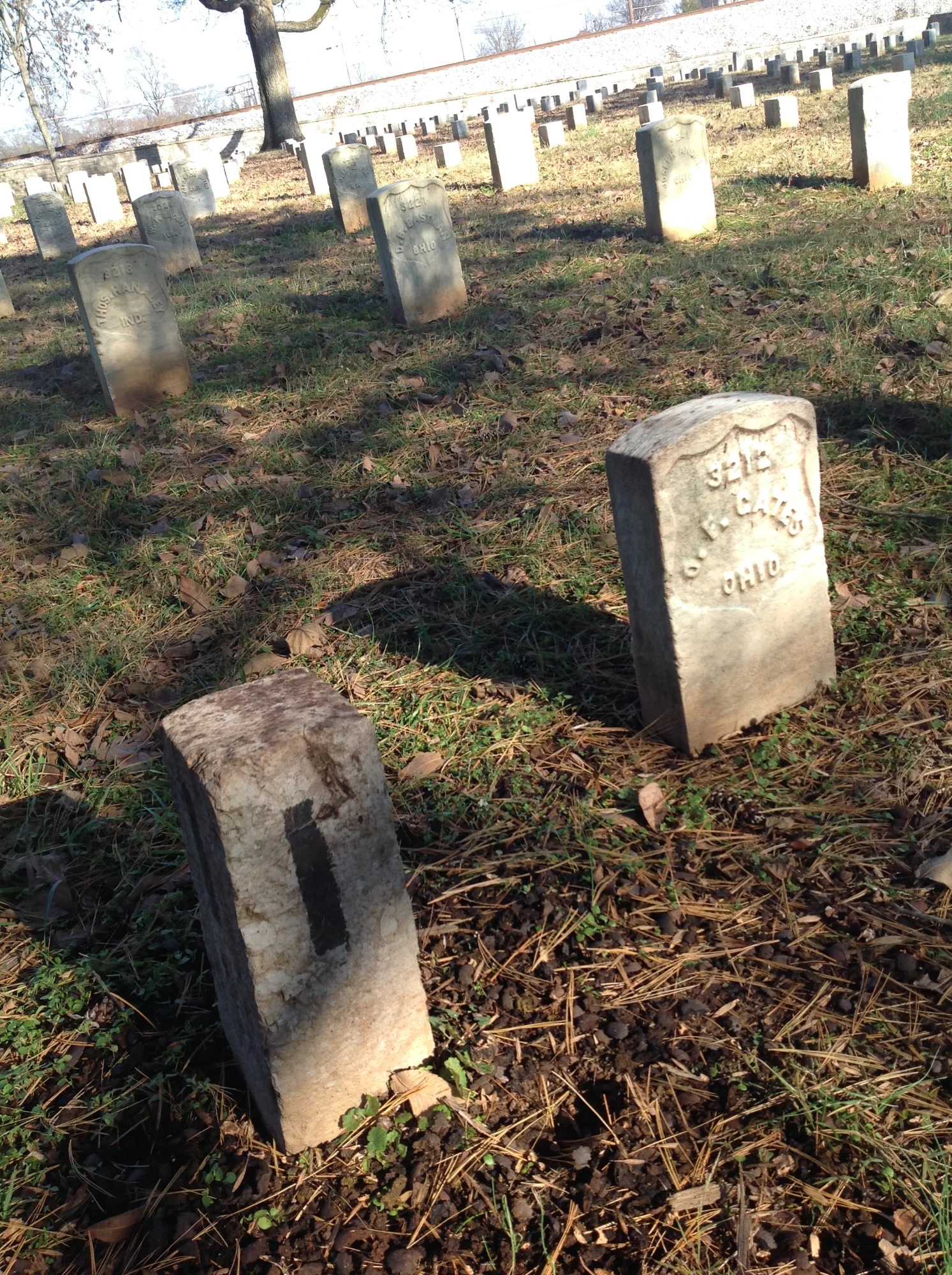
The accompanying photo is of section I, the southeast corner of the cemetery. It contains remains of the Union dead from Franklin.
After the battle the Union casualties had been later out in the ditch in front of the earthworks & the berm shoveled down over them. For reasons too convoluted to explain, by the time the 111th came to collect them, they had been moved three times.
As a result, almost all of the graves have square markers with numbers on them marking the graves of unknowns.
Unknown did not mean that the soldier's death was unrecorded. At what is now Central Magnet School in Murfreesboro (+/-) 300 remaines were collected from the site of a hospital.
When a soldier who died at a hospital was buried by his comrades, careful record of it was kept in a brigade cemetery.
"Mr. Sober,
Dear Sir,
I must write you the terrible news that Spencer is dead. He died at 3:00 in Hospital #8 in Murfreesboro. He was not well & should not have come here until the spring. We buried him at the brigade headquarters. He had the lung fever. I have his things & will express them when I can.
Yours, Orlando Demmic
When the 111th collected Spencer's remains, very careful tract was kept of the identification.
I can testify personally that a patient of a serious, life threatening injury injury arrives at the emergency room, in short order they are naked. The same was true of soldiers at the "almost twenty" hospitals in Murfreesboro. Record was kept of the soldier's death. Exactly which body was which in the often hasty trench burial was not a priority.
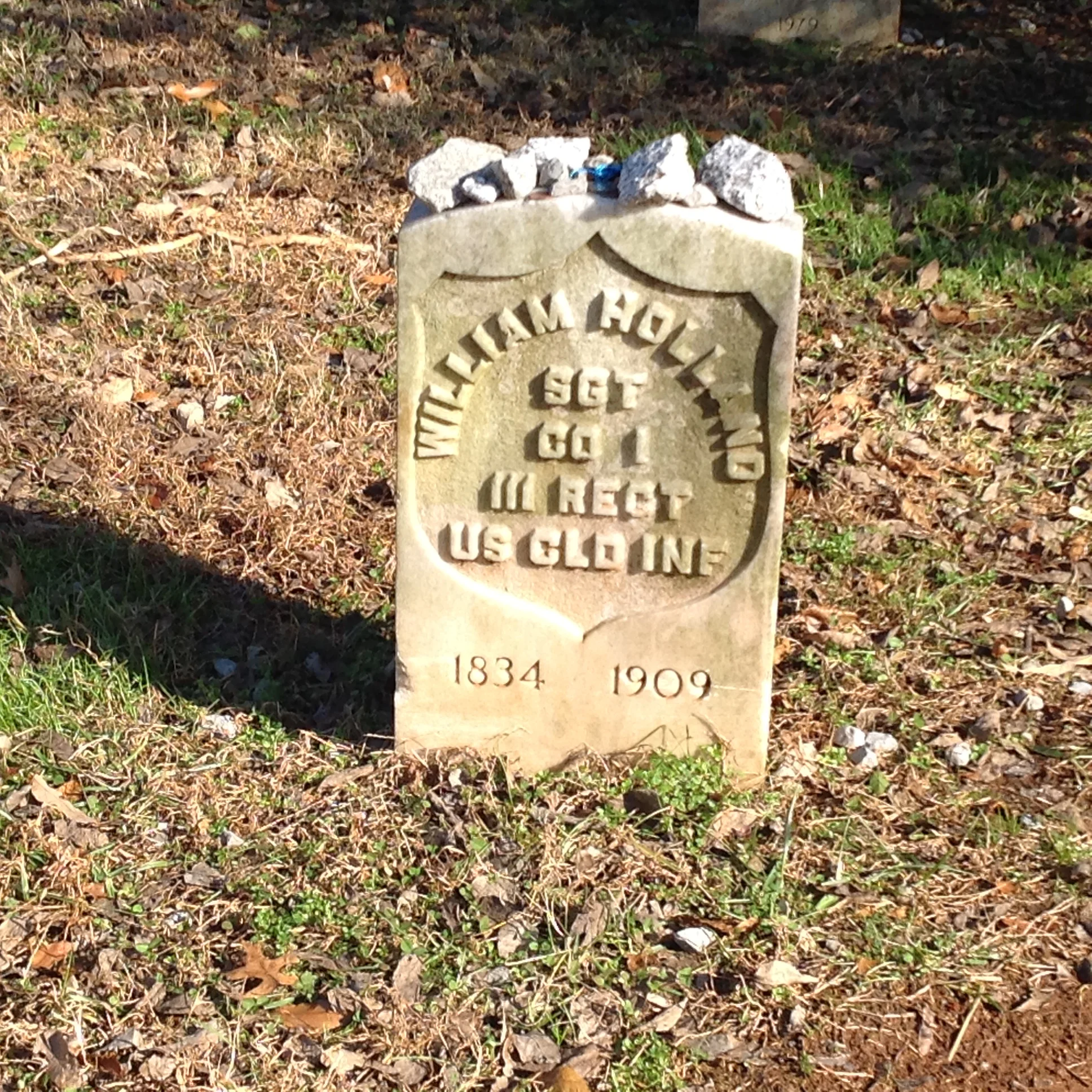
Sargent William Holland of the 111th USCTI's stone sits to the north of the Hazen Brigade Monument's southern wall. For decades it was the object of curiosity & speculation. Why was a lone USCT buried in such a place?
William Holland was captured by N. B. Forest. He was gifted gifted to the brigade surgeon. When Forrest's cavalry & Bate's infantry were sent to Murfreesboro after the Battle of Franklin, they suffered a route when the garrison of Fortress Rosecrans sallied. In the confusion following the Battle of the Cedars, Holland escaped.
By chance, his regiment was the very 111th that was guarding the RR when Chaplin Earnshaw came calling. After the war, Holland became the first head grounds keeper. He was buried in his own ground on the farm he owned adjacent to the Hazen Brigade Monument.
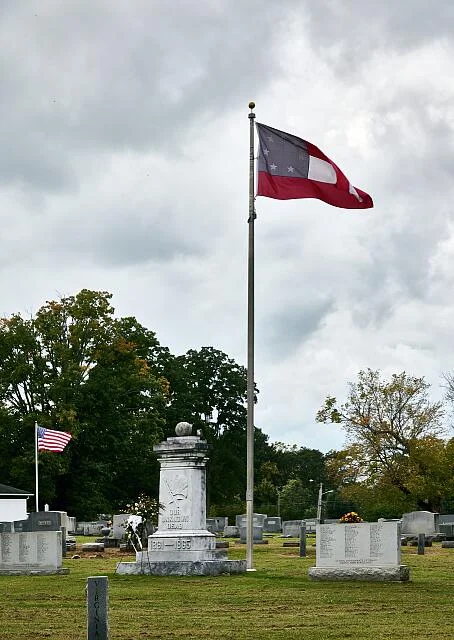
The Confederate Circle in Murfreesboro's Evergreen Cemetery tells a story of how the identity of soldier's remains were lost.
Following General Thomas' example, a committee of local ladies purchased a plot of ground & hired experienced veterans of the 111th to collect the remains of Confederates from the surrounding country.
As with the identified Union dead, careful tract was kept & the graves clearly marked.
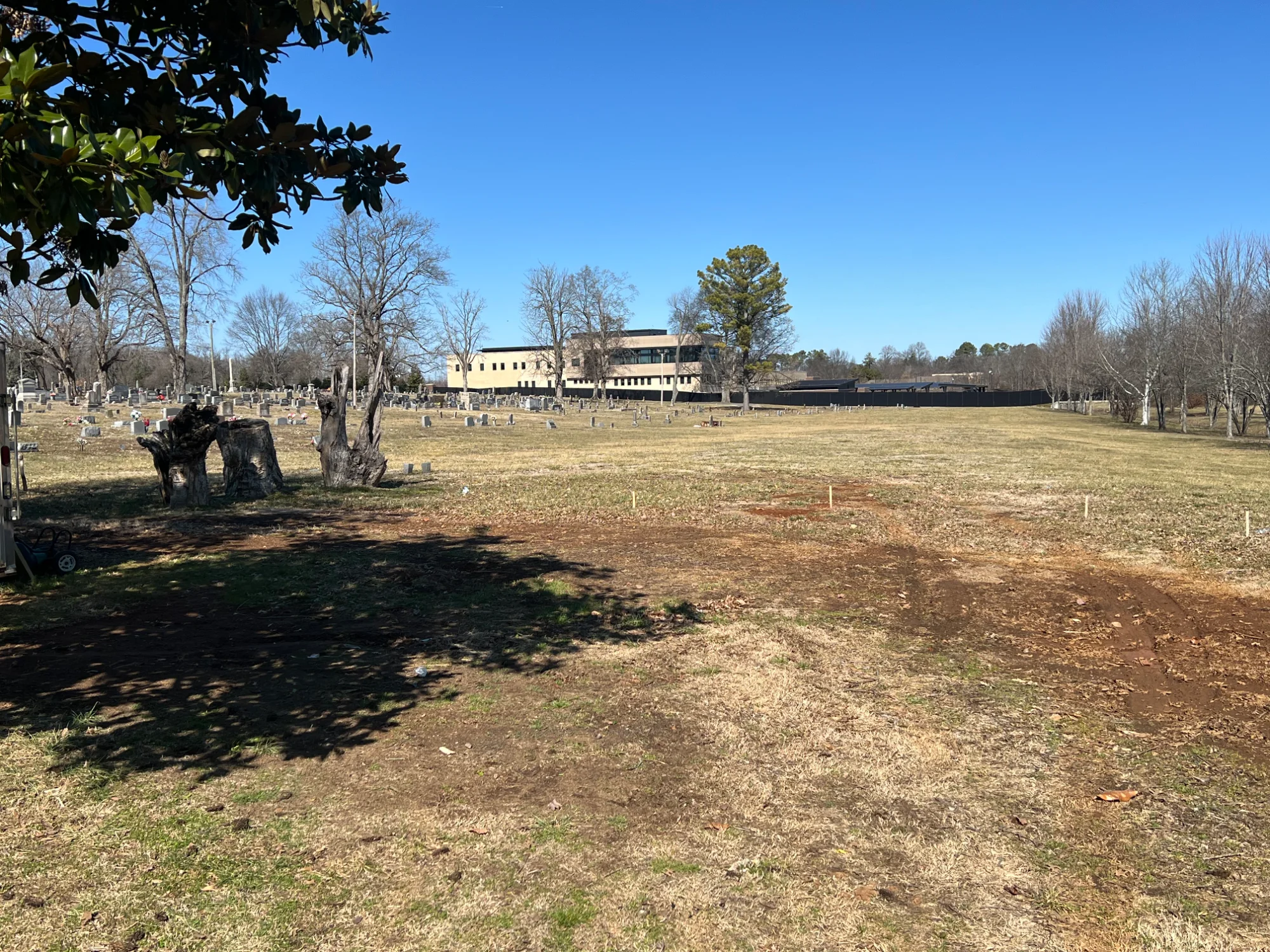
When the Maney family opened the land next to the Oaklands Plantation unmarked slave cemetery after the war, local white families bought family plots. They often disinterred relatives & reburied the remains there.
In a saga of a group of men deciding to create a monumental burial, it was decided to remove the gathered Confederate dead to the new cemetery.
Much to their shock & surprise the ladies society that owned the land on which the collected Confederate dead were laid objected to the relocation. After a hoo-haa too convoluted to explain here, the men got their way.
However, the rate / grave quoted by surviving 111th veterans skilled in such work was too dear. To the collective & long remembered fury of the ladies, the cut rate workers made no attempt to keep tract of the identified remains.
As a result, (+/-) 2,000 Confederate dead share a mass grave. Later generations put up a marker listing the names of known internees.
For the first time, after the Battle of Chickamauga the Army of Tennessee held the ground on which the battle was fought. When Cumberlander's returned to the battlefield after Missionary Ridge & the route of Bragg's army they were shocked & outraged at what the discovered. Contrary to all military custom & prudent sanitation, their camaraderie bodies had been left were the lay. Wild animals & farmer's pigs had feasted on the bounty. What could be collected was eventually interred on Orchard Knob.
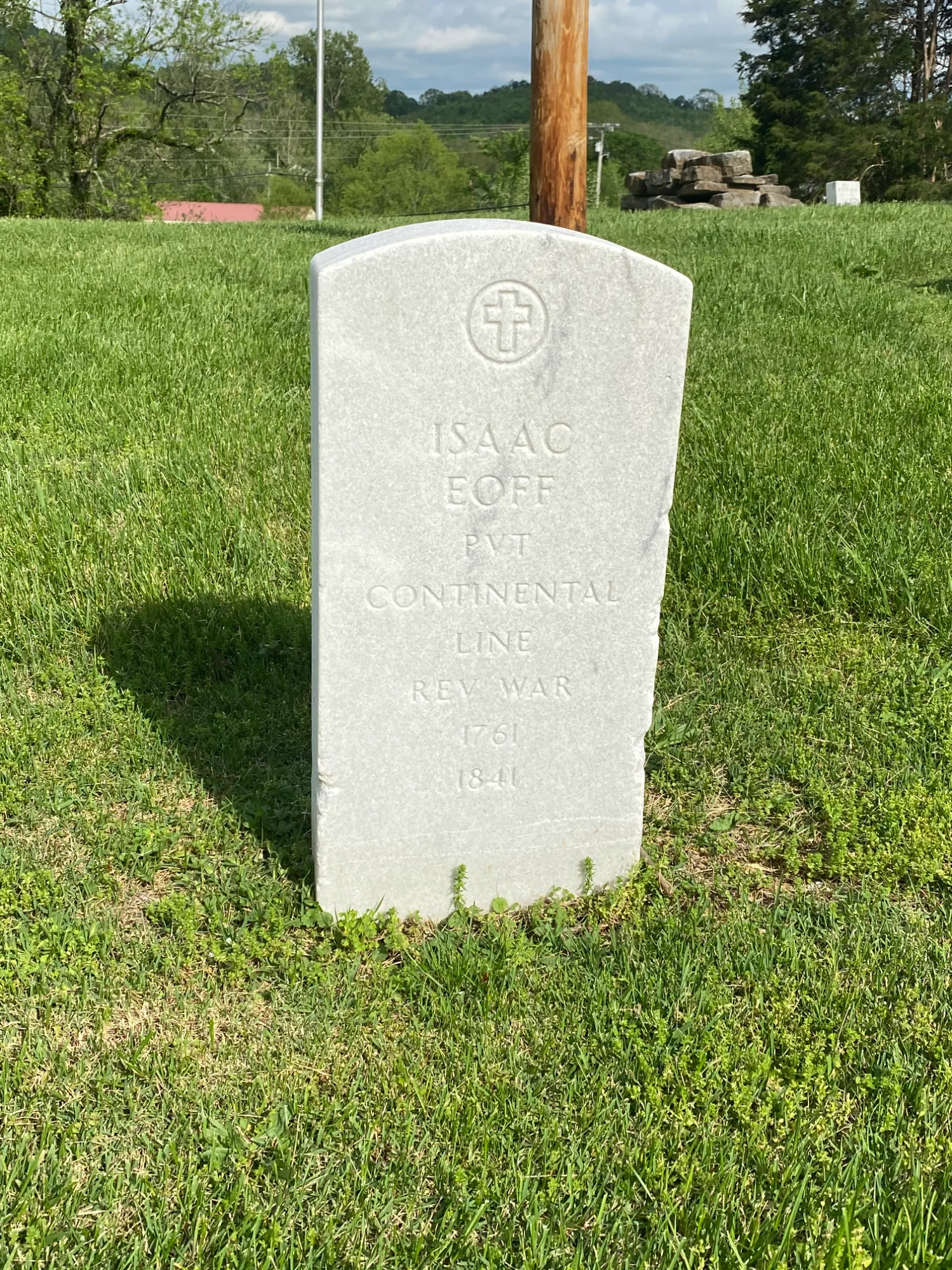
At the site of an existing cemetery containing the graves of Revolutionary War veterans, a local farmer reinterred the collected remains of Confederate soldiers.
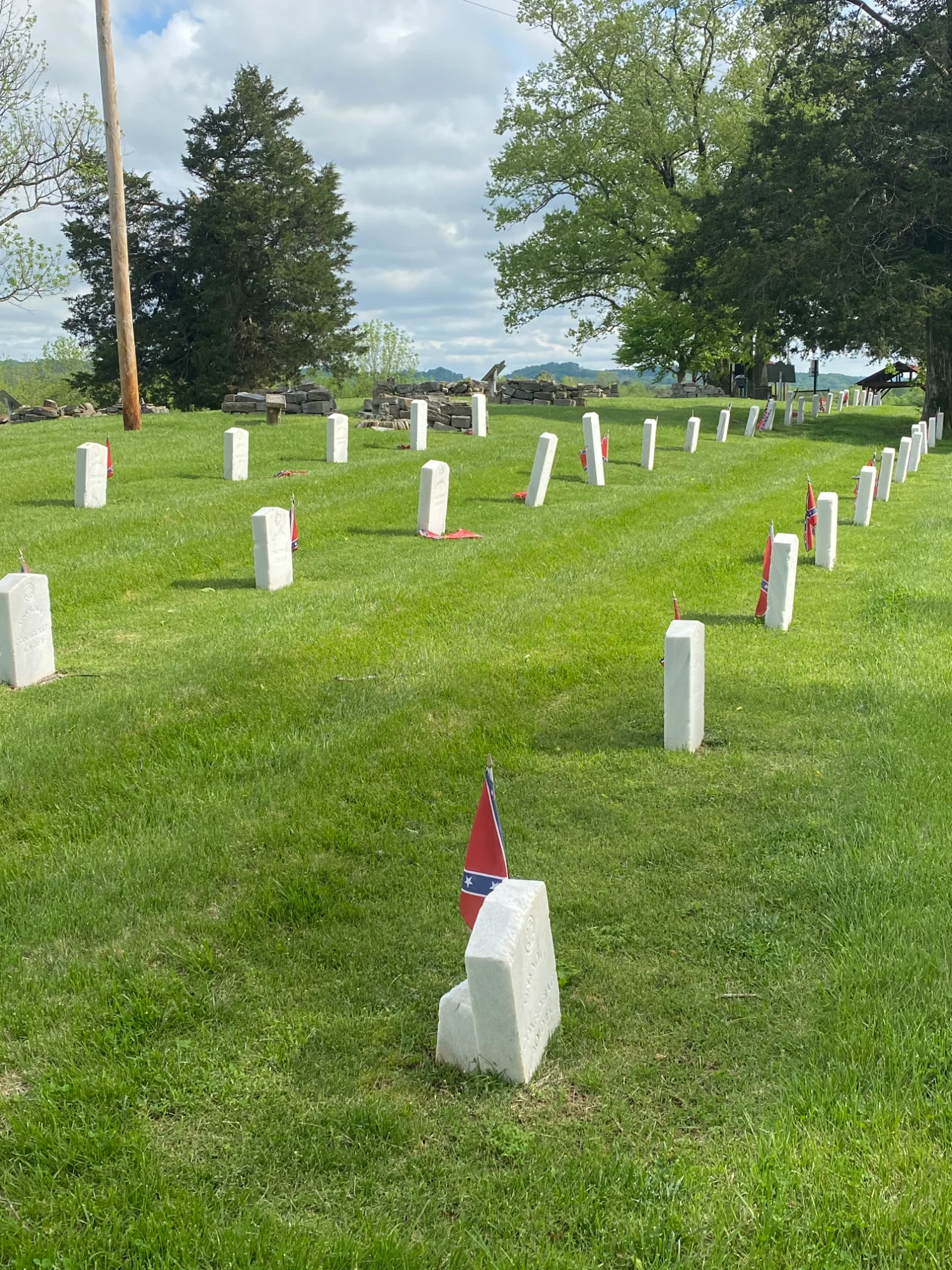
15 miles southeast of Murfreesboro, Hoover's Gap / Beech Grove was the site of Wilder's Brigade's first use of repeating rifles in the defeat of Bates brigade on July 23rd 1863, the opening day of the Tullahoma Campaign.
The U.S. Sanitary Commission kept meticulous daily reports of soldiers in Union hospitals. When they died, it was the sanitarians who contacted families. Many of the deceased were embalmed & returned home burial. Those that were not at minimum had their deaths recorded & grave sites identified when possible.
The history of the soldiers buried at Stones River is very much a part of the narrative that rangers & living history volunteers keep alive. The 'Hallowed Ground Candlelight Tour' of Stones River National Battlefield' is one of the longest continuously run living history programs in the National Park Service.
They were referred to as 'ghoul maps.' This example of the Gettysburg battlefield was sold as a souvenir. There is one from Antietam, as well.
The maps were based on both soldier's & contractor's reports. Because in the West the Union army almost exclusively universally retain command of the battle space, it was commonplace to hire civilian contractors paid a set rate / burial to collect & inter the dead.
The orderly arrangement of the fallen Confederates is testimony to the intensity of losses along the stout fence from two day's attacks stopped beside the Emmitsburg Road.
The Hazen Brigade Monument at Stones River was commissioned by survivors of the b battle for the Round Forest on Dec 32, 1862. Limestone headstones & a stout stone fence were constructed by immigrant German stone masons. They carved their names on the near by limestone cliff.
During renovations about ten years ago it was discovered that the headstones did not, in fact, mark burials. Instead, the trench burial where Hazen's men stood their ground runs under the monument.
In Gilpin-Faust's 'This Republic of Suffering; Death During The Civil War' she documents the creation of three cemeteries by order of General Thomas, commander of the Department of the Cumberland at Nashville, Murfreesboro & Chattanooga. At his order, there was no segregation of men by states or race.
By chance the 111th USCTI was guarding the stretch of N&CRR chosen for the site of Stones River National Cemetery. They were put under the command of army Chaplin William Earnshaw. Their mandate was to go out seventy miles & collect the remains of soldiers buried at hospital sites, skirmishes etc.
The accompanying photo is of section I, the southeast corner of the cemetery. It contains remains of the Union dead from Franklin.
After the battle the Union casualties had been later out in the ditch in front of the earthworks & the berm shoveled down over them. For reasons too convoluted to explain, by the time the 111th came to collect them, they had been moved three times.
As a result, almost all of the graves have square markers with numbers on them marking the graves of unknowns.
Unknown did not mean that the soldier's death was unrecorded. At what is now Central Magnet School in Murfreesboro (+/-) 300 remaines were collected from the site of a hospital.
When a soldier who died at a hospital was buried by his comrades, careful record of it was kept in a brigade cemetery.
"Mr. Sober,
Dear Sir,
I must write you the terrible news that Spencer is dead. He died at 3:00 in Hospital #8 in Murfreesboro. He was not well & should not have come here until the spring. We buried him at the brigade headquarters. He had the lung fever. I have his things & will express them when I can.
Yours, Orlando Demmic
When the 111th collected Spencer's remains, very careful tract was kept of the identification.
I can testify personally that a patient of a serious, life threatening injury injury arrives at the emergency room, in short order they are naked. The same was true of soldiers at the "almost twenty" hospitals in Murfreesboro. Record was kept of the soldier's death. Exactly which body was which in the often hasty trench burial was not a priority.
Sargent William Holland of the 111th USCTI's stone sits to the north of the Hazen Brigade Monument's southern wall. For decades it was the object of curiosity & speculation. Why was a lone USCT buried in such a place?
William Holland was captured by N. B. Forest. He was gifted gifted to the brigade surgeon. When Forrest's cavalry & Bate's infantry were sent to Murfreesboro after the Battle of Franklin, they suffered a route when the garrison of Fortress Rosecrans sallied. In the confusion following the Battle of the Cedars, Holland escaped.
By chance, his regiment was the very 111th that was guarding the RR when Chaplin Earnshaw came calling. After the war, Holland became the first head grounds keeper. He was buried in his own ground on the farm he owned adjacent to the Hazen Brigade Monument.
The Confederate Circle in Murfreesboro's Evergreen Cemetery tells a story of how the identity of soldier's remains were lost.
Following General Thomas' example, a committee of local ladies purchased a plot of ground & hired experienced veterans of the 111th to collect the remains of Confederates from the surrounding country.
As with the identified Union dead, careful tract was kept & the graves clearly marked.
When the Maney family opened the land next to the Oaklands Plantation unmarked slave cemetery after the war, local white families bought family plots. They often disinterred relatives & reburied the remains there.
In a saga of a group of men deciding to create a monumental burial, it was decided to remove the gathered Confederate dead to the new cemetery.
Much to their shock & surprise the ladies society that owned the land on which the collected Confederate dead were laid objected to the relocation. After a hoo-haa too convoluted to explain here, the men got their way.
However, the rate / grave quoted by surviving 111th veterans skilled in such work was too dear. To the collective & long remembered fury of the ladies, the cut rate workers made no attempt to keep tract of the identified remains.
As a result, (+/-) 2,000 Confederate dead share a mass grave. Later generations put up a marker listing the names of known internees.
For the first time, after the Battle of Chickamauga the Army of Tennessee held the ground on which the battle was fought. When Cumberlander's returned to the battlefield after Missionary Ridge & the route of Bragg's army they were shocked & outraged at what the discovered. Contrary to all military custom & prudent sanitation, their camaraderie bodies had been left were the lay. Wild animals & farmer's pigs had feasted on the bounty. What could be collected was eventually interred on Orchard Knob.
At the site of an existing cemetery containing the graves of Revolutionary War veterans, a local farmer reinterred the collected remains of Confederate soldiers.
15 miles southeast of Murfreesboro, Hoover's Gap / Beech Grove was the site of Wilder's Brigade's first use of repeating rifles in the defeat of Bates brigade on July 23rd 1863, the opening day of the Tullahoma Campaign.
The U.S. Sanitary Commission kept meticulous daily reports of soldiers in Union hospitals. When they died, it was the sanitarians who contacted families. Many of the deceased were embalmed & returned home burial. Those that were not at minimum had their deaths recorded & grave sites identified when possible.
The history of the soldiers buried at Stones River is very much a part of the narrative that rangers & living history volunteers keep alive. The 'Hallowed Ground Candlelight Tour' of Stones River National Battlefield' is one of the longest continuously run living history programs in the National Park Service.
Last edited:
RedRover
Captain
- Joined
- Dec 16, 2019
I think the Union Army could have done better in this area.
Granted. But it did better on this score of what we call today "graves registration" than any other army in history. Of 10,000 dead buried at Marietta National Cemetery, a large number of them combat deaths, over 7,000 are identified.
Andersonville Cemetery has large numbers of identified dead, principally thanks to the labors of the Union prisoners themselves. And even at Gettysburg, the National Cemetery's 3,512 total Union interments, only 979 graves are unknowns.
That wasn't always possible of course.
But anyways, in previous wars, the dead were not marked very well individually. And the Civil War Union fatalities, have an identified grave/burial rate over half, which is unprecedented.
Similar in Europe, fought over for centuries before the 1850s, where mass graves awaited the battle dead. Maybe at best a general monument on the field. For example from Waterloo in 1815...
Not much different in Roman times...
Anyways, during 1861-62 the Army and Congress acted to provide, so far as possible, a suitable grave, identified where possible, to each deceased soldier of the republic...
Rhea Cole
Colonel
- Joined
- Nov 2, 2019
- Location
- Murfreesboro, Tennessee
There is a reason why so many soldier's graves cannot be found or are discovered empty by archeologists.
Ask yourself, what do Waterloo & The Wilderness battlefields have in common?
The answer is the absence of archeological discoveries of human remains. A paltry number of the thousands of soldiers buried in the small battle space at Waterloo have been excavated by archeologists. The same can be said of The Wilderness.
The same thing happened to the mountains of buffalo bones .
Link:

 theconversation.com
During the 19th Century bonemeal was an essential source of fertilizer.
Link:
The Wilderness was aptly named. Due to the dense forest thousands of men died in obscurity. Often a body was covered in bracken & all but invisible within days.
The huge piles of disarticulated bones gathered by Union veterans was viewed as a cornucopia by professional bone picketers.
Link:

 npsfrsp.wordpress.com
As we contemplate the hallowed dead interred in holy ground that is profoundly meaningful to us, we must confront a stark reality. The minerals locked in dead soldier's bones was a valuable commodity.
Link:
 www.sciencefocus.com
Ask yourself, what do Waterloo & The Wilderness battlefields have in common?
The answer is the absence of archeological discoveries of human remains. A paltry number of the thousands of soldiers buried in the small battle space at Waterloo have been excavated by archeologists. The same can be said of The Wilderness.
The same thing happened to the mountains of buffalo bones .
Link:
Historical photo of mountain of bison skulls documents animals on the brink of extinction
Historical photographs of bison extermination are a window into a history of relationships between humans, bison and the environment.
theconversation.com
During the 19th Century bonemeal was an essential source of fertilizer.
Link:
The Wilderness was aptly named. Due to the dense forest thousands of men died in obscurity. Often a body was covered in bracken & all but invisible within days.
The huge piles of disarticulated bones gathered by Union veterans was viewed as a cornucopia by professional bone picketers.
Link:
The Bone Collectors: Creation of Wilderness Cemetery #1
From Donald Pfanz (for an earlier post on Wilderness Cemetery #2, click here): [We are very happy to welcome Donald Pfanz to Mysteries and Conundrums. The following is the product of his extensive …
npsfrsp.wordpress.com
As we contemplate the hallowed dead interred in holy ground that is profoundly meaningful to us, we must confront a stark reality. The minerals locked in dead soldier's bones was a valuable commodity.
Link:
Were the bones of soldiers that died at the Battle of Waterloo sold as fertiliser? Probably, archaeologists say. - BBC Science Focus Magazine
Very few human remains have been found at the site of the conflict despite thousands of soldiers being killed.
www.sciencefocus.com
Thanks for this information. I have the burial cards for Philip from the government and the cards say that he was dug up in 1944. They noted that the only thing found on his body was a pocket comb. He was reinterred at Marietta shortly after that. It would be amazing if a wooden board survived 80 years, but it is possible.During the fighting about Kennesaw, there was a truce between the two armies, to allow them to collect and bury their dead between the lines.
View attachment 575122
View attachment 575124
The graves were marked by their friends...
View attachment 575123
The graves were marked with pieces of wood.
View attachment 575135
View attachment 575136
In 1865-66, a local family donated land for a cemetery nearby to reinter the battlefield dead. The US Military took up the bodies from the marked graves on the battlefield, and other points from Sherman's Atlanta campaign, etc. and reburied them there in what is now the Marietta National Cemetery. Over 7,000 of the bodies were named, and about 3,000 unnamed. This notice gives that Philip Dial was moved to the Marietta National Cemetery from Kennesaw Mountain...
View attachment 575125
His remains had been reinterred in the Marietta National Cemetery as of 1869 according to the Government...
View attachment 575127
View attachment 575126
From 1899, the Marietta National Cemetery near Kennesaw Mountain, some unnamed bodies found in the area were yet being interred there...
View attachment 575121
Yes, the 83d is a typo. I had a researcher get the paperwork from when his mother applied for his pension in 1886 and all his service records say 86th. Plus his name is on the 86th monument in Peoria. Thank you both for the help.I suspect the reference to him in the "83rd" is just a typo.
Reconstructed Rebel
Captain
- Joined
- Jun 7, 2021
The quote below refers to a more general means of determining the identity of the fallen, and this is a practice I have not seen referred to before. Were Confederate soldiers routinely buried this way?
We approached Thoroughfare Gap, passed the Bull Run battle fields where the half buried bodies were noticeable. An occasional skull protruded from a small heap of earth indicating the burial place of friend and foe, the former was laid with head any other way than south, the latter always south.
Source: page 170
We approached Thoroughfare Gap, passed the Bull Run battle fields where the half buried bodies were noticeable. An occasional skull protruded from a small heap of earth indicating the burial place of friend and foe, the former was laid with head any other way than south, the latter always south.
Source: page 170
Similar threads


- Replies
- 5
- Views
- 179

- Replies
- 0
- Views
- 223

- Replies
- 4
- Views
- 228
- Replies
- 0
- Views
- 169
Similar threads

- Replies
- 5
- Views
- 6
- Replies
- 14
- Views
- 15

- Learn About Us
- ►About CivilWarTalk
- ►Contact the Webmaster
- ►Meet the Staff
- ►Link to CivilWarTalk
- Join Our Community
- ►Register
- ►Browse Forums
- ►View Today's Discussions
- ►Search the Forum
- Get Help
- ►FAQ
- ►Student Guide
- ►Forum Rules & Etiquette
- ►Copyright / DMCA
 Bringing the