
Robert Gray
Sergeant Major
- Joined
- Jul 24, 2012
The Quaker Gun
by Stephanie Hagiwara
Historical Publications, Sep 18, 2022
"t was a favorite trick to run it out into the center of the road and go through the motions of loading a gun and pointing it at the enemy, who promptly stampeded, under the impression that we had a piece of artillery with us," said PVT Edgar Warfield of the 17th Va., [at] Munson's Hill, Va.
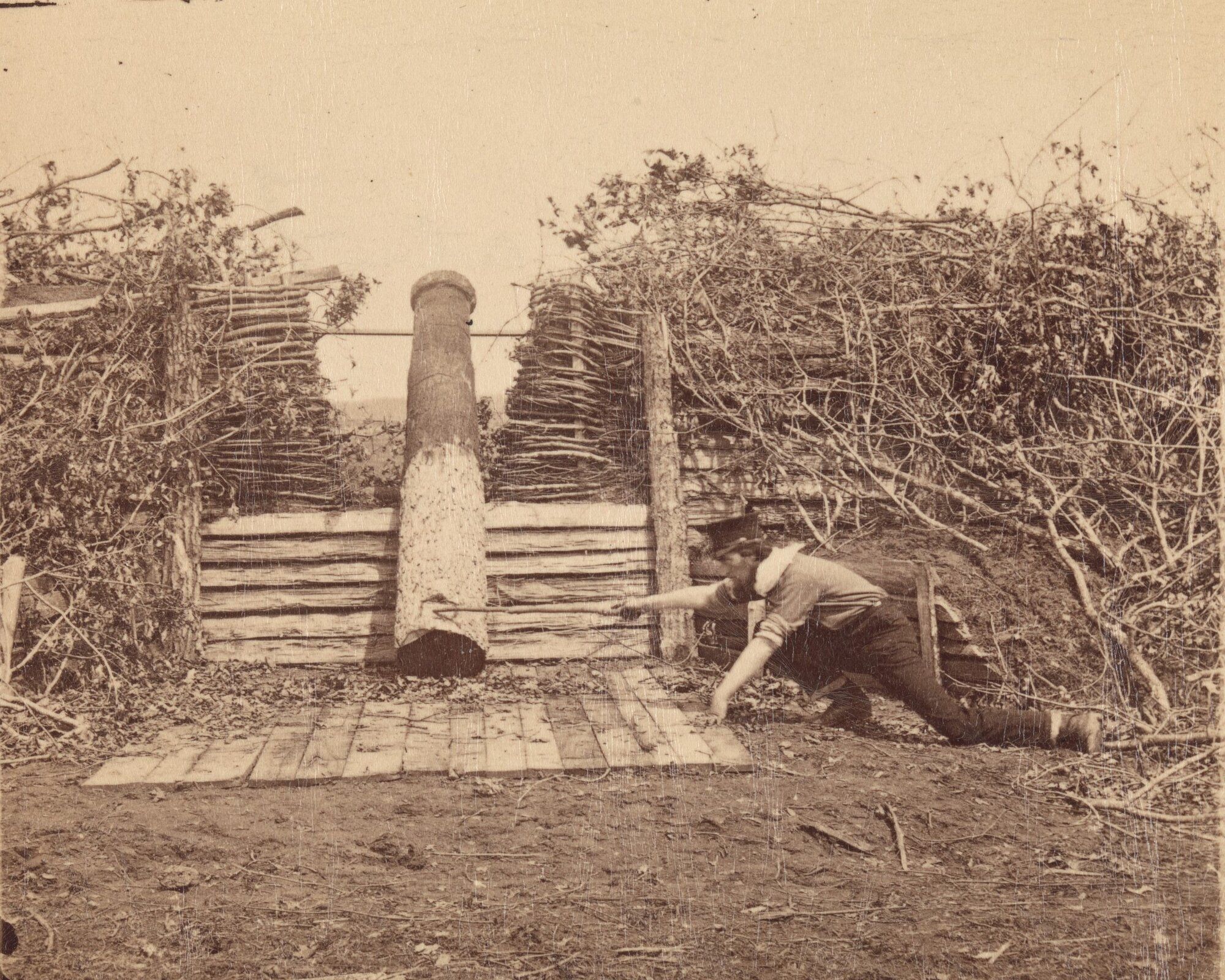
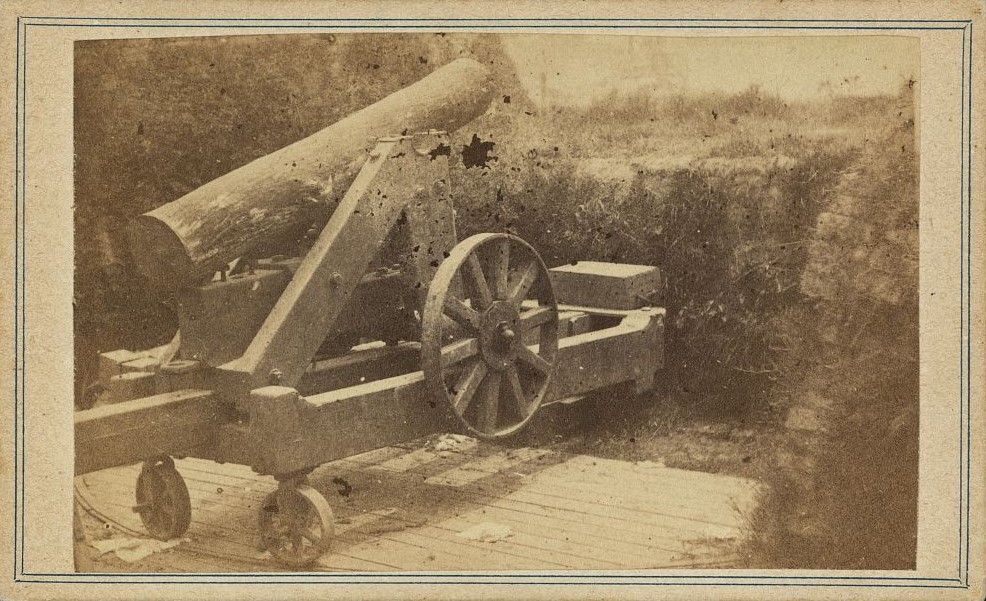
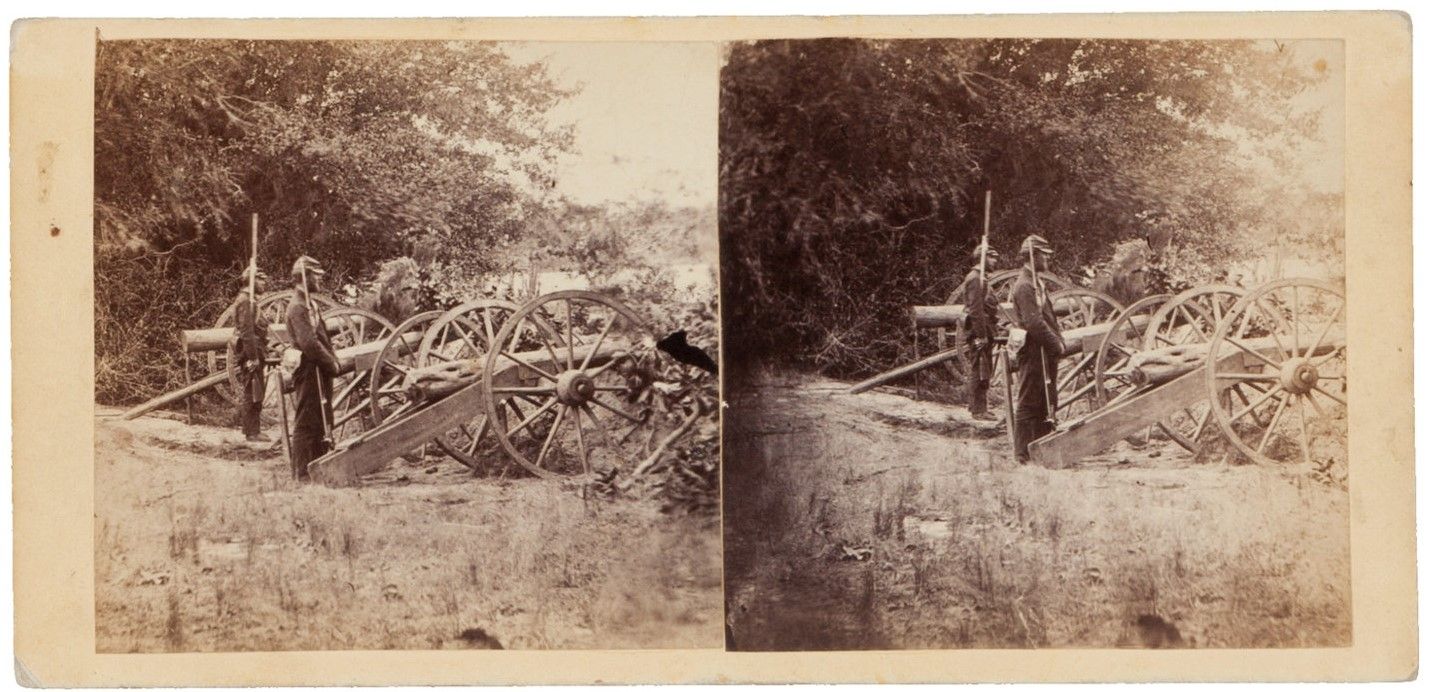
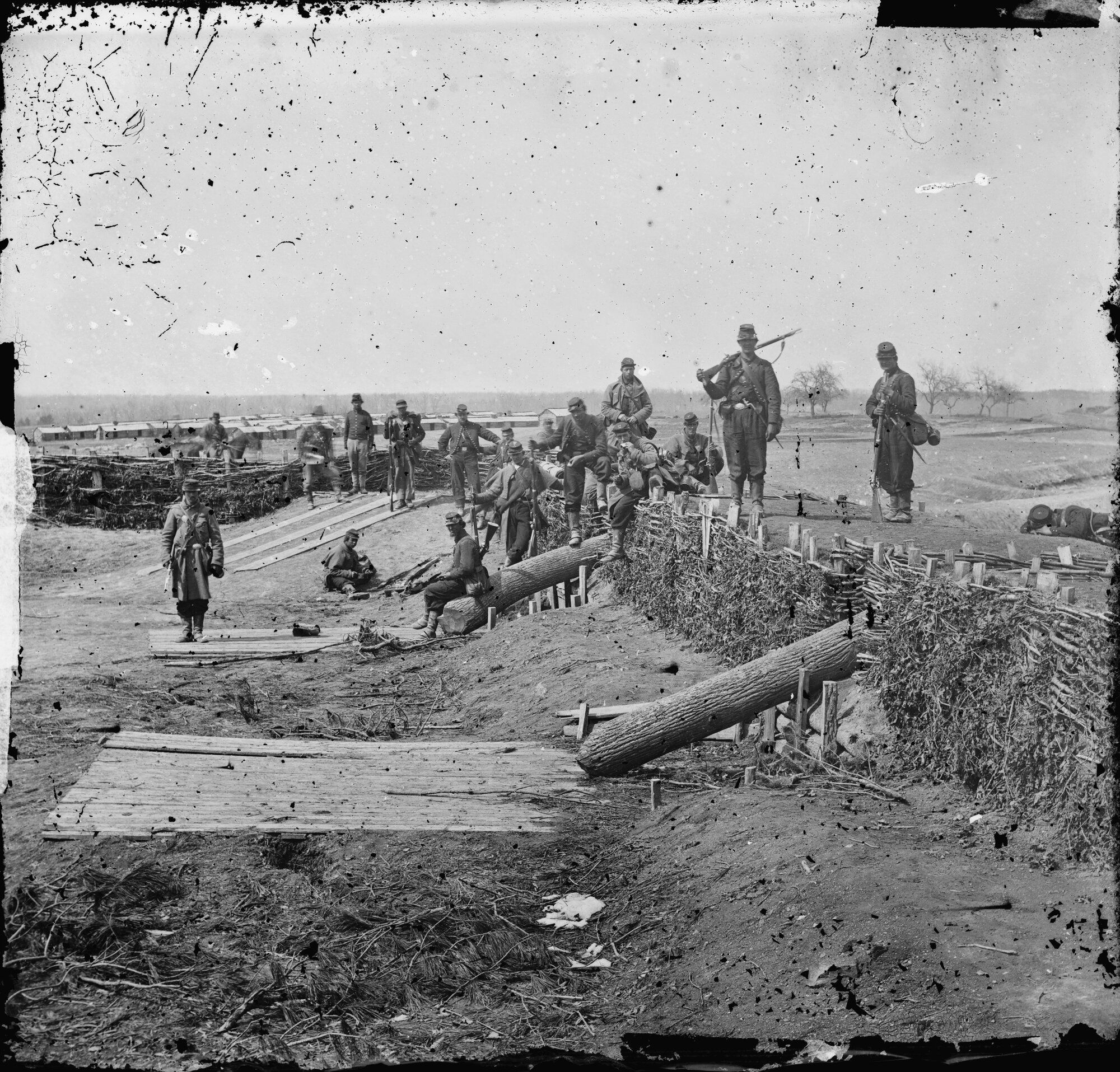
"Quaker Guns" – logs, usually painted black, have been used to deceive the enemy in North America since the American Revolution. Adding wheels to the log made it virtually impossible to discern it was a fake from a distance. During the Civil War, both sides, including civilians would hoodwink their foe using logs, stove-pipes, kegs and more.
After the First Battle of Manassas, Va. on July 21, 1861, Col. J.E.B. Stuart's troops ended up approximately six miles from Washington, D.C. at Munson's Hill, Va. While Gen. Joseph Johnston reorganized the Confederate Army of the Potomac; Stuart dug earthworks that appeared to be up to 15' high and erected signal stations. Lacking actual cannons, he placed Quaker Guns in the trenches.
As Gen. James Longstreet later recalled, "the authorities allowed me but one battery...we collected a number of old wagon-wheels and mounted on them stove-pipes of different calibre, till we had formidable-looking batteries, some large enough of calibre to threaten Alexandria, and even the National Capitol and Executive Mansion."
For the next two months, Gen. George McClellan drilled the Army of the Potomac at the capital. Thaddeus Lowe would send up his observation balloons to check out the situation. Stuart was promoted to the rank of Brig. Gen. The Confederates kept busy firing at anyone approaching on the broad, flat plain called Bailey's Crossings below and the observation balloons above.
As there weren't any major battles being fought, the newspapers focused on the Confederates above Washington, who alarmed everyone living in the capital by flying "an immense Confederate flag—the red, white, and blue stripes in which are at least five feet wide each—is the most prominent object upon the top of the eminence." According to the New York Times, it "was visible with a glass from the top of the shiphouse at the Navy-yard" in Washington, D.C.
Longstreet recollected, "[W]e were provokingly near Washington, with orders not to attempt to advance even to Alexandria." Johnson, on the other hand, considered the Munson's Hill position as defensively unsound and logistically difficult to keep supplied. McClellan, by twice sending out heavily armed reconnaissance parties to probe the rebel lines, may have convinced Johnson that enough was enough. It was time for the troops to fall back.
On September 28, 1861, the Confederates abandoned Munson's Hill, leaving behind their Quaker Guns. After having been terrified by logs, the North proceed to mock the army in the newspapers and by song. McClellan was the target of "The Bold Engineer" and the situation was declared a "humbug – worse that a Bull-run" in the song, "The Battle of the Stoves-Pipes." However, as the war proceeded, the newspapers began to defend the generals by pointing out that without risking being fired upon, it is difficult to discern logs from actual cannons.
Quaker guns were used not only to hoodwinked the enemy on the strength of a position but were deployed by Confederate Gen. P. T. Beauregard to rescue his army from capture. During the April – May 1862, Siege of Corinth, Miss., Union Gen. Henry Halleck's strategy was to keep his men in a mass, build entrenchments, have men move forward, dig more trenches at the new position and then repeat. As the federal troops crept towards him, Beauregard saw the writing in the mud. To save his army, he needed to employ every trick that he could think of to fool Halleck.
Beauregard ordered empty trains to continually rumble through the area. The soldiers cheered the trains as if reinforcements were arriving. Bands played festive music while fake deserters carried three days of rations as they slipped through Union lines. The buglers and drummers would convey "orders" from where each unit had camped. And dummies, with smiles on their faces, manned the Quaker guns that replaced the real cannons.
"The enemy is re-enforcing heavily, by trains, in my front and on my left," Gen. John Pope at the Siege of Corinth, wrote. "The cars are running constantly, and the cheering is immense every time they unload in front of me. I have no doubt, from all appearances, that I shall be attacked in heavy force at daylight."
Instead of attacking, by May 30, 1862, Beauregard's army had disappeared. Halleck didn't care. The capture of Corinth was a major victory. And he had done it all, he told his wife, "with very little loss of life...I have won the victory without the battle!"
Not only armies used Quaker guns. The citizens of Frankfurt, Ky. deployed two to save their town from Confederate Gen. John Hunt Morgan. During the war, Kentucky tried to maintain her neutrality. Frankfort, the capital, had the support of Union sympathizers but her Governor was a Confederate. On October 4, 1862, the Confederates decided to inaugurate Richard Hawes as the Confederate Governor of Kentucky. Union Gen. Don Carlos Buell broke up that party.
Before the Oct. 8, 1862, Battle of Perryville, Ky., Union Gen. Joshua Sill had hauled in two monster cannon to the hills of South Frankfort. When he left, he took his cannons with him. The citizens of Frankfort were understandably concerned. Rumor had it that Morgan was coming to town to destroy the turnpike bridge and more. Action had to be taken under the cover of night.
By morning, two empty beer kegs, covered with a tarpaulin stood in the spot that the cannons had so recently occupied. All the next day, Morgan's cavalry scouted the kegs but were reluctant to face their firepower. On Wednesday, the Confederates, "made a bold and daring charge on the 'tarpaulin beer keg battery', and captured it without the loss of a man." Morgan's cavalry took the town vacated by Sill. Their Captain acknowledged that he had been "sold by the Yanks."
In turn, the town was immediately abandoned by the Confederates. On Thursday, Oct. 9, 1862, Gen. Ebenezer Dumont's forces, using actual guns, swept the Confederates out of Frankfort. Our citizens, "and the two empty beer kegs had kept the Rebels from burning all the bridges around Frankfort," boasted the residents of Frankfort.
While these wooden "mock" guns had been named for the Quaker religious group, it is interesting to note that they too had deployed Quaker guns. During the War of 1812, the British would go to Reed's Beach, N.J., to fill their water casks and replenish their stores. The Quaker's belief in peace combined with the need to save their goods, resulted in a meeting to talk about their predicament. William Douglas, a ship's carpenter, suggested the use of Quaker guns. "A day later the shoreline of Reed's Beach was bristling with cannons peeping out from the underbrush." The British, after considering the situation, decided it was time to move on.
About the author
Stephanie Hagiwara is the editor for Civil War in Color.com and Civil War in 3D.com. She also writes a weekly column for History in Full Color.com that covers stories of photographs of historical interest from the 1850's to the present. Her articles can be found on Facebook, Tumblr and Pinterest.
Photo credits:
Library of Congress
Heritage Auctions
Metropolitan Museum Of Art
by Stephanie Hagiwara
Historical Publications, Sep 18, 2022
"t was a favorite trick to run it out into the center of the road and go through the motions of loading a gun and pointing it at the enemy, who promptly stampeded, under the impression that we had a piece of artillery with us," said PVT Edgar Warfield of the 17th Va., [at] Munson's Hill, Va.
"Quaker Guns" – logs, usually painted black, have been used to deceive the enemy in North America since the American Revolution. Adding wheels to the log made it virtually impossible to discern it was a fake from a distance. During the Civil War, both sides, including civilians would hoodwink their foe using logs, stove-pipes, kegs and more.
After the First Battle of Manassas, Va. on July 21, 1861, Col. J.E.B. Stuart's troops ended up approximately six miles from Washington, D.C. at Munson's Hill, Va. While Gen. Joseph Johnston reorganized the Confederate Army of the Potomac; Stuart dug earthworks that appeared to be up to 15' high and erected signal stations. Lacking actual cannons, he placed Quaker Guns in the trenches.
As Gen. James Longstreet later recalled, "the authorities allowed me but one battery...we collected a number of old wagon-wheels and mounted on them stove-pipes of different calibre, till we had formidable-looking batteries, some large enough of calibre to threaten Alexandria, and even the National Capitol and Executive Mansion."
For the next two months, Gen. George McClellan drilled the Army of the Potomac at the capital. Thaddeus Lowe would send up his observation balloons to check out the situation. Stuart was promoted to the rank of Brig. Gen. The Confederates kept busy firing at anyone approaching on the broad, flat plain called Bailey's Crossings below and the observation balloons above.
As there weren't any major battles being fought, the newspapers focused on the Confederates above Washington, who alarmed everyone living in the capital by flying "an immense Confederate flag—the red, white, and blue stripes in which are at least five feet wide each—is the most prominent object upon the top of the eminence." According to the New York Times, it "was visible with a glass from the top of the shiphouse at the Navy-yard" in Washington, D.C.
Longstreet recollected, "[W]e were provokingly near Washington, with orders not to attempt to advance even to Alexandria." Johnson, on the other hand, considered the Munson's Hill position as defensively unsound and logistically difficult to keep supplied. McClellan, by twice sending out heavily armed reconnaissance parties to probe the rebel lines, may have convinced Johnson that enough was enough. It was time for the troops to fall back.
On September 28, 1861, the Confederates abandoned Munson's Hill, leaving behind their Quaker Guns. After having been terrified by logs, the North proceed to mock the army in the newspapers and by song. McClellan was the target of "The Bold Engineer" and the situation was declared a "humbug – worse that a Bull-run" in the song, "The Battle of the Stoves-Pipes." However, as the war proceeded, the newspapers began to defend the generals by pointing out that without risking being fired upon, it is difficult to discern logs from actual cannons.
Quaker guns were used not only to hoodwinked the enemy on the strength of a position but were deployed by Confederate Gen. P. T. Beauregard to rescue his army from capture. During the April – May 1862, Siege of Corinth, Miss., Union Gen. Henry Halleck's strategy was to keep his men in a mass, build entrenchments, have men move forward, dig more trenches at the new position and then repeat. As the federal troops crept towards him, Beauregard saw the writing in the mud. To save his army, he needed to employ every trick that he could think of to fool Halleck.
Beauregard ordered empty trains to continually rumble through the area. The soldiers cheered the trains as if reinforcements were arriving. Bands played festive music while fake deserters carried three days of rations as they slipped through Union lines. The buglers and drummers would convey "orders" from where each unit had camped. And dummies, with smiles on their faces, manned the Quaker guns that replaced the real cannons.
"The enemy is re-enforcing heavily, by trains, in my front and on my left," Gen. John Pope at the Siege of Corinth, wrote. "The cars are running constantly, and the cheering is immense every time they unload in front of me. I have no doubt, from all appearances, that I shall be attacked in heavy force at daylight."
Instead of attacking, by May 30, 1862, Beauregard's army had disappeared. Halleck didn't care. The capture of Corinth was a major victory. And he had done it all, he told his wife, "with very little loss of life...I have won the victory without the battle!"
Not only armies used Quaker guns. The citizens of Frankfurt, Ky. deployed two to save their town from Confederate Gen. John Hunt Morgan. During the war, Kentucky tried to maintain her neutrality. Frankfort, the capital, had the support of Union sympathizers but her Governor was a Confederate. On October 4, 1862, the Confederates decided to inaugurate Richard Hawes as the Confederate Governor of Kentucky. Union Gen. Don Carlos Buell broke up that party.
Before the Oct. 8, 1862, Battle of Perryville, Ky., Union Gen. Joshua Sill had hauled in two monster cannon to the hills of South Frankfort. When he left, he took his cannons with him. The citizens of Frankfort were understandably concerned. Rumor had it that Morgan was coming to town to destroy the turnpike bridge and more. Action had to be taken under the cover of night.
By morning, two empty beer kegs, covered with a tarpaulin stood in the spot that the cannons had so recently occupied. All the next day, Morgan's cavalry scouted the kegs but were reluctant to face their firepower. On Wednesday, the Confederates, "made a bold and daring charge on the 'tarpaulin beer keg battery', and captured it without the loss of a man." Morgan's cavalry took the town vacated by Sill. Their Captain acknowledged that he had been "sold by the Yanks."
In turn, the town was immediately abandoned by the Confederates. On Thursday, Oct. 9, 1862, Gen. Ebenezer Dumont's forces, using actual guns, swept the Confederates out of Frankfort. Our citizens, "and the two empty beer kegs had kept the Rebels from burning all the bridges around Frankfort," boasted the residents of Frankfort.
While these wooden "mock" guns had been named for the Quaker religious group, it is interesting to note that they too had deployed Quaker guns. During the War of 1812, the British would go to Reed's Beach, N.J., to fill their water casks and replenish their stores. The Quaker's belief in peace combined with the need to save their goods, resulted in a meeting to talk about their predicament. William Douglas, a ship's carpenter, suggested the use of Quaker guns. "A day later the shoreline of Reed's Beach was bristling with cannons peeping out from the underbrush." The British, after considering the situation, decided it was time to move on.
About the author
Stephanie Hagiwara is the editor for Civil War in Color.com and Civil War in 3D.com. She also writes a weekly column for History in Full Color.com that covers stories of photographs of historical interest from the 1850's to the present. Her articles can be found on Facebook, Tumblr and Pinterest.
Photo credits:
Library of Congress
Heritage Auctions
Metropolitan Museum Of Art


 Bringing the