
 Forum Host
- Joined
- Aug 6, 2016
The "Red Jacket"
in the ice around Cape Horn - 1854
(Public Domain)
in the ice around Cape Horn - 1854
(Public Domain)
It's 1849 and a ship is loaded with prospectors hoping to strike it rich in the California Gold Rush. The captain heads south and in time he will need all his skill and experience as he guides her through some of the roughest waters found on the earth. The forty-niners paid anywhere $100 to $1,000 for the trip around Cape Horn. For some four to six months they're packed on the ship for the approximately 14,000 nautical mile journey.
Half-way through the journey came the hair-raising part of the trip as they approached Cape Horn. It's here where east meets west - the Atlantic meets the Pacific. At the tip of South America the ship navigates through dangerous waves, terrifying winds and extremely frigid temperatures that challenge the most experienced captains. It's been said that travelers became aware as they neared the Cape when they saw the fear in the deck hands on the ship as they began to "batten down the hatches". Depending on weather and water conditions the passage around the southern most tip of South America could take up to a month. If they make it through successfully, their journey is not done, they are only halfway from their final destination.
Future General William Sherman was a Lieutenant in 1846 when he received his next assignment in California.. He left New York on the U.S.S. Lexington. The ship carried a cannon making travel through Panama impossible so he was forced to travel around the Cape. Lieutenant Sherman arrived at the Monterey harbor on January 26, 1847 after one hundred and ninety-eight days at sea surviving the voyage around Cape Horn.
"See them all in sad repair - Demons dance everywhere
Southern gales, tattered sails - And none to tell the tales
All around old Cape Horn - Ships of the line, ships of the morn
Those who wish they'd never been born - They are the ghosts of Cape Horn" {7}
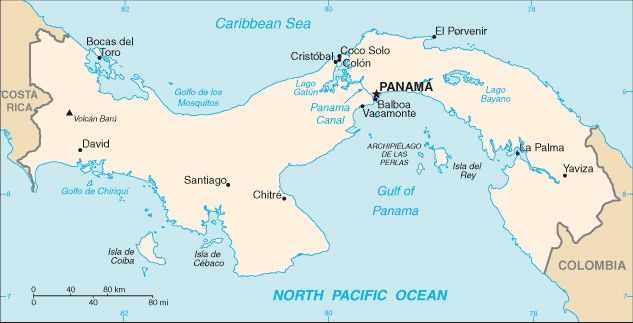
The Isthmus of Panama
February 1, 1849
(Public Domain)
Southern gales, tattered sails - And none to tell the tales
All around old Cape Horn - Ships of the line, ships of the morn
Those who wish they'd never been born - They are the ghosts of Cape Horn" {7}
The Isthmus of Panama
February 1, 1849
(Public Domain)
The Geary family is heading to San Francisco. John W has accepted the position of the United States Postmaster in California. He makes a fateful decision to reach the west coast in the hopes of saving time, he will journey via the Isthmus of Panama. By choosing this route, he will shave 8,000 nautical miles off his journey. The Isthmus of Panama was discovered as a "short-cut" some three hundred years earlier. However there are dangers in this part water/part land crossing. The jungles of Panama. Upon arrival they canoed up the Charges River then they rode mules through the jungle to reach the Pacific coast and Panama City. The problems they encountered: canoes, mules and waiting for ships arriving from San Francisco to take them the rest of the way; then there were the "other" problems yellow fever, malaria, the unpredictable natives and finally the local police department.
The Isthmus of Panama on the height of the Chagres River
An 1850 oil painting by Charles Christian Nahl
(Public Domain)
For Geary's wife Margaret Ann and son Eddie it proved to be an adventure of a lifetime. Upon arriving all went well until they reached Gorgona on the fourth day of their crossing. Now they need to obtain mules on their way to Panama City. They arrived safely while Mrs. Geary was said to be the first lady who made use of the side-saddle. Their problems grew while they were waiting for their steamer to take them to California. The Oregon was enroute having travelled around Cape Horn. While waiting Geary found a few rooms (near the jail) to house his young family. While there - they were robbed. Colonel Geary was a man of action so he went to the jail for information and as a veteran of the Mexican-American war his Spanish was quite excellent as he sought information from the thirteen guards. The guards pretended to ignore and intimidate him until Geary grabbed a musket for defense and through the chaos that ensued he discovered his stolen property at the jail. He contacted the American consul and pressed charges against the men which resulted in the public punishment of whipping the thieves. During his two weeks of waiting for the Oregon he managed to organize a Masonic society, preside over an association of Odd-Fellows, and assisted in the publication of the first English speaking newspaper in Panama. The family left Panama on March 13, 1849.
General Grant Crosses the Isthmus of Panama
In the summer of 1852, Ulysses Grant describes his crossing of Panama in his memoirs:
In the summer of 1852, Ulysses Grant describes his crossing of Panama in his memoirs:
"the Panama railroad was completed only to the point where it now crosses the Charges River. From there passengers were carried by boats to Gorgona, at which place they took mules for Panama, some twenty-five miles further. Those who travelled over the Isthmus in those days will remember that boats on the Charges River were propelled by natives not inconveniently burdened with clothing. These boats carried thirty to forty passengers each." [he continues discussing the large number of men crossing] "The unusual number of passengers that had come over on the steamer and the large amount of freight to pack, had created an unprecedented demand for mules. Some of the passengers paid as high as forty dollars for the use of a mule to ride twenty-five miles, when the mule would not have sold for ten dollars in that market. Meanwhile the cholera had broken out and men were dying every hour." [he concludes] "About one-seventh of those who left New York harbor with the 4th infanty of the 5th of July now lie buried on the Isthmus of Panama of on Flamingo island in Panama Bay." {5}
Crossing the Isthmus - 1855
(Public Domain)
Future Gettysburg Hero Travels Through
Winfield Scott Hancock made that journey in 1859 traveling with his wife and two children and emerged with his horror story:
"The journey was a nightmare. They sailed in an overcrowded steamer to the Isthmus of Panama, were detained at the Charges River during the transit of the isthmus in one hundred degree heat with no water for fourteen hours and were plagued with rumors that all the passengers on a preceding steamer had been massacred by the natives." [His wife went on to write] "We found the guards very insolent and unbearable but the gentlemen were fully armed and prepared for an assault." {6}
One-hundred-degree heat - with no water
(Public Domain)
On January 1, 1888 Ferdinand Marie, vicomte de Lesseps, a Frenchman and developer of the Suez Canal made the first attempt to build the Panama Canal. It only took a year before it all fell apart. Once again one of the biggest problems was disease - yellow fever and malaria. It would take Dr. Roland Ross and his discovery about the role of mosquitos and the tropical diseases before the Panama Canal would begin a robust period of building and development. On an interesting side-note, one of the leading pioneers in the study of tropical disease was Dr. William Gorgas (1854–1920) the son of Confederate General Josiah Gorgas (1818-1883). The Panama Canal's grand opening was planned for August 12, 1914 just a few weeks after the beginning of World War I. By then most people living in the United States were traveling by trains and the canal would be a boom for the shipping industry.
* * *
Sources
1. http://www.shoppbs.pbs.org/wgbh/amex/kids/goldrush/journey_capehorn.htm
2. https://www.maritimeheritage.org/ports/centralAmericaPanama.html
3. https://kids.britannica.com/students/article/California-Gold-Rush/631740
4. https://outrunchange.com/2016/12/05/travel-time-from-new-york-to-california-and-back-in-the-1850s/
5 Personal Memoirs of U.S. Grant
6. "Winfield Scott Hancock A Soldiers Life", by David M. Jordan
7. https://www.maritimeheritage.org/ports/southAmericaCapehorn.html


 Bringing the