
 Forum Host
- Joined
- Feb 5, 2017
From The National Museum of Civil War Medicine and Gettysburg National Military Park
#OnThisDay #gettysburg162
"In company with a young lady, Miss Julia Culp, a neighbor, I went into the court house with buckets of water and passed from one to another of the wounded, relieving them as best we could under the circumstances. Some of them so frightfully wounded that a lady could not go near them. These I gave water to, while she cared for those who were not so severely wounded. Quite a number of our townspeople were there doing everything they could in the relief work as the wounded were carried in."
- Daniel Skelly, "A Boy's Experiences During The Battle of Gettysburg"
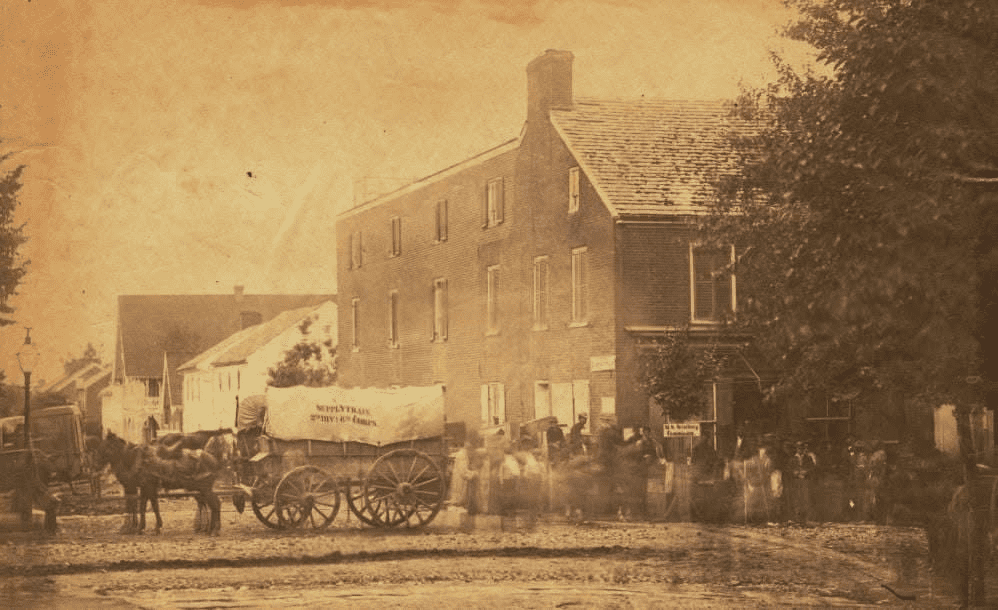
Photo: U.S. Sanitary Commission Headquarters at Gettysburg, New York Public Library
162nd Anniversary of the Battle of Gettysburg: July 1, 1863 - Daniel Skelly, After leaving the Fahnestock store, young Skelly went one block north "...to the McCurdy warehouse, just below the railroad, where the wounded were being brought in from the First Corps, then engaged west of the town. No provision had yet been made for their care in the town and they were laid on the floor. We remained there quite awhile, giving them water and doing what we could for their relief.
As the afternoon wore away, the churches and warehouses on Chambersburg, Carlisle, and York streets nearest the line of battle were filled with wounded. Then the court house as well as the Catholic, Presbyterian and Reformed churches and the school house in High Street received the injured soldiers, until those places had reached their capacity, when private homes were utilized, citizens volunteered to take them in and care for them.
In company with a young lady, Miss Julia Culp, a neighbor, I went into the court house with buckets of water and passed from one to another of the wounded, relieving them as best we could under the circumstances. Some of them so frightfully wounded that a lady could not go near them. These I gave water to, while she cared for those who were not so severely wounded. Quite a number of our townspeople were there doing everything they could in the relief work as the wounded were carried in."
#OnThisDay #gettysburg162
"In company with a young lady, Miss Julia Culp, a neighbor, I went into the court house with buckets of water and passed from one to another of the wounded, relieving them as best we could under the circumstances. Some of them so frightfully wounded that a lady could not go near them. These I gave water to, while she cared for those who were not so severely wounded. Quite a number of our townspeople were there doing everything they could in the relief work as the wounded were carried in."
- Daniel Skelly, "A Boy's Experiences During The Battle of Gettysburg"
Photo: U.S. Sanitary Commission Headquarters at Gettysburg, New York Public Library
162nd Anniversary of the Battle of Gettysburg: July 1, 1863 - Daniel Skelly, After leaving the Fahnestock store, young Skelly went one block north "...to the McCurdy warehouse, just below the railroad, where the wounded were being brought in from the First Corps, then engaged west of the town. No provision had yet been made for their care in the town and they were laid on the floor. We remained there quite awhile, giving them water and doing what we could for their relief.
As the afternoon wore away, the churches and warehouses on Chambersburg, Carlisle, and York streets nearest the line of battle were filled with wounded. Then the court house as well as the Catholic, Presbyterian and Reformed churches and the school house in High Street received the injured soldiers, until those places had reached their capacity, when private homes were utilized, citizens volunteered to take them in and care for them.
In company with a young lady, Miss Julia Culp, a neighbor, I went into the court house with buckets of water and passed from one to another of the wounded, relieving them as best we could under the circumstances. Some of them so frightfully wounded that a lady could not go near them. These I gave water to, while she cared for those who were not so severely wounded. Quite a number of our townspeople were there doing everything they could in the relief work as the wounded were carried in."


 Bringing the