
- Joined
- Oct 17, 2012
- Location
- Middle Tennessee
Expired Image Removed
130219-N-ZZ999-505 WASHINGTON (Feb. 19, 2013) In this depiction of the Battle of Hampton Roads provided by Naval History and Heritage Command, USS Monitor and CSS Virginia fire on each other. Monitor was a revolutionary vessel, designed by John Ericson, changing the course of the United States Navy. The Brooklyn-built Monitor made nautical history after being designed and assembled in 118 days, and then commissioned Feb. 25, 1862. Fighting in the first battle between two ironclads in the Battle of Hampton Roads on Mar. 9, 1862, the engagement marked the first time iron-armored ships clashed in naval warfare and signaled the end of the era of wooden ships. Its battle between the CSS Virginia proved that the age of wooden ships and sail were at an end. Though the Monitor's confrontation with the CSS Virginia ended in a draw, the Monitor prevented the Virginia from gaining control of Hampton Roads and thus preserved the Federal blockade of the Norfolk area. The Virginia, built on the carcass of the U.S. Navy frigate USS Merrimack, was the Confederate answer to the Union's ironclad ships. Months later, 16 Sailors were lost when the Monitor sank on Dec. 31, 1862 in a storm off Cape Hatteras, N.C. Her wreck was discovered in 1974 and is now a National Marine Sanctuary. (U.S. Navy photo courtesy of Naval History and Heritage Command/Released)
Monitor: A Naval Warfighting First
Story Number: NNS130305-13Release Date: 3/5/2013 4:24:00 PM
WASHINGTON (NNS) -- On March 8, 1862, a dark shape emerged from Gosport Shipyard: the beast that was the CSS Virginia was on the prowl, surrounded by smaller Confederate ships like a pack of wolves trailing after the alpha wolf. Union ships had surrounded the Norfolk area creating a blockade, but the wooden sloop of war Cumberland , and the frigate Congress, both sailing ships, sat in the water of the Elizabeth River on the windless day.
Which meant they were unable to move as the steaming iron-bound beast moved towards them.
Congress Sailors fired their cannons at the beast but the ship ignored them, the Congress's cannon shells simply bouncing off its iron hide like pebbles.
It stalked the more dangerous foe -- the Cumberland, which had heavier guns. A short cannon battle ensued, but, with no way to turn, Cumberland was an easy target.
Finally, Virginia dealt Cumberland a death blow, ramming a hole through its hull. The sinking Cumberland, decks red with blood from some of her 121 dead -- fallen to the numerous volleys of Confederate cannons - took the Virginia's cast iron ram imbedded inside her down into the depths.
"That ship goes down with her flag flying," Calhoun said. "The acting commanding officer is told to surrender his ship and he refuses. He becomes a national hero for doing that even though he lost the ship."
The iron beast turned its eyes on its other enemy. Congress had run aground in shallow water. The cannons and rifles of the CSS Virginia shredded the crew of Congress. As it finished off the ship, sending heated shot to burn Congress down to the waterline, the confederate warship moved back into the protection of the Gosport shipyard for the night to resupply.
In Washington D.C., news of the battle caused a panic in President Abraham Lincoln's staff. Secretary of War, William Stanton, was convinced that CSS Virginia would soon appear to bombard the city. Welles attempted to calm them, announcing the Monitor had arrived at Hampton Roads. But the new ironclad ship had never been tested in a fight.
As the next day dawned, the Virginia pulled out of the shipyard once more. Three ships had attempted to join its enemies when it came out the day before. All three had run aground, but, come morning, one was left, sitting helpless less than a half mile from the burning Congress. The Union ship Minnesota was ripe for picking.
As the Confederate warship steered towards the Minnesota, its Sailors noticed something strange. A small oddly shaped vessel had joined their prey in the water. But that wouldn't stop them from destroying the flagship.
Lt. John Worden, the Monitor's commanding officer, had received orders to protect the Minnesota at all costs and set out the evening before. The Monitor spent that night maneuvering the waters of Hampton Roads to get near to the Minnesota. It was 8 a.m. when the Monitor Sailors spotted the Confederate warship. Virginia aimed straight for the grounded Minnesota, firing its cannons.
It was time for the Monitor to act. Its cannons blazed, taking the black-iron beast in the side, shaking it to the core. Suddenly, it was as if no other ships were there, just two iron ships, circling and hitting like heavyweight boxers, struggling to punish one another.
The Monitor turned, gunners filling the cannons with new shells.
Guns from the black-iron beast blazed as it shot. One, two, three missed..."Krang!" The sound exploded inside the Monitor, shrieking into the Sailors ears.
Sailors inside the turret stumbled as the reverberations struck them, two who were leaning against the turret when the shell struck it fell to the floor stunned. But the Monitor's armor stopped any critical damage.
The Virginia fell silent as its cannons reloaded.
The Sailors inside the Monitor scrambled to their feet, striving to turn the turret, slowly bringing the confederate warship into their sights. The thunderous sound of the Dahlgren cannon half-deafened the crew as it spat out its payload.
The report of the shell catching the iron beast was like music to Monitor Sailors' ears, a small rent opening in its side.
But the Confederate ship was far from finished, and for hours volley after volley of ordnance fired back and forth. A game of cat and mouse was being played between the two ships with the Minnesota being the prize.
The USS Monitor, due to its small draft, was easily able to navigate the shallow waters around Hampton roads. The CSS Virginia, with a much larger draft, was limited in its movements, once running aground in the shallow water and taking all its energy to move back into the deeper channels.
Both the Monitor and Virginia sustained small damage, but neither could get the upper hand. It was shortly after noon when that changed.
"Crash!" The sound of tearing metal rushed the Monitor Sailors' ears as a shell ripped into the iron block that was the pilot house of the ship. The sound of the hit died down, leaving the sound of screaming. The shell's powder had found the commanding officer, blinding him and leaving the ship to steer into the shallows.
The Virginia, believing its foe to be retreating, turned towards its mission of the destruction of the Minnesota.
Executive Officer Dana Green took charge of the Monitor and turned it back towards the beast.
But the Confederate ship had started turning again, away from the flagship. The beast, leaking from its prow, its Sailors tired from the fight and the ebbing tide, had to choose between staying in the waters until the tide rose again or making its way to the safety of Confederate controlled waters.
Licking its numerous wounds, the beast made its way back into the safety of the shipyard.
The Monitor, which had strict orders to fight only defensively, stayed by Minnesota's side to protect it. Monitor hadn't escaped unscathed, either. Pockmarks scarred the surface of the vessel, from the volleys of Confederate ships, and parts of the pilothouse would need to be rebuilt. The battle was over and both sides could claim a victory. The CSS Virginia had sunk two Union Ships and the Monitor had fulfilled its mission of protecting the Minnesota. The battle became known as "The Battle of Hampton Roads." The U.S. Navy had seen its first glimpse of what the future held.
"For the next month, the ships tried to draw each other into battle," said Gordon Calhoun, Naval History and Heritage Command's Hampton Roads Naval Museum editor and historian. "The Monitor stayed in shallow water. The Virginia drew 22 feet of water, so she couldn't maneuver in half the waters of Hampton Roads. In the meantime, the Navy tried to pull the Minnesota off of what is called the middle ground - she ran aground in 18 feet of water and she draws 22 feet of water as well. So it was a task and a half to pull her off. "
That task was accomplished on March, 10, 1862. Minnesota was repaired and returned to duty, and three years later participated in the Second Battle of Fort Fisher. Minnesota served until 1898, when she was stricken, beached and burnt to recover her metal fittings and to clear her name for a newly-ordered battleship, USS Minnesota (BB-22).
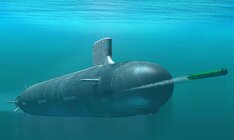
The Navy has a long memory. Today another ship is preparing to be commissioned bearing the name Minnesota. Sailors from that submarine, Virginia-class ironically enough, will honor the service and sacrifice made by Monitor Sailors on behalf of their forbears from the civil war by attending and rendering honors at the burial service of the remains of two Monitor Sailors who went down with the ship when she sank in a squall off the coast of North Carolina on Dec. 31, 1862.
The Navy will honor Monitor Sailors March 8 with a graveside interment ceremony at Arlington National Ceremony for the remains of two unknown Sailors recovered from the USS Monitor shipwreck. The unknown Sailors were lost along with 14 of their shipmates when Monitor sank off Cape Hatteras, N.C. Dec. 31, 1862. All 16 Sailors will be memorialized on a group marker in section 46 of the cemetery, which is between the amphitheater and the USS Maine Mast memorial.
http://www.navy.mil/submit/display.asp?story_id=72520
130219-N-ZZ999-505 WASHINGTON (Feb. 19, 2013) In this depiction of the Battle of Hampton Roads provided by Naval History and Heritage Command, USS Monitor and CSS Virginia fire on each other. Monitor was a revolutionary vessel, designed by John Ericson, changing the course of the United States Navy. The Brooklyn-built Monitor made nautical history after being designed and assembled in 118 days, and then commissioned Feb. 25, 1862. Fighting in the first battle between two ironclads in the Battle of Hampton Roads on Mar. 9, 1862, the engagement marked the first time iron-armored ships clashed in naval warfare and signaled the end of the era of wooden ships. Its battle between the CSS Virginia proved that the age of wooden ships and sail were at an end. Though the Monitor's confrontation with the CSS Virginia ended in a draw, the Monitor prevented the Virginia from gaining control of Hampton Roads and thus preserved the Federal blockade of the Norfolk area. The Virginia, built on the carcass of the U.S. Navy frigate USS Merrimack, was the Confederate answer to the Union's ironclad ships. Months later, 16 Sailors were lost when the Monitor sank on Dec. 31, 1862 in a storm off Cape Hatteras, N.C. Her wreck was discovered in 1974 and is now a National Marine Sanctuary. (U.S. Navy photo courtesy of Naval History and Heritage Command/Released)
Monitor: A Naval Warfighting First
Story Number: NNS130305-13Release Date: 3/5/2013 4:24:00 PM
A A A


By MC1(AW) Tim Comerford, Naval History and Heritage Command Public AffairsWASHINGTON (NNS) -- On March 8, 1862, a dark shape emerged from Gosport Shipyard: the beast that was the CSS Virginia was on the prowl, surrounded by smaller Confederate ships like a pack of wolves trailing after the alpha wolf. Union ships had surrounded the Norfolk area creating a blockade, but the wooden sloop of war Cumberland , and the frigate Congress, both sailing ships, sat in the water of the Elizabeth River on the windless day.
Which meant they were unable to move as the steaming iron-bound beast moved towards them.
Congress Sailors fired their cannons at the beast but the ship ignored them, the Congress's cannon shells simply bouncing off its iron hide like pebbles.
It stalked the more dangerous foe -- the Cumberland, which had heavier guns. A short cannon battle ensued, but, with no way to turn, Cumberland was an easy target.
Finally, Virginia dealt Cumberland a death blow, ramming a hole through its hull. The sinking Cumberland, decks red with blood from some of her 121 dead -- fallen to the numerous volleys of Confederate cannons - took the Virginia's cast iron ram imbedded inside her down into the depths.
"That ship goes down with her flag flying," Calhoun said. "The acting commanding officer is told to surrender his ship and he refuses. He becomes a national hero for doing that even though he lost the ship."
The iron beast turned its eyes on its other enemy. Congress had run aground in shallow water. The cannons and rifles of the CSS Virginia shredded the crew of Congress. As it finished off the ship, sending heated shot to burn Congress down to the waterline, the confederate warship moved back into the protection of the Gosport shipyard for the night to resupply.
In Washington D.C., news of the battle caused a panic in President Abraham Lincoln's staff. Secretary of War, William Stanton, was convinced that CSS Virginia would soon appear to bombard the city. Welles attempted to calm them, announcing the Monitor had arrived at Hampton Roads. But the new ironclad ship had never been tested in a fight.
As the next day dawned, the Virginia pulled out of the shipyard once more. Three ships had attempted to join its enemies when it came out the day before. All three had run aground, but, come morning, one was left, sitting helpless less than a half mile from the burning Congress. The Union ship Minnesota was ripe for picking.
As the Confederate warship steered towards the Minnesota, its Sailors noticed something strange. A small oddly shaped vessel had joined their prey in the water. But that wouldn't stop them from destroying the flagship.
Lt. John Worden, the Monitor's commanding officer, had received orders to protect the Minnesota at all costs and set out the evening before. The Monitor spent that night maneuvering the waters of Hampton Roads to get near to the Minnesota. It was 8 a.m. when the Monitor Sailors spotted the Confederate warship. Virginia aimed straight for the grounded Minnesota, firing its cannons.
It was time for the Monitor to act. Its cannons blazed, taking the black-iron beast in the side, shaking it to the core. Suddenly, it was as if no other ships were there, just two iron ships, circling and hitting like heavyweight boxers, struggling to punish one another.
The Monitor turned, gunners filling the cannons with new shells.
Guns from the black-iron beast blazed as it shot. One, two, three missed..."Krang!" The sound exploded inside the Monitor, shrieking into the Sailors ears.
Sailors inside the turret stumbled as the reverberations struck them, two who were leaning against the turret when the shell struck it fell to the floor stunned. But the Monitor's armor stopped any critical damage.
The Virginia fell silent as its cannons reloaded.
The Sailors inside the Monitor scrambled to their feet, striving to turn the turret, slowly bringing the confederate warship into their sights. The thunderous sound of the Dahlgren cannon half-deafened the crew as it spat out its payload.
The report of the shell catching the iron beast was like music to Monitor Sailors' ears, a small rent opening in its side.
But the Confederate ship was far from finished, and for hours volley after volley of ordnance fired back and forth. A game of cat and mouse was being played between the two ships with the Minnesota being the prize.
The USS Monitor, due to its small draft, was easily able to navigate the shallow waters around Hampton roads. The CSS Virginia, with a much larger draft, was limited in its movements, once running aground in the shallow water and taking all its energy to move back into the deeper channels.
Both the Monitor and Virginia sustained small damage, but neither could get the upper hand. It was shortly after noon when that changed.
"Crash!" The sound of tearing metal rushed the Monitor Sailors' ears as a shell ripped into the iron block that was the pilot house of the ship. The sound of the hit died down, leaving the sound of screaming. The shell's powder had found the commanding officer, blinding him and leaving the ship to steer into the shallows.
The Virginia, believing its foe to be retreating, turned towards its mission of the destruction of the Minnesota.
Executive Officer Dana Green took charge of the Monitor and turned it back towards the beast.
But the Confederate ship had started turning again, away from the flagship. The beast, leaking from its prow, its Sailors tired from the fight and the ebbing tide, had to choose between staying in the waters until the tide rose again or making its way to the safety of Confederate controlled waters.
Licking its numerous wounds, the beast made its way back into the safety of the shipyard.
The Monitor, which had strict orders to fight only defensively, stayed by Minnesota's side to protect it. Monitor hadn't escaped unscathed, either. Pockmarks scarred the surface of the vessel, from the volleys of Confederate ships, and parts of the pilothouse would need to be rebuilt. The battle was over and both sides could claim a victory. The CSS Virginia had sunk two Union Ships and the Monitor had fulfilled its mission of protecting the Minnesota. The battle became known as "The Battle of Hampton Roads." The U.S. Navy had seen its first glimpse of what the future held.
"For the next month, the ships tried to draw each other into battle," said Gordon Calhoun, Naval History and Heritage Command's Hampton Roads Naval Museum editor and historian. "The Monitor stayed in shallow water. The Virginia drew 22 feet of water, so she couldn't maneuver in half the waters of Hampton Roads. In the meantime, the Navy tried to pull the Minnesota off of what is called the middle ground - she ran aground in 18 feet of water and she draws 22 feet of water as well. So it was a task and a half to pull her off. "
That task was accomplished on March, 10, 1862. Minnesota was repaired and returned to duty, and three years later participated in the Second Battle of Fort Fisher. Minnesota served until 1898, when she was stricken, beached and burnt to recover her metal fittings and to clear her name for a newly-ordered battleship, USS Minnesota (BB-22).
The Navy has a long memory. Today another ship is preparing to be commissioned bearing the name Minnesota. Sailors from that submarine, Virginia-class ironically enough, will honor the service and sacrifice made by Monitor Sailors on behalf of their forbears from the civil war by attending and rendering honors at the burial service of the remains of two Monitor Sailors who went down with the ship when she sank in a squall off the coast of North Carolina on Dec. 31, 1862.
The Navy will honor Monitor Sailors March 8 with a graveside interment ceremony at Arlington National Ceremony for the remains of two unknown Sailors recovered from the USS Monitor shipwreck. The unknown Sailors were lost along with 14 of their shipmates when Monitor sank off Cape Hatteras, N.C. Dec. 31, 1862. All 16 Sailors will be memorialized on a group marker in section 46 of the cemetery, which is between the amphitheater and the USS Maine Mast memorial.
http://www.navy.mil/submit/display.asp?story_id=72520

 Forum Host




 Bringing the