Mississippi Confederate Generals

Championhilz

Sergeant Major
Forum Host
Joined
Mar 18, 2011
Location
Clinton, Mississippi
This is a little overview that I did for my blog on the Mississippians who served as general during the Civil War:

During the Civil War there were three ranks of general in the Confederate army; from lowest to highest they were brigadier general, major general, and lieutenant general. There were twenty-four Mississippians who were brigadier generals, five who were major generals, and no lieutenant generals.

The brigadier generals from Mississippi were Wirt Adams, William E.

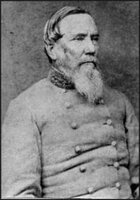
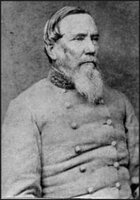
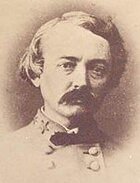
9851_128650641632.jpg

Brigadier General William Wirt Adams - findagrave.com
Baldwin, William Barksdale, Samuel Benton, William L. Brandon, William F. Brantley James R. Chalmers, Charles Clark, Douglas H. Cooper, Joseph R. Davis, Winfield S. Featherston, Samuel W. Ferguson, John W. Frazer, Samuel J. Ghoulson, Richard Griffith, Nathaniel H. Harris, Benjamin G. Humphreys, Mark P. Lowrey, Robert Lowry, Carnot Posey, Claudius W. Sears, Jacob H. Sharp, Peter B. Starke, and William F. Tucker.


The major generals from Mississippi were: Samuel G. French, William T. Martin, Earl Van Dorn, Edward C. Walthall, and William H. C. Whiting.


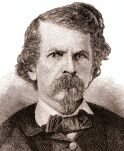
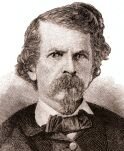
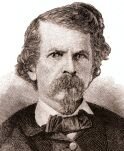
hd_vandorne.jpg

Major General Earl Van Dorn -hd.housedivided.dickinson.edu
Being a general in the Civil War could be a very hazardous job, as they were often required to be at the forefront of the attack to inspire their men and often found themselves in the thickest of the fight. The list of killed and wounded Mississippi generals bears out the dangerous nature of their work. Of the 29 generals who served from Mississippi, five were killed in battle and ten were wounded in action, three of them more than once.


The five Mississippi generals who were killed in action were as follows: William Barksdale, mortally wounded at Gettysburg, Pennsylvania, on July 2, 1863; Samuel Benton, mortally wounded at Atlanta, Georgia, on July 28, 1864; Richard Griffith, killed at Savage Station, Virginia, on June 29, 1862; Carnot Posey, mortally wounded at Bristoe Station, Virginia, on October 14, 1863; and William H. C. Whiting, mortally wounded at Fort Fisher, North Carolina, January 15, 1865.

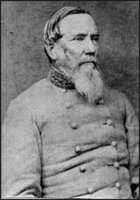
whiting.jpg

Major General William H.C. Whiting - findagrave.com

In addition, there were two Mississippi generals who died by misadventure: William Baldwin died on February 19, 1864 at Dog River Factory, Alabama, when he was thrown from his horse; Earl Van Dorn was murdered on May 7, 1863 at Spring Hill, Tennessee by an enraged husband who said the general "violated the sanctity of his home" by his affair with the man's wife.

The ten Mississippi generals who were wounded in action were as follows: William L. Brandon at Malvern Hill, Virginia; had to have his leg amputated. Brandon actually became a general of Mississippi state troops after he lost his leg; he was only a lieutenant colonel at the time he was wounded; James R. Chalmers, wounded at Stone's River, Tennessee; Charles Clark, wounded at Shiloh, Tennessee and Baton Rouge, Louisiana; the second wound crippled him for life; Samuel J. Gholson, wounded at Fort Donelson, Tennessee, and Egypt,

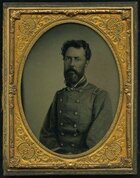
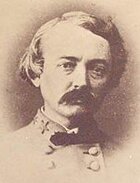
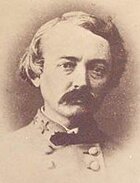
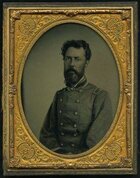
william_lindsay_brandon.jpg

Brigadier General William L. Brandon - Wikipedia
Mississippi; Benjamin G. Humphreys, wounded at Berryville, Virginia; Mark P. Lowry, wounded at Perryville, Kentucky; Robert Lowry, wounded twice at Shiloh, Tennessee; Claudius W. Sears, wounded at Nashville, Tennessee and had to have his leg amputated; William F. Tucker, wounded Resaca, Georgia; and Edward C. Walthall, wounded at Missionary Ridge, Tennessee.


No better example of the fighting spirit required of a Civil War general can be found than that of Brigadier General William Barksdale at Gettysburg on July 2, 1863. While waiting to be given the order to assault the federal troops in the Peach Orchard, the Mississippian were being hit by Union artillery fire. Barksdale pleaded with his superior to be allowed to attack saying "I wish you would let me go in general; I will take that battery in five minutes." At 6:30 p.m. he was finally given the command to charge, and Barksdale rode up in front of the 13th Mississippi Infantry and as he turned toward the enemy one of his aides said his face was "radiant with joy."

In a matter of minutes Barksdale's Brigade broke the Union line and

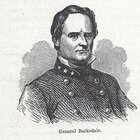
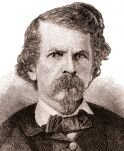
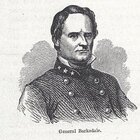
generalbarksdale_zps3678f799.jpg

Brigadier General William Barksdale - The Pictorial Books of Anecdotes and Incidents of the War of the Rebellion by Frazar Kirkland, 1866
smashed the federal brigade defending the Peach Orchard, capturing it's commander, Brigadier General Charles K. Graham. One Union colonel called the advance "the grandest charge that was ever made by mortal man." The Mississippians continued onward in the face of heavy fire, capturing an artillery battery of six guns at the Trostle Farm. Finally federal reinforcements stopped the advancing Mississippians, and as he tried to rally his men for another charge, Barksdale was shot from the saddle and captured by the Federals. Before he died Barksdale told a federal surgeon, "Tell my wife I am shot, but we fought like hell."


The bravery displayed by Mississippi generals and the men they led was

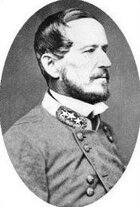
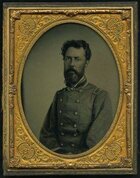
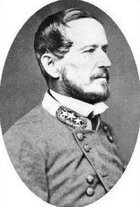
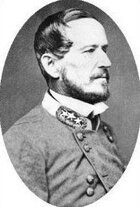
general-carnot-posey.jpg

Brigadier General Carnot Posey - www.civilwaref.blogspot.com
not uncommon during the war, and it was often remarked on. Major General Richard H. Anderson wrote in his official report on the battle of Chancellorsville glowing praise for the Mississippi Brigade commanded by General Carnot Posey, saying of them, "Where all performed their duty with so much zeal and courage, it is almost impossible to make a distinction; but Brigadier-General Posey and his brave, untiring, persevering Mississippians seem to me to deserve special notice. Their steadiness at the furnace on Saturday evening, when pressed by greatly superior numbers, saved our army from great peril, while their chivalrous charge upon the trenches on Sunday contributed largely to the successes of that day." – Official Records, Series 1, Volume 24, Part 1, 852.


Sources

Clark, Champ. Gettysburg. Alexandria, VA: Time-Life Books, 1985.

Confederate Generals Subject File, Mississippi Department of Archives and History, Jackson, MS.

Moneyhon, Carl and Bobby Roberts. Portraits of Conflict: A Photographic History of Mississippi In The Civil War. Fayetteville, AK: University of Arkansas Press, 1993.

Rowland, Dunbar. Military History of Mississippi 1803-1898. Spartanburg, SC: The Reprint Company, 1978.

United States War Department, Compiler. War of the Rebellion: Official Records of the Union and Confederate Armies. 73 Volumes, 128 Parts; Washington, DC: 1880-1902.
 

Attachments

  • 9851_128650641632.jpg
    9851_128650641632.jpg
    11.5 KB · Views: 151
  • whiting.jpg
    whiting.jpg
    7.9 KB · Views: 77
  • hd_vandorne.jpg
    hd_vandorne.jpg
    5.6 KB · Views: 72
  • william_lindsay_brandon.jpg
    william_lindsay_brandon.jpg
    12.1 KB · Views: 72
  • generalbarksdale_zps3678f799.jpg
    generalbarksdale_zps3678f799.jpg
    29.7 KB · Views: 86
  • general-carnot-posey.jpg
    general-carnot-posey.jpg
    18.5 KB · Views: 83
I'd like to observe that Posey's unusual first name Carnot is a typical-of-the-period nod to one of the heroes of the French Revolution, General and Minister of War Lazare Carnot, known as the Organizer of Victory for his superior administrative talents during one of the Revolution's most difficult periods. Unfortunately, his slightly later Republican politics kept him and his considerable talents idle during the subsequent period of the Napoleonic Wars.
 
Nice post---except you photos interrupted your text.

Edward C. Walthall, wounded at Missionary Ridge
I don't think I knew he was wounded there.

I also consider General Stephen D. Lee as a Mississippi general but he lived in South Carolina prior to the war. He left Mississippi troops and commanded a brigade in defense of Vicksburg and later lead the Department of Mississippi. He adopted Mississippi after the war---but technically wasn't a Mississippi General.
 
Nice post---except you photos interrupted your text.


I don't think I knew he was wounded there.

I also consider General Stephen D. Lee as a Mississippi general but he lived in South Carolina prior to the war. He left Mississippi troops and commanded a brigade in defense of Vicksburg and later lead the Department of Mississippi. He adopted Mississippi after the war---but technically wasn't a Mississippi General.

General Walthall was actually wounded twice - severely at Missionary Ridge, and slightly at Resaca, per his compiled service record. I considered adding Stephen D. Lee to the list, but although he spent a good bit of time in Mississippi during the war, he was not officially a resident of the state until after the conflict ended.
The problem with the pictures happens when I copy the article from my blog and paste it here - I have limited computer skills, and have not figured out what the problem is. I could remove all of the pictures, but prefer to leave them in and have the text a little mixed up as a result.
 
...During the Civil War there were three ranks of general in the Confederate army; from lowest to highest they were brigadier general, major general, and lieutenant general. There were twenty-four Mississippians who were brigadier generals, five who were major generals, and no lieutenant generals...

Actually there were four general ranks; you forgot (Full) General.

Another Mississippi Brigadier was Hiram B. Granbury, though he moved to Texas in the 50s and commanded Texan troops. Also, Brigadier Henry Gray lived in Mississippi for over a decade. If you include S.D. Lee you also have a Lieutenant General.
 
The Featherston-Posey-Harris Mississippi Brigade - the 12th, 16th, 19th and 48th Mississippi Infantry - is one of the underrated brigades in the ANV imo. Going from memory, they were at the Bloody Lane and Piper Orchard at Antietam, first and third days of Chancellorsville, the Bloody Angle at Spotsylvania, and in the last stand at Fort Gregg at Petersburg. Of course those weren't their only battles, but those were some of the fiercest they were ever in. They didn't do too well at Gettysburg, however; IIRC, Posey had some trouble controlling his brigade in the July 2 attacks on Cemetery Ridge.
 
This is a little overview that I did for my blog on the Mississippians who served as general during the Civil War:

During the Civil War there were three ranks of general in the Confederate army; from lowest to highest they were brigadier general, major general, and lieutenant general. There were twenty-four Mississippians who were brigadier generals, five who were major generals, and no lieutenant generals.

The brigadier generals from Mississippi were Wirt Adams, William E.

9851_128650641632.jpg

Brigadier General William Wirt Adams - findagrave.com
Baldwin, William Barksdale, Samuel Benton, William L. Brandon, William F. Brantley James R. Chalmers, Charles Clark, Douglas H. Cooper, Joseph R. Davis, Winfield S. Featherston, Samuel W. Ferguson, John W. Frazer, Samuel J. Ghoulson, Richard Griffith, Nathaniel H. Harris, Benjamin G. Humphreys, Mark P. Lowrey, Robert Lowry, Carnot Posey, Claudius W. Sears, Jacob H. Sharp, Peter B. Starke, and William F. Tucker.


The major generals from Mississippi were: Samuel G. French, William T. Martin, Earl Van Dorn, Edward C. Walthall, and William H. C. Whiting.


hd_vandorne.jpg

Major General Earl Van Dorn -hd.housedivided.dickinson.edu
Being a general in the Civil War could be a very hazardous job, as they were often required to be at the forefront of the attack to inspire their men and often found themselves in the thickest of the fight. The list of killed and wounded Mississippi generals bears out the dangerous nature of their work. Of the 29 generals who served from Mississippi, five were killed in battle and ten were wounded in action, three of them more than once.


The five Mississippi generals who were killed in action were as follows: William Barksdale, mortally wounded at Gettysburg, Pennsylvania, on July 2, 1863; Samuel Benton, mortally wounded at Atlanta, Georgia, on July 28, 1864; Richard Griffith, killed at Savage Station, Virginia, on June 29, 1862; Carnot Posey, mortally wounded at Bristoe Station, Virginia, on October 14, 1863; and William H. C. Whiting, mortally wounded at Fort Fisher, North Carolina, January 15, 1865.

whiting.jpg

Major General William H.C. Whiting - findagrave.com

In addition, there were two Mississippi generals who died by misadventure: William Baldwin died on February 19, 1864 at Dog River Factory, Alabama, when he was thrown from his horse; Earl Van Dorn was murdered on May 7, 1863 at Spring Hill, Tennessee by an enraged husband who said the general "violated the sanctity of his home" by his affair with the man's wife.

The ten Mississippi generals who were wounded in action were as follows: William L. Brandon at Malvern Hill, Virginia; had to have his leg amputated. Brandon actually became a general of Mississippi state troops after he lost his leg; he was only a lieutenant colonel at the time he was wounded; James R. Chalmers, wounded at Stone's River, Tennessee; Charles Clark, wounded at Shiloh, Tennessee and Baton Rouge, Louisiana; the second wound crippled him for life; Samuel J. Gholson, wounded at Fort Donelson, Tennessee, and Egypt,

william_lindsay_brandon.jpg

Brigadier General William L. Brandon - Wikipedia
Mississippi; Benjamin G. Humphreys, wounded at Berryville, Virginia; Mark P. Lowry, wounded at Perryville, Kentucky; Robert Lowry, wounded twice at Shiloh, Tennessee; Claudius W. Sears, wounded at Nashville, Tennessee and had to have his leg amputated; William F. Tucker, wounded Resaca, Georgia; and Edward C. Walthall, wounded at Missionary Ridge, Tennessee.


No better example of the fighting spirit required of a Civil War general can be found than that of Brigadier General William Barksdale at Gettysburg on July 2, 1863. While waiting to be given the order to assault the federal troops in the Peach Orchard, the Mississippian were being hit by Union artillery fire. Barksdale pleaded with his superior to be allowed to attack saying "I wish you would let me go in general; I will take that battery in five minutes." At 6:30 p.m. he was finally given the command to charge, and Barksdale rode up in front of the 13th Mississippi Infantry and as he turned toward the enemy one of his aides said his face was "radiant with joy."

In a matter of minutes Barksdale's Brigade broke the Union line and

generalbarksdale_zps3678f799.jpg

Brigadier General William Barksdale - The Pictorial Books of Anecdotes and Incidents of the War of the Rebellion by Frazar Kirkland, 1866
smashed the federal brigade defending the Peach Orchard, capturing it's commander, Brigadier General Charles K. Graham. One Union colonel called the advance "the grandest charge that was ever made by mortal man." The Mississippians continued onward in the face of heavy fire, capturing an artillery battery of six guns at the Trostle Farm. Finally federal reinforcements stopped the advancing Mississippians, and as he tried to rally his men for another charge, Barksdale was shot from the saddle and captured by the Federals. Before he died Barksdale told a federal surgeon, "Tell my wife I am shot, but we fought like hell."


The bravery displayed by Mississippi generals and the men they led was

general-carnot-posey.jpg

Brigadier General Carnot Posey - www.civilwaref.blogspot.com
not uncommon during the war, and it was often remarked on. Major General Richard H. Anderson wrote in his official report on the battle of Chancellorsville glowing praise for the Mississippi Brigade commanded by General Carnot Posey, saying of them, "Where all performed their duty with so much zeal and courage, it is almost impossible to make a distinction; but Brigadier-General Posey and his brave, untiring, persevering Mississippians seem to me to deserve special notice. Their steadiness at the furnace on Saturday evening, when pressed by greatly superior numbers, saved our army from great peril, while their chivalrous charge upon the trenches on Sunday contributed largely to the successes of that day." – Official Records, Series 1, Volume 24, Part 1, 852.


Sources

Clark, Champ. Gettysburg. Alexandria, VA: Time-Life Books, 1985.

Confederate Generals Subject File, Mississippi Department of Archives and History, Jackson, MS.

Moneyhon, Carl and Bobby Roberts. Portraits of Conflict: A Photographic History of Mississippi In The Civil War. Fayetteville, AK: University of Arkansas Press, 1993.

Rowland, Dunbar. Military History of Mississippi 1803-1898. Spartanburg, SC: The Reprint Company, 1978.

United States War Department, Compiler. War of the Rebellion: Official Records of the Union and Confederate Armies. 73 Volumes, 128 Parts; Washington, DC: 1880-1902.
Their is a direct quote from Joseph Davis Jefferson Davis's older brother in the book"Jefferson Davis American" "for want of a general a good captain was spoiled " concerning Van Doren. I can't find that book right now maybe someone else has the page number.
Leftyhunter
 

Attachments

  • 9851_128650641632.jpg
    9851_128650641632.jpg
    11.5 KB · Views: 74
  • generalbarksdale_zps3678f799.jpg
    generalbarksdale_zps3678f799.jpg
    29.7 KB · Views: 79
  • william_lindsay_brandon.jpg
    william_lindsay_brandon.jpg
    12.1 KB · Views: 79
  • whiting.jpg
    whiting.jpg
    7.9 KB · Views: 87
  • general-carnot-posey.jpg
    general-carnot-posey.jpg
    18.5 KB · Views: 81
  • hd_vandorne.jpg
    hd_vandorne.jpg
    5.6 KB · Views: 79
hd_vandorne.jpg

Major General Earl Van Dorn -hd.housedivided.dickinson.edu
Being a general in the Civil War could be a very hazardous job, as they were often required to be at the forefront of the attack to inspire their men and often found themselves in the thickest of the fight. The list of killed and wounded Mississippi generals bears out the dangerous nature of their work. Of the 29 generals who served from Mississippi, five were killed in battle and ten were wounded in action, three of them more than once.

Sorry......................................I couldn't help it!:nah disagree::mstickle::dance:
 

Attachments

  • hd_vandorne.jpg
    hd_vandorne.jpg
    5.6 KB · Views: 75
The Featherston-Posey-Harris Mississippi Brigade - the 12th, 16th, 19th and 48th Mississippi Infantry - is one of the underrated brigades in the ANV imo. Going from memory, they were at the Bloody Lane and Piper Orchard at Antietam, first and third days of Chancellorsville, the Bloody Angle at Spotsylvania, and in the last stand at Fort Gregg at Petersburg. Of course those weren't their only battles, but those were some of the fiercest they were ever in. They didn't do too well at Gettysburg, however; IIRC, Posey had some trouble controlling his brigade in the July 2 attacks on Cemetery Ridge.

That was another one I forgot to mention!

Winfield Scott Featherston!

Expired Image Removed
 
That was another one I forgot to mention!

Winfield Scott Featherston!

Expired Image Removed
Could be wrong, but I believe he was the only Mississippi brigadier general to command two Mississippi brigades - one in the East in the ANV and the other in the West in the AoT.
 
The one thing that I like about the series of Confederate Military History is that each volume for a State ends with a short biography and a small, dark image of the generals of that state.
I found one you may have missed. He commanded State troops and not CSA troops.

Reuben Davis was a major-general of State troops. He was born in Tennessee in 1813 but moved to Aberdeen, Miss where he served as prosecuting attorney from 1835-1839. In 1842, he was appointed to judge of the high court of appeals but resigned after only 4 months. During the Mexican War, he entered service as colonel of 2nd Mississippi Volunteers. After the war he was elected to State senate in 1855 until 1857 when he was elected to represent his district in Congress.
Though past military age he was glad to serve his country and was made brigadier-general of State troops and then promoted to major-general when he led 2,000 men who answered the call for troops to Bowling Green in fall and winter of 1861. While assigned to the fortifications there, he commanded one of Hardee's brigades for a period. When the period of enlistment had expired for the 90-day troops, he returned to Mississippi and to practicing law. He died in 1873 when he got into a quarrel with a prosecuting attorney and was shot in the court house.

I will check to see if there are any more.

{Edited to add}

There is one more who also commanded State Troops.
James L. Alcorn was born in Illinois and reared in Kentucky and moved to Coahoma County in 1843. He also lead State troops into Kentucky and served under General Buckner. He succeeded in getting his own brigade of Mississippians in the Confederate service. Then he requested to be relieved from service. Upon his return home, General Pettus placed him in command of troops enlisted for 60 days. He served mostly in the capacity of training and preparing troops for combat.
 
Could be wrong, but I believe he was the only Mississippi brigadier general to command two Mississippi brigades - one in the East in the ANV and the other in the West in the AoT.

Yes, yes he was. He was at Fredericksburg and then got moved to the Army of Tennessee later that next year.
 
This is a little overview that I did for my blog on the Mississippians who served as general during the Civil War:

During the Civil War there were three ranks of general in the Confederate army; from lowest to highest they were brigadier general, major general, and lieutenant general. There were twenty-four Mississippians who were brigadier generals, five who were major generals, and no lieutenant generals.

The brigadier generals from Mississippi were Wirt Adams, William E.

9851_128650641632.jpg

Brigadier General William Wirt Adams - findagrave.com
Baldwin, William Barksdale, Samuel Benton, William L. Brandon, William F. Brantley James R. Chalmers, Charles Clark, Douglas H. Cooper, Joseph R. Davis, Winfield S. Featherston, Samuel W. Ferguson, John W. Frazer, Samuel J. Ghoulson, Richard Griffith, Nathaniel H. Harris, Benjamin G. Humphreys, Mark P. Lowrey, Robert Lowry, Carnot Posey, Claudius W. Sears, Jacob H. Sharp, Peter B. Starke, and William F. Tucker.


The major generals from Mississippi were: Samuel G. French, William T. Martin, Earl Van Dorn, Edward C. Walthall, and William H. C. Whiting.


hd_vandorne.jpg

Major General Earl Van Dorn -hd.housedivided.dickinson.edu
Being a general in the Civil War could be a very hazardous job, as they were often required to be at the forefront of the attack to inspire their men and often found themselves in the thickest of the fight. The list of killed and wounded Mississippi generals bears out the dangerous nature of their work. Of the 29 generals who served from Mississippi, five were killed in battle and ten were wounded in action, three of them more than once.


The five Mississippi generals who were killed in action were as follows: William Barksdale, mortally wounded at Gettysburg, Pennsylvania, on July 2, 1863; Samuel Benton, mortally wounded at Atlanta, Georgia, on July 28, 1864; Richard Griffith, killed at Savage Station, Virginia, on June 29, 1862; Carnot Posey, mortally wounded at Bristoe Station, Virginia, on October 14, 1863; and William H. C. Whiting, mortally wounded at Fort Fisher, North Carolina, January 15, 1865.

whiting.jpg

Major General William H.C. Whiting - findagrave.com

In addition, there were two Mississippi generals who died by misadventure: William Baldwin died on February 19, 1864 at Dog River Factory, Alabama, when he was thrown from his horse; Earl Van Dorn was murdered on May 7, 1863 at Spring Hill, Tennessee by an enraged husband who said the general "violated the sanctity of his home" by his affair with the man's wife.

The ten Mississippi generals who were wounded in action were as follows: William L. Brandon at Malvern Hill, Virginia; had to have his leg amputated. Brandon actually became a general of Mississippi state troops after he lost his leg; he was only a lieutenant colonel at the time he was wounded; James R. Chalmers, wounded at Stone's River, Tennessee; Charles Clark, wounded at Shiloh, Tennessee and Baton Rouge, Louisiana; the second wound crippled him for life; Samuel J. Gholson, wounded at Fort Donelson, Tennessee, and Egypt,

william_lindsay_brandon.jpg

Brigadier General William L. Brandon - Wikipedia
Mississippi; Benjamin G. Humphreys, wounded at Berryville, Virginia; Mark P. Lowry, wounded at Perryville, Kentucky; Robert Lowry, wounded twice at Shiloh, Tennessee; Claudius W. Sears, wounded at Nashville, Tennessee and had to have his leg amputated; William F. Tucker, wounded Resaca, Georgia; and Edward C. Walthall, wounded at Missionary Ridge, Tennessee.


No better example of the fighting spirit required of a Civil War general can be found than that of Brigadier General William Barksdale at Gettysburg on July 2, 1863. While waiting to be given the order to assault the federal troops in the Peach Orchard, the Mississippian were being hit by Union artillery fire. Barksdale pleaded with his superior to be allowed to attack saying "I wish you would let me go in general; I will take that battery in five minutes." At 6:30 p.m. he was finally given the command to charge, and Barksdale rode up in front of the 13th Mississippi Infantry and as he turned toward the enemy one of his aides said his face was "radiant with joy."

In a matter of minutes Barksdale's Brigade broke the Union line and

generalbarksdale_zps3678f799.jpg

Brigadier General William Barksdale - The Pictorial Books of Anecdotes and Incidents of the War of the Rebellion by Frazar Kirkland, 1866
smashed the federal brigade defending the Peach Orchard, capturing it's commander, Brigadier General Charles K. Graham. One Union colonel called the advance "the grandest charge that was ever made by mortal man." The Mississippians continued onward in the face of heavy fire, capturing an artillery battery of six guns at the Trostle Farm. Finally federal reinforcements stopped the advancing Mississippians, and as he tried to rally his men for another charge, Barksdale was shot from the saddle and captured by the Federals. Before he died Barksdale told a federal surgeon, "Tell my wife I am shot, but we fought like hell."


The bravery displayed by Mississippi generals and the men they led was

general-carnot-posey.jpg

Brigadier General Carnot Posey - www.civilwaref.blogspot.com
not uncommon during the war, and it was often remarked on. Major General Richard H. Anderson wrote in his official report on the battle of Chancellorsville glowing praise for the Mississippi Brigade commanded by General Carnot Posey, saying of them, "Where all performed their duty with so much zeal and courage, it is almost impossible to make a distinction; but Brigadier-General Posey and his brave, untiring, persevering Mississippians seem to me to deserve special notice. Their steadiness at the furnace on Saturday evening, when pressed by greatly superior numbers, saved our army from great peril, while their chivalrous charge upon the trenches on Sunday contributed largely to the successes of that day." – Official Records, Series 1, Volume 24, Part 1, 852.


Sources

Clark, Champ. Gettysburg. Alexandria, VA: Time-Life Books, 1985.

Confederate Generals Subject File, Mississippi Department of Archives and History, Jackson, MS.

Moneyhon, Carl and Bobby Roberts. Portraits of Conflict: A Photographic History of Mississippi In The Civil War. Fayetteville, AK: University of Arkansas Press, 1993.

Rowland, Dunbar. Military History of Mississippi 1803-1898. Spartanburg, SC: The Reprint Company, 1978.

United States War Department, Compiler. War of the Rebellion: Official Records of the Union and Confederate Armies. 73 Volumes, 128 Parts; Washington, DC: 1880-1902.

Which one was the best commander?
 

Attachments

  • 9851_128650641632.jpg
    9851_128650641632.jpg
    11.5 KB · Views: 70
  • hd_vandorne.jpg
    hd_vandorne.jpg
    5.6 KB · Views: 76
  • whiting.jpg
    whiting.jpg
    7.9 KB · Views: 85
  • william_lindsay_brandon.jpg
    william_lindsay_brandon.jpg
    12.1 KB · Views: 74
  • generalbarksdale_zps3678f799.jpg
    generalbarksdale_zps3678f799.jpg
    29.7 KB · Views: 82
  • general-carnot-posey.jpg
    general-carnot-posey.jpg
    18.5 KB · Views: 79
Popularity wise somewhere between Barksdale and Adams.
I would also add Mark P. Lowery, one of Pat Cleburne's brigade commanders from the Chattanooga Campaign onward (previously colonel of the 32nd Mississippi Infantry). I believe he had a pretty good reputation as both a colonel and a brigadier.
 
I would also add Mark P. Lowery, one of Pat Cleburne's brigade commanders from the Chattanooga Campaign onward (previously colonel of the 32nd Mississippi Infantry). I believe he had a pretty good reputation as both a colonel and a brigadier.

Gah! I forgot Lowrey.

My favorite Brigadier under Cleburne was Govan.
 
  • Like
Reactions: AUG

Learn About Us
About CivilWarTalk
Contact the Webmaster
Meet the Staff
Link to CivilWarTalk
Join Our Community
Register
Browse Forums
View Today's Discussions
Search the Forum
Get Help
FAQ
Student Guide
Forum Rules & Etiquette
Copyright / DMCA

     Contact Us CivilwarTalk on Facebook CivilWarTalk on YouTube CivilWarTalk on Twitter RSS Feed

Bringing the American Civil War and More to Life.
© 1999 - , CIVILWARTALK, LLC - Site Version 10.0

SlaveryTalk.com - SecessionTalk.com - CivilWarTalk.com - ReconstructionTalk.com
Back
Top