Camp Food Lobscouse

NH Civil War Gal

Major
* OFFICIAL *
CWT PRESENTER
Forum Host
Regtl. Quartermaster Antietam 2021
Joined
Feb 5, 2017
From the National Museum of Civil War Medicine with permission

Lobscouse was a common part of the Civil War soldier's diet:

"Take a bit of fat pork and melt it over the fire in a frying-pan or tin plate. Break up the hard-tack into small pieces and drop it into the frying fat. Let the whole mess sizzle together until the cracker is saturated with the fat and the result is a product that looks and tastes like pie crust. It is quite palatable...

"Indigestible stuff, you say? Well, who ever heard of a soldier having dyspepsia? Of all the ailments that came along to make the soldier's life miserable, indigestion was one of the things he never complained of. Ye dyspeptics, who swallow nostrums and patent medicines by the barrel, consider the ways of the soldiers and be wise. Go to the war and be shot, and you'll have no more dyspepsia. Nor will you have any more even if you are not shot."

Source: "The Young Volunteer," by Joseph Edgar Crowell, pages 72 and 73. Crowell served in the 13th New Jersey Volunteer Infantry and the Veteran Reserve Corps during the Civil War.

Image credits:
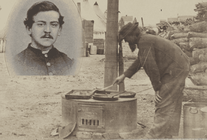
Joseph Edgar Crowell from "The Young Volunteer," and a soldier of the 153rd New York cooking in camp during the Civil War from the Library of Congress.
1695561258203.png
 

"Although it's been suggested that the first syllable of the word comes from an English dialect word lob meaning "to boil," the more popular theory is that "lobscouse" comes from a Norwegian stew called "Lapskaus.""
 
"Take a bit of fat pork and melt it over the fire in a frying-pan or tin plate. Break up the hard-tack into small pieces and drop it into the frying fat. Let the whole mess sizzle together until the cracker is saturated with the fat
Oh my - saturated fat and unenriched flour, a nutritional nightmare. Eating potato chips would at least have provided some potassium.

No wonder soldiers on both sides were known to forage liberally, with or without the approval of their officers. They needed food that would keep their bodies functioning and healthy.… something that was often not provided by their governments.
 
I´ve made that quite often! If you fry the hardtack bits just right, they taste like those little crispy fries that lurk i the bottom of the container - fatty, salty and crunchy! :thumbsup:
 
For many, the first time they see the term "Lobscouse", they assume it's a dish that involves lobster.
:bounce:

Is there any difference between lobscouse & Hell Fire Stew ?

I thought it involved scouse. Lob is the first syllable so, says me, it modifies the second syllable. Thus, it's some kind of scouse that is 'lobbed' (i.e. as opposed to just plain scouse).
 
If you have ever eaten a casserole with a browned cracker crust on top you have eaten a version of lobscouse. Traditional potato pies have a crushed cracker crust.

An Italian iteration is to brown bits of stale bread or crackers & then pour beaten eggs on top. Give it a swirl to fully incorporate the bread / cracker. You can also add what-ya-got: onion, cheese, tomato, herbs. "Stracha" makes a hearty omelette that can be eaten hot or out of hand cold.

Into the 20th Century hogs were bred for lard production. In illustrations, pigs often look like enfiladed [spell check is too accustomed to my CW vocabulary] inflated balloons. The thick layer of pure white fat from the back was especially valued. Today, cooks still value the special qualities of pie crust & biscuit made with lard. The reference to lobscouse made by rendering fat from side meat tasting like a pie crust is, in fact, an apt one. A fried pie made with & fried in lard is light, flaky & delicious.

Soldier's standard daily ration included onions & potatoes. Green onions sprout up everywhere. They are a form of garlic that adds a fresh flavor. Add some hen's eggs or duck egged even better & our soldier boy & his mess mates had quite a satisfying lobscouse dinner. Modern living historians can attest to that.

One of General Thomas' innovations was to issue rations to a mess rather than individually. Anybody who has tried it will testify to the indifferent results rendering fat bacon over an open fire, even by an experienced practitioner, can be. In the hands of a talented soldier or hired cook army rations could be turned into an acceptable meal. There was much less wastage, as well.

At living history events I have made up a mess of lobscouse many times. All I ever had to do was wipe out an empty skillet afterwards.

Note: Bottles of Tabasco sauce & other condiments were readily available from sutlers. Canned peaches were especially appreciated. There were plenty of ways to spice up the bland rations.

Marching rations were essentially bacon & crackers. The standard ration included onions, potatoes & fresh produce. That had both a culinary & a known health benefit. Without the unknown vitamin C, called an ascorbic at the time, the debilitating symptoms of scurvy inevitability appeared.

During the final phase of the siege of Vicksburg, that scourge of besieging armies raised it ugly head. Having eaten out all the fresh produce in the surrounding country, Grant's men fell afoul of the same scurvy that had lifted many a mediaeval siege.

Mrs. Livermore, a Sanitary Commission nurse, had a solution. Word was wired to Sanitarians in Chicago, etc. tons of potatoes & stands of plaited onions were gathered.

Grant told the commander of a convoy of 14 steamboats that he was to consider orders given by Mrs. Livermore as having been spoken directly from the general's own mouth.

In short order "Commodore" Livermore's flotilla loaded down with ascorbic vegetables was back hooting & whistling at the landing. Both Grant & Sherman credited the Sanitarians with securing the victory. With typical Sanitation matter of factness, the entire episode is only a few paragraphs in her memoir.
 
Last edited:
If you have ever eaten a casserole with a browned cracker crust on top you have eaten a version of lobscouse. Traditional potato pies have a crushed cracker crust.

An Italian iteration is to brown bits of stale bread or crackers & then pour beaten eggs on top. Give it a swirl to fully incorporate the bread / cracker. You can also add what-ya-got: onion, cheese, tomato, herbs. "Stracha" makes a hearty omelette that can be eaten hot or out of hand cold.

Into the 20th Century hogs were bred for lard production. In illustrations, pigs often look like enfiladed [spell check is too accustomed to my CW vocabulary] inflated balloons. The thick layer of pure white fat from the back was especially valued. Today, cooks still value the special qualities of pie crust & biscuit made with lard. The reference to lobscouse made by rendering fat from side meat tasting like a pie crust is, in fact, an apt one. A fried pie made with & fried in lard is light, flaky & delicious.

Soldier's standard daily ration included onions & potatoes. Green onions sprout up everywhere. They are a form of garlic that adds a fresh flavor. Add some hen's eggs or duck egged even better & our soldier boy & his mess mates had quite a satisfying lobscouse dinner. Modern living historians can attest to that.

One of General Thomas' innovations was to issue rations to a mess rather than individually. Anybody who has tried it will testify to the indifferent results rendering fat bacon over an open fire, even by an experienced practitioner, can be. In the hands of a talented soldier or hired cook army rations could be turned into an acceptable meal. There was much less wastage, as well.

At living history events I have made up a mess of lobscouse many times. All I ever had to do was wipe out an empty skillet afterwards.

Note: Bottles of Tabasco sauce & other condiments were readily available from sutlers. Canned peaches were especially appreciated. There were plenty of ways to spice up the bland rations.

Marching rations were essentially bacon & crackers. The standard ration included onions, potatoes & fresh produce. That had both a culinary & a known health benefit. Without the unknown vitamin C, called an ascorbic at the time, the debilitating symptoms of scurvy inevitability appeared.

During the final phase of the siege of Vicksburg, that scourge of besieging armies raised it ugly head. Having eaten out all the fresh produce in the surrounding country, Grant's men fell afoul of the same scurvy that had lifted many a mediaeval siege.

Mrs. Livermore, a Sanitary Commission nurse, had a solution. Word was wired to Sanitarians in Chicago, etc. tons of potatoes & stands of plaited onions were gathered.

Grant told the commander of a convoy of 14 steamboats that he was to consider orders given by Mrs. Livermore as having been spoken directly from the general's own mouth.

In short order "Commodore" Livermore's flotilla loaded down with ascorbic vegetables was back hooting & whistling at the landing. Both Grant & Sherman credited the Sanitarians with securing the victory. With typical Sanitation matter of factness, the entire episode is only a few paragraphs in her memoir.
Fascinating! Sounds like a 'make something filling out of whatever one has to hand" situation, rather like panando.
 
Fascinating! Sounds like a 'make something filling out of whatever one has to hand" situation, rather like panando.
Are you familiar with the heroic panando made up in giant cast iron turpentine cauldrons by the heroic Mother Mary Bickerdyke in Chattanooga?

A cold front of biblical proportions hit Chattanooga in the winter of 1863/4. It roared down Lookout Mountain like a solid wall. Thousands of wounded & sick men were sheltered in nothing more than canvas. The surgeon in charge of the hospital shook his head & went to bed beside his glowing wood stove…

Mother Mary Bickerdyke had members of the Pioneer Brigade tear down a turpentine works & bring the huge cast iron cauldrons to the tent hospital.

It was impossible to bring in firewood with the numbed suffering mules & Pioneers. So… Mother told them to tear down the fort & feed the fires during the bitterly cold night.

Hot bricks were piled around the helpless sufferers. Both man & mule were sustained through the by gallons of hot whisky porridge, a.k.a., panando.

Mother stood by the fire as her skirt burst into flam s & was beaten out by others. That dress became like a saint's relic in Sanitarian fundraisers.

Sometime during the long night a convoy came in from the evacuation of the hospital at Rome GA. The drivers were so cold that they had to be handed down, unable to dismount on their own. The suffering patients were added to Mother's flock… I leave the details to your nightmare imagination.

In the thin light of a winter sunrise the exhausted Pioneers & mules drug the last logs of the fort onto the fires. Mother, in her fire scarred dress, was confronted by the near hysterical surgeon. During the night she had buildings torn down, logs of fortress walls pulled up & drug away & issued out untold barrels of whisky laced panando. He put her under arrest… in a very direct way she told him she didn't have time for that.

When a committee of colonels had an audience with Sherman to complain about Mother's high handed behavior h answered them with one of those cryptic statements for which he was justly famous, "I can't help you … she ranks me."

Whenever I see the word panando that horrific night & Mother Bickerdyke fills my imagination.

Note: Mrs Livermore is the source for the Night of the Panando. The Mississippi River froze solid below Memphis!

Mother Mary rode side by side with Sherman during the Great Review in Washington… no panando was on offer.
 
Last edited:
Are you familiar with the heroic panando made up in giant cast iron turpentine cauldrons by the heroic Mother Mary Bickerdyke in Chattanooga?

A cold front of biblical proportions hit Chattanooga in the winter of 1863/4. It roared down Lookout Mountain like a solid wall. Thousands of wounded & sick men were sheltered in nothing more than canvas. The surgeon in charge of the hospital shook his head & went to bed beside his glowing wood stove…

Mother Mary Bickerdyke had members of the Pioneer Brigade tear down a turpentine works & bring the huge cast iron cauldrons to the tent hospital.

It was impossible to bring in firewood with the numbed suffering mules & Pioneers. So… Mother told them to tear down the fort & feed the fires during the bitterly cold night.

Hot bricks were piled around the helpless sufferers. Both man & mule were sustained through the by gallons of hot whisky porridge, a.k.a., panando.

Mother stood by the fire as her skirt burst into flam s & was beaten out by others. That dress became like a saint's relic in Sanitarian fundraisers.

Sometime during the long night a convoy came in from the evacuation of the hospital at Rome GA. The drivers were so cold that they had to be handed down, unable to dismount on their own. The suffering patients were added to Mother's flock… I leave the details to your nightmare imagination.

In the thin light of a winter sunrise the exhausted Pioneers & mules drug the last logs of the fort onto the fires. Mother, in her fire scarred dress, was confronted by the near hysterical surgeon. During the night she had buildings torn down, logs of fortress walls pulled up & drug away & issued out untold barrels of whisky laced panando. He put her under arrest… in a very direct way she told him she didn't have time for that.

When a committee of colonels had an audience with Sherman to complain about Mother's high handed behavior h answered them with one of those cryptic statements for which he was justly famous, "I can't help you … she ranks me."

Whenever I see the word panando that horrific night & Mother Bickerdyke fills my imagination.

Note: Mrs Livermore is the source for the Night of the Panando. The Mississippi River froze solid below Memphis!

Mother Mary rode side by side with Sherman during the Great Review in Washington… no panando was on offer.
This story is one of my favorites of the ACW. One version I read had the pioneers surrounding her and not allowing her to be arrested. Mother Bickerdyke was one amazing woman, as were many of the Sanitation Commission folks.
 
I read that story and the Colonel was going to try to court martial her because it was a serious offense to take down a breastworks but it was a breastworks that wasn't in use any longer and all those men would have died without her heating those bricks. She was untouchable.
 
I read that story and the Colonel was going to try to court martial her because it was a serious offense to take down a breastworks but it was a breastworks that wasn't in use any longer and all those men would have died without her heating those bricks. She was untouchable.
Mother Bickerdyke was a force of nature, no doubt about it. Her operation supporting the hospitals in Memphis was way ahead of its time.

In our Sanitary Commission living history program I portrayed Dr A. N. Reed & my finger waving wife channeled Mother Bickerdyke "… somebody always winds up with their back against the wall & it taint never me!"

The work of the Sanitarians was multifaceted, innovative & long lasting. It is too bad that the same furrows about Gettysburg on CWT are so deep that you can't see the tips of the mule's ears & there is so little discussion of the USSC, etc.
 
Last edited:

Learn About Us
About CivilWarTalk
Contact the Webmaster
Meet the Staff
Link to CivilWarTalk
Join Our Community
Register
Browse Forums
View Today's Discussions
Search the Forum
Get Help
FAQ
Student Guide
Forum Rules & Etiquette
Copyright / DMCA

     Contact Us CivilwarTalk on Facebook CivilWarTalk on YouTube CivilWarTalk on Twitter RSS Feed

Bringing the American Civil War and More to Life.
© 1999 - , CIVILWARTALK, LLC - Site Version 10.0

SlaveryTalk.com - SecessionTalk.com - CivilWarTalk.com - ReconstructionTalk.com
Back
Top