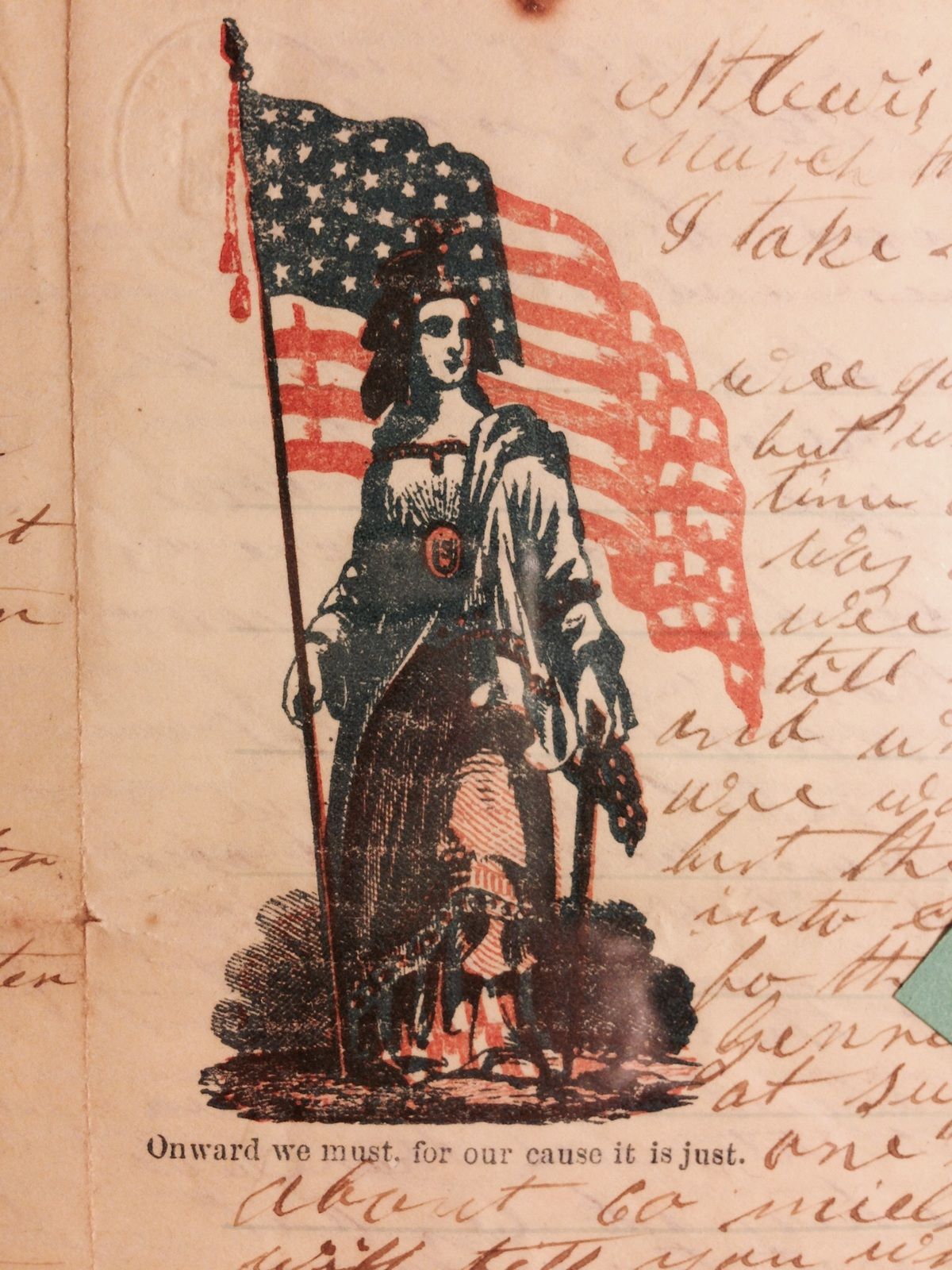
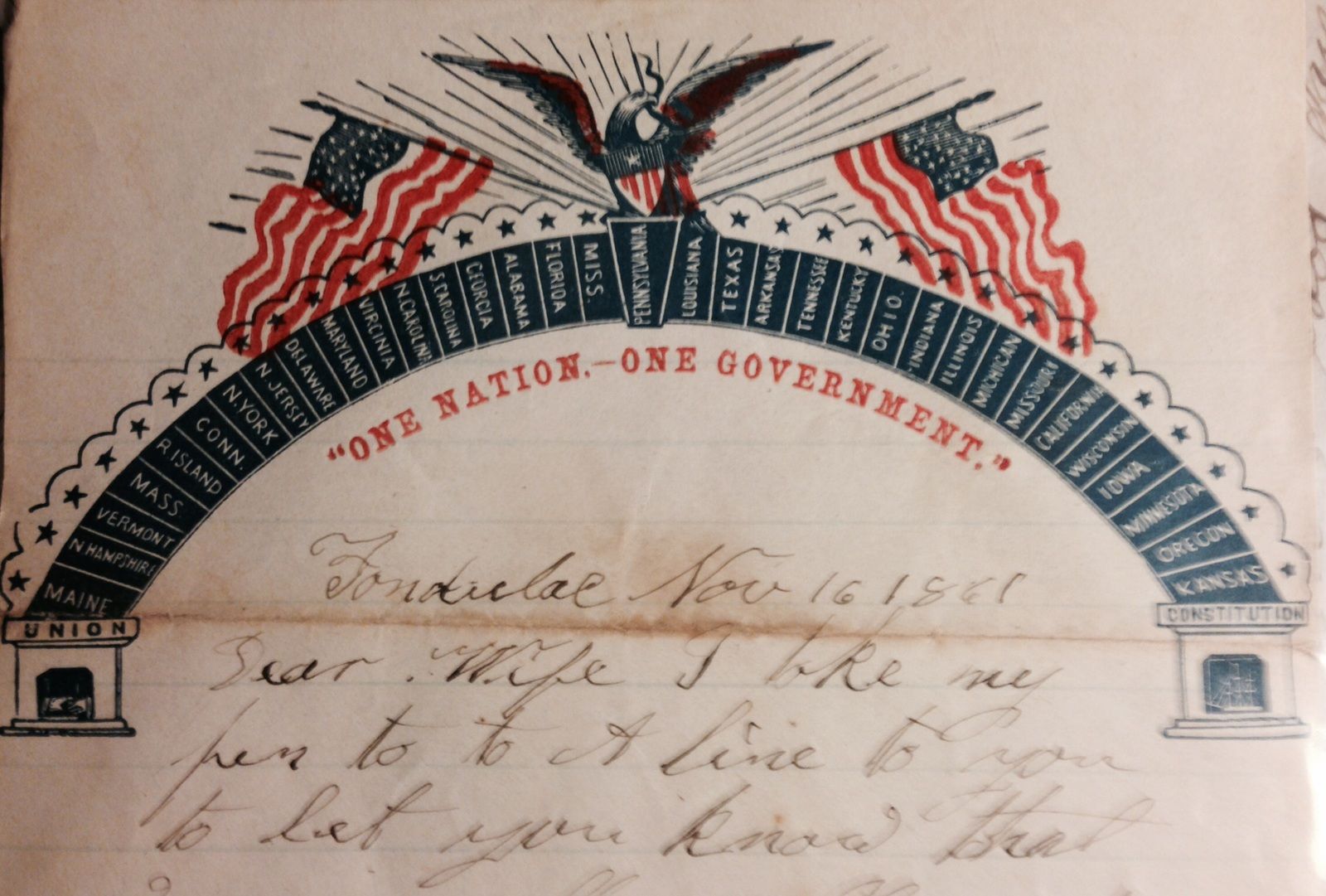
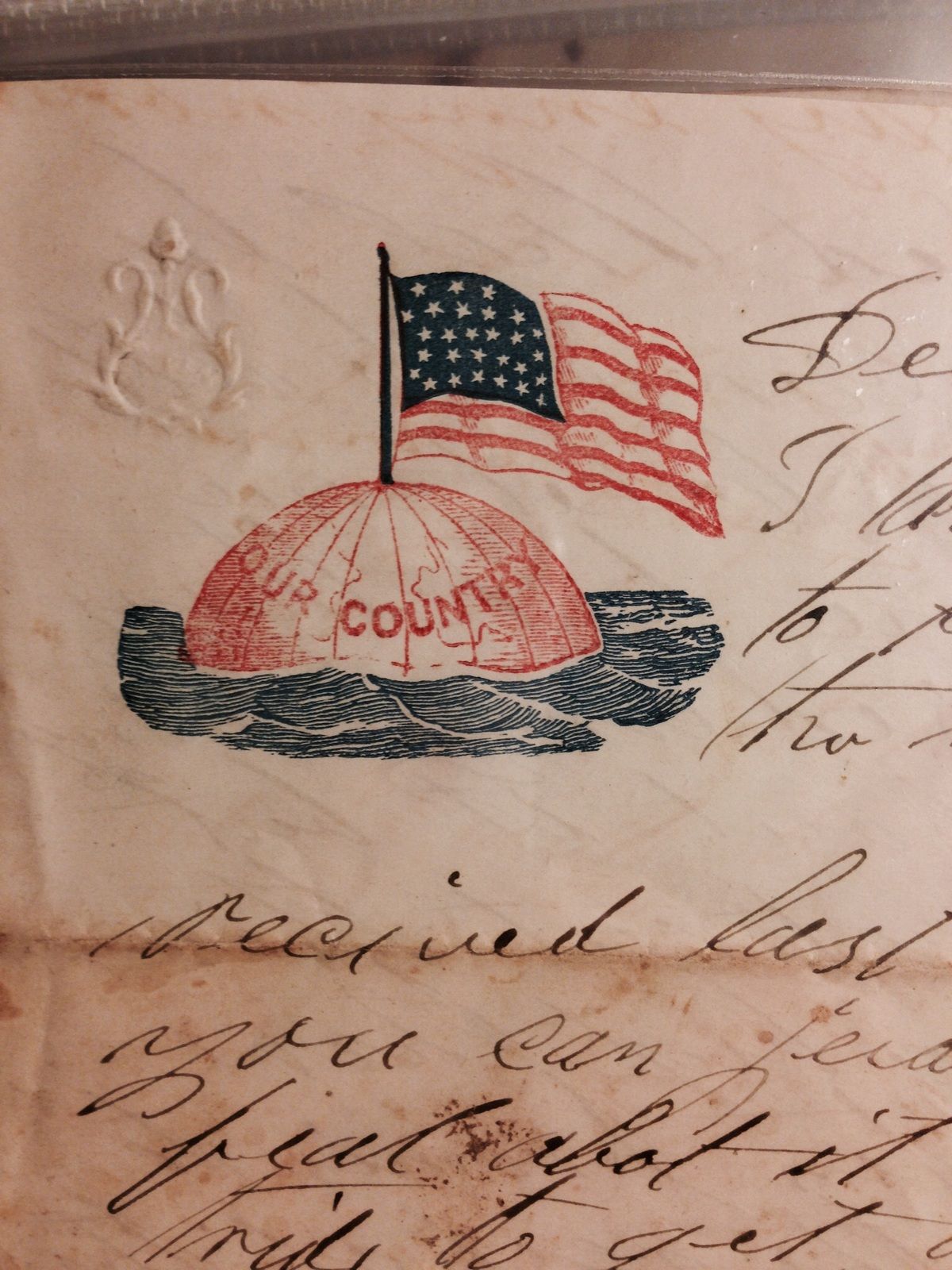
Letters and Letterhead

DJenne

Private
Joined
Apr 11, 2015
Location
Northern Virginia
I have a good collection of letters written by my gggrandfather home. What I find especially interesting about the letters, is the variety of letterhead he had available to him. (I'm a designer, I can't help but notice this stuff.) I figured this is the best place to share some of these. He was a union soldier, in the 14th Wisconsin. I hope perhaps someone has some other images.mi would love to see them.
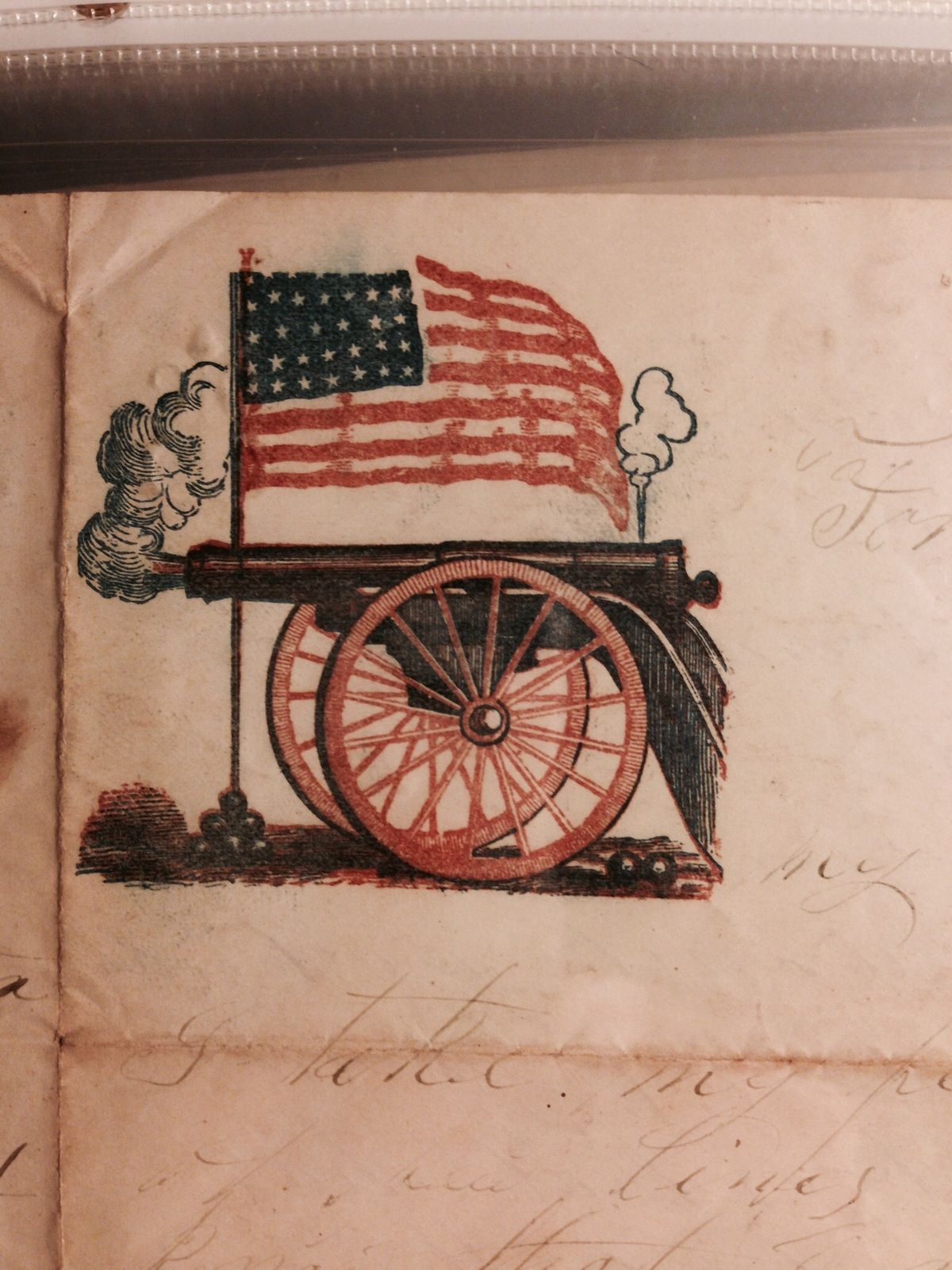
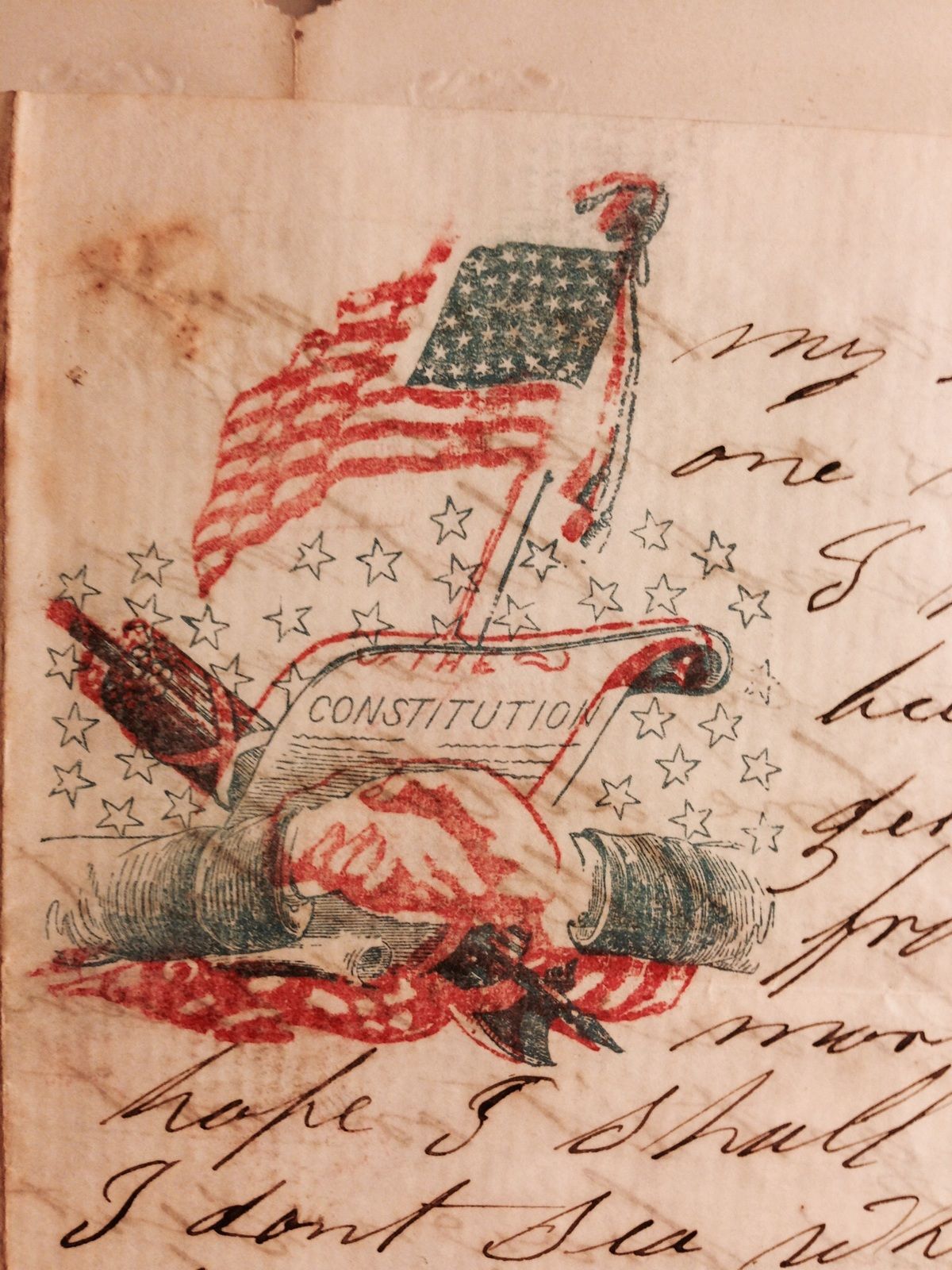
image.jpg
image.jpg
image.jpg


image.jpg


image.jpg
 
Last edited:
Now that I look real closely, I can see other examples of blind embossing in these attachments. I suppose it was there at that time for the same reason we occasionally see it now: It was a subtle and very elegant way to mark a piece of paper as special.

Blind embossing required two printing plates or dies (a positive and a negative). It was and continues to be more complex and expensive than printing with ink. It's a very elegant process....or, at least it CAN be, if the embossed art is elegant. (I suppose if you had cheesy art, you'd wind up with tasteless, cheesy embossing).

Oh, I should explain that it's called "blind" embossing because there is no ink involved. It's strictly a textural thing. In the examples above, look beyond the colorful ink and you will pick out the three dimensional, sculptural effects in the paper in several of the photos. That's blind embossing.
 
Great information. Thankfully not a lost art. Professionally, it takes a special client ($$$) who will include this type of embossing in their collateral print material. In the meantime, we can enjoy the resurgence of letterpress to satisfy the tactile quality of a deep imprint on fine paper.

Of course you're comments have sent me searching for the reasons. The blind emboss, corner mark or stamp is the stationer's imprint. When the paper was made, it was stamped by the manufacturer. Think of Cranes or Tiffany fine stationery. Then sold either for commercial use (printing) or straight to the consumer.
 
May4_Redeagle.jpg
TheWarfortheUnion.jpg
A few more...
Camp_Tents.jpg

Completely embossed..very feminine. I think he was finding any piece of paper he could at one point.
CompleteEmboss.jpg

This congress imprint is on the majority of his letters. No other illustration is on them. I love that it is the Capitol building
CongressEmboss.jpg

This was written May 4th, 1862.
The Eagle envelope. He (or somebody) drew another eagle.
Nov1861-Eagle-envelope.jpg

TheWarfortheUnion.jpg
 
So @Patrick H, I recently posted a question about markings on a piece of correspondence, but worded it terribly, in both the title and the body of the question, and searching around online, I found myself back on this forum, coincidentally, at this post.

I've obtained my first CW letter and was curious about the embossing at the top of the letter, which is similar to a water mark, as suggested by connecticut yankee and ucvrelics. It is an eagle, with the word "commercial" stamped above it, and it has clearly been pressed into the paper after it was folded (or appears to have been). Do you know if this is a stamp from the paper manufacturer, and if so, did they send the stationary to the soldiers pre-folded like that? And if not, was this something that was done downstream of the soldier by someone, and if so, do you know by whom?

Many thanks!

20171012_141421.jpg
 
So @Patrick H, I recently posted a question about markings on a piece of correspondence, but worded it terribly, in both the title and the body of the question, and searching around online, I found myself back on this forum, coincidentally, at this post.

I've obtained my first CW letter and was curious about the embossing at the top of the letter, which is similar to a water mark, as suggested by connecticut yankee and ucvrelics. It is an eagle, with the word "commercial" stamped above it, and it has clearly been pressed into the paper after it was folded (or appears to have been). Do you know if this is a stamp from the paper manufacturer, and if so, did they send the stationary to the soldiers pre-folded like that? And if not, was this something that was done downstream of the soldier by someone, and if so, do you know by whom?

Many thanks!

View attachment 161706
I really don't know the origin of the embossing. Is there more than one sheet in the letter? If so, is the mark present on each sheet? Whether applied by a letterpress or by a hand embossing seal, the mark could only have been applied with the paper unfolded. In other words, it was done pre-fold or the paper was deliberately unfolded to hand-apply the stamp. It seems laboriously fussy, doesn't it? But then consider all the fancy touches of the era that we see on everything else: Pinstripes painted on wagons and metal pieces, curved crank arms when straight ones would do just as well, and so forth. Elegant touches were often applied to the most common of objects in that era.
 
Yep - elegant touches! Well said, Patrick, and another era, for sure. Last touches of the pre-industrial artisans. I've always been impressed with wrought iron from that era, for example, and wish I'd paid more attention when living in the South, particularly the Deep South, as many of those items are still around and available.

As to the embossing: There is only the one sheet of paper, folded. That is why I was thinking it must have been applied after the fact - because you can see such an impression on the rear folded piece, as if the image was pressed with a die afterwards, and hence the question about whether stationary was acquired pre-folded for convenience. I can't imagine the embossing would have made such an impression on the back fold from being in a pocket, or stored in an envelope, etc. It seems that if anything, the embossing itself would have been rendered flat, if say, pressed in a book or something. ?
 

Learn About Us
About CivilWarTalk
Contact the Webmaster
Meet the Staff
Link to CivilWarTalk
Join Our Community
Register
Browse Forums
View Today's Discussions
Search the Forum
Get Help
FAQ
Student Guide
Forum Rules & Etiquette
Copyright / DMCA

     Contact Us CivilwarTalk on Facebook CivilWarTalk on YouTube CivilWarTalk on Twitter RSS Feed

Bringing the American Civil War and More to Life.
© 1999 - , CIVILWARTALK, LLC - Site Version 10.0

SlaveryTalk.com - SecessionTalk.com - CivilWarTalk.com - ReconstructionTalk.com
Back
Top