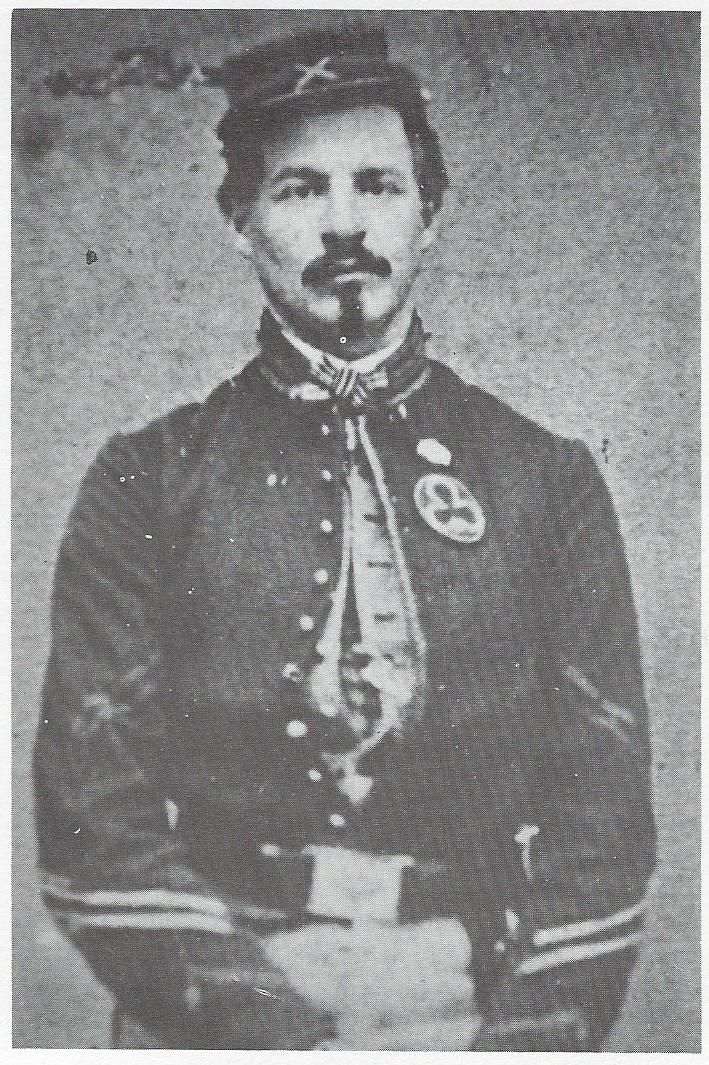
Lapel Corps badge.

major bill

Brev. Brig. Gen'l
Forum Host
Joined
Aug 25, 2012
Although this image was copied form a magazine and the quality is poor, one can see that this soldier wears his large Corps badge on his lapel. Wearing Corps badges like this would not have bee too common during the Civil War.
odd 2.jpg

Here the Corps badge is worn in a more common way.

corps 4.jpg
 
Could this be something done just for the photograph?

Perhaps, but the jacket would then have small holes in the lapel, well that is if it were pinned on. Sewing it on would cause issues as well. Both men may have purchased these to wear home on leave or for the photograph. Note the artillery corporal wear a second (identification ?) badge as well.
@major bill, some forum members might like to know the magazine these images came from. Thank you.

The top image is from a carte de visite of George A. Heimbach, Battery F, 1st Pennsylvania Light Artillery, 2nd Army Corps. It was published in An Unusual Shoulder (Lapel?) Patch Insignia from the Civil War, by Edward Steer, Jr. which was published in the Journal of The Company of Military Historians , Spring 1980 issue.

In an attempt clean up my personal library I have been going through old magazines in an attempt to get rid of some. I will not be able to bring myself to part with the old Journal of The Company of Military Historians issues. Sadly they do take up a fair amount of space, my library room is fairly large and I can make room for my issues of the Journal of The Company of Military Historians
 
The second image is from the Journal of The Company of Military Historians Fall 1981 issue. Mr. Steer updated his older article with A Corps Badge of Battery F. First Pennsylvania Light Artillery? It image is said to be Cpl. Hiram M. Pidcoe

Steers believes these are similar to WWI should patches and thinks they are made of cloth about three inches wide. I am uncertain of his evaluation.
 
Although this image was copied form a magazine and the quality is poor, one can see that this soldier wears his large Corps badge on his lapel. Wearing Corps badges like this would not have bee too common during the Civil War.
View attachment 205668
Here the Corps badge is worn in a more common way.

View attachment 205669
I thought some of the troops wore corps badges on their hats or kepis. I've never seen one on a lepel.
 
Perhaps, but the jacket would then have small holes in the lapel, well that is if it were pinned on. Sewing it on would cause issues as well. Both men may have purchased these to wear home on leave or for the photograph. Note the artillery corporal wear a second (identification ?) badge as well.


The top image is from a carte de visite of George A. Heimbach, Battery F, 1st Pennsylvania Light Artillery, 2nd Army Corps. It was published in An Unusual Shoulder (Lapel?) Patch Insignia from the Civil War, by Edward Steer, Jr. which was published in the Journal of The Company of Military Historians , Spring 1980 issue.

In an attempt clean up my personal library I have been going through old magazines in an attempt to get rid of some. I will not be able to bring myself to part with the old Journal of The Company of Military Historians issues. Sadly they do take up a fair amount of space, my library room is fairly large and I can make room for my issues of the Journal of The Company of Military Historians
I know the feeling, on my work ventures, I go by a couple of used book stores and of course, time allowing must stop. I had to sneak 10 ACW research books in last night, but have no room on my library shelves...….the horror, the horror.....

One book of particular note "Round Shot to Rockets" a history of the Washington Navy Yard and Naval Gun Factory. Some very unique information, in fact who knew that Colonel Ulric Dahlgren's leg is buried within the walls of the Dahlgren Foundry? He lost the leg after the battle of Gettysburg in a skirmish in Hagerstown, MD on July 6th 1863.

A good friend is the head Naval Archivist, at the Navy Yard, so now I get to play stump the expert...…..
 
...one can see that this soldier wears his large Corps badge on his lapel. ...Here the Corps badge is worn in a more common way.

In the first photo I'm seeing a man wearing a civilian frock coat, which of course has a lapel, and in the second photo a man wearing a military shell jacket, which of course has no lapel. The badge is at the identical spot in both -- same chest position near the button line. So as far as badge placement anyway there's no inconsistency at all, imho.
 
The first man wearing a civilian frock coat needs to be investigated. How can we be sure?

The buttons on the sleave could be brass. Do I also see a button in the lower right, perhaps a rear pocket button?

It looks like a military version of a vest as well.
 
Last edited:
I agree that it looks like a civilian frock that has been "militarized". Standard enlisted frocks do not have the lapel that this soldier is wearing. I imagine that being a member of a state artillery unit, he was issued a sack and shell, regulations specified that cavalry and light artillery would wear a uniform jacket of dark blue cloth...….I imagine that the subject decided he preferred a frock and went about his own way of securing and militarizing.

Enlisted foot (infantry and HA) wore a frock for dress occasions, while cavalry and light artillery wore the shell jacket for dress and field as preferences dictated. There are certainly exceptions and it appears as if the 1st subject is one; I wonder what he wore in the field, most likely a shell or sack.
 

Learn About Us
About CivilWarTalk
Contact the Webmaster
Meet the Staff
Link to CivilWarTalk
Join Our Community
Register
Browse Forums
View Today's Discussions
Search the Forum
Get Help
FAQ
Student Guide
Forum Rules & Etiquette
Copyright / DMCA

     Contact Us CivilwarTalk on Facebook CivilWarTalk on YouTube CivilWarTalk on Twitter RSS Feed

Bringing the American Civil War and More to Life.
© 1999 - , CIVILWARTALK, LLC - Site Version 10.0

SlaveryTalk.com - SecessionTalk.com - CivilWarTalk.com - ReconstructionTalk.com
Back
Top